

Basic information
- Standard SMILES
[BH3-]C#N.[Na+]- InChIKey
CVDUGUOQTVTBJH-UHFFFAOYSA-N- Molecular formula
- CH3BNNa
- Average molar mass
- 62.84 g/mol
- Monoisotopic mass
- 63.0256235
Names & identifiers
- Preferred name
- Sodium cyanoborohydride
- IUPAC
- sodium cyanoboranuide
- English name
- Sodium cyanoborohydride
- Molecular formula
- CH3BNNa
- Molecular weight
- 62.84
Names & synonyms
Sodium cyanotrihydroborateDTXSID40894864C4I8C58P9TBorate(1-), (cyano-kappaC)trihydro-, sodium, (T-4)-Borate(1-), (cyano-kappaC)trihydro-, sodium (1:1), (T-4)-sodium cyanohydridoborateNaBH(3)CNsodium cyanoborohydride, borate (1-) ionRefChem:887464DTXCID001838713247-317-225895-60-7
Show more names
NaBH3CNNaCNBH3SODIUM CYANOTRIHYDRIDOBORATESodium cyanoboronhydrideSodium cyanborohydrideCyanoborohydride SodiumCyano sodiuM borohydridesodium (cyano-kappaC)(trihydrido)borate(1-)Sodium cyanoborohydride, 1M solution in THF, AcroSeal
Borate(1-), (cyano-C)trihydro-, sodium, (T-4)-Sodium borocyanohydrideSodium cyanoborohydrideCH3BNNasodiumcyanoborohydrideSodium (cyanido-kappaC)trihydridoborate(1-)CVDUGUOQTVTBJH-UHFFFAOYSA-NSodium (T-4)-(Cyano-C)trihydroborate(1-); Sodium borocyanohydride; Sodium Cyanotrihydroborate; Sodium Cyanotrihydroborate(1-);
Database identifiers
- CAS
25895-60-7- PubChem CID
- 5003444
- DTXSID
DTXSID40894864- UNII
- C4I8C58P9T
- EC Number
- 247-317-2
Properties
Computed structural properties
- Topological polar surface area
- 23.8 Ų
- Hydrogen bond donors
- 0
- Hydrogen bond acceptors
- 2
- Rotatable bonds
- 0
- Heavy atoms
- 4
- Formal charge
- 0
- Complexity
- 34
Experimental & physicochemical properties
Physical DescriptionWhite hygroscopic solid; [Merck Index] White powder; [Alfa Aesar MSDS]
Physicochemical properties
- Melting point
- 242 °C · >242 °C (dec.) (lit.)
- Boiling point
- 307 °C · 307°C
- Density
- 1.083 g/mL · 1.083 g/mL at 25 °C
- Flash point
- 1 °F · −1 °F
- storage temp.
- 30 °C · Store below +30°C.
- solubility
- Soluble in water (100 mg/ml, with heating), methanol, ethanol, and THF. It is insoluble in nonpolar solvents such as benzene or hexane
- form
- Powder
- color
- White
- Specific Gravity
- 1.2 · 1.2
- biological source
- synthetic
- Water Solubility
- 2120 g/L · 2120 g/L at 29 ºC (dec.)
- Sensitive
- Moisture Sensitive
- Merck
- 14 · 14,8606
- BRN
- 4152656 · 4152656
- Stability
- Stable. Hygroscopic. Reacts violently with water, giving off and igniting hydrogen. Do not use water on fires involving this chemical - instead use dry soda ash. Incompatible with strong acids, water, strong oxidizing agents.
- InChI
- 1S/CH3BN.Na/c2-1-3;/h2H3;/q-1;+1
- InChIKey
- CVDUGUOQTVTBJH-UHFFFAOYSA-N
- SMILES
- [Na+].[BH3-]C#N
- CAS DataBase Reference
- 25895 · 25895-60-7(CAS DataBase Reference)
- FDA UNII
- 4 I8C58P9T · C4I8C58P9T
- EPA Substance Registry System
- Borate(1-), (cyano-.kappa.C)trihydro-, sodium, (T-4)- (25895-60-7)
- UNSPSC Code
- 12352306 · 12352306
- NACRES
- 22 · NA.22
- Symbol(GHS)
- 2 · GHS02,GHS05,GHS06,GHS09
- Signal word
- Danger
- Hazard statements
- 228 · H228-H260-H300+H310+H330-H314-H410
- Precautionary statements
- 210 · P210-P231+P232-P260-P280-P303+P361+P353-P304+P340+P310-P305+P351+P338
- PPE
- 3 · Eyeshields, Faceshields, Gloves, type P3 (EN 143) respirator cartridges
- Hazard Codes
- T+,N,T,F
- Risk Statements
- 26 · 26/27/28-32-34-50/53-16-15-11-51/53-36-23/24/25-19-14-40-36/37/38
- Safety Statements
- 26 · 26-28-36/37/39-45-60-61-8-50A-43-28A-1-16-36/37
- RIDADR
- 3179 · UN 3179 4.1/PG 2
- WGK Germany
- 1 · 1
- F
- 10 · 10-21
- Hazard Note
- Toxic/Highly Flammable
- TSCA
- TSCA listed
- HazardClass
- 6.1 · 6.1
- PackingGroup
- I
- HS Code
- 28500020 · 28500020
- Storage Class
- 4.3 · 4.3 - Hazardous materials which set free flammable gases upon contact with water
- Hazard Classifications
- 2 DermalAcute · Acute Tox. 2 DermalAcute Tox. 2 InhalationAcute Tox. 2 OralAquatic Acute 1Aquatic Chronic 1Eye Dam. 1Flam. Sol. 1Skin Corr. 1BWater-react 1
- Excepted Quantities
- Not Permitted as Excepted Quantity
Safety & regulation
GHS classification
GHS Classification
Danger
H228 (97.1%): Flammable solid [Danger Flammable solids];H300 (100%): Fatal if swallowed [Danger Acute toxicity, oral];H310 (100%): Fatal in contact with skin [Danger Acute toxicity, dermal];H314 (100%): Causes severe skin burns and eye damage [Danger Skin corrosion/irritation];H318 (25%): Causes serious eye damage [Danger Serious eye damage/eye irritation];H330 (100%): Fatal if inhaled [Danger Acute toxicity, inhalation];H400 (75.8%): Very toxic to aquatic life [Warning Hazardous to the aquatic environment, acute hazard];H410 (77%): Very toxic to aquatic life with long lasting effects [Warning Hazardous to the aquatic environment, long-term hazard]
P210, P240, P241, P260, P262, P264, P264+P265, P270, P271, P273, P280, P284, P301+P316, P301+P330+P331, P302+P352, P302+P361+P354, P304+P340, P305+P354+P338, P316, P317, P320, P321, P330, P361+P364, P363, P370+P378, P391, P403+P233, P405, and P501 (click each P-code to see the statement)
Aggregated GHS information provided per 244 reports by companies from 16 notifications to the ECHA C&L Inventory. Each notification may be associated with multiple companies.;Information may vary between notifications depending on impurities, additives, and other factors. The percentage value in parenthesis indicates the notified classification ratio from companies that provide hazard codes. Only hazard codes with percentage values above 10% are shown. For more detailed information, please visit ECHA C&L website.
Hazard information
Regulatory Information
Chemical: Borate(1-), (cyano-C)trihydro-, sodium, (T-4)-
Sodium cyanoborohydride: HSNO Approval: HSR004685 Approved with controls
Other Safety InformationIMAP assessments - Borate(1-), (cyano-C)trihydro-, sodium, (T-4)-: Human health tier I assessment;IMAP assessments - Borate(1-), (cyano-C)trihydro-, sodium, (T-4)-: Environment tier I assessment
Hazards SummaryReacts with water evolving extremely flammable gases; Causes burns; Highly toxic by ingestion, inhalation, and skin absorption; [Alfa Aesar MSDS]
Hazard Classes and CategoriesFlam. Sol. 1 (97.1%);Acute Tox. 1 (100%);Acute Tox. 1 (100%);Skin Corr. 1B (100%);Eye Dam. 1 (25%);Acute Tox. 1 (100%);Aquatic Acute 1 (75.8%);Aquatic Chronic 1 (77%)
Toxicology
Adverse EffectsDermatotoxin - Skin burns.
Regulatory information
Regulatory Information
Chemical: Borate(1-), (cyano-C)trihydro-, sodium, (T-4)-
Sodium cyanoborohydride: HSNO Approval: HSR004685 Approved with controls
Safety data
- F
- 10-21
- PPE
- Eyeshields, Faceshields, Gloves, type P3 (EN 143) respirator cartridges
- wgk
- 1
- tsca
- TSCA listed
- ridadr
- UN 3179 4.1/PG 2
- hs_code
- 28500020
- risk_code
- 26/27/28-32-34-50/53-16-15-11-51/53-36-23/24/25-19-14-40-36/37/38
- Signal word
- Danger
- Symbol(GHS)
- GHS02,GHS05,GHS06,GHS09
- hazard_code
- T+,N,T,F
- hazard_note
- Toxic/Highly Flammable
- safety_code
- 26-28-36/37/39-45-60-61-8-50A-43-28A-1-16-36/37
- hazard_class
- 6.1
- Storage Class
- 4.3 - Hazardous materials which set free flammable gases upon contact with water
- packing_group
- I
- Hazard statements
- H228-H260-H300+H310+H330-H314-H410
- Excepted Quantities
- Not Permitted as Excepted Quantity
- Hazard Classifications
- Acute Tox. 2 DermalAcute Tox. 2 InhalationAcute Tox. 2 OralAquatic Acute 1Aquatic Chronic 1Eye Dam. 1Flam. Sol. 1Skin Corr. 1BWater-react 1
- Precautionary statements
- P210-P231+P232-P260-P280-P303+P361+P353-P304+P340+P310-P305+P351+P338
Chemistry & industry
Pharmacology
MeSH Pharmacological Classification
Substances used for the detection, identification, analysis, etc. of chemical, biological, or pathologic processes or conditions. Indicators are substances that change in physical appearance, e.g., color, at or approaching the endpoint of a chemical titration, e.g., on the passage between acidity and alkalinity. Reagents are substances used for the detection or determination of another substance by chemical or microscopical means, especially analysis. Types of reagents are precipitants, solvents, oxidizers, reducers, fluxes, and colorimetric reagents. (From Grant & Hackh's Chemical Dictionary, 5th ed, p301, p499)
Uses & manufacturing
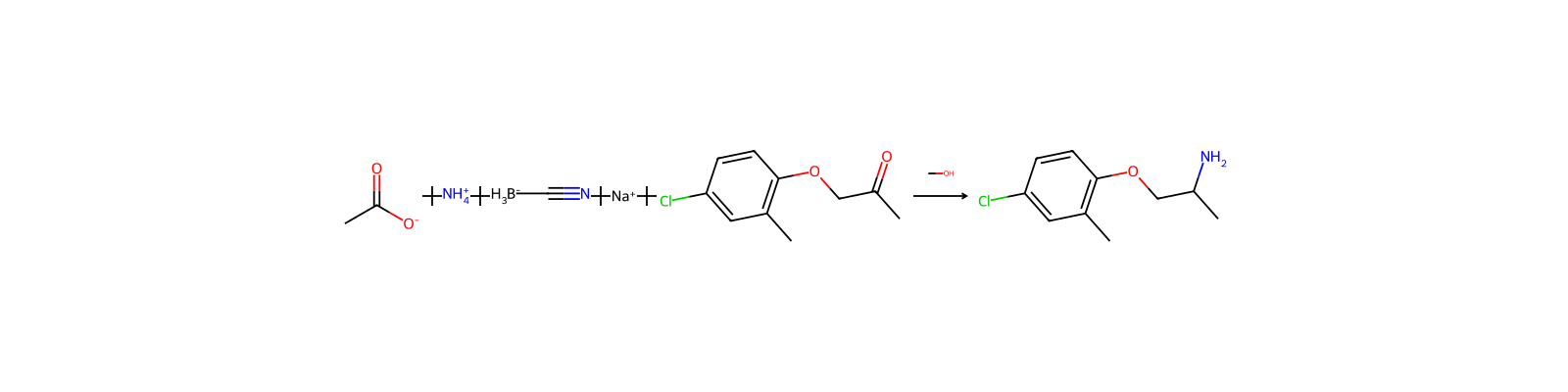
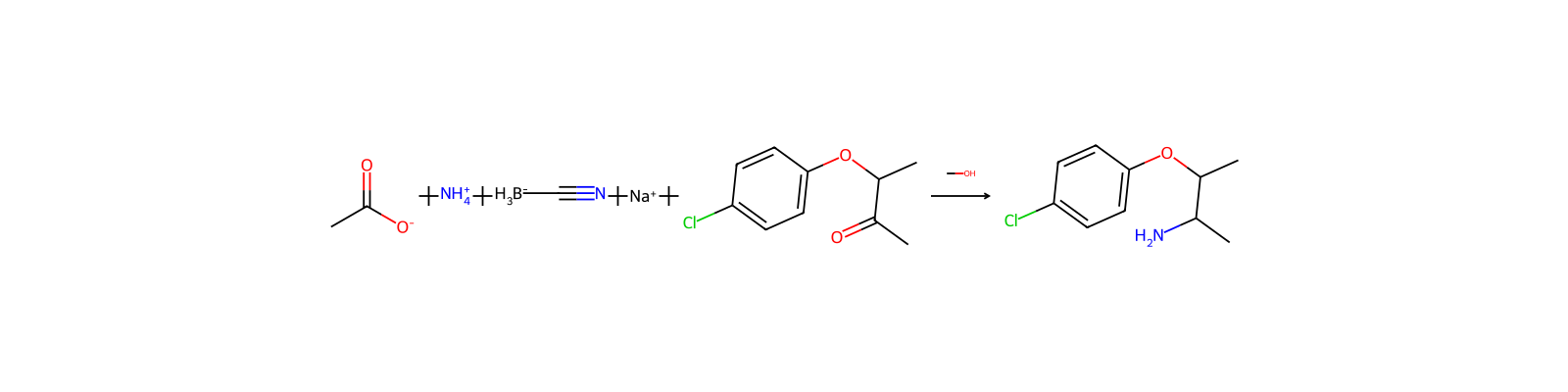
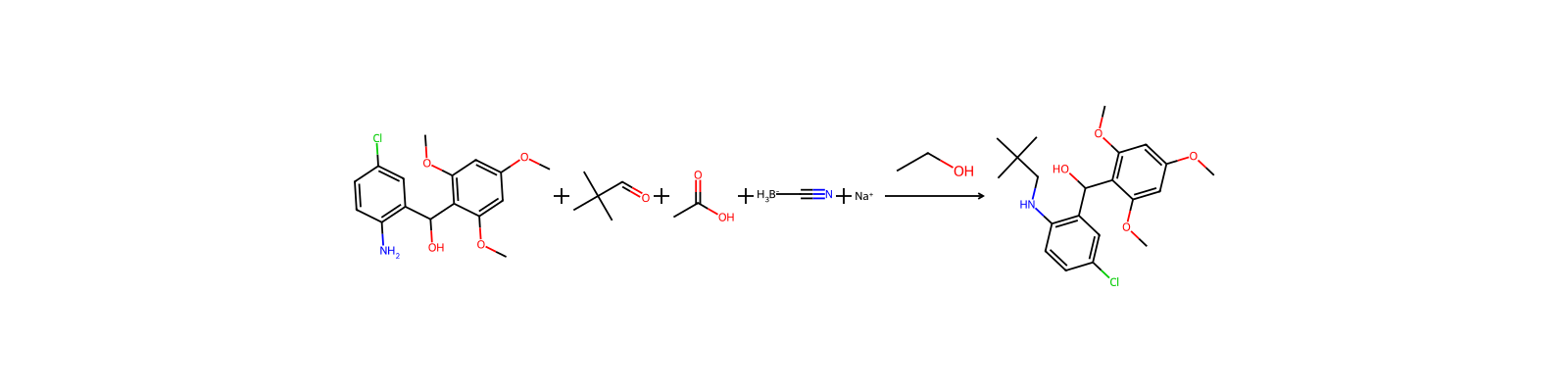
UsesUsed as a reducing agent (aldehydes, ketones, oximes, and enamines); Also used for reductive amination, reductive alkylation, reductive displacement, and deoxygenation; [Merck Index]
Applications
DescriptionSodium cyanoborohydride (NaBH3CN) is a selective reducing agent used for a variety of chemical reductions, including aldehyde, ketones, acetals, epoxides, oximes, enamines, reductive aminations of aldehydes and ketones, and reductive alkylations of amines and hydrazines. The utility of sodium cyanoborohydride as a reducing agent is greatly enhanced by its stability under acid conditions, and its solubility in aprotic solvents. Sodium cyanoborohydride is a milder and more selective reducing agent than sodium borohydride. Sodium cyanoborohydride is a weaker and more-selective reducing agent than sodium borohydride because of the electron-withdrawing effect of the cyano group. It has the further advantage that it is stable in acid to pH = 3 and can be employed to effect reductions in the presence of functional groups that are sensitive to the more-basic conditions of reduction with sodium borohydride. Aldehydes and ketones are unaffected by sodium cyanoborohydride in neutral solution, but they are readily reduced to the corresponding alcohol at pH=3-4 by way of the protonated carbonyl group. By previous exchange of the hydrogens of the borohydride for deuterium or tritium, by reaction with D2O or tritiated water, an efficient and economical route is available for deuteride or tritiide reduction of aldehydes and ketones.
UsesSodium Cyanoborohydride is a commonly used as a reagent in the reductive amination of aldehydes and ketones and in the reductive alkylation of amines. It is also used in the synthesis of a novel phenolate-bridged dilanthanum(III) complex of interest as a model for metalloproteins as well as for its importance in basic and applied chemistry.
Preparation methods
PreparationSynthesis of Sodium cyanoborohydride(NaBH3CN): NaBH3CN was made by stirring equimolar BH3·THF (~1 M) with NaCN in THF in excellent yield.To a rapidly stirred slurry of sodium borohydride (80.2g, 2.09 mol) in THF (1000mL) in a 2-L flask is added a solution of hydrogen cyanide in THF (294g containing 58.8g of hydrogen cyanide) at 25°C. Evolution of hydrogen occurs slowly during the addition. Following the addition, the reaction mixture is stirred for 1 h at 25°C and then heated at reflux until hydrogen evolution has ceased. Filtration followed by vacuum removal of THF gives white solid sodium cyanoborohydride; yield 120g (91%).
Upstream & downstream products
Upstream raw materials
Downstream products
Suppliers50 total
国药集团化学试剂有限公司86-21-63210123 · [email protected]
梯希爱(上海)化成工业发展有限公司021-67121386 · [email protected]
上海阿拉丁生化科技股份有限公司400-6206333 13167063860 · [email protected]
杭州品高化工有限公司0571-87658025 · [email protected]
上海泰矶林实业有限公司02150630626 17717886015 · [email protected]
爱斯特(成都)生物制药股份有限公司+86-28-85122536 85324413 · [email protected]
北京安司莫森技术有限公司010-82954736 13391601435 · [email protected]
韶远科技(上海)有限公司021-50795510 4000665055 · [email protected]
科瑞迪化学400-821-5857 021-64326257 · [email protected]
Syntechem Co.,Ltd[email protected]
南通萧畅医药贸易有限公司0513-82104991 18862997351 · [email protected]
上海迈瑞尔生化科技有限公司4006356688 18621169109 · [email protected]
武汉易泰科技有限公司上海分公司18930552037 · [email protected]
阿法埃莎(中国)化学有限公司400-6106006 · [email protected]
安耐吉化学&3A(安徽泽升科技股份有限公司)400-0056266 · [email protected]
陕西纬宇新材料有限公司13772052144 13772052144 · [email protected]
上海瀚鸿科技股份有限公司021-54306202 13764082696 · [email protected]
上海相辉医药科技有限公司13761987713 · [email protected]
上海景颜化工科技有限公司13817811078 · [email protected]
嘉兴市艾森化工有限公司0573-85285100 18627885956 · [email protected]
Pure Chemistry Scientific Inc.001-857-928-2050 or 1-888-588-9418 · [email protected]
上海攀鸿化工科技有限公司021-56491756 13512199871 · [email protected]
上海忆嵘生物科技有限公司18049974220 · [email protected]
苏州施亚生物科技有限公司86(512)5235 8471 17715136450 · [email protected]
山东西亚化学有限公司13355009207 13355009207 · [email protected]
玛雅试剂+86 (573) 82222445 (0)18006601000 452520369 · [email protected]
四川库利南科技有限公司400-1166-196 18981987031 · [email protected]
河南萬象化工有限公司(优势生产供应!)0371-56669001 13949088811 · [email protected]
上海钰康生物科技有限公司15618758386 15618758386 · [email protected]
湖南汇百侍生物科技有限公司0731-85526065 13308475853 · [email protected]
河南多贝化工有限公司0370-2785118 17550508557 · [email protected]
斯百全化学(上海)有限公司021-021-021-67601398-809-809-809 15221380277 · [email protected]
艾科试剂4008-755-333 18080918076 · [email protected]
上海思域化工科技有限公司86-21-34053660 · [email protected]
赛默飞世尔科技(中国)有限公司800-810-5118 · [email protected]
北京伊诺凯科技有限公司400-810-7969 010-59572699 · [email protected]
Wuhan NCE Biomedical Co.,Ltd.4000-027-021 |24 +86-13986109188 | +86-15623472865 | +81-08033611988
上海遐瑞医药科技有限公司+86 21 61551611
上海健超生物科技有限公司150-2103-5486 18017383231 · [email protected]
TOKYO CHEMICAL INDUSTRY CO., LTD.03-36680489 · [email protected]
上海贤鼎生物科技有限公司4009209199 · [email protected]
上海卓锐化工有限公司021-69180038
深圳康特腾科技有限公司86-0755-86635001 · [email protected]
越林试剂021-62960152 · [email protected]
苏州安尼康药物研发有限公司0512-69369885 · [email protected]
无锡中坤生化科技有限公司+86 0510-85629785
上海汇凯化学科技有限公司021-61995394 18916691159 · [email protected]
上海灏云化工科技有限公司021-68367562 · [email protected]
上海泽信化工科技有限公司021-60136491 15901897992
上海湄水化工科技有限公司021-60549325 18616193163
Related reactions
9,344 records




Linked notes
Loading…