HomeMCPWorkbenchSkills
HomeWorkbenchNotificationsMe
llms.txt · MCP GuidePrivacy Policy · Terms of Service · Supportv1.8.3
  1. Home
  2. /Compound

Potassium periodate

HCID 516896
New reaction
Print
Basic informationNames & identifiersPropertiesSafety & regulationChemistry & industryRelated reactionsCompound notes
Substructure searchFind similar structures

Basic information

CAS
7790-21-8
Standard SMILES
[K+].[O-][I+3]([O-])([O-])[O-]
InChIKey
WZIUPTUZHCSBAA-UHFFFAOYSA-N
Molecular formula
I.K.O4
Average molar mass
230 g/mol
Monoisotopic mass
229.84783816

Names & identifiers

Preferred name
Potassium periodate
IUPAC
potassium periodate
English name
Potassium periodate
Molecular formula
H2IKO4
Molecular weight
232.01

Names & synonyms

Potassium periodate7790-21-8POTASSIUM METAPERIODATEQ3LOC6P66LDTXSID90894076Periodic acid (HIO4), potassium salt (1:1)RefChem:867964DTXCID301324119232-196-0potassium;periodateUNII-Q3LOC6P66LEINECS 232-196-0
Show more names
ACS, 99.8%-100.3%Potassium m-PeriodaPOTASSIUM M-PERIODATEPotassiumPeriodateKIO4Potassium periodate 99%PotassiumMetaperiodateGrpotassium periodate, acsPotassium metaperiodiate
Periodic acid (HIO4), potassium saltMFCD00011407IKO4POTASSIUM IODATE (KIO4)POTASSIUM PERIODATE [MI]K (I O4)AKOS015901592NS00046869

Database identifiers

CAS
7790-21-8
PubChem CID
516896
DTXSID
DTXSID90894076
UNII
Q3LOC6P66L
EC Number
232-196-0
Nikkaji
J43.936C

Properties

Computed structural properties

Topological polar surface area
74.3 Ų
Hydrogen bond donors
0
Hydrogen bond acceptors
4
Rotatable bonds
0
Heavy atoms
6
Formal charge
0
Complexity
118

Experimental & physicochemical properties

Chemical ClassesOther Classes -> Halogens, Inorganic Compounds
Density3.618 @ 15°C
Physical DescriptionColorless or white solid; [Hawley] Colorless odorless powder; [MSDSonline]

Physicochemical properties

Melting point
582 °C · 582 °C
Boiling point
93 · explodes [HAW93]
Density
3.618 · 3.618
vapor density
7.9 · 7.9 (vs air)
storage temp.
2 · 2-8°C
solubility
2 O: · H2O: 0.01 M at 20 °C, clear, colorless
form
Powder/Solid
color
White to off-white
Specific Gravity
3.618 · 3.618
PH
5 g/l, · pH (5g/l, 25℃) : 4.5~5.5
Odor
Odorless
PH Range
4.5 · 4.5 - 5.5
Oxidising Properties
2 · The substance or mixture is classified as oxidizing with the subcategory 2
Water Solubility
0.42 g/100 · 0.42 g/100 mL (20 ºC)
Merck
14 · 14,7654
crystal system
square
Space group
41 · I41/a
Lattice constant
a/nm
Symbol(GHS)
3 · GHS03,GHS07
Signal word
Danger
Hazard statements
272 · H272-H315-H319-H335
Precautionary statements
264 · P264-P280-P261-P271-P302+P352-P332+P313-P362+P364-P305+P351+P338-P337+P313-P304+P340-P312-P403+P233-P405-P501
target organs
Thyroid
Hazard Codes
O,Xi
Risk Statements
8 · 8-36/37/38
Safety Statements
17 · 17-26-36-37/39
RIDADR
1479 · UN 1479 5.1/PG 2
WGK Germany
3 · 3
F
3 · 3
TSCA
TSCA listed
HazardClass
5.1 · 5.1
PackingGroup
II
HS Code
28299000 · 28299000
Storage Class
5.1 A · 5.1A - Strongly oxidizing hazardous materials
Hazard Classifications
1 Eye · Aquatic Acute 1Eye Dam. 1Ox. Sol. 1Skin Corr. 1CSTOT RE 1

Safety & regulation

Safety information is for reference only and does not replace the supplier’s Safety Data Sheet (SDS), applicable regulations, or professional assessment.

GHS classification

GHS Classification · 6 items

Danger

H272 (96.4%): May intensify fire; oxidizer [Danger Oxidizing liquids; Oxidizing solids]

P210, P220, P261, P264, P264+P265, P271, P280, P302+P352, P304+P340, P305+P351+P338, P319, P321, P332+P317, P337+P317, P362+P364, P370+P378, P403+P233, P405, and P501 (click each P-code to see the statement)

Aggregated GHS information provided per 56 reports by companies from 10 notifications to the ECHA C&L Inventory. Each notification may be associated with multiple companies.

Danger

H302: Harmful if swallowed [Warning Acute toxicity, oral]

Hazard information

Regulatory Information · 2 items

Chemical: Periodic acid (HIO4), potassium salt

Periodic acid, potassium salt: HSNO Approval: HSR001341 Approved with controls

Other Safety InformationIMAP assessments - Periodic acid and its salts: Human health tier II assessment
Hazards Summary · 1 item

A strong skin, eye, and mucous membrane irritant; [Merck Index] May cause fire on contact with organic substances; A strong oxidizing agent and irritant; [Hawley] A skin and eye irritant; [eChemPortal: ERMA] An oxidizing agent; May cause fire on contact with combustible material; An irritant; [MSDSonline] See Metaperiodic acid.

Hazard Classes and Categories · 2 items

Ox. Sol. 2 (96.4%)

Acute toxicity (ingestion) - category 4

Safety & protection

Protective Action Criteria (PAC) · 3 items

1.2 [mg/m3]

13 [mg/m3]

79 [mg/m3]

Safety data

F
3
wgk
3
tsca
TSCA listed
ridadr
UN 1479 5.1/PG 2
hs_code
28299000
risk_code
8-36/37/38
Signal word
Danger
Symbol(GHS)
GHS03,GHS07
hazard_code
O,Xi
safety_code
17-26-36-37/39
hazard_class
5.1
Storage Class
5.1A - Strongly oxidizing hazardous materials
packing_group
II
target organs
Thyroid
Hazard statements
H272-H315-H319-H335
Hazard Classifications
Aquatic Acute 1Eye Dam. 1Ox. Sol. 1Skin Corr. 1CSTOT RE 1
Precautionary statements
P264-P280-P261-P271-P302+P352-P332+P313-P362+P364-P305+P351+P338-P337+P313-P304+P340-P312-P403+P233-P405-P501

Chemistry & industry

Uses & manufacturing

UsesUsed as oxidizing agent (in acid solution) for manganese and organic compounds; [Merck Index]
General Manufacturing InformationPeriodic acid (HIO4), potassium salt (1:1): ACTIVE
Applications · 4 items

DescriptionPotassium periodate (chemical formula: KIO4) is a kind of inorganic salt composed of a potassium cation and a periodate anion. It can be used for the determination of potassium and cerium owing to its low solubility of KIO4. It can be used an oxidizing agent, and as a source of oxygen. It can also be used for the determination of the concentration of other compounds through measuring the reaction between DPC (sc-202590) and KIO4. It can be synthesize through the oxidation of potassium iodate through chlorine and potassium hydroxide, or by the electrochemical oxidation of potassium iodate.

UsesFor the colorimetric determination of Mn (oxidizes manganese compounds to permanganates), as oxidizing agentPotassium periodate is used as an oxidizing agent in organic synthesis and an analytical reagent for the determination of potassium and cerium. It is also used in colorimetric estimation of manganese. It reacts with ammonium cerium(IV) nitrate to prepare tris[trinitratocerium(IV)] paraperiodate which finds application as an oxidant.

UsesPowerful oxidizer in acid solution, oxidizing manganese Compounds to permanganate; used for this purpose in analytical chemistry (colorimetric estimation of Mn), also for the oxidation of some organic Compounds.

General DescriptionPotassium (meta)periodate exhibits strong oxidizing properties in acidic medium.

Preparation methods · 1 item

PreparationPotassium periodate can be prepared by oxidation of potassium iodate with a powerful oxidizing agent such as potassium permanganate, chlorine or bromine in basic solution:IO3ˉ+ Cl2+ 2OHˉ→IO4ˉ+ 2Clˉ+ H2OAlso, the salt may be prepared by electrolysis.

Upstream & downstream products

Upstream raw materials

iodinePeriodic acidPotassium hydroxide solutionIodinePotassium nitrateiodate

Downstream products

potassmm iodate for foodXANTHOTOXOLPotassium iodate

Related reactions

19 records
New reaction record
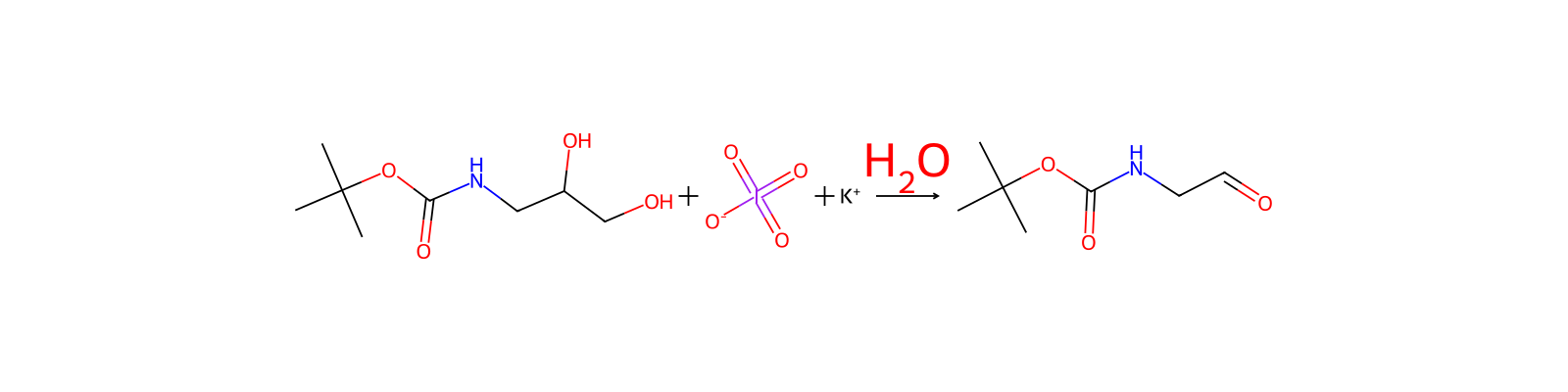
HRID 50098 reaction equation
HRID 50098As reactant
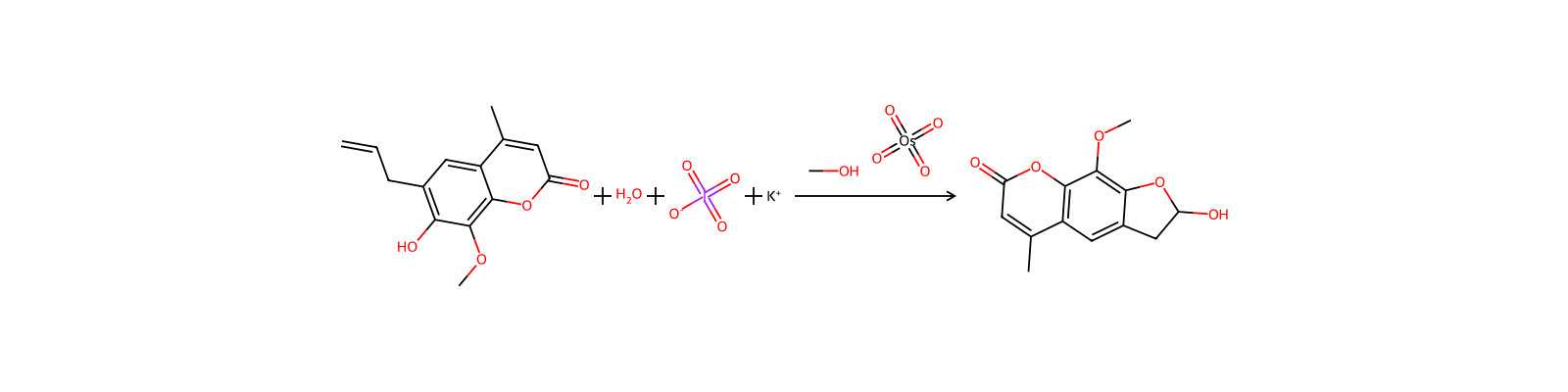
HRID 51183 reaction equation
HRID 51183As reactant
HRID 66073 reaction equation
HRID 66073As reactant
HRID 66079 reaction equation
HRID 66079As reactant
HRID 132629 reaction equation
HRID 132629As reactant
HRID 225208 reaction equation
HRID 225208As reactant
HRID 349810 reaction equation
HRID 349810As reactant
HRID 466267 reaction equation
HRID 466267As reactant
PreviousPage 1 of 3

Compound notes

On this pageBasic informationNames & identifiersPropertiesSafety & regulationChemistry & industryRelated reactionsCompound notes