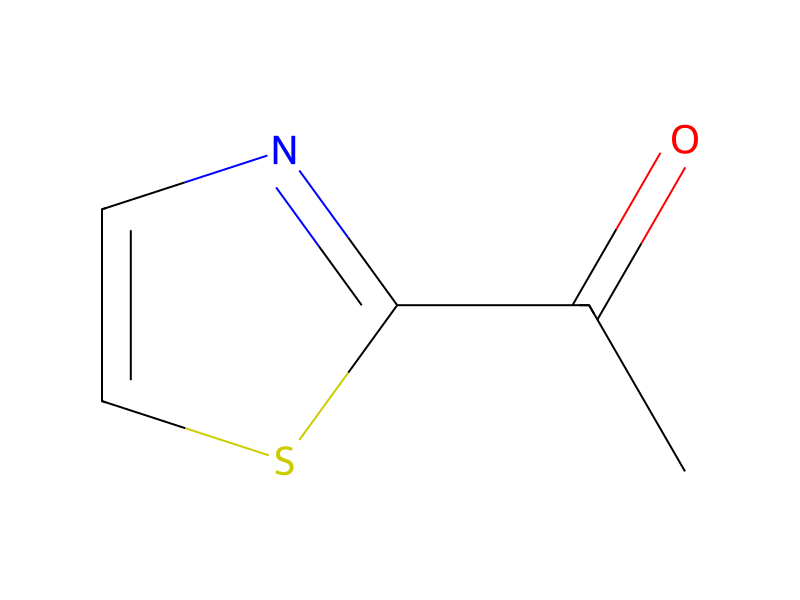
2-Acetylthiazole
Basic information
- CAS
24295-03-2- Standard SMILES
CC(=O)c1nccs1- InChIKey
MOMFXATYAINJML-UHFFFAOYSA-N- Molecular formula
- C5H5NOS
- Average molar mass
- 127.17 g/mol
- Monoisotopic mass
- 127.00918496
Overview
2-Acetylthiazole is an aromatic ketone.
Names & identifiers
- Preferred name
- 2-Acetylthiazole
- IUPAC
- 1-(1,3-thiazol-2-yl)ethanone
- English name
- 2-Acetylthiazole
- Molecular formula
- C5H5NOS
- Molecular weight
- 127.16
Names & synonyms
2-Acetylthiazole24295-03-21-(1,3-Thiazol-2-yl)ethan-1-one1-(1,3-Thiazol-2-yl)ethanoneEthanone, 1-(2-thiazolyl)-Ketone, methyl 2-thiazolyl1-(Thiazol-2-yl)ethan-1-oneMethyl 2-thiazolyl ketone2-Thiazolyl methyl ketoneFEMA No. 3328DTXSID003016216IGS5268I
Show more names
2-AcetylthiazolFEMA 3328AcetylthiazoleFEMA NUMBER 33282-acetylthiazoneTHIAZOLE-2-ACETYL2-Acetylo thiazole
DTXCID8010162RefChem:85013246-134-51-thiazol-2-yl-ethanone2-ACETYL THIAZOLEMFCD000053241-(thiazol-2-yl)ethanoneThiazole, 2-acetyl
Database identifiers
- CAS
24295-03-2- PubChem CID
- 520108
- DTXSID
DTXSID0030162- ChEMBL
CHEMBL1589555- ChEBI
CHEBI:173474- UNII
- 16IGS5268I
- EC Number
- 246-134-5
- Nikkaji
- J45.590C
Properties
Computed structural properties
- XLogP
- 1
- Topological polar surface area
- 58.2 Ų
- Hydrogen bond donors
- 0
- Hydrogen bond acceptors
- 3
- Rotatable bonds
- 1
- Heavy atoms
- 8
- Formal charge
- 0
- Complexity
- 105
Experimental & physicochemical properties
SpringerMaterials PropertiesChemical shift
FragrancesFragrance Ingredient (2-Acetylthiazole) -> IFRA transparency List
Food AdditivesANTIOXIDANT, FLAVOR ENHANCER, FLAVORING AGENT OR ADJUVANT, PROCESSING AID, SURFACE-FINISHING AGENT -> FDA Substance added to food
Density1.225-1.229
Flavoring AgentsEU Flavoring substances
Solubility
Insoluble in water; Soluble in fats, oils, most organic solvents
Miscible at room temperature (in ethanol)
Boiling Point
89.00 to 91.00 °C. @ 12.00 mm Hg
89-91 °C (12 mm Hg)
Melting Point64.5 - 65.5 °C
Refractive Index1.543-1.550
Physical Description
Solid
Clear, colourless to pale yellow, oily liquid; cocoa, hazelnut, popcorn, bread-like odour
Physicochemical properties
- Melting point
- 65.5 °C · 65.5°C
- Boiling point
- 89 · 89-91 °C/12 mmHg (lit.)
- Density
- 1.227 g/mL · 1.227 g/mL at 25 °C (lit.)
- refractive index
- 20 · n20/D 1.548(lit.)
- FEMA
- 3328 · 3328 | 2-ACETYLTHIAZOLE
- FLAVIS Number
- 15.02 · 15.020 | 2-Acetylthiazole
- Flash point
- 173 °F · 173 °F
- storage temp.
- Inert atmosphere,Room Temperature
- form
- Powder or Crystals
- pka
- 0.05 · 0.05±0.10(Predicted)
- Specific Gravity
- 1.23 · 1.23
- color
- White to slightly yellow
- Odor
- 0.1 % · at 0.10 % in dipropylene glycol. nutty popcorn roasted peanuts hazelnut
- Odor Type
- popcorn
- biological source
- synthetic
- Sensitive
- Stench
- JECFA Number
- 1041 · 1041
- BRN
- 109803 · 109803
- Major Application
- flavors and fragrances
- Cosmetics Ingredients Functions
- PERFUMING
- InChI
- 1S/C5H5NOS/c1-4(7)5-6-2-3-8-5/h2-3H,1H3
- InChIKey
- MOMFXATYAINJML-UHFFFAOYSA-N
- SMILES
- CC(=O)c1nccs1
- LogP
- 0.37 · 0.37
- CAS DataBase Reference
- 24295 · 24295-03-2(CAS DataBase Reference)
- Substances Added to Food (formerly EAFUS)
- 2 · 2-ACETYLTHIAZOLE
- FDA UNII
- 16 IGS5268I · 16IGS5268I
- NIST Chemistry Reference
- 2 · 2-Acetylthiazole(24295-03-2)
- EPA Substance Registry System
- 1 · Ethanone, 1-(2-thiazolyl)- (24295-03-2)
- UNSPSC Code
- 12352100 · 12352100
- NACRES
- 22 · NA.22
- Symbol(GHS)
- 7 · GHS07
- Signal word
- Warning
- Hazard statements
- 227 · H227-H302-H317-H319
- Precautionary statements
- 280 · P280-P305+P351+P338-P210-P264-P270-P301+P312+P330-P305+P351+P338+P337+P313-P403+P235-P501-P280f
- PPE
- Eyeshields, Faceshields, Gloves, type ABEK (EN14387) respirator filter
- Hazard Codes
- Xn,Xi
- Risk Statements
- 22 · 22-36-43-36/37/38
- Safety Statements
- 26 · 26-36/37-24/25-36
- RIDADR
- 3334 · 3334
- WGK Germany
- 3 · 3
- F
- 13 · 13
- Hazard Note
- Irritant/Stench
- TSCA
- TSCA listed
- HazardClass
- STENCH
- HS Code
- 29341000 · 29341000
- Storage Class
- 10 · 10 - Combustible liquids
Safety & regulation
Safety information is for reference only and does not replace the supplier’s Safety Data Sheet (SDS), applicable regulations, or professional assessment.
GHS classification
GHS Classification
This chemical does not meet GHS hazard criteria for 9.7% (153 of 1570) of reports.
Warning
H302 (90.1%): Harmful if swallowed [Warning Acute toxicity, oral]
P264, P270, P301+P317, P330, and P501 (click each P-code to see the statement)
Aggregated GHS information provided per 1570 reports by companies from 13 notifications to the ECHA C&L Inventory.
Hazard information
Regulatory Information
Chemical: Ethanone, 1-(2-thiazolyl)-
Regulation (EC) No 1831/2003 (amended)
Ethanone, 1-(2-thiazolyl)-: Does not have an individual approval but may be used under an appropriate group standard
Other Safety InformationIMAP assessments - Ethanone, 1-(2-thiazolyl)-: Environment tier I assessment
Hazard Classes and CategoriesAcute Tox. 4 (90.1%)
Safety data
- F
- 13
- PPE
- Eyeshields, Faceshields, Gloves, type ABEK (EN14387) respirator filter
- wgk
- 3
- tsca
- TSCA listed
- ridadr
- 3334
- hs_code
- 29341000
- risk_code
- 22-36-43-36/37/38
- Signal word
- Warning
- Symbol(GHS)
- GHS07
- hazard_code
- Xn,Xi
- hazard_note
- Irritant/Stench
- safety_code
- 26-36/37-24/25-36
- hazard_class
- STENCH
- Storage Class
- 10 - Combustible liquids
- Hazard statements
- H227-H302-H317-H319
- Precautionary statements
- P280-P305+P351+P338-P210-P264-P270-P301+P312+P330-P305+P351+P338+P337+P313-P403+P235-P501-P280f
Chemistry & industry
Pharmacology
Cellular LocationsCytoplasm
Uses & manufacturing
Use Classification
Fragrance Ingredients
Flavouring Agent -> FLAVOURING_AGENT -> JECFA Functional Classes
Flavoring Agents -> JECFA Flavorings Index
Flavouring Agent -> FLAVOURING_AGENT -> JECFA Functional Classes
Flavouring Agent -> FLAVOURING_AGENT -> JECFA Functional Classes
Flavouring Agent -> FLAVOURING_AGENT -> JECFA Functional Classes
General Manufacturing InformationEthanone, 1-(2-thiazolyl)-: ACTIVE
Applications
Occurrence2-Acetylthiazole is naturally found in raw asparagus, cooked asparagus, kohlrabi, cooked or boiled potatoes, turkey (roasted), raw chicken, boiled and cooked beef, grilled and roasted beef, pork liver, beer, Finnish whiskey, heated beans, other varieties of mushroom, rice bran, maize, and other natural sources.
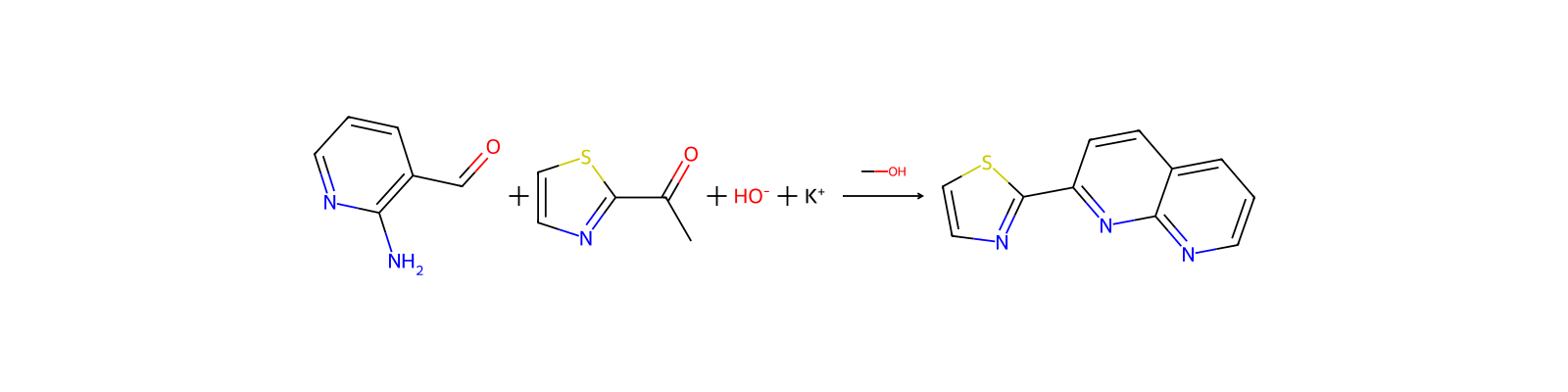
Uses2-Acetylthiazole can be used as a flavoring agent in food industries. It may be used as a food additive in the preparation of ′fragrant′ rice. It also was used in the preparation of triazolothiazoles, chiral alcohols and in aldol condensation reactions.
General Description2-Acetylthiazole is a volatile flavoring substance generally formed by the Maillard reaction between an amino acid and carbonyl compounds. It is reported to occur in canned sweet corn products, cooked pine mushroom, cooked asparagus and roasted beef.
Preparation methods
Preparation2-Acetylthiazole is formed by oxidation of the corresponding carbinol using dichromate.
Upstream & downstream products
Upstream raw materials
Downstream products
Additional notes
DefinitionChEBI: 2-Acetylthiazole is an aromatic ketone.
Related reactions
25 records


Compound notes
Loading…