HomeMCPWorkbenchSkills
HomeWorkbenchNotificationsMe
llms.txt · MCP GuidePrivacy Policy · Terms of Service · Supportv1.8.3
  1. Home
  2. /Compound

Bis(2-chloroethyl)amine hydrochloride

HCID 522769
New reaction
Print
Basic informationNames & identifiersPropertiesSafety & regulationChemistry & industryRelated reactionsCompound notes
Substructure searchFind similar structures

Basic information

CAS
821-48-7
Standard SMILES
Cl.ClCCNCCCl
InChIKey
YMDZDFSUDFLGMX-UHFFFAOYSA-N
Molecular formula
C4H9Cl2N.ClH
Average molar mass
178.48 g/mol
Monoisotopic mass
176.98788236

Names & identifiers

Preferred name
Bis(2-chloroethyl)amine hydrochloride
IUPAC
2-chloro-N-(2-chloroethyl)ethanamine;hydrochloride
English name
Bis(2-chloroethyl)amine hydrochloride
Molecular formula
C4H10Cl3N
Molecular weight
178.49

Names & synonyms

Bis(2-chloroethyl)amine hydrochloride821-48-7Bis(2-chloroethyl)ammonium chloridenor-Lost hydrochloridNor-HN2 hydrochlorideDTXSID3052567di(2-chloroethyl)amine hydrochlorideDi-2-chloroethylamine hydrochlorideBi(2-chloroethyl)amine hydrochlorideNSC 10873NSC-108731,5-Dichloro-3-azapentane hydrochloride
Show more names
CyclophosphaMide Related CoMpound AAdomiparinBIS (2-CHLOROETHYL) AMINE HCLis(2-chloroethyl)aMine hydrochloride2-Chloro-N-(2-chloroethyl)ethylamine hydrochloridenc26sk555tl161leo72a
LEO-72ABis(.beta.-chloroethyl)amine hydrochlorideDTXCID4031140LY407360DGNor-lost hydrochlorid [German]Bis(beta-chloroethyl)amine hydrochlorideEthanamine, 2-chloro-N-(2-chloroethyl)-, hydrochloride (1:1)EINECS 212-479-5

Database identifiers

CAS
821-48-7
PubChem CID
522769
DTXSID
DTXSID3052567
UNII
LY407360DG
EC Number
212-479-5

Properties

Computed structural properties

Topological polar surface area
12 Ų
Hydrogen bond donors
2
Hydrogen bond acceptors
1
Rotatable bonds
4
Heavy atoms
8
Formal charge
0
Complexity
28.9

Experimental & physicochemical properties

Chemical ClassesNitrogen Compounds -> Halogenated Aliphatic Amines
Physical DescriptionOff-white powder with an irritating odor; [Alfa Aesar MSDS]

Physicochemical properties

Melting point
212 · 212-214 °C(lit.)
storage temp.
30 °C · Store below +30°C.
solubility
100 g/l · >100g/l
form
Crystalline Powder
color
White to beige
Water Solubility
SOLUBLE
Sensitive
Hygroscopic
BRN
3550356 · 3550356
InChI
InChI=1S/C4H9Cl2N.ClH/c5-1-3-7-4-2-6;/h7H,1-4H2;1H
InChIKey
YMDZDFSUDFLGMX-UHFFFAOYSA-N
SMILES
N(CCCl)CCCl.Cl
CAS DataBase Reference

Safety & regulation

Safety information is for reference only and does not replace the supplier’s Safety Data Sheet (SDS), applicable regulations, or professional assessment.

GHS classification

GHS Classification · 4 items

Danger

H290 (16.2%): May be corrosive to metals [Warning Corrosive to Metals]

P203, P234, P260, P261, P264, P264+P265, P270, P271, P280, P301+P317, P301+P330+P331, P302+P352, P302+P361+P354, P304+P340, P305+P351+P338, P305+P354+P338, P316, P318, P319, P321, P330, P332+P317, P337+P317, P362+P364, P363, P390, P403+P233, P405, P406, and P501 (click each P-code to see the statement)

Aggregated GHS information provided per 68 reports by companies from 16 notifications to the ECHA C&L Inventory. Each notification may be associated with multiple companies.

Hazard information

Regulatory Information · 3 items

Chemical: Ethanamine, 2-chloro-N-(2-chloroethyl)-, hydrochloride

Status: Active Update: 07-03-2019 https://echa.europa.eu/registration-dossier/-/registered-dossier/19951

Bis(2-chloroethyl)ammonium chloride: Does not have an individual approval but may be used under an appropriate group standard

Hazards Summary · 1 item

Causes burns and lachrymation; Inhalation may cause corrosive injuries to upper respiratory tract and lungs; May cause skin sensitization; Harmful by ingestion; Toxic by inhalation; Risk of irreversible adverse health effects; Suspected mutagen; Reproductive effects observed in experimental animals; [Alfa Aesar MSDS] See 1-Chloro-2-(diethylamine)ethane hydrochloride, N,N-Dimethylaminoethyl chloride hydrochloride, and 2-Chloro-N,N-dimethyl-1-propanamine hydrochloride. Search for (821-48-7[EC/RN Number]) AND (allergic OR dermatitis OR sensitizer OR sensitization): no results; [PubMed]

Hazard Classes and CategoriesMet. Corr. 1 (16.2%)

Toxicology

Chemistry & industry

Uses & manufacturing

General Manufacturing InformationEthanamine, 2-chloro-N-(2-chloroethyl)-, hydrochloride (1:1): ACTIVE

Applications

UsesA cytotoxic metabolite of Cyclophosphamide; a deuterated analog of Nor-nitrogen mustard.

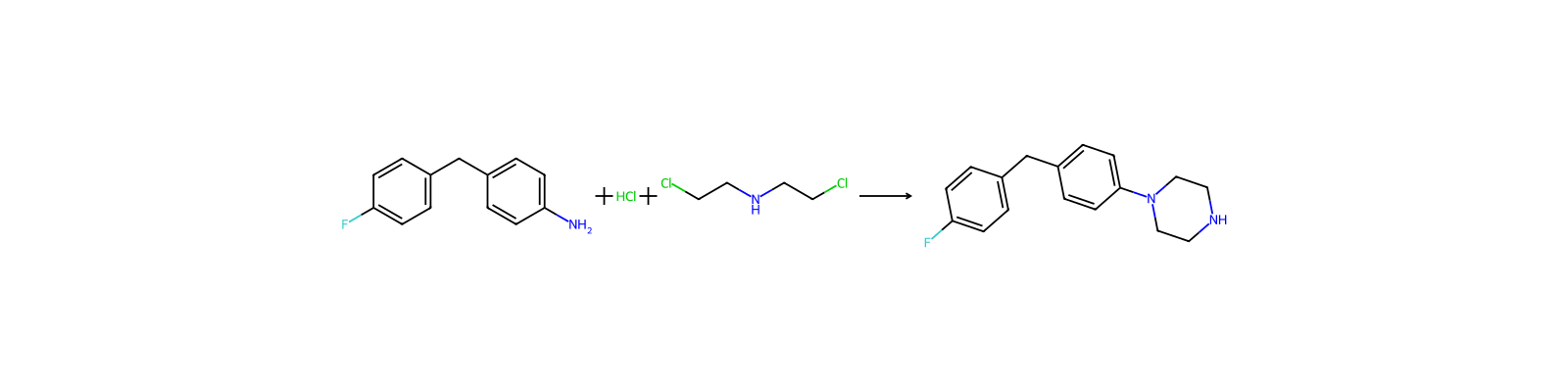
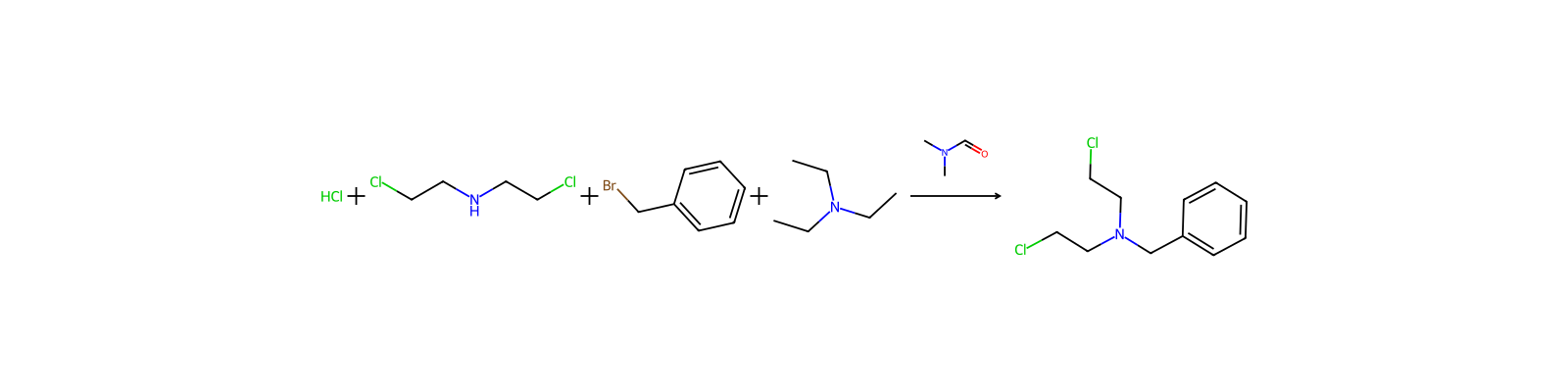
UsesBis(2-chloroethyl)amine hydrochloride is used as an intermediate in chemicals synthesis and building block for piperazine derivatives.

Upstream & downstream products

Upstream raw materials

Diethanolamine1,2-DichloroethaneThionyl chloride

Downstream products

1-(3-Methylphenyl)piperazineN-(3-Trifluoromethylphenyl)piperazine1-Amino-4-(2-hydroxyethyl)piperazine1-(4-Methoxyphenyl)piperazine dihydrochloride1-Cyclopropylpiperazine1-(3-Nitrophenyl)-piperazine3-(4-methylpiperazin-1-yl)phenylboronic acid1-(2-Methoxyphenyl)piperazine hydrobromide

Related reactions

187 records
New reaction record
HRID 952 reaction equation
HRID 952As reactant
HRID 12503 reaction equation
HRID 12503As reactant
HRID 29862 reaction equation
HRID 29862As reactant
HRID 32134 reaction equation
HRID 32134As reactant
HRID 32143 reaction equation
HRID 32143As reactant
HRID 32153 reaction equation
HRID 32153As reactant
HRID 32155 reaction equation
HRID 32155As reactant
HRID 32156 reaction equation
HRID 32156As reactant
PreviousPage 1 of 24

Compound notes

On this pageBasic informationNames & identifiersPropertiesSafety & regulationChemistry & industryRelated reactionsCompound notes
821 · 821-48-7(CAS DataBase Reference)
FDA UNII
407360 DG · LY407360DG
NIST Chemistry Reference
2 · 2,2'-Dichlorodiethylamine hydrochloride(821-48-7)
EPA Substance Registry System
2 · Ethanamine, 2-chloro-N-(2-chloroethyl)-, hydrochloride (821-48-7)
UNSPSC Code
41116107 · 41116107
NACRES
24 · NA.24
Symbol(GHS)
5 · GHS05,GHS07
Signal word
Danger
Hazard statements
290 · H290-H302-H314
Precautionary statements
234 · P234-P260-P280-P301+P312-P303+P361+P353-P305+P351+P338
PPE
95 · dust mask type N95 (US), Eyeshields, Gloves
Hazard Codes
Xi,T,C
Risk Statements
36 · 36/37/38-36-34
Safety Statements
26 · 26-45-36/37/39-27
RIDADR
2811 · 2811
WGK Germany
3 · 3
RTECS
1225000 · IA1225000
Hazard Note
Irritant/Toxic
TSCA
TSCA listed
HazardClass
8 · 8
PackingGroup
III
HS Code
29211980 · 29211980
Storage Class
8 A · 8A - Combustible corrosive hazardous materials
Hazard Classifications
4 OralEye · Acute Tox. 4 OralEye Dam. 1Met. Corr. 1Skin Corr. 1B
Toxicity
50 orally · LD50 orally in Rabbit: 1150 mg/kg
REACH Registrations
Active
Adverse EffectsDermatotoxin - Skin burns.
Toxicity DataLCLo (mouse) = 1,000 mg/m3/10min

Safety data

PPE
dust mask type N95 (US), Eyeshields, Gloves
wgk
3
tsca
TSCA listed
rtecs
IA1225000
ridadr
2811
hs_code
29211980
Toxicity
LD50 orally in Rabbit: 1150 mg/kg
risk_code
36/37/38-36-34
Signal word
Danger
Symbol(GHS)
GHS05,GHS07
hazard_code
Xi,T,C
hazard_note
Irritant/Toxic
safety_code
26-45-36/37/39-27
hazard_class
8
Storage Class
8A - Combustible corrosive hazardous materials
packing_group
III
Hazard statements
H290-H302-H314
REACH Registrations
Active
Hazard Classifications
Acute Tox. 4 OralEye Dam. 1Met. Corr. 1Skin Corr. 1B
Precautionary statements
P234-P260-P280-P301+P312-P303+P361+P353-P305+P351+P338
1-(4-Methoxyphenyl)piperazine
3-(4-Phenyl-piperazin-1-yl)-propionic acid
1-(4-Methylphenyl)piperazine
1-(3-Chlorophenyl)piperazine dihydrochloride
Thiomorpholine
1-(2-Ethoxyphenyl)piperazine hydrochloride
4-(4-Methylpiperazin-1-yl)phenylboronic Acid
1-(4-Chlorophenyl)piperazine
4-Cyano-4-phenylpiperidine hydrochloride
1-(2-Methylphenyl)piperazine
1-(1-Phenylethyl)piperazine
(4-Phenyl-piperazin-1-yl)-acetic acid
Tert-butyl bis(2-chloroethyl)carbamate
1-(3-Fluorophenyl)piperazine
1-[2-(Morpholin-4-yl)-ethyl]-piperazine
N-(2-Methylphenyl)piperazine hydrochloride
1-(3,4-Dichlorophenyl)piperazine
1-(2-Fluorophenyl)piperazine hydrochloride
1-(3-Methoxyphenyl)piperazine
1-(1-Naphthyl)piperazine hydrochloride
1-(3,5-Dichlorophenyl)piperazine