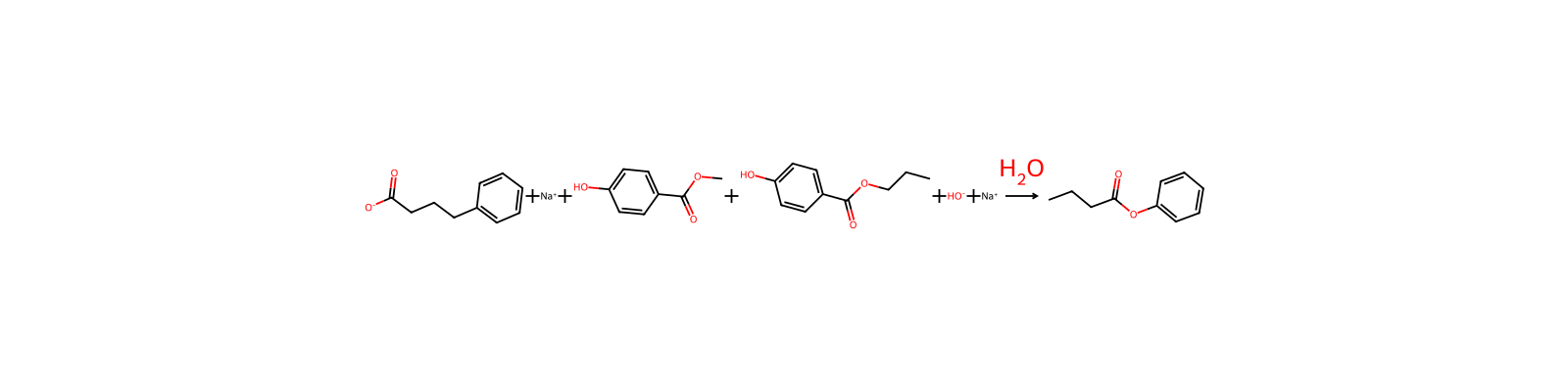
Sodium Phenylbutyrate
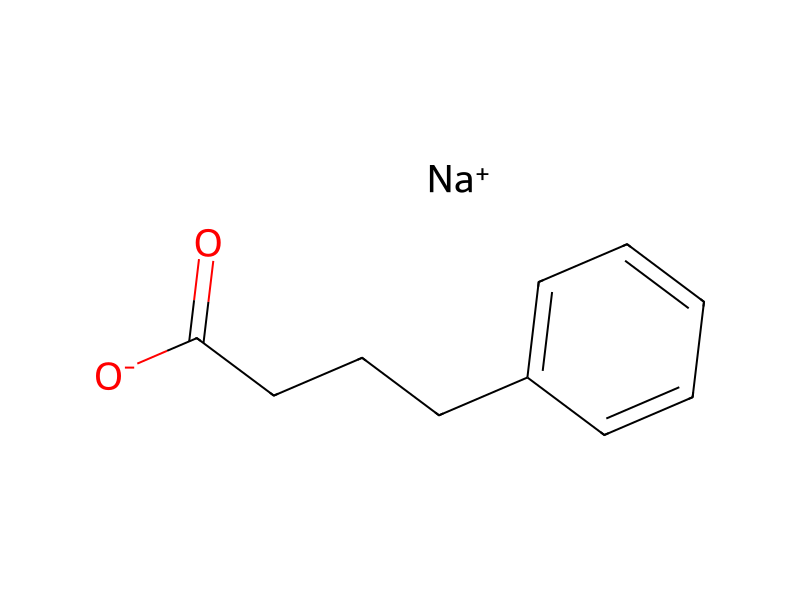
Basic information
- CAS
1716-12-7- Standard SMILES
O=C([O-])CCCc1ccccc1.[Na+]- InChIKey
VPZRWNZGLKXFOE-UHFFFAOYSA-M- Molecular formula
- C10H11NaO2
- Average molar mass
- 186.18 g/mol
- Monoisotopic mass
- 186.06567387
Overview
Sodium phenylbutyrate is the organic sodium salt of 4-phenylbutyric acid. A prodrug for phenylacetate, it is used to treat urea cycle disorders. It has a role as a geroprotector, a prodrug, an EC 3.5.1.98 (histone deacetylase) inhibitor, a neuroprotective agent and an orphan drug. It contains a 4-phenylbutyrate.
Names & identifiers
- Preferred name
- Sodium Phenylbutyrate
- IUPAC
- sodium 4-phenylbutanoate
- English name
- Sodium 4-phenylbutyrate
- Molecular formula
- C10H13NaO2
- Molecular weight
- 188.2
Names & synonyms
Sodium 4-phenylbutyrateSODIUM PHENYLBUTYRATE1716-12-7BuphenylTriButyrateBenzenebutanoic acid, sodium saltAmmonapsPheburane4-phenylbutyric acid, sodium saltOLPRUVADTXSID7040948NT6K61736T
Show more names
PBNA4PBA4-PHENYLBUTYRATENsc6578024PBA SODIUM4-PHENYLBUTYRATE, NASodium 4-Phenylbutyr
ACER-001NSC-657802DTXCID5020948CHEBI:75316RELYVRIO COMPONENT SODIUM PHENYLBUTYRATEAMX0035 COMPONENT SODIUM PHENYLBUTYRATEAmbutyrateRefChem:56033
Database identifiers
- CAS
1716-12-7- PubChem CID
- 5258
- DTXSID
DTXSID7040948- ChEMBL
CHEMBL1333672、CHEMBL1746- ChEBI
CHEBI:75316- UNII
- NT6K61736T
- EC Number
- 605-612-7
- Nikkaji
- J783.828J
Properties
Computed structural properties
- Topological polar surface area
- 40.1 Ų
- Hydrogen bond donors
- 0
- Hydrogen bond acceptors
- 2
- Rotatable bonds
- 4
- Heavy atoms
- 13
- Formal charge
- 0
- Complexity
- 142
Experimental & physicochemical properties
Human Drugs
Breast Feeding; Lactation; Milk, Human; Urea Cycle Disorders
FDA approved drugs -> Active ingredient
EMA approved medicines: Human medicine
EMA approved medicines: Human medicine
FDA approved drugs -> Active ingredient
Physicochemical properties
- Melting point
- 224 · 224-226°C (dec.)
- storage temp.
- room temp
- solubility
- 2 O: · H2O: ≥5mg/mL
- form
- White to slightly yellow solid
- color
- white to beige
- Water Solubility
- 10 mg/mL · water: 10mg/mL
- Stability
- 2 years · Stable for 2 years from date of purchase as supplied. Solutions in DMSO or distilled water may be stored at -20°C for up to 3 months.
- InChI
- InChI=1S/C10H12O2.Na.H/c11-10(12)8-4-7-9-5-2-1-3-6-9;;/h1-3,5-6H,4,7-8H2,(H,11,12);;
- InChIKey
- OBKXEAXTFZPCHS-UHFFFAOYSA-N
- SMILES
- C(C1C=CC=CC=1)CCC(=O)O.[NaH]
Safety & regulation
Safety information is for reference only and does not replace the supplier’s Safety Data Sheet (SDS), applicable regulations, or professional assessment.
GHS classification
GHS Classification
This chemical does not meet GHS hazard criteria for 2.3% (1 of 44) of reports.
Warning
H319 (93.2%): Causes serious eye irritation [Warning Serious eye damage/eye irritation]
P264+P265, P280, P305+P351+P338, and P337+P317 (click each P-code to see the statement)
Aggregated GHS information provided per 44 reports by companies from 6 notifications to the ECHA C&L Inventory.
Hazard information
Hazard Classes and CategoriesEye Irrit. 2 (93.2%)
Toxicology
Hepatotoxicity
While the urea cycle disorders are caused by deficiencies of hepatic enzymes responsible for the elimination of nitrogen, patients generally present with hyperammonemia without other features or biochemical evidence of hepatic injury. Thus, serum aminotransferase, alkaline phosphatase and bilirubin levels are generally normal or only mildly elevated. Newborns presenting with hyperammonemia may have hepatomegaly but other, non-urea cycle, liver function is normal as is hepatic histology. Phenylbutyrate can help to lower ammonia levels acutely and manage to keep them in the normal or near normal range, but generally does not affect other liver functions. In open label studies, a small proportion of patients (particularly with ornithine transcarbamylase [OTC] deficiency) have had ALT or AST elevations, but these have generally been attributed to the underlying condition or its complications. Phenylbutyrate has not been linked to instances of clinically apparent liver injury with jaundice.
Drug Induced Liver Injury
Drug Induced Liver Injury Rank (DILIrank 2.0)
Sodium phenylbutyrate
Ambiguous-DILI-concern
Chemistry & industry
Pharmacology
ATC Code
A - Alimentary tract and metabolism
QA - Alimentary tract and metabolism
FDA Pharmacological Classification
SODIUM PHENYLBUTYRATE
Nitrogen Binding Agent [EPC]; Ammonium Ion Binding Activity [MoA]
SODIUM PHENYLBUTYRATE TABLETS, 500 MG
Ammonium Ion Binding Activity [MoA]; Nitrogen Binding Agent [EPC]
MeSH Pharmacological ClassificationSubstances that inhibit or prevent the proliferation of NEOPLASMS.
Applications
DescriptionSodium 4-phenylbutyrate (4-PBA sodium) is an inhibitor of HDAC and endoplasmic reticulum (ER) stress, used in cancer and infection research.Sodium phenylbutyrate stimulates urinary nitrogen excretion. It is a prodrug, which undergoes β-oxidation to phenylacetate. Sodium phenylbutyrate is used to treat urea cycle disorder. It might be associated with menstrual dysfunction, amenorrhea and painful mucositis of the esophagus and stomach.Sodium phenylbutyrate has been used as an endoplasmic reticulum (ER) stress inhibitor to study the role of ER stress in the expression of betatrophin.
DescriptionSodium 4-phenylbutyrate is a chemical chaperone that has been shown to rescue the trafficking of misfolded proteins. It also weakly blocks histone deacetylase activity (IC50 = 0.4 mM), which results in cell cycle arrest, differentiation, and/or apoptosis of various tumors. Formulations containing sodium 4-phenylbutyrate have been used for the treatment of urea cycle disorders.
UsesACE inhibitor, antihypertensive, Inhibitor of histone deacetylase (HDAC). Anti-neoplastic agent and transcriptional regulator. Also acts as an inducer of tumor cytostasis and differentiation.Sodium 4-phenylbutyrate is a chemical chaperone that has been shown to rescue the trafficking of misfolded proteins.It also weakly blocks histone deacetylase activity (IC50 = 0.4 mM), which results in cell cycle arrest, differentiation, and/or apoptosis of various tumors.Formulations containing sodium 4-phenylbutyrate have been used for the treatment of urea cycle disorders.
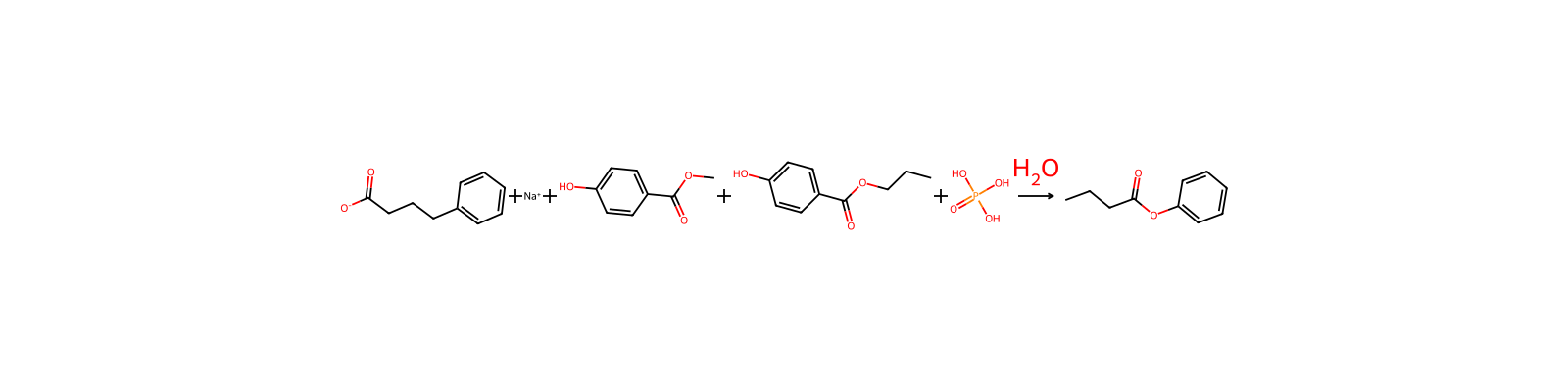
Related reactions
5 records



Compound notes
Loading…