

Basic information
- Standard SMILES
CCCCC/C=C\C[C@@H](O)/C=C/C=C/C=C\[C@@H](O)CCCC(=O)O- InChIKey
VNYSSYRCGWBHLG-AMOLWHMGSA-N- Molecular formula
- C20H32O4
- Average molar mass
- 336.5 g/mol
- Monoisotopic mass
- 336.2300595
Overview
Leukotriene B4 is a leukotriene composed of (6Z,8E,10E,14Z)-icosatetraenoic acid having (5S)- and (12R)-hydroxy substituents. It is a lipid mediator of inflammation that is generated from arachidonic acid via the 5-lipoxygenase pathway. It has a role as a vasoconstrictor agent, a mouse metabolite, a plant metabolite and a human metabolite. It is a hydroxy polyunsaturated fatty acid, a long-chain fatty acid, a leukotriene and a dihydroxy monocarboxylic acid. It is functionally related to an icosa-6,8,10,14-tetraenoic acid. It is a conjugate acid of a leukotriene B4(1-).
Names & identifiers
- Preferred name
- Leukotriene B4
- IUPAC
- (5S,6Z,8E,10E,12R,14Z)-5,12-dihydroxyicosa-6,8,10,14-tetraenoic acid
- English name
- Leukotriene B4
- Molecular formula
- C20H32O4
- Molecular weight
- 336.47
Names & synonyms
LEUKOTRIENE B4LTB471160-24-25,12-Hete(5S,6Z,8E,10E,12R,14Z)-5,12-dihydroxyicosa-6,8,10,14-tetraenoic acidLEUKOTRIENE_B41HGW4DR56D5S,12R-dihydroxy-6Z,8E,10E,14Z-eicosatetraenoic acid5S,12R-diHETEDTXSID4037162CHEBI:15647(6z,8e,10e,14z)-(5s,12r)-5,12-dihydroxyicosa-6,8,10,14-tetraenoate
Show more names
Leukotriene B?LTB4 (Leukotriene B4)VNYSSYRCGWBHLG-AMOLWHMGSA-NLeukotriene B4 MaxSpecStandardleukotriene B4 ethanol solutionLeukotriene B4 Lipid Maps MS StandardLeukotriene B - CAS 71160-24-2 - Calbiochem
Leukotriene B5,12 diHETELeukotriene B 4Leukotriene B-4B-4, LeukotrieneRefChem:1531495,12 HETEDTXCID401765891
Database identifiers
- CAS
71160-24-2- PubChem CID
- 5280492
- DTXSID
DTXSID4037162- ChEMBL
CHEMBL65061- ChEBI
CHEBI:15647- UNII
- 1HGW4DR56D
- Nikkaji
- J240.041C
Properties
Computed structural properties
- XLogP
- 4.1
- Topological polar surface area
- 77.8 Ų
- Hydrogen bond donors
- 3
- Hydrogen bond acceptors
- 4
- Rotatable bonds
- 14
- Heavy atoms
- 24
- Formal charge
- 0
- Complexity
- 421
Experimental & physicochemical properties
Chemical ClassesOther Uses -> Biochemical Research
DrugsPharmaceuticals -> Listed in ZINC15
LipidsFatty Acyls [FA] -> Eicosanoids [FA03] -> Leukotrienes [FA0302]
Physical Description
Colorless liquid; [Fisher Scientific MSDS]
Solid
Collision Cross Section
185.3 Ų [M-H]- [CCS Type: DT; Buffer gas: N2; Ionization: ESI-; Calculation: Single Field; Dataset: Oxylipins]
187.44 Ų [M-H]- [CCS Type: DT; Method: stepped-field]
186.8 Ų [M-H]-
Physicochemical properties
- Boiling point
- 536.4 · 536.4±50.0 °C(Predicted)
- Density
- 1.04 · 1.040±0.06 g/cm3(Predicted)
- Flash point
- 14 °C · 14 °C
- storage temp.
- -20 °C · -20°C
- solubility
- Soluble in ethanol (supplied pre-dissolved in anhydrous ethanol, 50μg/ml)
- form
- Clear oil
- pka
- 4.66 · 4.66±0.10(Predicted)
- color
- Colorless to light yellow
- InChIKey
- VNYSSYRCGWBHLG-AMOLWHMGSA-N
- SMILES
- CCCCC\C=C/C[C@@H](O)\C=C\C=C\C=C/[C@@H](O)CCCC(O)=O
- CAS DataBase Reference
- 71160 · 71160-24-2(CAS DataBase Reference)
- FDA UNII
- 1 HGW4DR56D · 1HGW4DR56D
- UNSPSC Code
- 12352211 · 12352211
- NACRES
- 77 · NA.77
- Symbol(GHS)
- 2 · GHS02,GHS07
- Signal word
- Danger
- Hazard statements
- 225 · H225-H319
- Precautionary statements
- 210 · P210-P233-P240-P241-P242-P305+P351+P338
- Hazard Codes
- F
- Risk Statements
- 11 · 11
- Safety Statements
- 7 · 7-16
- RIDADR
- 1170 · UN 1170 3/PG 2
- WGK Germany
- 1 · 1
- Storage Class
- 3 · 3 - Flammable liquids
- Hazard Classifications
- 2 Flam · Eye Irrit. 2Flam. Liq. 2
Safety & regulation
Hazard information
Hazards SummaryAn irritant; Inhalation of high concentrations may cause bronchospasm and delayed pulmonary edema; [Fisher Scientific MSDS]
Toxicology
Adverse EffectsToxic Pneumonitis - Inflammation of the lungs induced by inhalation of metal fumes or toxic gases and vapors.
Safety data
- wgk
- 1
- ridadr
- UN 1170 3/PG 2
- risk_code
- 11
- Signal word
- Danger
- Symbol(GHS)
- GHS02,GHS07
- hazard_code
- F
- safety_code
- 7-16
- Storage Class
- 3 - Flammable liquids
- Hazard statements
- H225-H319
- Hazard Classifications
- Eye Irrit. 2Flam. Liq. 2
- Precautionary statements
- P210-P233-P240-P241-P242-P305+P351+P338
Chemistry & industry
Pharmacology
Tissue LocationsEpidermis
Cellular LocationsCytoplasm
Metabolite PathwaysAcetaminophen Action Pathway
Uses & manufacturing
Uses
Leukotrienes are metabolites of arachidonic acid that are chemically related to prostaglandins and thromboxanes; They are potent bronchoconstrictors that serve an important role in immediate hypersensitivity reactions; [Merck Index] The major metabolite in neutrophil polymorphonuclear leukocytes. It stimulates polymorphonuclear cell function (degranulation, formation of oxygen-centered free radicals, arachidonic acid release, and metabolism). (From Dictionary of Prostaglandins and Related Compounds, 1990) [ChemIDplus]
Applications
DescriptionLeukotriene B4 (LTB4) is a dihydroxy fatty acid derived from arachidonic acid through the 5-LO pathway. It promotes a number of leukocyte functions including aggregation, stimulation of ion fluxes, enhancement of lysosomal enzyme release, superoxide anion production, chemotaxis, and chemokinesis. In subnanomolar ranges (3.9 x 10⁻¹⁰ M), LTB4 causes chemotaxis and chemokinesis in human polymorphonuclear leukocytes. At higher concentrations, (1.0 x 10⁻⁷ M), LTB4 leads to neutrophil aggregation and degranulation as well as superoxide anion production. LTB4 MaxSpec® standard is a quantitative grade standard of LTB4 that has been prepared specifically for mass spectrometry and related applications where quantitative reproducibility is required. The solution has been prepared gravimetrically and is supplied in a deactivated glass ampule sealed under argon. The concentration was verified by comparison to an independently prepared calibration standard. This LTB4 MaxSpec® standard is guaranteed to meet identity, purity, stability, and concentration specifications and is provided with a batch-specific certificate of analysis. Ongoing stability testing is performed to ensure the concentration remains accurate throughout the shelf life of the product. Note: The amount of solution added to the vial is in excess of the listed amount. Therefore, it is necessary to accurately measure volumes for preparation of calibration standards. Follow recommended storage and handling conditions to maintain product quality.
UsesLTB4 (Leukotriene B4) is a potent chemokine with roles in inflammation, immunology, the nervous system, brain and skin.
Suppliers32 total
陕西缔都医药有限责任公司029-81124775 17791530730 · [email protected]
湖北永阔科技有限公司027-59223108 15972152991 · [email protected]
上海阿拉丁生化科技股份有限公司400-6206333 13167063860 · [email protected]
Career Henan Chemica Co+86-0371-86658258 +86-13203830695 · [email protected]
成都超九八生物科技有限公司13348960310 13348960310 · [email protected]
上海金试生化科技有限公司18601717983 18601717983 · [email protected]
上海钰博生物科技有限公司021-60514606 18321282235 · [email protected]
武汉易泰科技有限公司上海分公司18930552037 · [email protected]
安耐吉化学&3A(安徽泽升科技有限公司)021-58432009 400-005-6266 · [email protected]
江苏艾康生物医药研发有限公司025-5885952 15955137747 · [email protected]
United Life Science020-82099279 18988941402 · [email protected]
怀化市冰峰化工有限公司0745-2866851 17711757908 · [email protected]
BOC Sciences1-631-485-4226; 16314854226 · [email protected]
上海心语生物科技有限公司13301728348 · [email protected]
天津普西唐生物医药科技有限公司010-60605840 · [email protected]
上海麦克林生化科技股份有限公司15221275939 15221275939 · [email protected]
Sigma-Aldrich西格玛奥德里奇(上海)贸易有限公司021-61415566 800-8193336 · [email protected]
上海陶术生物科技股份有限公司+1-781-999-5354; +1-00000000000 · [email protected]
上海波以尔化工有限公司021-50182298 021-50180596 · [email protected]
EMMX Biotechnology LLC888-539-0666 · [email protected]
上海一飞生物科技有限公司021-65675885 18964387627 · [email protected]
上海颖心实验室设备有限公司021-021-59178156 15300768757 · [email protected]
厦门盈融达化工有限公司+86-0592-6210733 · [email protected]
Aladdin Scientific[email protected]
TargetMol中国(陶术生物)4008200310 15002144251 · [email protected]
武汉伊莱瑞特生物科技股份有限公司15608650971 · [email protected]
ChemeGen 中国18818260767 · [email protected]
北京百灵威科技有限公司18210857532 18210857532 · [email protected]
上海陶术生物科技股份有限公司+1-781-999-5354 · [email protected]
上海雅吉生物科技有限公司021-34661275 15301693058 · [email protected]
上海鼓臣生物技术有限公司021-34675735 19147740836 · [email protected]
上海皓鸿生物医药科技有限公司400-8210725 4008210725 · [email protected]
Additional notes
DefinitionChEBI: A leukotriene composed of (6Z,8E,10E,14Z)-icosatetraenoic acid having (5S)- and (12R)-hydroxy substituents.
Related reactions
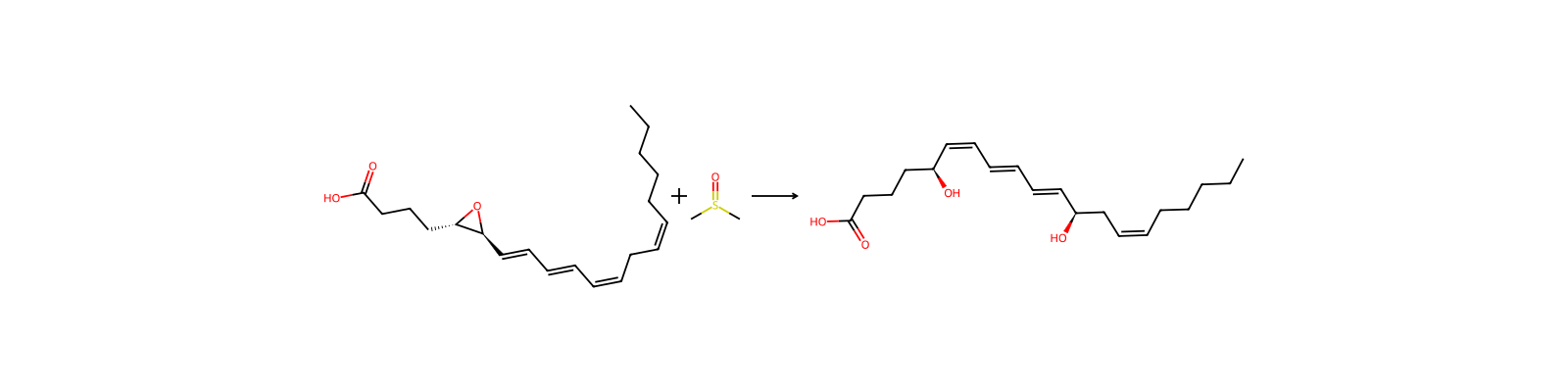
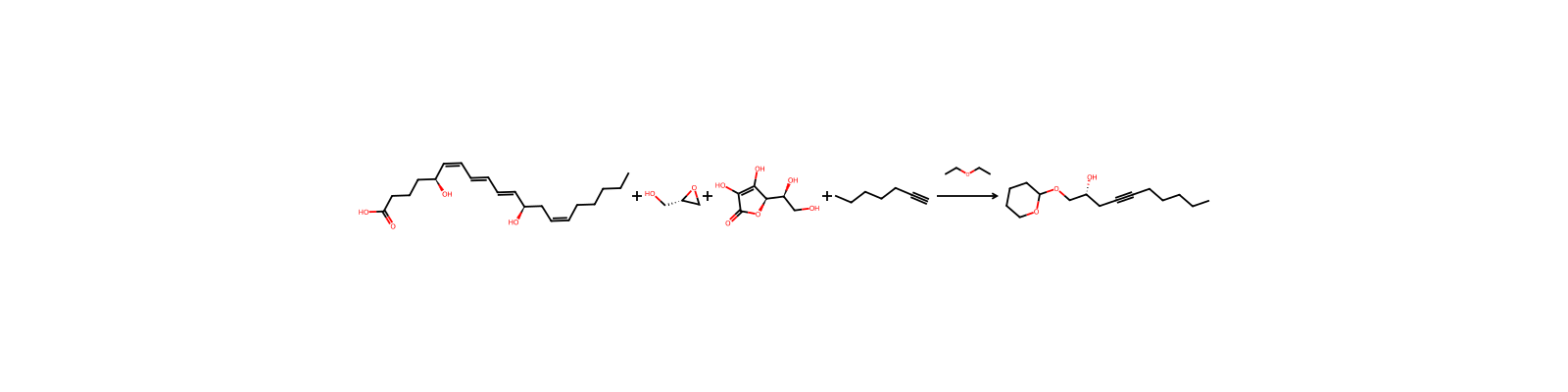
15 records


Linked notes
Loading…