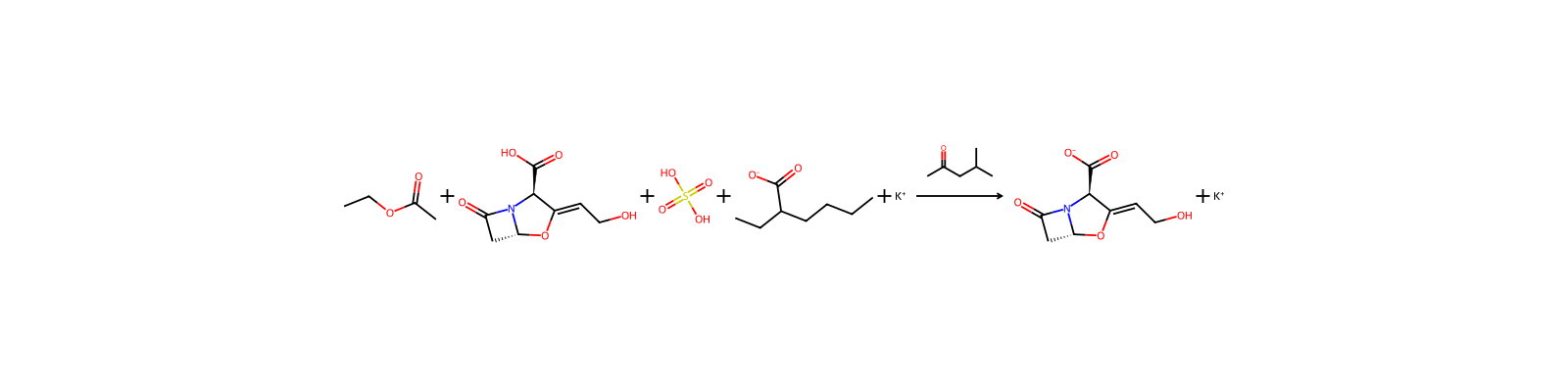
Clavulanic Acid
Completing data — refresh the page later to see the latest
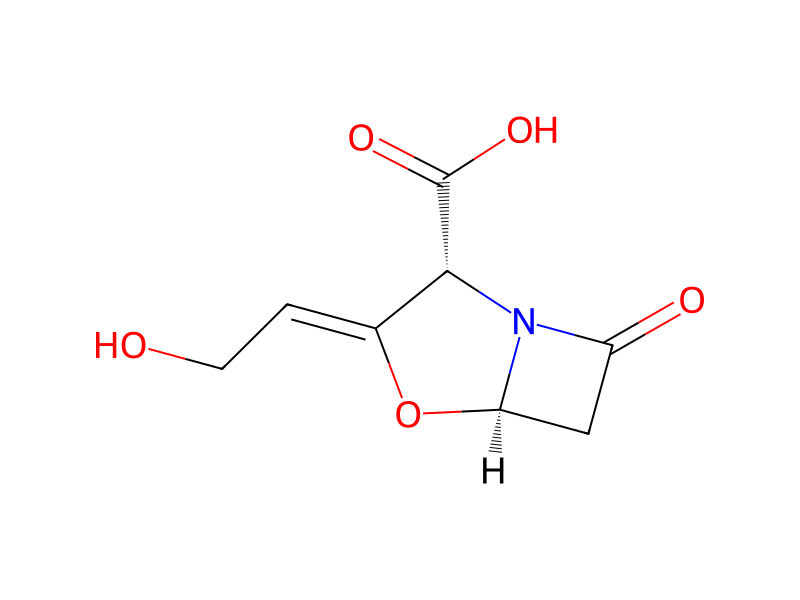
Basic information
- CAS
58001-44-8- Standard SMILES
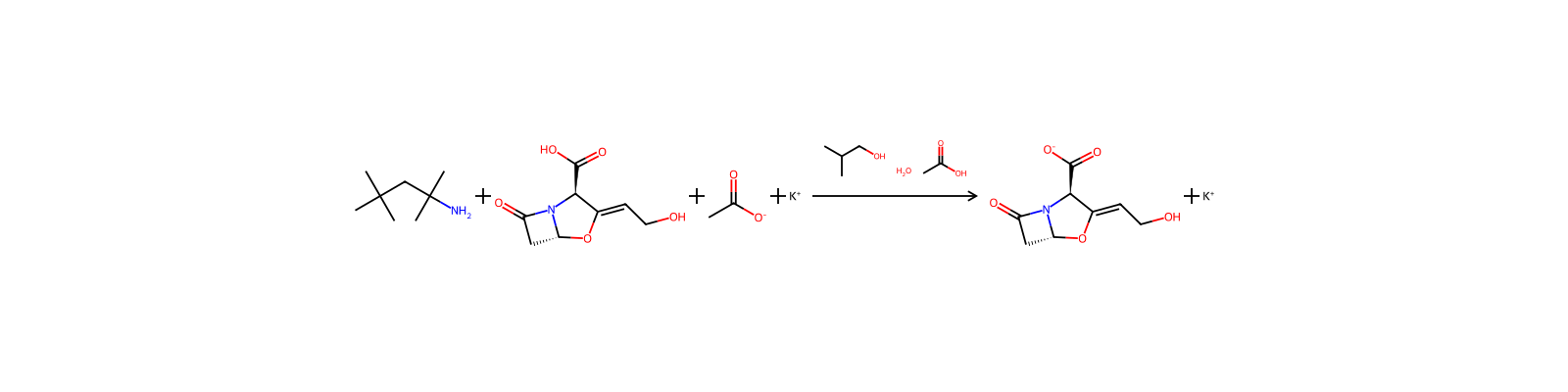
O=C(O)[C@H]1/C(=C/CO)O[C@@H]2CC(=O)N21- InChIKey
HZZVJAQRINQKSD-PBFISZAISA-N- Molecular formula
- C8H9NO5
- Average molar mass
- 199.16 g/mol
- Monoisotopic mass
- 199.04807239
Names & identifiers
- Preferred name
- Clavulanic Acid
- IUPAC
- (2R,3Z,5R)-3-(2-hydroxyethylidene)-7-oxo-4-oxa-1-azabicyclo[3.2.0]heptane-2-carboxylic acid
- English name
- Clavulanic acid
- Molecular formula
- C8H9NO5
- Molecular weight
- 199.16
Names & synonyms
CLAVULANIC ACID58001-44-8Acido clavulanicoAcide clavulaniqueAntibiotic MM 14151acidum clavulanicumClavulansaeure(2R,3Z,5R)-3-(2-hydroxyethylidene)-7-oxo-4-oxa-1-azabicyclo[3.2.0]heptane-2-carboxylic acidMM 14151BRL-14151SerdaxinBRL 14151
Show more names
Clavulanate acid3008-bC06662MM-14151antibioticmm14151Clavulanate MonomerClavulanic acid USP/EP/BP
rx-10100(Z)-(2R,5R)-3-(2-Hydroxyethylidene)-7-oxo-4-oxa-1-azabicyclo(3.2.0)heptane-2-carboxylic acidCHEBI:4894723521W1S24DTXSID2022830BRL14151(2R,3Z,5R)-3-(2-HYDROXYETHYLIDENE)-7-OXO-4-OXA-1-AZABICYCLO(3.2.0)HEPTANE-2-CARBOXYLIC ACIDClavulanate, Sodium
Database identifiers
- CAS
58001-44-8- PubChem CID
- 5280980
- DTXSID
DTXSID2022830- ChEMBL
CHEMBL777- ChEBI
CHEBI:48947- UNII
- 23521W1S24
- EC Number
- 261-069-2
- Nikkaji
- J14.640D
Properties
Computed structural propertiesFilling in
- XLogP
- -1.2
- Topological polar surface area
- 87.1 Ų
- Hydrogen bond donors
- 2
- Hydrogen bond acceptors
- 5
- Rotatable bonds
- 2
- Heavy atoms
- 14
- Formal charge
- 0
- Complexity
- 324
Experimental & physicochemical properties
LogP
-2.3
-1.5
LogS0.23
Solubility3.37e+02 g/L
Boiling Point545.8
Melting Point
117.5-118
117.5 - 118 °C
Physical DescriptionSolid
Dissociation Constants2.7
Physicochemical properties
- Boiling point
- 545.8 · 545.8±50.0 °C(Predicted)
- Density
- 1.65 · 1.65±0.1 g/cm3(Predicted)
- storage temp.
- 4 °C, · 4°C, protect from light, stored under nitrogen
- solubility
Safety & regulation
Safety information is for reference only and does not replace the supplier’s Safety Data Sheet (SDS), applicable regulations, or professional assessment.
Hazard information
Regulatory InformationClavulanic acid: Does not have an individual approval but may be used as a component in a product covered by a group standard. It is not approved for use as a chemical in its own right.
Toxicology
Adverse Effects
Clavulanic acid, when administered with amoxicillin, can cause some mild gastrointestinal adverse effects. These include vomiting, nausea, loose stools, and discomfort. Antibiotic-associated diarrhea due to amoxicillin-clavulanic acid treatment is the most common adverse effect. There is a higher incidence of diarrhea when clavulanic acid is added to amoxicillin compared to amoxicillin alone. Diarrhea is more common in those taking a high dose of the extended-release form of clavulanic acid and amoxicillin. Drug-induced pancreatitis from clavulanic acid and amoxicillin has occurred in a few cases.;When used for the treatment of urinary tract infections, this drug combination can cause candida vaginitis. Amoxicillin, in conjunction with clavulanic acid, is the most common cause of idiosyncratic drug-induced injury, specifically cholestatic liver injury, and this can lead to an increase in alkaline phosphatase and bilirubin levels. Since clavulanic acid administration is always in conjunction with amoxicillin, it is important to consider the adverse effects of amoxicillin alone as well. Hypersensitivity reactions to this drug combination, usually due to amoxicillin, can occur and result in dermatological reactions. Still, none of these allergic reactions are known to be due to clavulanic acid alone.
Toxicity Summary
The toxicity of clavulanic acid alone is unknown. However, the toxic effects of amoxicillin/clavulanate have been reported. The most common toxic effect is an idiosyncratic drug-induced hepatic injury which leads to a mixed hepatocellular-cholestatic injury, and it is more common in older men. Amoxicillin-clavulanic acid is the most common cause of idiosyncratic drug-induced hepatic injury. Risk factors for hepatic injury include sex, cytochrome P450, and genetic polymorphisms. These risk factors should be examined before administering amoxicillin/clavulanate to reduce the risk of toxic and adverse effects. In addition to early diagnosis and discontinuation of the drug, N-acetylcysteine can be administered to minimize damage. Additionally, steroids can be given to decrease the time it takes to return hepatic enzymes and bilirubin levels to normal. Liver failure is also a rare but possible toxic effect of amoxicillin-clavulanic acid.
Chemistry & industry
Pharmacology
Protein BindingThe plasma protein binding of amoxicillin is about 25%.
Pharmacodynamics
Clavulanic acid inactivates some beta-lactamase enzymes that are produced by bacteria, therefore preventing enzymatic destruction of amoxicillin. This helps to treat a variety of bacterial infections which would otherwise be resistant to antibiotics without the addition of clavulanic acid.
Mechanism of Action
Clavulanic acid contains a beta-lactam ring in its structure that binds in an irreversible fashion to beta-lactamases, preventing them from inactivating certain beta-lactam antibiotics, with efficacy in treating susceptible gram-positive and gram-negative infections.
Biological Half-LifeThe half-life of clavulanic acid is reported to be similar to amoxicillin, and last 45-90 minutes. A study of radiolabeled clavulanic acid administered to 4 healthy volunteers determined a half-life of 0.8 h.
Metabolism/Metabolites
Clavulanic acid is heavily metabolized to form the metabolites 2,5-dihydro-4-(2- hydroxyethyl)-5-oxo-1H-pyrrole-3-carboxylic acid and 1-amino-4-hydroxy-butan-2-one. The first metabolite was found to account for 15.6% of the dose while the second metabolite was reported to account for 8.8% of the dose in one pharmacokinetic study.
FDA Pharmacological Classification
23521W1S24
CLAVULANIC ACID
Established Pharmacologic Class [EPC] - beta Lactamase Inhibitor
Mechanisms of Action [MoA] - beta Lactamase Inhibitors
Clavulanic acid is a beta Lactamase Inhibitor. The mechanism of action of clavulanic acid is as a beta Lactamase Inhibitor.
MeSH Pharmacological ClassificationEndogenous substances and drugs that inhibit or block the activity of BETA-LACTAMASES.
Absorption, Distribution and Excretion
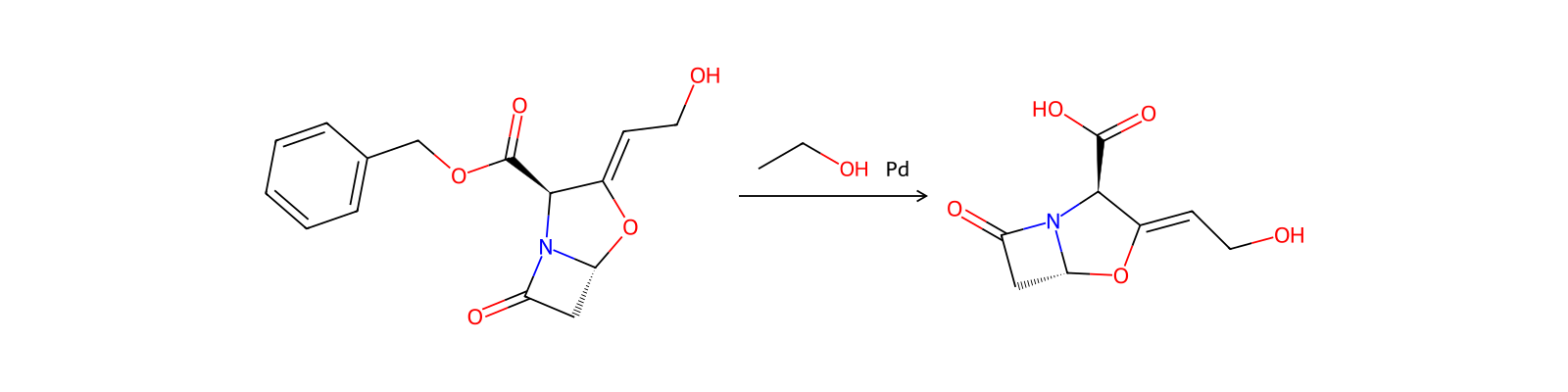
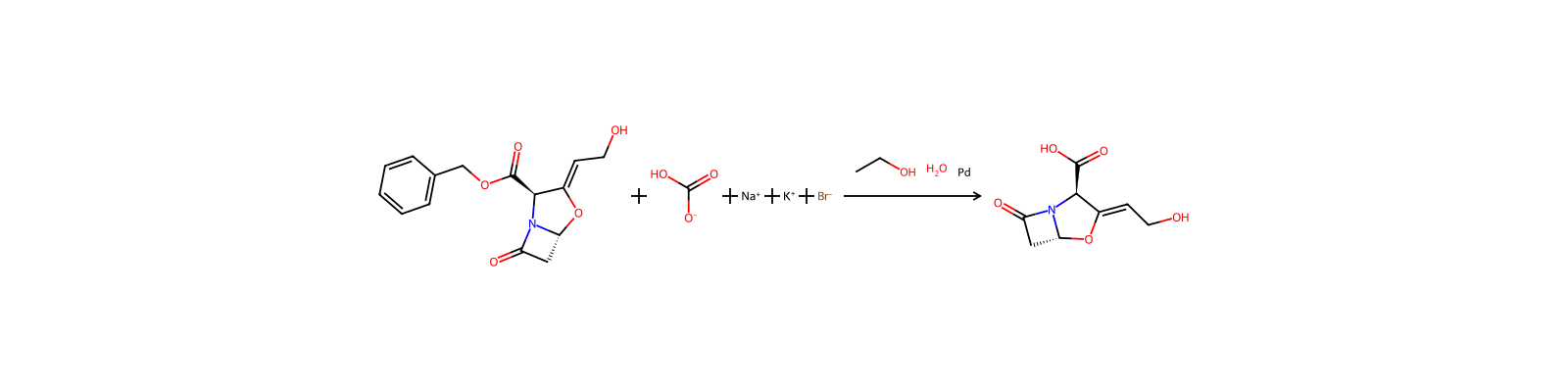
Related reactions
68 records




Compound notes
Loading…