HomeMCPWorkbenchSkills
HomeWorkbenchNotificationsMe
llms.txt · MCP GuidePrivacy Policy · Terms of Service · Supportv1.8.3
  1. Home
  2. /Compound

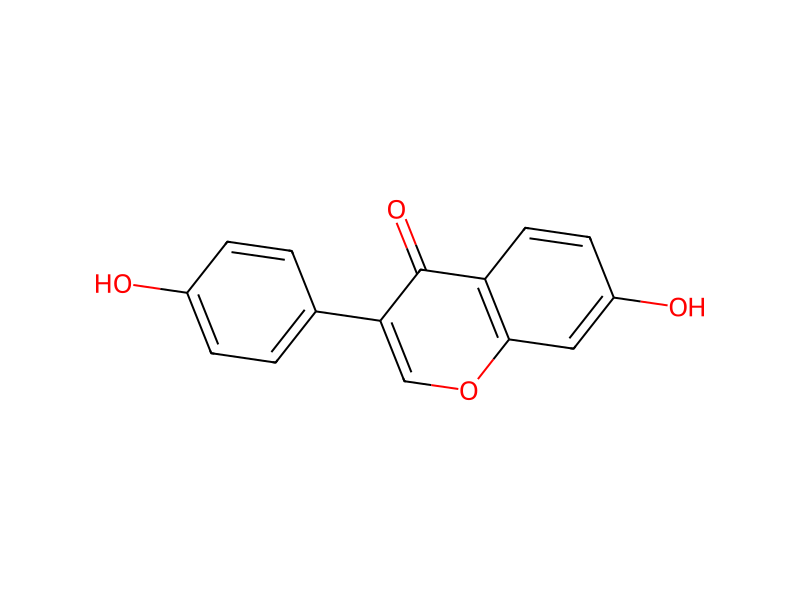
Daidzein

HCID 5281708
New reaction
Print
Basic informationOverviewNames & identifiersPropertiesSafety & regulationChemistry & industryRelated reactionsCompound notes
Substructure searchFind similar structures

Basic information

CAS
486-66-8
Standard SMILES
O=c1c(-c2ccc(O)cc2)coc2cc(O)ccc12
InChIKey
ZQSIJRDFPHDXIC-UHFFFAOYSA-N
Molecular formula
C15H10O4
Average molar mass
254.24 g/mol
Monoisotopic mass
254.0579088

Overview

Daidzein is a member of the class of 7-hydroxyisoflavones that is 7-hydroxyisoflavone substituted by an additional hydroxy group at position 4'. It has a role as an EC 2.7.7.7 (DNA-directed DNA polymerase) inhibitor, an antineoplastic agent, an EC 3.2.1.20 (alpha-glucosidase) inhibitor, a plant metabolite and a phytoestrogen. It is a conjugate acid of a daidzein(1-).

Names & identifiers

Preferred name
Daidzein
IUPAC
7-hydroxy-3-(4-hydroxyphenyl)chromen-4-one
English name
Daidzein
Molecular formula
C15H10O4
Molecular weight
254.24

Names & synonyms

daidzein486-66-84',7-DihydroxyisoflavoneDaidzeol7,4'-Dihydroxyisoflavone7-hydroxy-3-(4-hydroxyphenyl)-4H-chromen-4-one7-Hydroxy-3-(4-hydroxyphenyl)-4H-1-benzopyran-4-oneDiadzein7-hydroxy-3-(4-hydroxyphenyl)chromen-4-one7-Hydroxy-3-(4-hydroxyphenyl)-4-benzopyroneDTXSID90223106287WC5J2L
Show more names
Daidzein 486-66-84’,7-dihydroxy-isoflavon4,7-Dihydroxyisoflavone(Daidzein)7-HYDROXY-3-(4-HYDROXY-PHENYL)-CHROMEN-4-ONEk251bGMP-5TatoinDaizeolK 251-6
DTXCID102310CHEBI:28197RefChem:5729207-635-4Daidzein (Standard)4H-1-Benzopyran-4-one, 7-hydroxy-3-(4-hydroxyphenyl)-MFCD000169544,7-Dihydroxyisoflavone

Database identifiers

CAS
486-66-8
PubChem CID
5281708
DTXSID
DTXSID9022310
ChEMBL
CHEMBL8145
ChEBI
CHEBI:28197
UNII
6287WC5J2L
EC Number
207-635-4
Nikkaji
J6.014C

Properties

Computed structural properties

XLogP
2.5
Topological polar surface area
66.8 Ų
Hydrogen bond donors
2
Hydrogen bond acceptors
4
Rotatable bonds
1
Heavy atoms
19
Formal charge
0
Complexity
382

Experimental & physicochemical properties

DrugsPharmaceuticals -> Listed in ZINC15
LipidsPolyketides [PK] -> Flavonoids [PK12] -> Isoflavonoids [PK1205]
LogP3.42
Endocrine DisruptorsPotential endocrine disrupting compound
Melting Point323 °C
Physical DescriptionSolid
Collision Cross Section · 3 items

155.8 Ų [M+H]+ [CCS Type: DT; Buffer gas: N2; Ionization: ESI+; Dataset: TOXCAST; Source Identifier: DTXSID9022310]

162.33 Ų [M-H]- [CCS Type: DT; Method: stepped-field]

161.8 Ų [M-H]-

Physicochemical properties

Melting point
315 · 315-323°C (dec.)
Boiling point
317.45 °C · 317.45°C (rough estimate)
Density
1.1629 · 1.1629 (rough estimate)
refractive index
1.43 · 1.4300 (estimate)
storage temp.
2 · 2-8°C
solubility
10 mg/mL · DMSO: 10 mg/mL
form
Powder
pka
7.01 · 7.01±0.20(Predicted)
color
White to off-white
biological source
synthetic
Water Solubility
insoluble
Merck
14 · 14,2801
BRN
231523 · 231523
Major Application
food and beverages
Cosmetics Ingredients Functions
SKIN CONDITIONING - MISCELLANEOUS
InChI
1S/C15H10O4/c16-10-3-1-9(2-4-10)13-8-19-14-7-11(17)5-6-12(14)15(13)18/h1-8,16-17H
InChIKey
ZQSIJRDFPHDXIC-UHFFFAOYSA-N
SMILES
Oc1ccc(cc1)C2=COc3cc(O)ccc3C2=O
LogP
2.632 · 2.632 (est)
CAS DataBase Reference
486 · 486-66-8(CAS DataBase Reference)
EWG's Food Scores
1 · 1
NCI Dictionary of Cancer Terms
daidzein
FDA UNII
6287 WC5J2L · 6287WC5J2L
EPA Substance Registry System
4 H-1-Benzopyran-4-one, · 4H-1-Benzopyran-4-one, 7-hydroxy-3-(4-hydroxyphenyl)- (486-66-8)
UNSPSC Code
85151701 · 85151701
NACRES
77 · NA.77
Symbol(GHS)
7 · GHS07
Signal word
Warning
Hazard statements
315 · H315-H319
Precautionary statements
264 · P264-P280-P302+P352-P305+P351+P338-P332+P313-P337+P313
Hazard Codes
Xi
Risk Statements
36 · 36/38
Safety Statements
24 · 24-26-37/39
WGK Germany
3 · 3
RTECS
3100040 · DJ3100040
HazardClass
IRRITANT
HS Code
2932999099 · 2932999099
Storage Class
11 · 11 - Combustible Solids
Hazard Classifications
2 Skin · Eye Irrit. 2Skin Irrit. 2

Safety & regulation

Safety information is for reference only and does not replace the supplier’s Safety Data Sheet (SDS), applicable regulations, or professional assessment.

GHS classification

GHS Classification · 5 items

This chemical does not meet GHS hazard criteria for 3.7% (3 of 81) of reports.

Warning

H315 (95.1%): Causes skin irritation [Warning Skin corrosion/irritation]

P264, P264+P265, P280, P302+P352, P305+P351+P338, P321, P332+P317, P337+P317, and P362+P364 (click each P-code to see the statement)

Aggregated GHS information provided per 81 reports by companies from 5 notifications to the ECHA C&L Inventory. Each notification may be associated with multiple companies.

Hazard information

Regulatory Information4H-1-Benzopyran-4-one, 7-hydroxy-3-(4-hydroxyphenyl)-: Does not have an individual approval but may be used as a component in a product covered by a group standard. It is not approved for use as a chemical in its own right.
Hazard Classes and CategoriesSkin Irrit. 2 (95.1%)

Toxicology

Carcinogen ClassificationNo indication of carcinogenicity to humans (not listed by IARC).

Safety data

wgk
3
rtecs
DJ3100040
hs_code
2932999099
risk_code
36/38
Signal word
Warning
Symbol(GHS)
GHS07
hazard_code
Xi
safety_code
24-26-37/39
hazard_class
IRRITANT
Storage Class
11 - Combustible Solids
Hazard statements
H315-H319
Hazard Classifications
Eye Irrit. 2Skin Irrit. 2
Precautionary statements
P264-P280-P302+P352-P305+P351+P338-P332+P313-P337+P313

Chemistry & industry

Pharmacology

Metabolism/MetabolitesDaidzein has known human metabolites that include (2S,3S,4S,5R)-3,4,5-Trihydroxy-6-[3-(4-hydroxyphenyl)-4-oxochromen-7-yl]oxyoxane-2-carboxylic acid and Dihydrodazein.
MeSH Pharmacological ClassificationCompounds derived from plants, primarily ISOFLAVONES that mimic or modulate endogenous estrogens, usually by binding to ESTROGEN RECEPTORS.
Cellular LocationsMembrane

Uses & manufacturing

Uses · 1 item

Isoflavones compounds are found in a number of plants, but soybeans and soy products like tofu and textured vegetable protein are the primary food source. Equol represents the main active product of daidzein metabolism, produced via specific microflora in the gut.

Applications · 7 items

DescriptionDaidzein mainly comes from leguminous plants, the seeds of soybean (dadou), red clover grass, or all Pueraria roots. Its medicinal value was first recorded in Shen Nong Ben Cao Jing 2838 BC.Daidzein, one of the main soy isoflavones, is also the main component of radix puerariae (Gegen) which is the dry root of kudzu leguminous plants. Radix puerariae can reduce fever, produce saliva, and relieve diarrhea. Its chemical composition is complicated, including puerarin, xyloside, soy flavonoids, soybean flavonoid glycosides, beta-sitosterol, daidzin, daidzein. The main effective components are puerarin and daidzein

DescriptionDaidzein is an isoflavone phytoestrogenic compound that has been found in soybeans and other legumes. It binds to estrogen receptor β (ERβ; Ki = 2.8 μM) but not ERα at concentrations up to 1 mM. It is estrogenic in vitro, increasing gene transcription mediated by the estrogen response element (ERE) in a reporter assay in an ERβ-dependent manner (EC50 = 2.8 μM for MCF-7 cells expressing ERβ). Daidzein is an inhibitor of carbonic anhydrase (CA) that is selective for carbonic CAVII and CAXII (Kis = 4.2 and 56 nM, respectively) over CAI, II, and IV (Kis = >10,000, >10,000, and 718.7 nM, respectively). It reduces tumor growth in a PC3 prostate cancer mouse orthotopic model when administered at a dose of 50 mg/kg per day and potentiates the effects of radiation therapy.

HistoryDaidzein is a kind of isoflavone compound, which was first synthetized by researchers in China. It has been widely used in drugs, food supplements, and cosmetics. Because of two phenolic hydroxyl structures, Daidzein has poor water solubility, poor liposolubility, and strong first-pass effect, leading to the low bioavailability of oral absorption, which limits its widely clinical usage. Ipriflavone is a kind of isoflavone modified from Daidzein, which has been used for the treatment of osteoporosis in Japan and some European countries. The effects of a series of amino alkoxy derivatives of ipriflavones on inhibiting the bone absorption were evaluated. The researchers found that 7-amino alkoxy derivative works best. When Daidzein was alkylated or acylated at 7-hydroxyl selectively, the stability was increased, and thus the proliferation of MCF-7 cell was inhibited.

UsesInactive analog of Genistein (Cat. #G350000). Blocks the G1 phase of the cell cycle in Swiss 3T3 cells by inhibiting casein kinase II activity1. Daidzein has also been shown to inhibit the action of GABA on recombinant GABAA receptors2. uv max:250 nm (log e 4.44)

Usesphytoestrogen

UsesDaidzein belongs to the group of isoflavones. Daidzein and other isoflavone compounds, such as genistein, are present in a number of plants and herbs. Soy isoflavones are a group of compounds found in and isolated from the soybean. Besides functioning as

General DescriptionDaidzein is an endocrine-active estrogenic isoflavone. This phytoestrogen is capable to bind to estrogen to exert estrogenic effects in vivo. It can naturally be found in soybean seed and flour.

Upstream & downstream products

Upstream raw materials

EthanolDiethyl etherHydrochloric acid

Downstream products

6,7,4'-Trihydroxyisoflavone4-Oxo-3-[4-[(1-oxohexyl)oxy]phenyl]-4H-1-benzopyran-7-yl -D-Glucopyranosiduronic Acid Methyl Ester, 2,3,4-Triacetate

Additional notes

DefinitionChEBI: A member of the class of 7-hydroxyisoflavones that is 7-hydroxyisoflavone substituted by an additional hydroxy group at position 4'.

Related reactions

49 records
New reaction record
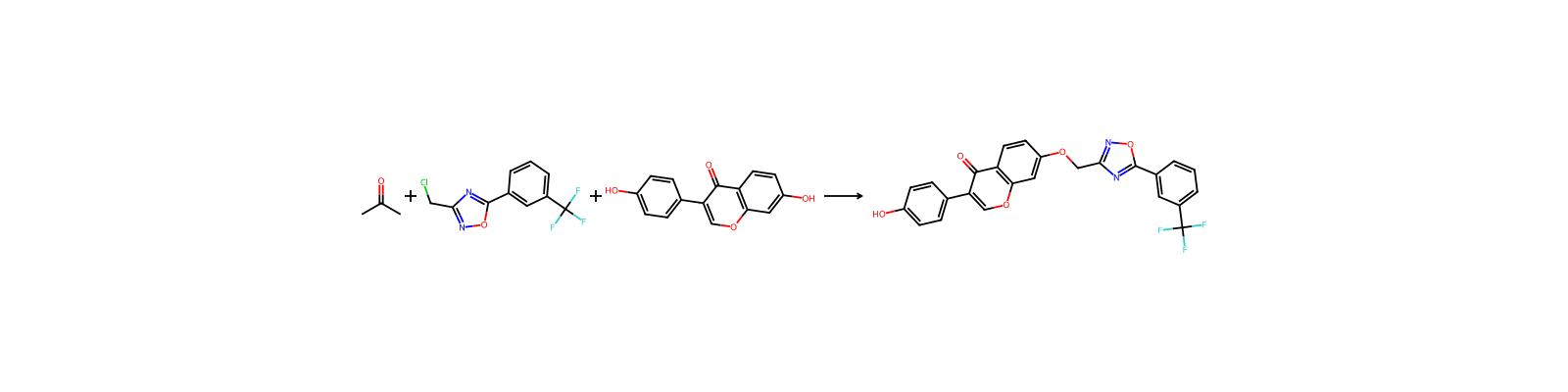
HRID 28761 reaction equation
HRID 28761As reactant
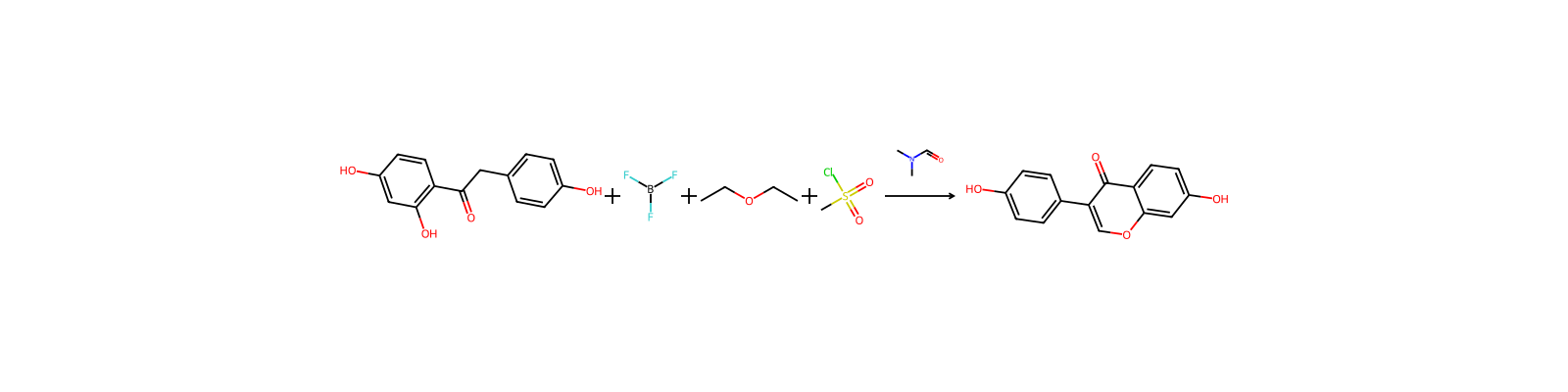
HRID 28763 reaction equation
HRID 28763As product
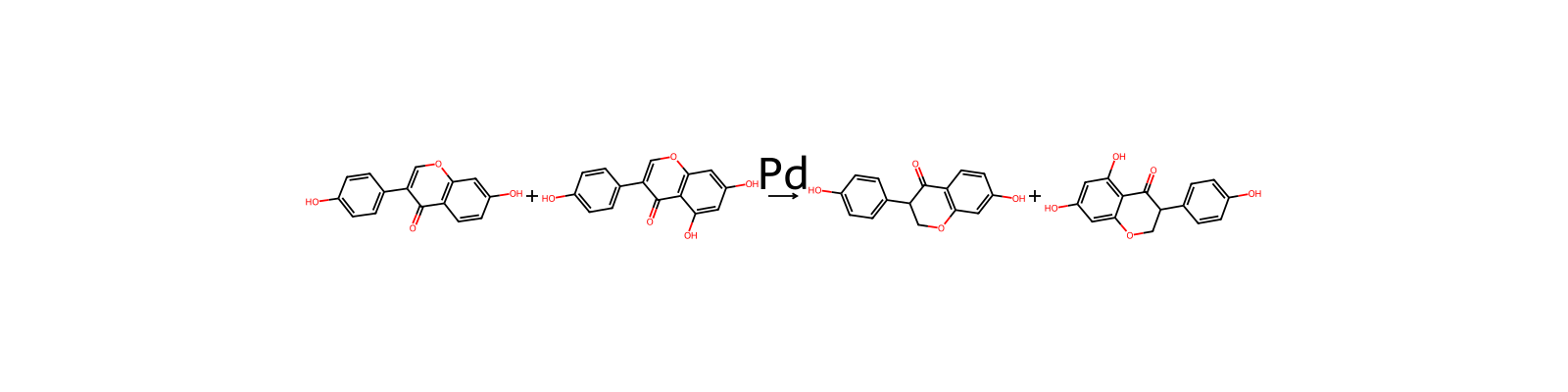
HRID 28764 reaction equation
HRID 28764As reactant
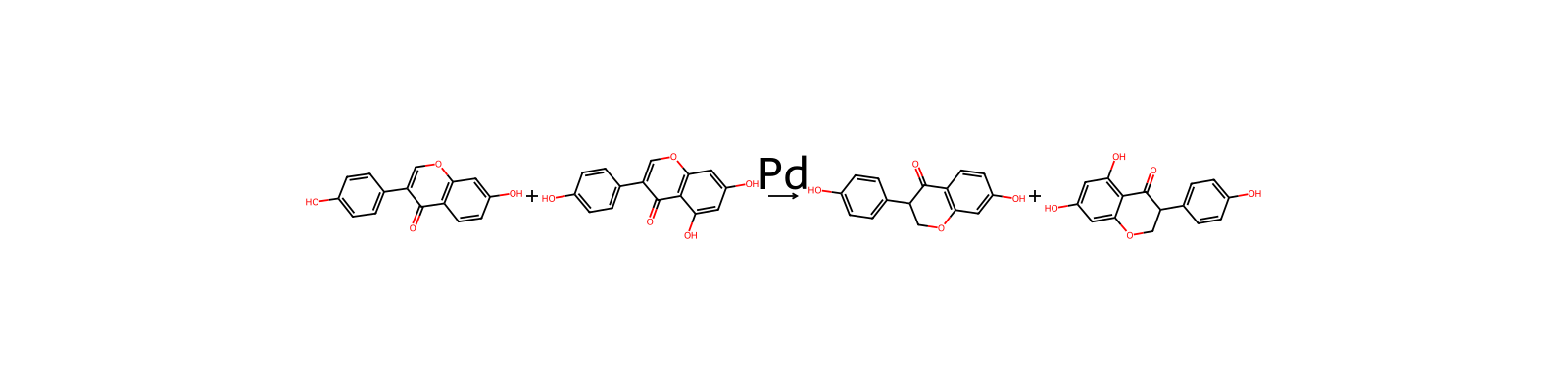
HRID 227207 reaction equation
HRID 227207As reactant
HRID 236342 reaction equation
HRID 236342As reactant
HRID 304424 reaction equation
HRID 304424As reactant
HRID 418879 reaction equation
HRID 418879As product
HRID 480219 reaction equation
HRID 480219As reactant
PreviousPage 1 of 7

Compound notes

On this pageBasic informationOverviewNames & identifiersPropertiesSafety & regulationChemistry & industryRelated reactionsCompound notes