
Basic information
- CAS
18259-15-9- Standard SMILES
COc1cc(/C=C/c2ccc(O)cc2)cc(OC)c1- InChIKey
VLEUZFDZJKSGMX-ONEGZZNKSA-N- Molecular formula
- C16H16O3
- Average molar mass
- 256.3 g/mol
- Monoisotopic mass
- 256.10994437
Overview
Pterostilbene is a stilbenol that consists of trans-stilbene bearing a hydroxy group at position 4 as well as two methoxy substituents at positions 3' and 5'. It has a role as an antioxidant, a neurotransmitter, a hypoglycemic agent, an antineoplastic agent, a radical scavenger, a neuroprotective agent, an anti-inflammatory agent, an apoptosis inducer and a plant metabolite. It is a stilbenol, a diether and a member of methoxybenzenes. It derives from a hydride of a trans-stilbene.
Names & identifiers
- Preferred name
- Pterostilbene
- IUPAC
- 4-[(E)-2-(3,5-dimethoxyphenyl)ethenyl]phenol
- English name
- Pterostilbene
- Molecular formula
- C16H16O3
- Molecular weight
- 256.3
Names & synonyms
Pterostilbene537-42-8trans-pterostilbene4-[(E)-2-(3,5-dimethoxyphenyl)ethenyl]phenolpterostilbene, (E)-3',5'-Dimethoxy-4-stilbenol3,5-Dimethoxy-4'-hydroxy-trans-stilbenePhenol, 4-[(1E)-2-(3,5-dimethoxyphenyl)ethenyl]-3',5'-dimethoxy-resveratroltrans-3,5-dimethoxy-4'-hydroxystilbene3,5-Dimethoxy-4'-hydroxystilbene26R60S6A5I
Show more names
pterostibenehydroxystilbenePTEROCARPUS MARSUPIUMnootropic blueberry extract PterostilbeneAKOS 236-80(Z)-3,4’-aminostilbene(E/Z)-3,4’POVIDONE USP(RG)
4-((E)-2-(3,5-dimethoxyphenyl)ethenyl)phenolCHEBI:8630DTXSID9041106phenol, 4-((1E)-2-(3,5-dimethoxyphenyl)ethenyl)-EH-301 COMPONENT PTEROSTILBENEPhenol, 4-(2-(3,5-dimethoxyphenyl)ethenyl)-, (E)-3',5'-dimethoxy-4E-stilbenol3',5'-dimethoxy-4trans-stilbenol
Database identifiers
- CAS
18259-15-9、537-42-8
Properties
Computed structural properties
- XLogP
- 3.8
- Topological polar surface area
- 38.7 Ų
- Hydrogen bond donors
- 1
- Hydrogen bond acceptors
- 3
- Rotatable bonds
- 4
- Heavy atoms
- 19
- Formal charge
- 0
- Complexity
- 270
Experimental & physicochemical properties
LipidsPolyketides [PK] -> Aromatic polyketides [PK13] -> Diphenyl ethers, biphenyls, dibenzyls and stilbenes [PK1309]
Endocrine DisruptorsPotential endocrine disrupting compound
Physicochemical properties
- Melting point
- 89 · 89-92 ºC
- Boiling point
- 420.4 · 420.4±35.0 °C(Predicted)
- Density
- 1.169 · 1.169±0.06 g/cm3(Predicted)
- storage temp.
- 2 · 2-8°C
- solubility
- 20 mg/mL · DMSO: >20mg/mL
- pka
- 9.96 · 9.96±0.26(Predicted)
- form
- solid
- color
- White or off-white
- Odor
- Characteristic
- λmax
- 321 nm · 321nm(MeOH)(lit.)
- Stability
- 2 years · Stable for 2 years from date of purchase as supplied. Solutions in DMSO or ethanol may be stored at -20° for up to 1 week.
Safety & regulation
Safety information is for reference only and does not replace the supplier’s Safety Data Sheet (SDS), applicable regulations, or professional assessment.
GHS classification
GHS Classification
Danger
H318 (100%): Causes serious eye damage [Danger Serious eye damage/eye irritation]
P264+P265, P273, P280, P305+P354+P338, P317, P391, and P501 (click each P-code to see the statement)
Aggregated GHS information provided per 41 reports by companies from 1 notifications to the ECHA C&L Inventory. Each notification may be associated with multiple companies.
Hazard information
Hazard Classes and CategoriesEye Dam. 1 (100%)
Safety data
- wgk
- 3
- ridadr
- 3077
- hs_code
- 29095000
- risk_code
- 41-51/53
- Signal word
- Danger
- Symbol(GHS)
- GHS05,GHS09
- hazard_code
- Xi,N
- safety_code
- 26-39-61
- hazard_class
- IRRITANT
- Storage Class
- 11 - Combustible Solids
- packing_group
- Ⅲ
- Hazard statements
- H318-H411
- Hazard Classifications
- Aquatic Chronic 2Eye Dam. 1
- Precautionary statements
- P273-P280-P305+P351+P338-P391-P501
Chemistry & industry
Pharmacology
Metabolism/MetabolitesPterostilbene has known human metabolites that include (2S,3S,4S,5R)-6-[4-[(E)-2-(3,5-dimethoxyphenyl)ethenyl]phenoxy]-3,4,5-trihydroxyoxane-2-carboxylic acid.
Applications
DescriptionPterostilbene (PTS) is a fragrant-smelling hydrocarbon called "styrene", which is a derivative of resveratrol. It is found in blueberries and Pterocarpus marsupium (PM) heartwood. Similar to resveratrol, PTS has anti-inflammatory, anti-thrombotic, anti-cancer, anti-cancer, anti-hyperlipidemia and antibacterial effects.
OccurrencePterostilbene is a natural molecule found in fruits, vegetables and nuts. Blueberries are often quoted as one of the richest sources of pterostilbene. It is also found in almonds,various Vaccinium berries (including blueberries), grape leaves and vines,and Pterocarpus marsupium heartwood.
UsesSubstantial studies demonstrate that pterostilbene has diverse pharmacological activities for the prevention and treatment of diseases including inflammation, cancer, diabetes, and dyslipidemia.Pterostilbene has been used:to investigate its anti-oxidative stress activities and the involvement of the nuclear factor (erythroid-derived 2)-like 2 (Nrf2)-antioxidant response element (ARE) signaling pathwayto determine its effects on transcriptional activation of estrogen receptor-α (ERα) in hormone resistant breast cancer cells)
Preparation methods
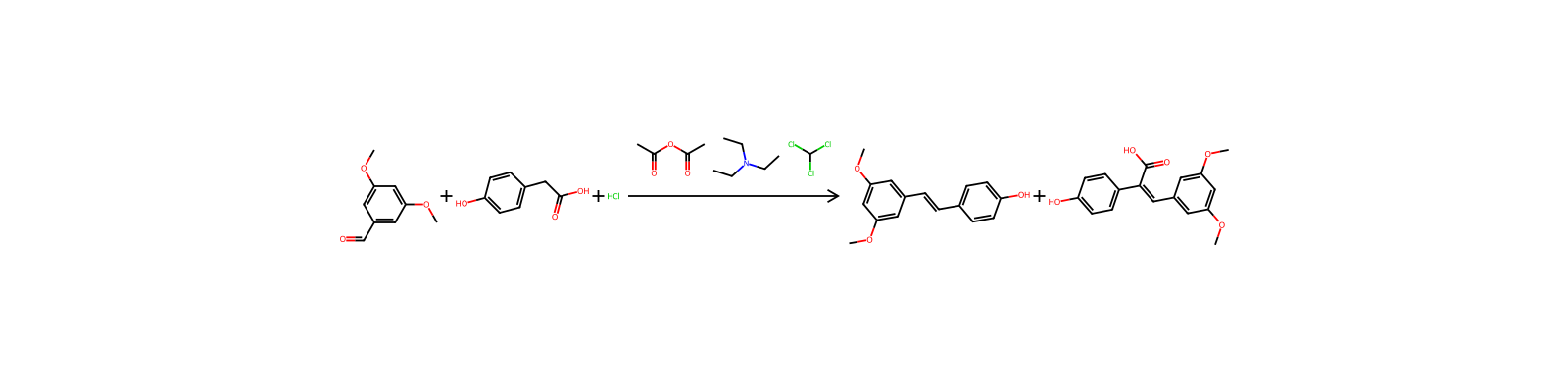
PreparationPterostilbene was synthesized from 3,5-dimethoxybenzyl bromide and p-nitrobenzaldehyde by Witting-Hornor reaction, reduction, diazotization and hydrolysis, with a total yield of 53.9%.
Upstream & downstream products
Upstream raw materials
Related reactions
5 records


Compound notes
Loading…