
Basic information
- Standard SMILES
CN1CCNCC1- InChIKey
PVOAHINGSUIXLS-UHFFFAOYSA-N- Molecular formula
- C5H12N2
- Average molar mass
- 100.16 g/mol
- Monoisotopic mass
- 100.10004839
Names & identifiers
- Preferred name
- 1-Methylpiperazine
- IUPAC
- 1-methylpiperazine
- English name
- 1-Methylpiperazine
- Molecular formula
- C5H12N2
- Molecular weight
- 100.16
Names & synonyms
1-MethylpiperazineN-Methylpiperazine109-01-3PIPERAZINE, 1-METHYL-1-methyl piperazineB92I95EL9QNSC-30195NSC-30675DTXSID4021898RefChem:434645DTXCID601898CHEBI:46920
Show more names
NMPRZ1-MethyipiperazineN-MethylpiperazinPiperazine,1-methyl-CL046AKOS BBS-000036651-methyl-piperazin
203-639-54-Methylpiperazinen-methyl piperazine1-Methyl-piperazineMETHYLPIPERAZINEmethyl piperazineN-METHYL-PIPERAZINE1-methylpyperazine
Database identifiers
- CAS
109-01-3- PubChem CID
- 53167
- DTXSID
DTXSID4021898- ChEMBL
CHEMBL1011- ChEBI
CHEBI:166561- UNII
- B92I95EL9Q
- EC Number
- 203-639-5
- Nikkaji
- J1.011A
Properties
Computed structural properties
- XLogP
- -0.4
- Topological polar surface area
- 15.3 Ų
- Hydrogen bond donors
- 1
- Hydrogen bond acceptors
- 2
- Rotatable bonds
- 0
- Heavy atoms
- 7
- Formal charge
- 0
- Complexity
- 48
Experimental & physicochemical properties
Vapor Pressure3.0 [mmHg]
Physical DescriptionClear light yellow hygroscopic liquid; [Sigma-Aldrich MSDS]
Kovats Retention Index
839;847;852;838.5
1266;1270;1274;1282;1282;1286;1262
Physicochemical properties
- Melting point
- -6 °C · -6 °C
- Boiling point
- 138 °C · 138 °C(lit.)
- Density
- 0.903 g/mL · 0.903 g/mL at 25 °C(lit.)
- vapor density
- 3.5 · 3.5 (vs air)
- vapor pressure
- 12 hPa · 12 hPa (20 °C)
- refractive index
- 20 · n20/D 1.466(lit.)
- Flash point
- 108 °F · 108 °F
- storage temp.
- 2 · 2-8°C
- solubility
- Chloroform (Soluble), Methanol (Soluble)
- pka
- 1 · pK1:4.94(+2);pK2:9.09(+1) (25°C,μ=0.1)
- form
- Liquid
- Specific Gravity
- 0.903 · 0.903
- color
- Clear
- PH
- 11 · 11-12 (50g/l, H2O, 20℃)
- explosive limit
- 1.2 · 1.2-9.9%(V)
- Viscosity
- 2.27 mm2/s · 2.27mm2/s
- Water Solubility
- soluble
- Sensitive
- Hygroscopic
- BRN
- 102724 · 102724
- Henry's Law Constant
- 1.8 · 1.8×103 mol/(m3Pa) at 25℃, Nguyen (2013)
- InChI
- 1S/C5H12N2/c1-7-4-2-6-3-5-7/h6H,2-5H2,1H3
- InChIKey
- PVOAHINGSUIXLS-UHFFFAOYSA-N
- SMILES
- CN1CCNCC1
- LogP
- -0.57 at · -0.57 at 25℃
- Surface tension
- 30.65 mN/m · 30.65mN/m at 298.15K
- CAS DataBase Reference
- 109 · 109-01-3(CAS DataBase Reference)
- FDA UNII
- 92 I95EL9Q · B92I95EL9Q
- NIST Chemistry Reference
- 1 · Piperazine, 1-methyl-(109-01-3)
- EPA Substance Registry System
- 1 · Piperazine, 1-methyl- (109-01-3)
- UNSPSC Code
- 41116107 · 41116107
- NACRES
- 24 · NA.24
- Symbol(GHS)
- 2 · GHS02,GHS05,GHS06
- Signal word
- Danger
- Hazard statements
- 226 · H226-H312-H314-H331
- Precautionary statements
- 210 · P210-P260-P280-P304+P340+P310-P305+P351+P338-P370+P378
- PPE
- Faceshields, Gloves, Goggles, type ABEK (EN14387) respirator filter
- Hazard Codes
- T,F,C,Xi
- Risk Statements
- 10 · 10-21-23-34-36/37/38-20/21
- Safety Statements
- 16 · 16-26-36/37/39-45-36
- RIDADR
- 2734 · UN 2734 8/PG 2
- WGK Germany
- 2 · 2
- RTECS
- 1225000 · TM1225000
- Autoignition Temperature
- 320 °C · 320 °C
- Hazard Note
- Flammable/Toxic/Corrosive/Store under nitrogen
- TSCA
- TSCA listed
- HazardClass
- 3 · 3
- PackingGroup
- III
- HS Code
- 29335995 · 29335995
- Storage Class
- 3 · 3 - Flammable liquids
- Hazard Classifications
- 4 DermalAcute · Acute Tox. 4 DermalAcute Tox. 4 InhalationEye Dam. 1Flam. Liq. 3Skin Corr. 1BSkin Sens. 1B
- Toxicity
- 50 orally · LD50 orally in Rabbit: 2547 mg/kg LD50 dermal Rabbit 1341 mg/kg
- REACH Registrations
- Active
- Limited Quantities
- 1 L · 1.0 L (0.3 gallons) (liquid) or 1 Kg (2.2 lbs) (solid)
- Excepted Quantities
- Max Inner Pack (30g or 30ml) and Max Outer Pack (500g or 500ml)
Safety & regulation
GHS classification
GHS Classification
This chemical does not meet GHS hazard criteria for 1.1% (4 of 377) of reports.
Danger
H226 (98.7%): Flammable liquid and vapor [Warning Flammable liquids];H312 (44.8%): Harmful in contact with skin [Warning Acute toxicity, dermal];H314 (98.9%): Causes severe skin burns and eye damage [Danger Skin corrosion/irritation];H317 (53.8%): May cause an allergic skin reaction [Warning Sensitization, Skin];H318 (51.7%): Causes serious eye damage [Danger Serious eye damage/eye irritation];H330 (24.4%): Fatal if inhaled [Danger Acute toxicity, inhalation];H331 (12.5%): Toxic if inhaled [Danger Acute toxicity, inhalation];H332 (56.8%): Harmful if inhaled [Warning Acute toxicity, inhalation]
P210, P233, P240, P241, P242, P243, P260, P261, P264, P264+P265, P271, P272, P280, P284, P301+P330+P331, P302+P352, P302+P361+P354, P303+P361+P353, P304+P340, P305+P354+P338, P316, P317, P320, P321, P333+P317, P362+P364, P363, P370+P378, P403+P233, P403+P235, P405, and P501 (click each P-code to see the statement)
Aggregated GHS information provided per 377 reports by companies from 24 notifications to the ECHA C&L Inventory. Each notification may be associated with multiple companies.;Reported as not meeting GHS hazard criteria per 4 of 377 reports by companies.;There are 23 notifications provided by 373 of 377 reports by companies with hazard statement code(s).;Information may vary between notifications depending on impurities, additives, and other factors. The percentage value in parenthesis indicates the notified classification ratio from companies that provide hazard codes. Only hazard codes with percentage values above 10% are shown. For more detailed information, please visit ECHA C&L website.
Hazard information
Regulatory Information
Chemical: Piperazine, 1-methyl-
Status: Active Update: 08-07-2022 https://echa.europa.eu/registration-dossier/-/registered-dossier/13739;Status: Active Update: 20-10-2022 https://echa.europa.eu/registration-dossier/-/registered-dossier/18323
1-Methylpiperazine: Does not have an individual approval but may be used under an appropriate group standard
The New Jersey Worker and Community Right to Know Act requires public and private employers to provide information about hazardous substances at their workplaces. (N.J.S.A. 34:5A-1 et. seq.)
Hazards Summary
Causes skin corrosion in acute dermal studies of rabbits; Causes convulsions in acute inhalation studies of mice; Causes multiple liver effects, changes in renal tubules, changes in recording from peripheral motor nerve, and general anesthesia in acute oral studies of mice; [RTECS] Causes burns; May cause skin sensitization; Harmful by inhalation; [ECHA REACH Registrations] Causes burns; Inhalation may cause corrosive injuries to upper respiratory tract and lungs; Harmful by skin absorption; Toxic by inhalation; [Sigma-Aldrich MSDS] See Piperazine and salts.
Hazard Classes and Categories
Flam. Liq. 3 (98.7%);Acute Tox. 4 (44.8%);Skin Corr. 1B (98.9%);Skin Sens. 1B (53.8%);Eye Dam. 1 (51.7%);Acute Tox. 1 (24.4%);Acute Tox. 3 (12.5%);Acute Tox. 4 (56.8%)
Corrosives, Flammable agents - 2nd degree
Toxicology
Adverse Effects
Occupational hepatotoxin - Secondary hepatotoxins: the potential for toxic effect in the occupational setting is based on cases of poisoning by human ingestion or animal experimentation.;Dermatotoxin - Skin burns.;Skin Sensitizer - An agent that can induce an allergic reaction in the skin.;Toxic Pneumonitis - Inflammation of the lungs induced by inhalation of metal fumes or toxic gases and vapors.
Toxicity DataLC50 (mouse) = 2,740 mg/m3/2hr
Regulatory information
Regulatory Information
Chemical: Piperazine, 1-methyl-
Status: Active Update: 08-07-2022 https://echa.europa.eu/registration-dossier/-/registered-dossier/13739;Status: Active Update: 20-10-2022 https://echa.europa.eu/registration-dossier/-/registered-dossier/18323
1-Methylpiperazine: Does not have an individual approval but may be used under an appropriate group standard
The New Jersey Worker and Community Right to Know Act requires public and private employers to provide information about hazardous substances at their workplaces. (N.J.S.A. 34:5A-1 et. seq.)
Safety data
- PPE
- Faceshields, Gloves, Goggles, type ABEK (EN14387) respirator filter
- wgk
- 2
- tsca
- TSCA listed
- rtecs
- TM1225000
- ridadr
- UN 2734 8/PG 2
- hs_code
- 29335995
- Toxicity
- LD50 orally in Rabbit: 2547 mg/kg LD50 dermal Rabbit 1341 mg/kg
- risk_code
- 10-21-23-34-36/37/38-20/21
- Signal word
- Danger
- Symbol(GHS)
- GHS02,GHS05,GHS06
- hazard_code
- T,F,C,Xi
- hazard_note
- Flammable/Toxic/Corrosive/Store under nitrogen
- safety_code
- 16-26-36/37/39-45-36
- hazard_class
- 3
- Storage Class
- 3 - Flammable liquids
- packing_group
- III
- Hazard statements
- H226-H312-H314-H331
- Limited Quantities
- 1.0 L (0.3 gallons) (liquid) or 1 Kg (2.2 lbs) (solid)
- Excepted Quantities
- Max Inner Pack (30g or 30ml) and Max Outer Pack (500g or 500ml)
- REACH Registrations
- Active
- Hazard Classifications
- Acute Tox. 4 DermalAcute Tox. 4 InhalationEye Dam. 1Flam. Liq. 3Skin Corr. 1BSkin Sens. 1B
- Autoignition Temperature
- 320 °C
- Precautionary statements
- P210-P260-P280-P304+P340+P310-P305+P351+P338-P370+P378
Chemistry & industry
Uses & manufacturing
UsesUsed to make large scale and fine chemicals; [ECHA REACH Registrations]
General Manufacturing InformationPiperazine, 1-methyl-: ACTIVE
Applications
Uses1-Methylpiperazine is used in the preparation of 2-(4-Methyl-1-piperazinylmethyl)acrylophenone(MPMAP)
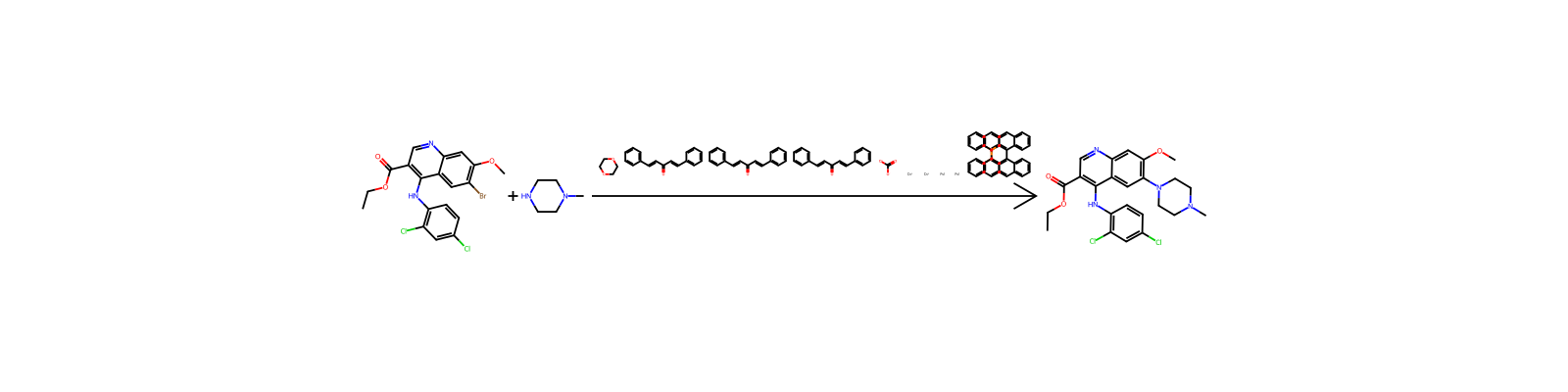
Uses1-Methylpiperazine is used in the preparation of 2-(4-methyl-1-piperazinylmethyl)acrylophenone. It is involved in the preparation of 1-(4-methoxy-phenyl)-4-methyl-piperazine by reacting with 1-chloro-4-methoxy-benzene. It acts as an intermediate in the synthesis of active pharmaceutical ingredients like ofloxacin, rifampicin, clozapine, sildenafil, trifluoperazine and zopiclone. Further, it is used as a mimic template in the preparation of molecularly imprinted microspheres. In addition to this, it is used in the generation of difunctional strong anion-exchange stationary phase from a 1,4-diazacyclohexane derivative.
Upstream & downstream products
Upstream raw materials
Downstream products
Suppliers50 total
国药集团化学试剂有限公司86-21-63210123 · [email protected]
梯希爱(上海)化成工业发展有限公司021-67121386 · [email protected]
衢州润东化工有限公司0570-8789886 18892685668 · [email protected]
上海阿拉丁生化科技股份有限公司400-6206333 13167063860 · [email protected]
爱斯特(成都)生物制药股份有限公司+86-28-85122536 85324413 · [email protected]
山东前元高分子材料有限公司18678041314 18765609661 · [email protected]
北京安司莫森技术有限公司010-82954736 13391601435 · [email protected]
韶远科技(上海)有限公司021-50795510 4000665055 · [email protected]
科瑞迪化学400-821-5857 021-64326257 · [email protected]
Syntechem Co.,Ltd[email protected]
上海迈瑞尔生化科技有限公司4006356688 18621169109 · [email protected]
阿法埃莎(中国)化学有限公司400-6106006 · [email protected]
上海德默医药科技有限公司400-021-7337 2355568890 · [email protected]
安耐吉化学&3A(安徽泽升科技股份有限公司)400-0056266 · [email protected]
武汉凯威斯科技有限公司86-027-67849912 · [email protected]
上海瀚鸿科技股份有限公司021-54306202 13764082696 · [email protected]
上海格物致知医药科技有限公司21-21-54301573 13917723525 · [email protected]
上海相辉医药科技有限公司13761987713 · [email protected]
上海景颜化工科技有限公司13817811078 · [email protected]
嘉兴市艾森化工有限公司0573-85285100 18627885956 · [email protected]
雅帝興業有限公司+86-561-5269788, 5209788
上海隆盛化工有限公司58099637 13585536065 · [email protected]
武汉丰泰威远科技有限公司027-87465837 19945049750 · [email protected]
孝感深远化工有限公司15527621225; 15527621225 · [email protected]
玛雅试剂+86 (573) 82222445 (0)18006601000 452520369 · [email protected]
四川库利南科技有限公司400-1166-196 18981987031 · [email protected]
上海耐士化工科技有限公司400-188-0725 +86 21 34310725 13611771617
天津希恩思生化科技有限公司400 638 7771 · [email protected]
南京维奥化工有限公司Please Send Email 18652950785 · [email protected]
河南多贝化工有限公司0370-2785118 17550508557 · [email protected]
斯百全化学(上海)有限公司021-021-021-67601398-809-809-809 15221380277 · [email protected]
艾科试剂4008-755-333 18080918076 · [email protected]
上海思域化工科技有限公司86-21-34053660 · [email protected]
赛默飞世尔科技(中国)有限公司800-810-5118 · [email protected]
北京伊诺凯科技有限公司400-810-7969 010-59572699 · [email protected]
上海特伯化学科技有限公司+86-21-60341587 · [email protected]
Wuhan NCE Biomedical Co.,Ltd.4000-027-021 |24 +86-13986109188 | +86-15623472865 | +81-08033611988
江苏艾康生物医药研发有限公司025-66113011 13913916777 · [email protected]
TCI AMERICA800-4238616 · [email protected]
TOKYO CHEMICAL INDUSTRY CO., LTD.03-36680489 · [email protected]
TCI Europe320-37350700 · [email protected]
上海贤鼎生物科技有限公司4009209199 · [email protected]
深圳振强药物研发有限公司0755-66853366 13670046396 · [email protected]
深圳康特腾科技有限公司86-0755-86635001 · [email protected]
越林试剂021-62960152 · [email protected]
广州爱纯医药科技有限公司020-39119399 18927568969 · [email protected]
无锡中坤生化科技有限公司+86 0510-85629785
上海汇凯化学科技有限公司021-61995394 18916691159 · [email protected]
湖北鑫源顺医药化工有限公司13971561712, 13995564702, 027-50664929 · [email protected]
上海湄水化工科技有限公司021-60549325 18616193163
Additional notes
DefinitionChEBI: 1-Methylpiperazine is a N-methylpiperazine.
Related reactions
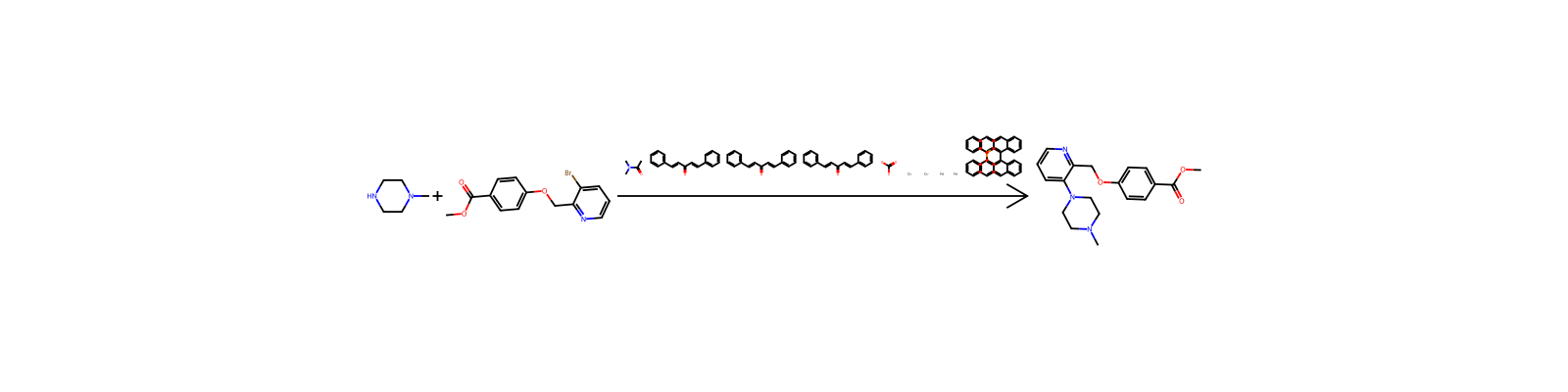
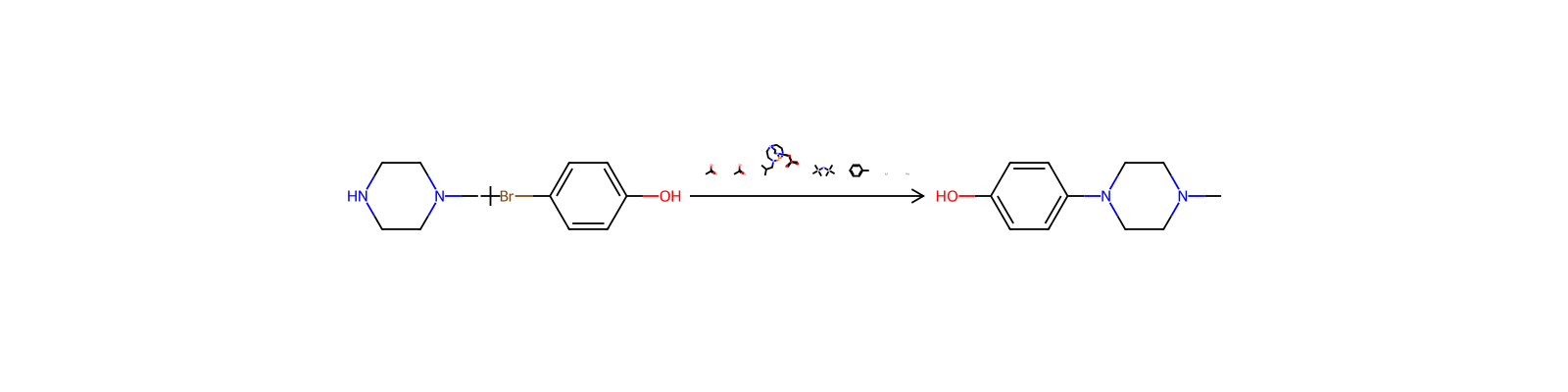
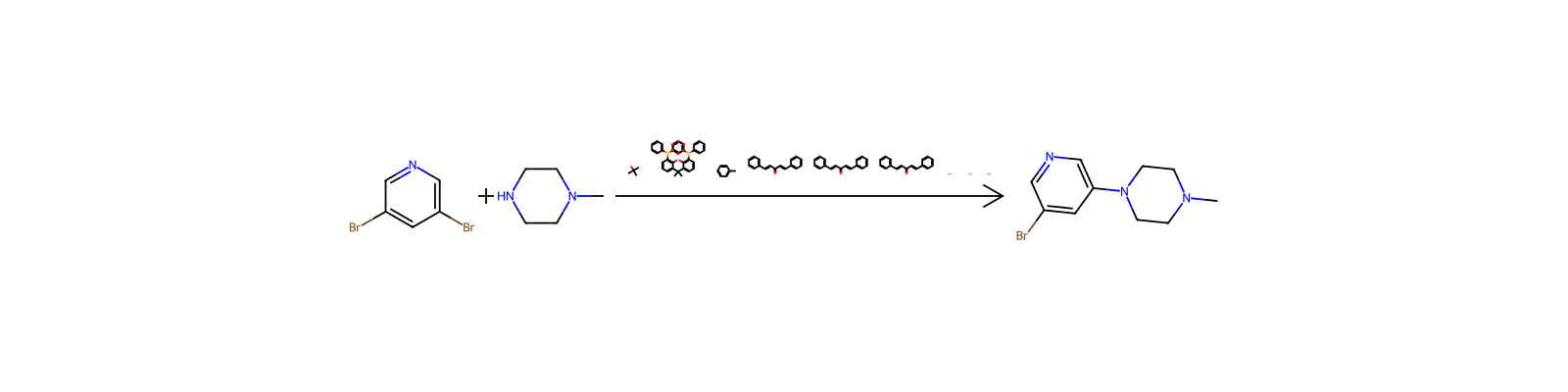
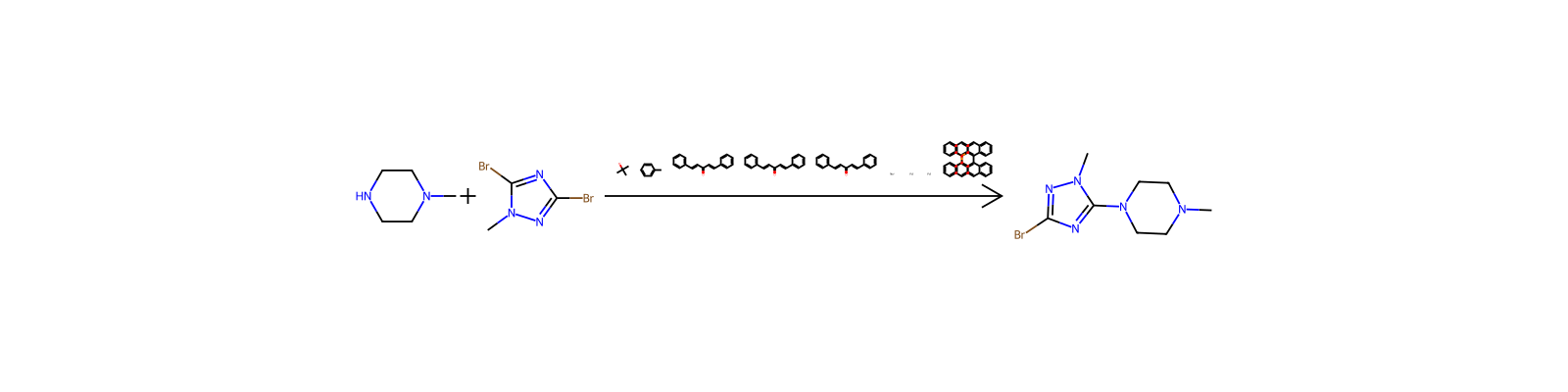
5,438 records



Linked notes
Loading…