
HRID 22445As product
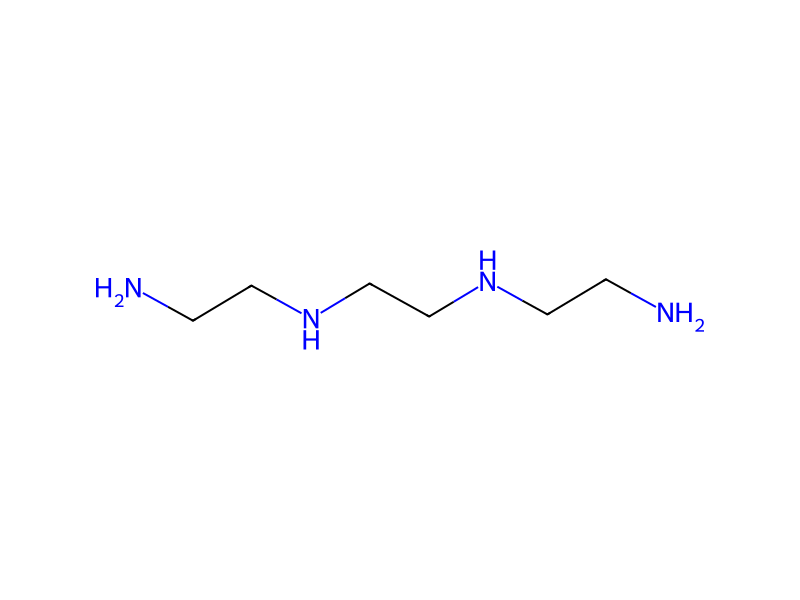
112-24-3NCCNCCNCCNVILCJCGEZXAXTO-UHFFFAOYSA-NTriethylenetetramine appears as a yellowish liquid. Less dense than water. Combustible, though may be difficult to ignite. Corrosive to metals and tissue. Vapors heavier than air. Toxic oxides of nitrogen produced during combustion. Used in detergents and in the synthesis of dyes, pharmaceuticals and other chemicals.
112-24-3DTXSID9023702CHEMBL609CHEBI:39501Nitrogen Compounds -> Amines, Aliphatic
Corrosives
0.982 at 68 °F (USCG, 1999) - Less dense than water; will float
0.9818 @ 20 °C/20 °C
0.98 g/cm³
Relative density of the vapour/air-mixture at 20 °C (air = 1): 1.00
0.982
0.982 @25 °C
greater than or equal to 100 mg/mL at 68.4 °F (NTP, 1992)
Safety information is for reference only and does not replace the supplier’s Safety Data Sheet (SDS), applicable regulations, or professional assessment.
Danger
H312: Harmful in contact with skin [Warning Acute toxicity, dermal]
P260, P261, P264, P272, P273, P280, P301+P330+P331, P302+P352, P302+P361+P354, P304+P340, P305+P354+P338, P316, P317, P321, P333+P317, P362+P364, P363, P405, and P501 (click each P-code to see the statement)
This chemical does not meet GHS hazard criteria for 0.4% (10 of 2507) of reports.
Danger
H302+H312 (18.4%): Harmful if swallowed or in contact with skin [Warning Acute toxicity, oral; acute toxicity, dermal]
Chemical: 1,2-Ethanediamine, N,N'-bis(2-aminoethyl)-
1,2-Ethanediamine, N1,N2-bis(2-aminoethyl)- is listed on the EPA's Chemical Data Reporting (CDR) system. Manufacturers and importers of 1,2-Ethanediamine, N1,N2-bis(2-aminoethyl)- are required to report information about their production and use of this chemical to the EPA under the Toxic Substances Control Act (TSCA). (40 eCFR Part 711)
REACH registered substance: Trientine (EC: 203-950-6)
Triethylenetetramine: Does not have an individual approval but may be used under an appropriate group standard
The New Jersey Worker and Community Right to Know Act requires public and private employers to provide information about hazardous substances at their workplaces. (N.J.S.A. 34:5A-1 et. seq.)
Excerpt from ERG Guide 153 [Substances - Toxic and/or Corrosive (Combustible)]:
· Combustible material: may burn but does not ignite readily.
A - Alimentary tract and metabolism
QA - Alimentary tract and metabolism
Triethylenetetramine (TETA) is a selective copper(II) chelator that works to promote urinary copper excretion. It was shown to reduce excess body copper storage and ameliorate symptoms of Wilson’s disease. In rats with diabetes mellitus, intravenous administration of TETA led to a dose-dependent increase in urinary copper excretion. In preliminary studies, TETA was shown to ameliorate left ventricular hypertrophy in both human and animal subjects with diabetes. In animal models, TETA was also shown to reverse manifestations of diabetic nephropathy, including nephromegaly, renal fibrosis, glomerulosclerosis, and albuminuria, without lowering hyperglycemia. This finding may be explained by TETA chelating copper cations, which are pro-oxidant and activate pathways that produce excessive reactive oxygen species (ROS) that cause tissue injury. TETA was shown to possess anti-angiogenesis properties, as copper is an essential element for angiogenesis in cancer cells. TETA was shown to inhibit telomerase, suggesting that it may exhibit an inhibitory effect or cytotoxicity on tumor growth. Based on these early findings, TETA has been studied for its anticancer effects.
Wilson's disease is an autosomal recessive genetic disorder that leads to copper accumulation in the tissues. It is characterized by an array of neurologic or psychiatric symptoms as well as liver disease. One of the treatments for Wilson's disease is the use of copper-chelating agents, such as triethylenetetramine (TETA). TETA forms a stable complex with copper(II), which is then is readily eliminated through urinary excretion. TETA also chelates copper in the intestinal tract, reducing intestinal copper absorption by 80%. TETA and its metabolite, N<sub>1</sub>-acetyltriethylenetetramine (MAT), are also capable of binding divalent iron, divalent zinc, magnesium, and manganese.



Soluble
SOL IN ALCOHOL, ACID
COMPLETE SOLUBILITY IN WATER
Solubility in water: miscible
275 °F (NTP, 1992)
290 °F
290 °F
135 °C c.c.
275 °F
Breast Feeding; Lactation; Milk, Human; Chelating Agents
EMA approved medicines: Human medicine
511 to 513 °F at 760 mmHg (NTP, 1992)
266-267
266-267 °C @ 760 MM HG
277 °C
511-513 °F
272 °C @760 [mm Hg]
Combustible. Gives off irritating or toxic fumes (or gases) in a fire. Risk of fire and explosion on contact with oxidants. See Chemical Dangers.
Vapors from hot liquid can irritate eyes and upper respiratory system. Liquid burns eyes and skin. May cause sensitization of skin. (USCG, 1999)
· TOXIC and/or CORROSIVE; inhalation, ingestion or skin contact with material may cause severe injury or death.
Liquid causes first degree burns on short exposure. [CHRIS] Asthma reported in aircraft fitter; [Malo] A corrosive substance with low vapor pressure, but could cause pulmonary edema after exposure to high concentrations ; May cause asthma and skin sensitization; [ICSC]
Excerpt from ERG Guide 153 [Substances - Toxic and/or Corrosive (Combustible)]:
Use powder, alcohol-resistant foam, water spray, carbon dioxide. In case of fire: keep cylinder cool by spraying with water.
Fresh air, rest. Half-upright position. Refer immediately for medical attention.
First rinse with plenty of water for at least 15 minutes, then remove contaminated clothes and rinse again. Refer immediately for medical attention.
Rinse with plenty of water (remove contact lenses if easily possible). Refer immediately for medical attention.
Rinse mouth. Do NOT induce vomiting. Refer immediately for medical attention.
· CALL 911. Then call emergency response telephone number on shipping paper. If shipping paper not available or no answer, refer to appropriate telephone number listed on the inside back cover.
· ELIMINATE all ignition sources (no smoking, flares, sparks or flames) from immediate area.
EYES: First check the victim for contact lenses and remove if present. Flush victim's eyes with water or normal saline solution for 20 to 30 minutes while simultaneously calling a hospital or poison control center. Do not put any ointments, oils, or medication in the victim's eyes without specific instructions from a physician. IMMEDIATELY transport the victim after flushing eyes to a hospital even if no symptoms (such as redness or irritation) develop.
General First Aid:
IN GENERAL, MATERIALS...TOXIC AS STORED OR WHICH CAN DECOMP INTO TOXIC COMPONENTS...SHOULD BE STORED IN COOL...VENTILATED PLACE, OUT OF...SUN, AWAY FROM...FIRE HAZARD...BE PERIODICALLY INSPECTED & MONITORED. INCOMPATIBLE MATERIALS SHOULD BE ISOLATED...
Personal protection: chemical protection suit including self-contained breathing apparatus. Do NOT let this chemical enter the environment. Collect leaking liquid in sealable containers. Absorb remaining liquid in sand or inert absorbent. Then store and dispose of according to local regulations.
.../IT WAS/ CONCLUDED THAT CONTROL PROBLEM WAS PRIMARILY ONE OF PREVENTING DIRECT SKIN CONTACT. SUCCESSFUL CONTROL REQUIRES GOOD PERSONNEL TRAINING AND SCRUPULOUS HANDLING TECHNIQUES.
C) DECR CONCN OF AMINE VAPOR BY GOOD VENTILATION. AMINES WITH HEAVY VAPOR... SHOULD BE DRAWN OFF BY DESCENT. D) EMPLOYEES PRONE TO SENSITIZATION OR LIVER DEFICIENCY...REMOVED FROM SHOPS HANDLING HARDENERS. /ALIPHATIC AMINES/
Excerpt from ERG Guide 153 [Substances - Toxic and/or Corrosive (Combustible)]:
Immediate precautionary measure
In clinical trials conducted in children with Wilson disease, serum aminotransferase levels generally improved or were stable during treatment with trientine. There have been no clinical reports of acute liver injury with jaundice attributed to trientine, even with overdoses. Patients with Wilson disease typically have mild-to-moderate serum aminotransferase elevations and may have signs and symptoms of cirrhosis. Improvement in liver injury in Wilson disease typically requires months to years of treatment.
While TETA is severely irritating to the skin and eyes and produces skin sensitization, it is of low to moderate acute toxicity orally and dermally. Effects on lungs, liver, and spleen were found in mice in subchronic studies but were not found in rats. While TETA was genotoxic/mutagenic in short-term in vitro assays, it was not genotoxic/mutagenic in in vivo assays. No data on reproductive toxicity were available, and embryo/fetal toxicity was associated with copper deficiency and occurred at maternally toxic doses. The use of TETA·2HCl for treatment of Wilson’s disease during pregnancy in humans resulted in no miscarriages or fetal abnormalities. There was no evidence of carcinogenicity in a lifetime dermal mouse study.
Sore throat. Cough. Burning sensation. Laboured breathing. Shortness of breath.
Redness. Pain. Skin burns. Blisters.
Redness. Pain. Loss of vision. Severe deep burns.
Burns in mouth and throat. Burning sensation in the throat and chest. Abdominal pain. Shock or collapse.
EXPOSURE TO THE HOT VAPOR RESULTS IN RESPIRATORY TRACT IRRITATION AND ITCHING OF THE FACE WITH ERYTHEMA AND EDEMA.
...MARKED SENSITIZATION /NOTED/ IN 6-20 WORKMEN EMPLOYED IN ELECTRICAL EQUIPMENT...FACTORY. THIS SHOWED ITSELF AS SERIOUS SKIN LESIONS, VESICULAR PAPULAR ECZEMA, SOMETIMES WEEPING, LOCALIZED PARTICULARLY ON HANDS, FOREARMS, & GENITAL & INGUINAL REGIONS, TOGETHER WITH FACIAL EDEMA.
ACUTE TOXICITY IN RABBITS: SKIN IRRITATION GRADE 6. 6= MORE NECROSIS FROM UNDILUTED, LESS THAN EDEMA FROM 10%. /FROM TABLE/
THERE WERE NO DEATHS IN RATS EXPOSED TO SATURATED VAPOR FOR 4 HR. /FROM TABLE/
...RATED 5 ON RABBIT EYES. /MOST SEVERE INJURIES HAVE BEEN RATED 10/.
IN NONPREGNAT RATS TREATED DERMALLY WITH TRIETHYLENETETRAMINE STABILIZER, GAMMA-GLUTAMYLTRANSPEPTIDASE ACTIVITY IN KIDNEYS & AMINOTRANSFERASES ACTIVITY IN LIVER INCR. ACETYLCHOLINESTERASES ACTIVITY IN BRAIN WAS INHIBITED.
For more Non-Human Toxicity Excerpts (Complete) data for TRIETHYLENETETRAMINE (10 total), please visit the HSDB record page.
The majority of absorbed TETA is extensively metabolized into acetyl-metabolites. TETA undergoes acetylation mediated by diamine acetyltransferase, also known as spermidine/spermine N<sub>1</sub>-acetyltranferase, to form two major active metabolites, N<sub>1</sub>-acetyltriethylenetetramine (MAT) and N<sub>1</sub>,N<sub>10</sub>-diacetyltriethylenetetramine (DAT). The chelating activity of MAT is significantly lower than that of TETA.
SJ76Y07H5F
TRIENTINE
Mechanisms of Action [MoA] - Metal Chelating Activity
Established Pharmacologic Class [EPC] - Copper Chelator
Mechanisms of Action [MoA] - Copper Chelating Activity
Trientine is a Copper Chelator. The mechanism of action of trientine is as a Metal Chelating Activity and Copper Chelating Activity.
TETA is poorly absorbed from the gastrointestinal tract with an oral bioavailability ranging from 6% to 18%. TETA has the potential to chelate non-copper cations in mineral supplements and other oral drugs, resulting in altered drug absorption; thus, TETA should be administered at least one hour apart from these medications. The median Tmax ranges from 1.25 to 2 hours. Mean Cmax (± SD) of triethylenetetramine (TETA) was 2030 ± 981 ng/mL following oral administration of 900 mg TETA and 3430 ± 1480 ng/mL following administration of 1500 mg TETA. The systemic exposure (AUC) of TETA increased in a dose-proportional manner over the range of 900 mg to 1500 mg TETA. The mean AUCinf (± SD) was 9750 ± 4910 ngxh/mL at 900 mg and 17200 ± 9470 ngxh/mL at 1500 mg.
TETA and its metabolites, MAT and DAT, are mainly excreted in the urine. Approximately less than 1% of the administered dose is renally excreted as unchanged drug within the first six hours of dosing. About 8% of the dose is excreted as two major metabolites of TETA, MAT and DAT. Urinary excretion of metabolites occurs later than the excretion of the unchanged parent drug: it continues for 26 hours or longer.
TETA is widely distributed in tissues, with relatively high concentrations measured in liver, heart, and kidney. It is prone to accumulation in certain tissues. In healthy adult volunteers receiving oral capsules of TETA, the apparent volume of distribution of steady state was 645 L.
In healthy adult volunteers receiving oral capsules of TETA, the oral total clearance was 69.5 L/h.
Used as a chemical intermediate for polyamide resins, imidazoline, and aminoamide surfactants; as a curing agent for alkyl acrylate and methacrylonitrile polymers; and as a hardener for epoxy resins; [HSDB] The hydrochloride salt is used as a chelating agent in the treatment of Wilson's disease; [AIHA]
Plastic Composites Manufacturing [Category: Industry]
IN DETERGENTS; SYNTHESIS OF DYESTUFFS, PHARMACEUTICALS
MEDICATION (VET)
MEDICATION
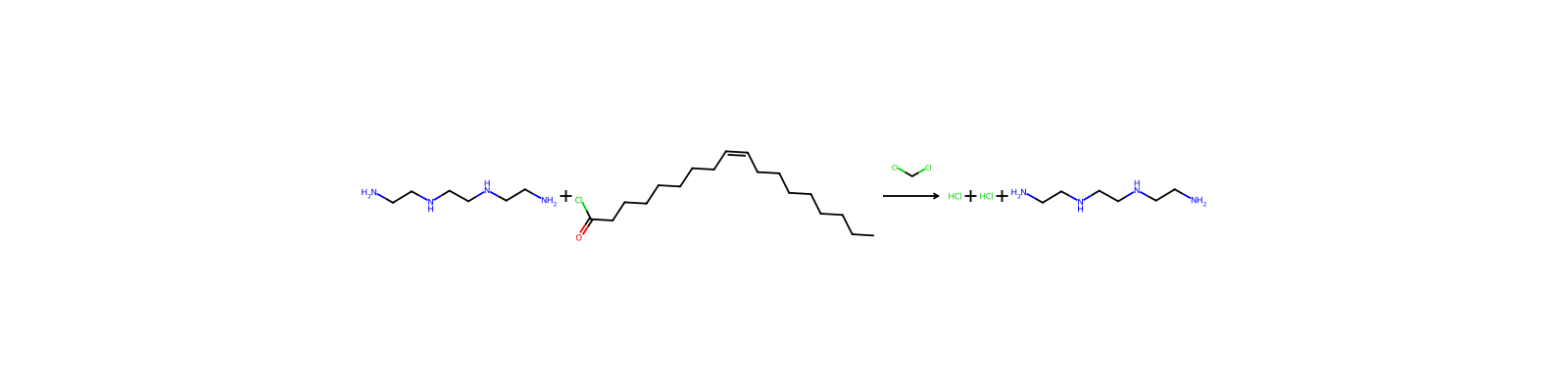
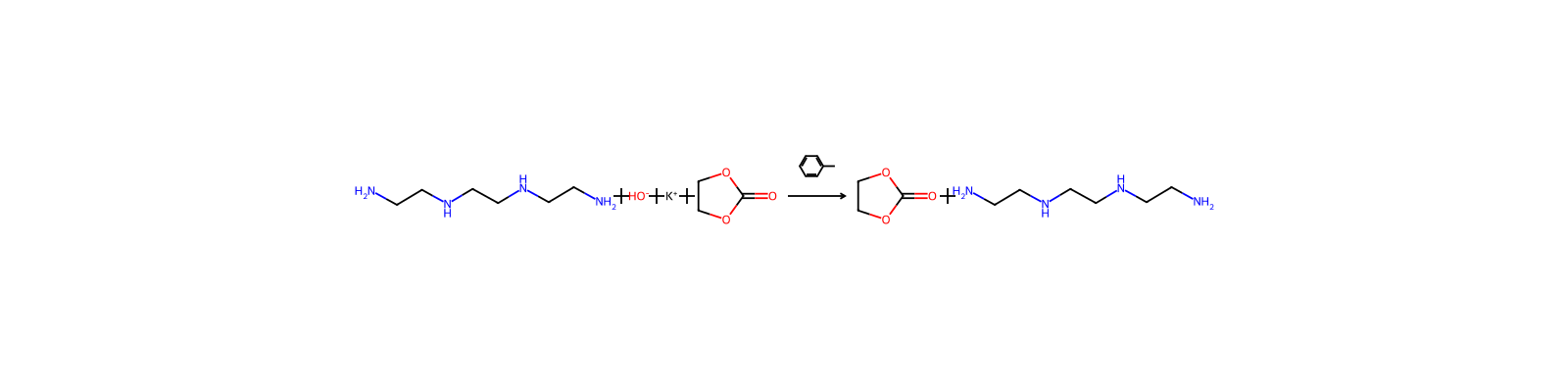
CHEM INT FOR IMIDAZOLINE & AMINOAMIDE SURFACTANTS, WATER SOL PLASTIC FILMS & POLYAMIDE RESINS; CURING AGENT IN VULCANIZATION OF ALKYL ACRYLATE POLYMERS, METHACRYLONITRILE POLYMERS & COPOLYMERS; HARDENER FOR LIQUID EPOXY RESINS
(1972) No Data
(1975) No Data
(1972) No Data
(1975) No Data
2023: 10,000,000 - <25,000,000 lb
(1972) 8.2X10+9 GRAMS
(1975) 1.36X10+6 GRAMS
All Other Basic Organic Chemical Manufacturing
1,2-Ethanediamine, N1,N2-bis(2-aminoethyl)-: ACTIVE
DescriptionTriethylenetetramine (TETA and trien) also known as trientine (INN) when used medically, is an organic compound with the formula [CH2NHCH2CH2NH2]2. The pure freebase is a colorless oily liquid, but, like many amines, older samples assume a yellowish color due to impurities resulting from air- oxidation. It is soluble in polar solvents. The branched isomer tris(2-aminoethyl)amine and piperazine derivatives may also be present in commercial samples of Triethylenetetramine. The hydrochloride salts are used medically as a treatment for copper toxicity.
UsesTriethylenetetramine is used as an amine hardener in epoxy resin of the bisphenol A type.It is used in synthesis of detergents, softeners, and dyestuffs; manufacture of pharmaceuticals; vulcanization accelerator of rubber; thermo setting resin; epoxy curing agent; lubricating-oil additive; analytical reagent for Cu, Ni; chelating agent; treatment of Wilson's disease.
General DescriptionA yellowish liquid. Less dense than water. Combustible, though may be difficult to ignite. Corrosive to metals and tissue. Vapors heavier than air. Toxic oxides of nitrogen produced during combustion. Used in detergents and in the synthesis of dyes, pharmaceuticals and other chemicals.
DefinitionChEBI: 2,2,2-tetramine is a polyazaalkane that is decane in which the carbon atoms at positions 1, 4, 7 and 10 are replaced by nitrogens. It has a role as a copper chelator. It is a tetramine and a polyazaalkane.