
Guanidine Hydrochloride
Completing data — refresh the page later to see the latest
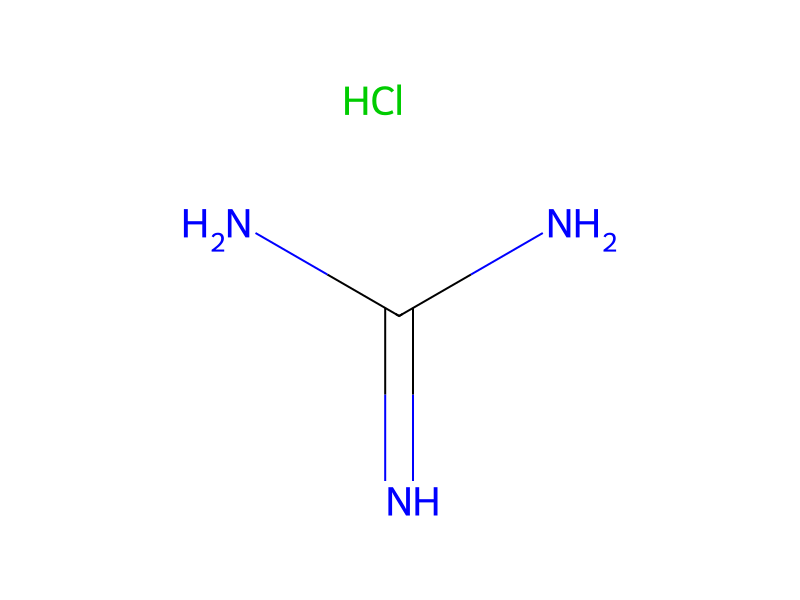
Basic information
- CAS
50-01-1- Standard SMILES
Cl.N=C(N)N- InChIKey
PJJJBBJSCAKJQF-UHFFFAOYSA-N- Molecular formula
- CH5N3.ClH
- Average molar mass
- 95.53 g/mol
- Monoisotopic mass
- 95.02502487
Overview
Guanidine Hydrochloride is the hydrochloride salt form of guanidine, a strong basic compound with parasympathomimetic activity. Guanidine hydrochloride enhances the release of acetylcholine following a nerve impulse and potentiates acetylcholine actions on muscarinic and nicotinic receptors. It also appears to slow the rates of depolarization and repolarization of muscle cell membranes. (NCI05)
Names & identifiers
- Preferred name
- Guanidine Hydrochloride
- IUPAC
- guanidine;hydrochloride
- English name
- Guanidine hydrochloride
- Molecular formula
- CH5N3.ClH
- Molecular weight
- 95.53
Names & synonyms
Guanidine hydrochloride50-01-1Guanidinium chlorideguanidine HClAminoformamidine hydrochlorideGUANIDINE MONOHYDROCHLORIDECarbamidine hydrochlorideAminomethanamidine hydrochlorideIminourea hydrochloride3YQC9ZY4YBNSC-755884DTXSID7058757
Show more names
GAClGdmClAMINOFORMAMIDINE HCLguanidiniumhydrochlorideGUANIDINE HYDROCHLORIDE 99%guanidine,monohydrochlorideGuanidine, hydrochloride (1:1)
Chloride, GuanidiniumGuanidium chlorideCHEBI:32735Chloride, GuanidiumHydrochloride, GuanidineRefChem:58639Monohydrochloride, GuanidineDTXCID4040763
Database identifiers
- CAS
50-01-1- PubChem CID
- 5742
- DTXSID
DTXSID7058757- ChEMBL
CHEMBL1200728- UNII
- 3YQC9ZY4YB
Properties
Computed structural propertiesFilling in
- Topological polar surface area
- 75.9 Ų
- Hydrogen bond donors
- 4
- Hydrogen bond acceptors
- 1
- Rotatable bonds
- 0
- Heavy atoms
- 5
- Formal charge
- 0
- Complexity
- 26.3
Experimental & physicochemical properties
CosmeticsBuffering
LogP-1.7
Density1.3 g/cm³
SolubilitySolubility in water, g/100ml at 20 °C: 215
Human Drugs
FDA approved drugs -> Active ingredient
FDA approved drugs -> Active ingredient
Melting Point
178-185 °C
183 °C
Physical Description
Large Crystals; Dry Powder; Liquid
HYGROSCOPIC CRYSTALLINE POWDER.
Physicochemical properties
- Melting point
- 180 · 180-185 °C(lit.)
- Density
- 1.18 g/mL · 1.18 g/mL at 25 °C(lit.)
- bulk density
- 550 · 550-620kg/m3
Safety & regulation
Safety information is for reference only and does not replace the supplier’s Safety Data Sheet (SDS), applicable regulations, or professional assessment.
GHS classification
GHS Classification
Warning
H302: Harmful if swallowed [Warning Acute toxicity, oral]
P264, P264+P265, P270, P280, P301+P317, P302+P352, P305+P351+P338, P321, P330, P332+P317, P337+P317, P362+P364, and P501 (click each P-code to see the statement)
This chemical does not meet GHS hazard criteria for 9.2% (37 of 404) of reports.
Warning
H302 (90.8%): Harmful if swallowed [Warning Acute toxicity, oral]
Hazard information
Regulatory Information
Chemical: Guanidine, monohydrochloride
Guanidine, hydrochloride (1:1) is listed on the EPA's Chemical Data Reporting (CDR) system. Manufacturers and importers of Guanidine, hydrochloride (1:1) are required to report information about their production and use of this chemical to the EPA under the Toxic Substances Control Act (TSCA). (40 eCFR Part 711)
Status: Active Update: 12-05-2021 https://echa.europa.eu/registration-dossier/-/registered-dossier/13899
Guanidinium chloride: Does not have an individual approval but may be used under an appropriate group standard
Fire HazardsCombustible.
EC ClassificationSymbol: Xn; R: 22-36/38; S: (2)-22
Chemical DangersOn combustion, forms toxic and corrosive fumes including hydrogen chloride and nitrogen oxides. The solution in water is a weak acid.
Hazard Classes and Categories
Acute Tox. 4 (90.8%)
Acute toxicity - category 4
Acute toxicity (Oral) - Category 4
Acute Tox. 4 *
Safety & protection
Chemistry & industry
Uses & manufacturing
U.S. Production2023: 100,000 - <250,000 lb
Consumer UsesLaboratory chemicals
Industry UsesLaboratory chemicals
Use ClassificationCosmetics -> Buffering
General Manufacturing Information
Pharmaceutical and Medicine Manufacturing
Guanidine, hydrochloride (1:1): ACTIVE
Applications
UsesGuanidine hydrochloride is used in RNA isolation to dissociate nucleoproteins and inhibit RNase. Strong chaotropic agent useful for the denaturation and subsequent refolding of proteins. This strong denaturant can solubilize insoluble or denatured proteins such as inclusion bodies. This can be used as the first step in refolding proteins or enzymes into their active form. Urea and dithiothreitol (DTT) may also be necessary.
UsesGuanidine has a good bacterial and fungicidal efficacy when used in low concentration and can also be used as disinfectant.
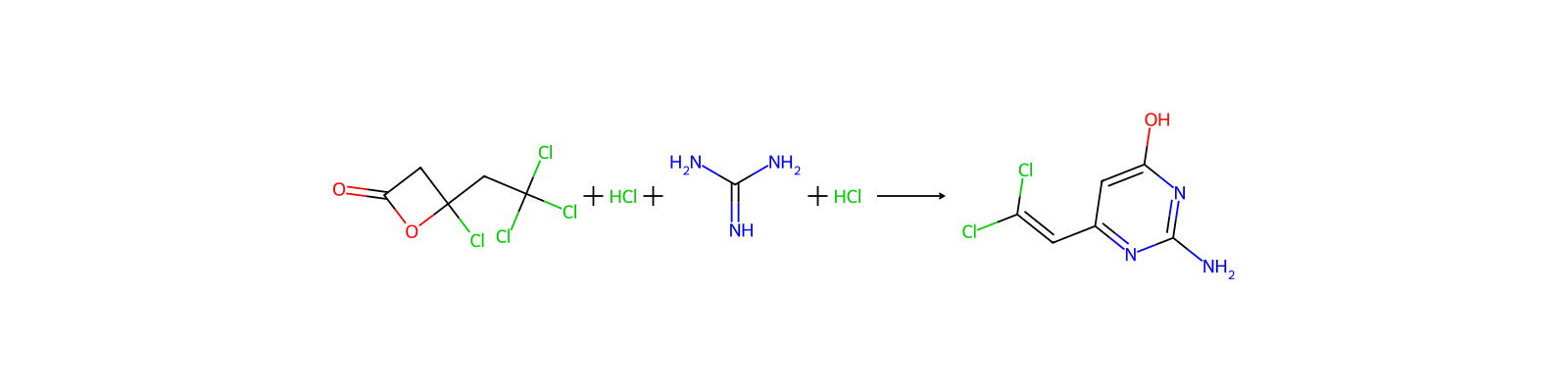
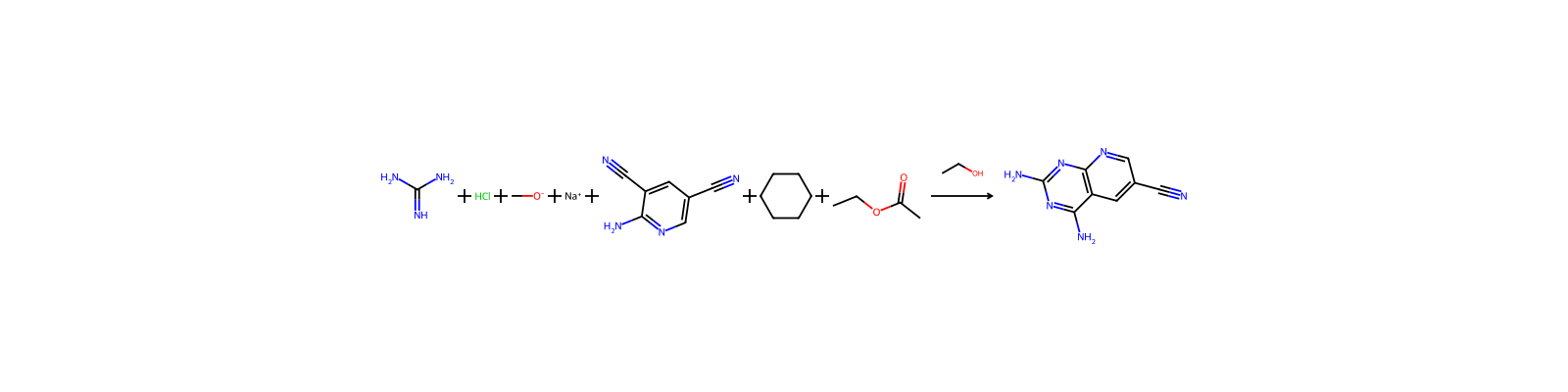
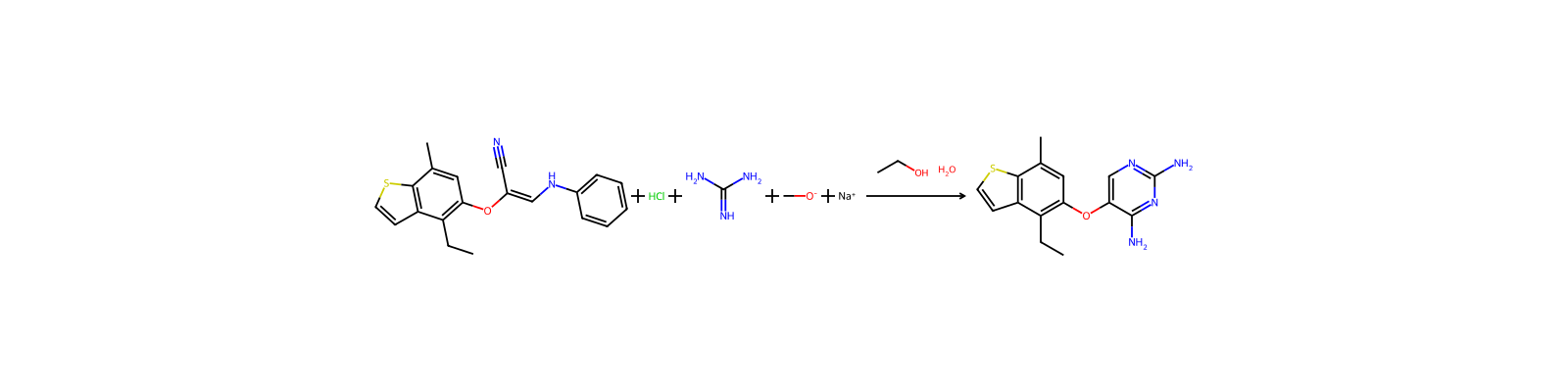
UsesGuanidine hydrochloride is used for purification of proteins and nucleic acids. It can be used as a medicine, organic synthesis intermediate and is used in dyes. It acts as an intermediate in the preparation of sulfadiazine, which is an important raw material for sulfamethyldiazine, sulfamethazine and folic acid. It is utilized in the synthesis of 2-amino-pyrimidine, 2- amino -6- methyl-pyrimidine and 2-amino -4,6 - dimethyl-pyrimidine. Also used in RNA isolation to dissociate nucleoproteins and inhibit RNase.
General DescriptionGuanidine hydrochloride (GdnHCl) is a well-known protein and enzyme denaturant. It is a small molecule and hydroscopic in nature. It is used to synthesis medicine, pesticide, dye and other organic compound, is the important material to make sulfanilamide medicine and folacin, and can be used as anti-static agent of compound fibre.
Related reactions
510 records



Compound notes
Loading…