
Basic information
- CAS
4039-32-1- Standard SMILES
C[Si](C)(C)N[Si](C)(C)C.[Li]- InChIKey
QQIRAVWVGBTHMJ-UHFFFAOYSA-N- Molecular formula
- C6H19LiNSi2
- Average molar mass
- 168.4 g/mol
Overview
structure in first source
Names & identifiers
- Preferred name
- Lithium bis(trimethylsilyl)amide
- English name
- Lithium bis(trimethylsilyl)amide
- Molecular formula
- C6H18LiNSi2
- Molecular weight
- 167.33
Names & synonyms
Bis(trimethylsilyl)amidolithiumLithiumbis(trimethylsilyl)amineBis(trimethylsilyl)amido lithiumLi bis(TMS)ARefChem:924827(LiN(SiMe3)2)223-725-64039-32-1Disilazane, 1,1,1,3,3,3-hexamethyl-, lithium saltLithium bis(trimethylsilyl)amideLithium, (bis(trimethylsilyl)amino)-Lithiumbis(trimethylsilyl)amide
Show more names
LIHMDSLHMDSLiHDMSLITHIUM HEXAMETHYLDISILAZANELithium 1,1,1,3,3,3-hexamethyldisilazideLITHIUM HEXAMETHYLDISILAZIDELithium bis(trimethylsilyl)amide solutionLiHMDS(1M)HMDS LiLiHMDS 1M in THF
lithium bis(trimethylsilyl)aminelithium HMDSlithiumhexamethyldisilazanelithium hexamethydisilazanelithium hexamethyidisilazanelithium hexamethyl disilazanelithium hexamethyl-disilazanelithium(hexamethyldisilazane)
Database identifiers
- CAS
4039-32-1
Properties
Computed structural properties
- Topological polar surface area
- 12 Ų
- Hydrogen bond donors
- 1
- Hydrogen bond acceptors
- 1
- Rotatable bonds
- 2
- Heavy atoms
- 10
- Formal charge
- 0
- Complexity
- 76.2
Experimental & physicochemical properties
Chemical ClassesMetals -> Metalloid Compounds (Silicon)
Physical Description
Wet Solid
White powder; [Alfa Aesar MSDS]
Physicochemical properties
- Melting point
- 73 °C · 73°C
- Boiling point
- 55 · 55-56 °C
- Density
- 0.86 g/mL · 0.860 g/mL at 25 °C (lit.)
- refractive index
- 20 · n20/D 1.425(lit.)
- Flash point
- 48 °F · 48 °F
- storage temp.
- 30 °C · Store below +30°C.
- solubility
- hydrolysis
- form
- Powder
- color
- White
- Specific Gravity
- 0.716 · 0.716
- Water Solubility
- hydrolysis
- Sensitive
- Air & Moisture Sensitive
Safety & regulation
Safety information is for reference only and does not replace the supplier’s Safety Data Sheet (SDS), applicable regulations, or professional assessment.
GHS classification
GHS Classification
Danger
H228 (43.9%): Flammable solid [Danger Flammable solids]
P210, P240, P241, P260, P261, P264, P264+P265, P270, P271, P273, P280, P301+P317, P301+P330+P331, P302+P352, P302+P361+P354, P304+P340, P305+P354+P338, P316, P317, P321, P330, P362+P364, P363, P370+P378, P405, and P501 (click each P-code to see the statement)
Aggregated GHS information provided per 198 reports by companies from 9 notifications to the ECHA C&L Inventory. Each notification may be associated with multiple companies.
Hazard information
Regulatory Information
Silanamine, 1,1,1-trimethyl-N-(trimethylsilyl)-, lithium salt (1:1) is listed on the EPA's Chemical Data Reporting (CDR) system. Manufacturers and importers of Silanamine, 1,1,1-trimethyl-N-(trimethylsilyl)-, lithium salt (1:1) are required to report information about their production and use of this chemical to the EPA under the Toxic Substances Control Act (TSCA). (40 eCFR Part 711)
Status: Active Update: 19-10-2022 https://echa.europa.eu/registration-dossier/-/registered-dossier/13861
1,1,1,3,3,3-Hexamethyldisilazane lithium salt: Does not have an individual approval but may be used under an appropriate group standard
Hazards SummaryReacts violently with water evolving extremely flammable gases; Causes burns; [Alfa Aesar MSDS] See Silanamine, 1,1,1-trimethyl-N-(trimethylsilyl)-, hydrolysis products with silica. See Hexamethyldisilazane. See Lithium.
Hazard Classes and CategoriesFlam. Sol. 2 (43.9%)
Toxicology
Adverse EffectsDermatotoxin - Skin burns.
Chemistry & industry
Uses & manufacturing
UsesUsed as an intermediate; [ExPub: ECHA REACH Registrations]
U.S. Production2023: <50,000 lb
Industry UsesIntermediate
General Manufacturing Information
Pharmaceutical and Medicine Manufacturing
Silanamine, 1,1,1-trimethyl-N-(trimethylsilyl)-, lithium salt (1:1): ACTIVE
Applications
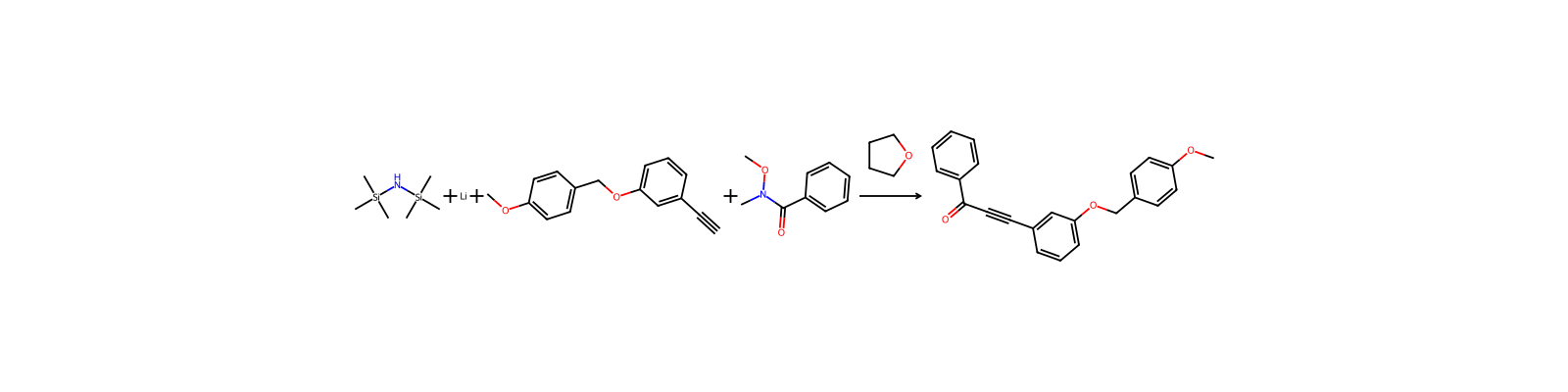
UsesLithium bis(trimethylsilyl)amide is used as nonnucleophilic base to generate kinetic ketone and ester enolates. It is considerably more selective than LDA and undesired reductions (e.g., of nonenolizable ketones observed in the case of LDA) can be avoided by using LHMDS.
UsesLithium Hexamethyldisilazide is widely used as strong nonnucleophilic base
UsesLithium bis(trimethylsilyl)amide is a base used in preparation of dienes and enolates. It is used to catalyze the addition of phosphine P-H bonds to carbodiimides leading to phosphaguanidines. Lithium bis(trimethylsilyl)amide is also used in a novel three-step synthesis of disubstituted 1,2,5-thiadiazoles.
General DescriptionThis product, 0.5 M in 2-methyltetrahydrofuran aligns with Safer Solvents and Auxiliaries, Use of Renewable Feedstocks and Inherently Safer Chemistry for Accident Prevention.
Preparation methods
PreparationIt is conveniently prepared by the reaction of hexamethyldisilazane with n-butyllithium in hexane. For most uses the hexane is then evaporated and replaced with THF.
Upstream & downstream products
Upstream raw materials
Related reactions
126 records


Compound notes
Loading…