HomeMCPWorkbenchSkills
HomeWorkbenchNotificationsMe
llms.txt · MCP GuidePrivacy Policy · Terms of Service · Supportv1.8.3
  1. Home
  2. /Compound

Benzylacetylene

HCID 575753
New reaction
Print
Basic informationNames & identifiersPropertiesSafety & regulationChemistry & industryRelated reactionsCompound notes
Substructure searchFind similar structures

Basic information

CAS
10147-11-2
Standard SMILES
C#CCc1ccccc1
InChIKey
NGKSKVYWPINGLI-UHFFFAOYSA-N
Molecular formula
C9H8
Average molar mass
116.16 g/mol
Monoisotopic mass
116.06260026

Names & identifiers

Preferred name
Benzylacetylene
IUPAC
prop-2-ynylbenzene
English name
3-Phenyl-1-propyne
Molecular formula
C9H8
Molecular weight
116.16

Names & synonyms

3-Phenyl-1-propyne10147-11-2Propargylbenzeneprop-2-yn-1-ylbenzene(2-Propynyl)benzeneBenzylacetylene3-phenylpropyneBenzene, (2-propynyl)-benzene, 2-propynyl-PROPYNE, 3-PHENYL-EU32H24A0ADTXSID00143941
Show more names
3-PHENYL-1-PROPYNE 97%3-benzene-1-propargyneBenzene, 2-propyn-1-yl-3-Phenyl-1-propyne, 97%, stab.
RefChem:566928DTXCID2066432629-124-9InChI=1/C9H8/c1-2-6-9-7-4-3-5-8-9/h1,3-5,7-8H,6Hprop-2-ynylbenzeneMFCD001344313-Phenyl-1-propyne (stabilised with BHT)(prop-2-yn-1-yl)benzene

Database identifiers

CAS
10147-11-2
PubChem CID
575753
DTXSID
DTXSID00143941
UNII
EU32H24A0A
EC Number
629-124-9
Nikkaji
J371.303B

Properties

Computed structural properties

XLogP
2.9
Topological polar surface area
0 Ų
Hydrogen bond donors
0
Hydrogen bond acceptors
0
Rotatable bonds
1
Heavy atoms
9
Formal charge
0
Complexity
109

Experimental & physicochemical properties

SpringerMaterials PropertiesDensity

Physicochemical properties

Boiling point
75 °C20 · 75 °C20 mm Hg(lit.)
Density
0.934 g/mL · 0.934 g/mL at 25 °C(lit.)
refractive index
20 · n20/D 1.526(lit.)
Flash point
126 °F · 126 °F
storage temp.
Flammables area
solubility
Chloroform (Sparingly), DMSO (Slightly)
form
Liquid
Specific Gravity
0.934 · 0.934
color
Clear colorless to yellow
Stability
Volatile
InChI
1S/C9H8/c1-2-6-9-7-4-3-5-8-9/h1,3-5,7-8H,6H2
InChIKey
NGKSKVYWPINGLI-UHFFFAOYSA-N
SMILES

Safety & regulation

Safety information is for reference only and does not replace the supplier’s Safety Data Sheet (SDS), applicable regulations, or professional assessment.

GHS classification

GHS Classification · 4 items

Warning

H226 (91.3%): Flammable liquid and vapor [Warning Flammable liquids]

P210, P233, P240, P241, P242, P243, P261, P264, P264+P265, P271, P280, P302+P352, P303+P361+P353, P304+P340, P305+P351+P338, P319, P321, P332+P317, P337+P317, P362+P364, P370+P378, P403+P233, P403+P235, P405, and P501 (click each P-code to see the statement)

Aggregated GHS information provided per 46 reports by companies from 6 notifications to the ECHA C&L Inventory. Each notification may be associated with multiple companies.

Hazard information

Hazard Classes and CategoriesFlam. Liq. 3 (91.3%)

Safety data

PPE
Eyeshields, Faceshields, Gloves, type ABEK (EN14387) respirator filter
wgk
3
ridadr
UN 3295 3/PG 3
hs_code
29029090
risk_code
10-36/37/38
Signal word
Warning
Symbol(GHS)
GHS02,GHS07
hazard_code
Xi
safety_code
16-26-36/37/39-37/39
hazard_class
3.2
Storage Class
3 - Flammable liquids
packing_group
III
target organs
Respiratory system
Hazard statements
H226-H315-H319-H335

Chemistry & industry

Applications · 2 items

Uses3-Phenyl-1-propyne is used as a starting material in the synthesis of 4-phenyl-2-butyn-1-ol. It is also used in the preparation of beta-hydroxytriazoles and indoles.

General Description3-Phenyl-1-propyne is a 3-aryl-1-propyne. The electronic transition of the resonance-stabilized 1-phenylpropargyl radical, produced in a jet-cooled discharge of 3-phenyl-1-propyne, has been studied by laser-induced fluorescence excitation and dispersed single vibronic level fluorescence (SVLF) spectroscopy. The microwave rotational spectrum of 3-phenyl-1-propyne (propargyl benzene) has been studied and its stable conformation is reported to have coplanar carbon atoms. Reaction of N-methyl-N-phenylhydrazine or N-phenylhydrazine with 3-phenyl-1-propyne is reported to yield indoles. 3-Phenyl-1-propyne is reported to react with styrene oxide and sodium azide, to afford β-hydroxytriazoles.

Related reactions

66 records
New reaction record
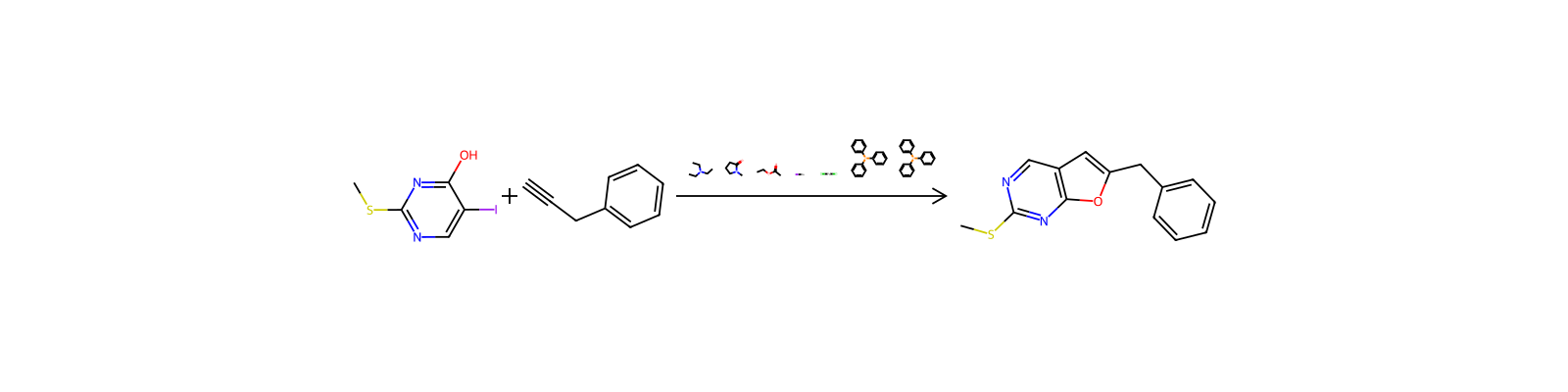
HRID 9764 reaction equation
HRID 9764As reactant
HRID 22872 reaction equation
HRID 22872As product
HRID 54249 reaction equation
HRID 54249As reactant
HRID 103769 reaction equation
HRID 103769As reactant
HRID 146835 reaction equation
HRID 146835As reactant
HRID 186527 reaction equation
HRID 186527As reactant
HRID 190765 reaction equation
HRID 190765As reactant
HRID 212948 reaction equation
HRID 212948As reactant
PreviousPage 1 of 9

Compound notes

On this pageBasic informationNames & identifiersPropertiesSafety & regulationChemistry & industryRelated reactionsCompound notes
C#CCc1ccccc1
CAS DataBase Reference
10147 · 10147-11-2
FDA UNII
32 H24A0A · EU32H24A0A
Comptox DTXSID
143941 · DTXSID00143941
UNSPSC Code
12352100 · 12352100
NACRES
22 · NA.22
Symbol(GHS)
2 · GHS02,GHS07
Signal word
Warning
Hazard statements
226 · H226-H315-H319-H335
Precautionary statements
210 · P210-P233-P240-P241-P303+P361+P353-P305+P351+P338
target organs
Respiratory system
PPE
Eyeshields, Faceshields, Gloves, type ABEK (EN14387) respirator filter
Hazard Codes
Xi
Risk Statements
10 · 10-36/37/38
Safety Statements
16 · 16-26-36/37/39-37/39
RIDADR
3295 · UN 3295 3/PG 3
WGK Germany
3 · 3
HazardClass
3.2 · 3.2
PackingGroup
III
HS Code
29029090 · 29029090
Storage Class
3 · 3 - Flammable liquids
Hazard Classifications
2 Flam · Eye Irrit. 2Flam. Liq. 3Skin Irrit. 2STOT SE 3
Hazard Classifications
Eye Irrit. 2Flam. Liq. 3Skin Irrit. 2STOT SE 3
Precautionary statements
P210-P233-P240-P241-P303+P361+P353-P305+P351+P338