
HRID 28066As reactant
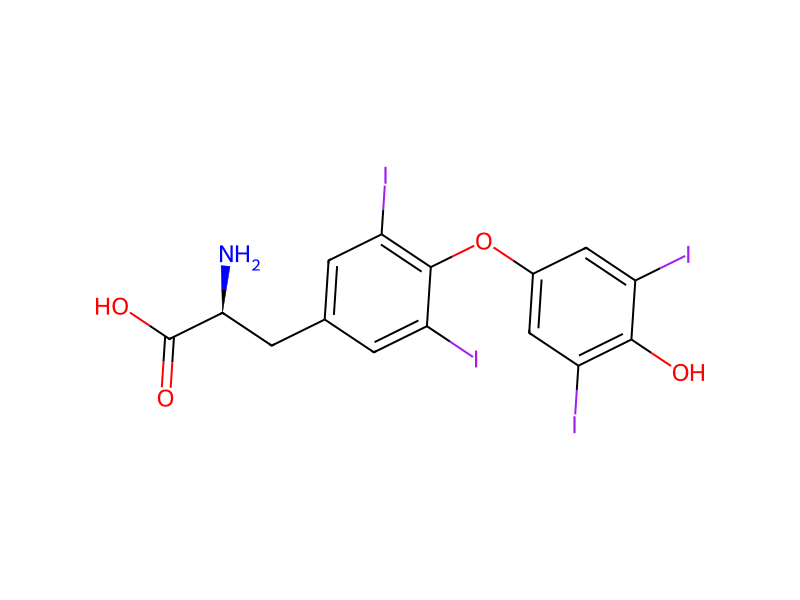
51-48-9N[C@@H](Cc1cc(I)c(Oc2cc(I)c(O)c(I)c2)c(I)c1)C(=O)OXUIIKFGFIJCVMT-LBPRGKRZSA-NL-thyroxine is the L-enantiomer of thyroxine. It has a role as an antithyroid drug, a thyroid hormone, a mouse metabolite and a human metabolite. It is an iodophenol, a thyroxine, a 2-halophenol, a non-proteinogenic L-alpha-amino acid and a L-phenylalanine derivative. It is a conjugate acid of a L-thyroxine(1-). It is an enantiomer of a D-thyroxine. It is a tautomer of a L-thyroxine zwitterion.
51-48-9DTXSID8023214CHEMBL1624、CHEMBL42115CHEBI:18332Crystals
Needles
Slightly soluble in water
Insoluble in ethanol, benzene
Breast Feeding; Lactation; Milk, Human; Thyroid Hormones
Thyroid hormones and antithyroid medicines
Decomposes at 235-236 °C
235.5 °C
Specific optical rotation: -4.4 deg at 20 °C/D (3% in 0.13N sodium hydroxide in 70% ethanol)
Specific optical rotation: -3.2 deg at 25 °C, 546 mm Hg (0.66 g in 6.07 g 0.5N sodium hydroxide and 13.03 g alcohol)
Safety information is for reference only and does not replace the supplier’s Safety Data Sheet (SDS), applicable regulations, or professional assessment.
This chemical does not meet GHS hazard criteria for 8% (2 of 25) of reports.
Danger
H302 (56%): Harmful if swallowed [Warning Acute toxicity, oral]
P203, P260, P264, P270, P280, P301+P317, P318, P319, P330, P405, and P501 (click each P-code to see the statement)
Aggregated GHS information provided per 25 reports by companies from 8 notifications to the ECHA C&L Inventory. Each notification may be associated with multiple companies.
Warning
Status: Active Update: 10-09-2021 https://echa.europa.eu/registration-dossier/-/registered-dossier/24062
L-Tyrosine, O-(4-hydroxy-3,5-diiodophenyl)-3,5-diiodo-: Does not have an individual approval but may be used under an appropriate group standard
The Approved Drug Products with Therapeutic Equivalence Evaluations identifies currently marketed prescription drug products, including levothyroxine sodium, approved on the basis of safety and effectiveness by FDA under sections 505 of the Federal Food, Drug, and Cosmetic Act. /Levothyroxine sodium/
Acute Tox. 4 (56%)
Reproductive toxicity - Category 2
H03AA01
H03AA01
Circulating thyroid hormones are greater than 99% bound to plasma proteins, including thyroxine-binding globulin (TBG), thyroxine-binding prealbumin (TBPA) and albumin (TBA). The higher affinity of both TBG and TBPA for T4 partially explains the higher serum levels, slower metabolic clearance and longer half-life of T4 compared to T3. Protein-bound thyroid hormones exist in reverse equilibrium with small amounts of free hormone where only unbound hormone is metabolically active.
Oral levothyroxine is a synthetic hormone that exerts the same physiologic effect as endogenous T<sub>4</sub>, thereby maintaining normal T<sub>4</sub> levels when a deficiency is present. Levothyroxine has a narrow therapeutic index and is titrated to maintain a euthyroid state with TSH (thyroid stimulating hormone) within a therapeutic range of 0.4–4.0 mIU/L. Over- or under-treatment with levothyroxine may have negative effects on growth and development, cardiovascular function, bone metabolism, reproductive function, cognitive function, emotional state, gastrointestinal function and glucose and lipid metabolism. The dose of levothyroxine should be titrated slowly and carefully and patients should be monitored for their response to titration to avoid these effects. TSH levels should be monitored at least yearly to avoid over-treating with levothyroxine which can result in hyperthyroidism (TSH <0.1mIU/L) and symptoms of increased heart rate, diarrhea, tremor, hypercalcemia, and weakness to name a few. As many cardiac functions including heart rate, cardiac output, and systemic vascular resistance are closely linked to thyroid status, over-treatment with levothyroxine may result in increases in heart rate, cardiac wall thickness, and cardiac contractility and may precipitate angina or arrhythmias, particularly in patients with cardiovascular disease and in elderly patients. In populations with any cardiac concerns, levothyroxine should be initiated at lower doses than those recommended in younger individuals or in patients without cardiac disease. Patients receiving concomitant levothyroxine and sympathomimetic agents should be monitored for signs and symptoms of coronary insufficiency. If cardiac symptoms develop or worsen, reduce the levothyroxine dose or withhold for one week and restart at a lower dose. Increased bone resorption and decreased bone mineral density may occur as a result of levothyroxine over-replacement, particularly in post-menopausal women. The increased bone resorption may be associated with increased serum levels and urinary excretion of calcium and phosphorous, elevations in bone alkaline phosphatase and suppressed serum parathyroid hormone levels. Administer the minimum dose of levothyroxine that achieves the desired clinical and biochemical response to mitigate this risk. Addition of levothyroxine therapy in patients with diabetes mellitus may worsen glycemic control and result in increased antidiabetic agent or insulin requirements. Carefully monitor glycemic control after starting, changing or discontinuing levothyroxine.





Stable under recommended storage conditions.
Extemporaneously prepared liquid dosage forms are needed to administer required medications in infants and young children. The goal of this study was to evaluate the stability of levothyroxine ... in extemporaneously prepared suspensions stored in plastic prescription bottles under refrigeration and room temperature. Levothyroxine (25 ug/mL) /was/ prepared in two groups of suspensions. ... /The/ suspensions were stored in plastic prescription bottles under refrigeration and at room temperature. Levothyroxine was stable for two weeks at 4 °C but only one week at 25 °C in both suspensions. ...
213.4 Ų [M+H]+ [CCS Type: DT; Buffer gas: N2; Ionization: ESI+; Dataset: TOXCAST; Source Identifier: DTXSID8023214]
216.2 Ų [M+H]+ [CCS Type: DT; Method: single field calibrated with Agilent tune mix (Agilent)]
208 Ų [M-H]-
log Kow = 0.16-2.11
Occurs as the hydrate. Triclinic crystals or cream-colored powder; odorless, teasteless, somewhat hygroscopic. Density: 2.381 at 20 °C/4 °C. Specific optical rotation: -4.4 deg at 20 °C/D (C = 3 in 70% ethanol). Solubility in water (25 °C): about 15 mg/100 mL. Soluble in mineral acids and in solutions of alkalies it dissolves and hot solutions of alkyl carbonates. Slightly soluble in alcohol. Insoluble in acetone, chloroform, ether. pH of saturated water solution: 8.35 to 9.35 /Thyroxine sodium salt/
Needle-like crystals. Decomposes 231-233 °C. Insoluble in water, alcohol and in the other usual organic solvents; in the presence of mineral acids or alkalies it dissolves in alcohol; soluble in solutions of the alkali hydroxides and in hot solutions of the alkali carbonates /DL-Thyroxine/
Crystals, decoposes at 237 °C. Specific optical rotaion: +2.97 deg at 21 °C/546 mm Hg (0.74 g in 6 g og 0.5N sodium hydroxide and 14 g alcohol) /D-Thyroxine/
Suitable extinguishing media: Use water spray, alcohol-resistant foam, dry chemical or carbon dioxide.
Advice for firefighters: Wear self contained breathing apparatus for fire fighting if necessary.
Store at 25 °C (77 °F); excursions permitted to 15 deg -30 °C (59 deg - 86 °F).
Keep container tightly closed in a dry and well-ventilated place.
ACCIDENTAL RELEASE MEASURES: Personal precautions, protective equipment and emergency procedures: Avoid dust formation. Avoid breathing vapors, mist or gas; Environmental precautions: Do not let product enter drains; Methods and materials for containment and cleaning up: Sweep up and shovel. Keep in suitable, closed containers for disposal.
SRP: Expired or waste pharmaceuticals shall carefully take into consideration applicable DEA, EPA, and FDA regulations. It is not appropriate to dispose by flushing the pharmaceutical down the toilet or discarding to trash. If possible return the pharmaceutical to the manufacturer for proper disposal being careful to properly label and securely package the material. Alternatively, the waste pharmaceutical shall be labeled, securely packaged and transported by a state licensed medical waste contractor to dispose by burial in a licensed hazardous or toxic waste landfill or incinerator.
Product: Offer surplus and non-recyclable solutions to a licensed disposal company; Contaminated packaging: Dispose of as unused product.
Precautions for safe handling: Provide appropriate exhaust ventilation at places where dust is formed. Normal measures for preventive fire protection.
Appropriate engineering controls: General industrial hygiene practice.
Gloves must be inspected prior to use. Use proper glove removal technique (without touching glove's outer surface) to avoid skin contact with this product. Dispose of contaminated gloves after use in accordance with applicable laws and good laboratory practices. Wash and dry hands.
SRP: Local exhaust ventilation should be applied wherever there is an incidence of point source emissions or dispersion of regulated contaminants in the work area. Ventilation control of the contaminant as close to its point of generation is both the most economical and safest method to minimize personnel exposure to airborne contaminants. Ensure that the local ventilation moves the contaminant away from the worker.
Eye/face protection: Use equipment for eye protection tested and approved under appropriate government standards such as NIOSH (US) or EN 166(EU).
Skin protection: Handle with gloves.
Body Protection: Choose body protection in relation to its type, to the concentration and amount of dangerous substances, and to the specific work-place. The type of protective equipment must be selected according to the concentration and amount of the dangerous substance at the specific workplace.
Respiratory protection: Respiratory protection is not required. Where protection from nuisance levels of dusts are desired, use type N95 (US) or type P1 (EN 143) dust masks. Use respirators and components tested and approved under appropriate government standards such as NIOSH (US) or CEN (EU).
Antacids (e.g., aluminum hydroxide, magnesium hydroxide, calcium carbonate), simethicone, and sucralfate bind thyroid agents in the GI tract and delay or prevent their absorption. Calcium carbonate may form an insoluble chelate with levothyroxine, resulting in decreased levothyroxine absorption and increased serum thyrotropin concentrations; in vitro studies indicate that levothyroxine binds to calcium carbonate at acidic pH levels. To minimize or prevent this interaction, some clinicians recommend that these agents be administered approximately 4 hours apart when the drugs must be used concurrently with thyroid agents.
Serum concentrations of digitalis glycosides may be decreased in patients with hyperthyroidism or in patients with hypothyroidism in whom a euthyroid state has been achieved. Thus, therapeutic effects of digitalis glycosides may be reduced in these patients.
Drugs that induce hepatic microsomal enzymes (e.g., carbamazepine, phenytoin, phenobarbital, rifampin) may accelerate metabolism of thyroid agents, resulting in increased thyroid agent dosage requirements. Phenytoin and carbamazepine also reduce serum protein binding of levothyroxine, and total- and free-T4 may be reduced by 20-40%, but most patients have normal serum concentrations of thyrotropin (thyroid-stimulating hormone, TSH) and are clinically euthyroid. /Thyroid agents/
Bile acid sequestrants (e.g., cholestyramine resin, colestipol) bind thyroid agents in the GI tract and substantially impair their absorption. In vitro studies indicate that the binding is not readily reversible. To minimize or prevent this interaction, these agents should be administered at least 4 hours apart when the drugs must be used concurrently.
For more Interactions (Complete) data for LEVOTHYROXINE (14 total), please visit the HSDB record page.
TERRESTRIAL FATE: Based on a classification scheme(1), an estimated Koc value of 6600(SRC), determined from a structure estimation method(2), indicates that levothyroxine is expected to be immobile in soil(SRC). Estimated pKa values of 7.43 and 9.43(3), indicating that this compound will exist as a zwitterion in the environment. Volatilization from moist soil is not expected because the compound exists as an ion and ions do not volatilize. Levothyroxine is not expected to volatilize from dry soil surfaces(SRC) based upon an estimated vapor pressure of 2.1X10⁻¹⁶ mm Hg at 25 °C(SRC), determined from a fragment constant method(2). Biodegradation data in soil ere not available(SRC, 2016).
AQUATIC FATE: Based on a classification scheme(1), an estimated Koc value of 6600(SRC), determined from a structure estimation method(2), indicates that levothyroxine is expected to adsorb to suspended solids and sediment(SRC). Estimated pKa values of 7.43 and 9.43(3) indicate levothyroxine will exist as a zwitterion at pH values of 5 to 9 and, therefore, volatilization from water surfaces and bioconcetration are not expected to be an important fate processes. Biodegradation data in water were not available(SRC, 2016).
ATMOSPHERIC FATE: According to a model of gas/particle partitioning of semivolatile organic compounds in the atmosphere(1), levothyroxine, which has an estimated vapor pressure of 2.1X10⁻¹⁶ mm Hg at 25 °C(SRC), determined from a fragment constant method(2), is expected to exist solely in the particulate phase in the ambient atmosphere. Particulate-phase levothyroxine may be removed from the air by wet and dry deposition(SRC). Levothyroxine contains chromophores that absorb at wavelengths >290 nm(3) and, therefore, may be susceptible to direct photolysis by sunlight(SRC).
Generally, adverse events resulting from incorrect dosing (excessive dosing) often form a hyperthyroid-like picture or an allergic reaction to the excipient of the levothyroxine tablets. Levothyroxine 50 mcg tablets don't contain allergic excipients, so there is a decreased risk for immune reactions. Allergy to the excipients such as dye(tartrazine yellow), lactose, acacia, or even gluten in the levothyroxine tablet may infrequently occur. Hence, allergy or intolerance to levothyroxine can be managed by changing the product, including consideration of gel capsules.Among older persons treated with levothyroxine, levothyroxine at doses more than 75 mcg per day is associated with an increased risk of atrial fibrillation.
IDENTIFICATION AND USE: Levothyroxine occurs as crystals or needles. As a drug, levothyroxine sodium is used as replacement or supplemental therapy in congenital or acquired hypothyroidism. It is also used in the treatment or prevention of various types of euthyroid goiters, including thyroid nodules, subacute or chronic lymphocytic thyroiditis (Hashimoto's thyroiditis), multinodular goiter and, as an adjunct to surgery and radioiodine therapy in the management of thyrotropin-dependent well-differentiated thyroid cancer. The injection form of levothyroxine sodium is indicated for the treatment of myxedema coma. Levothyroxine has also been used in veterinary medicine. HUMAN EXPOSURE AND TOXICITY: The signs and symptoms of levothyroxine overdosage are those of hyperthyroidism. In addition, confusion and disorientation may occur. Cerebral embolism, shock, coma, and death have been reported. Studies indicate that careful attention is necessary when initiating the administration of levothyroxine sodium to very-low-birth-weight infants. Ingestion of levothyroxine in children typically follows a benign course, but overdose can result in significant complications, including seizures and arrhythmias, both of which should be monitored for. In one genotoxicity study, the ability of thyroxine to induce sister chromatid exchange and micronuclei was tested in cultured human lymphocytes. Thyroxine exhibited weak clastogenic effects only at high concentrations. ANIMAL STUDIES: A single acute overdose in small animals is less likely to cause severe thyrotoxicosis than chronic overdosage. Vomiting, diarrhea, transition from hyperactivity to lethargy, hypertension, tachycardia, tachypnea, dyspnea, and abnormal pupillary light reflexes may be noted in dogs and cats. In dogs, clinical signs may appear within 1-9 hours after ingestion. Four pregnant New Zealand white rabbits received intramuscular levothyroxine at 250 ug/kg on days 25 and 26 of gestation. Maternal and fetal plasma-free levothyroxine concentration was higher than in controls, with the highest concentration noted at 14 days of neonatal period. Treatment resulted in fetal hyperglycemia and depletion of fetal liver glycogen content. Animal studies have not been performed to evaluate levothyroxine carcinogenic potential, mutagenic potential or effects on fertility.
Levothyroxine toxicity is rare; however, it is most likely to occur in the setting of accidental ingestion by children or older adults. Thyroxine (T4) and triiodothyronine (T3) levels rise within 1 to 2 hours of ingestion. In the initial stage of overdose (6 to 12 hours post-ingestion), the common signs of toxicity would be tremulousness, tachycardia, hypertension, anxiety, and diarrhea. Rarely convulsions, thyroid storms, acute psychosis, arrhythmias, and acute myocardial infarction may occur. Laboratory workup usually reveals elevated serum total T4 and T3, suppressed serum TSH, and elevated Free T4 and Free T3.
EPA has released the Interactive Chemical Safety for Sustainability (iCSS) Dashboard. The iCSS Dashboard provides an interactive tool to explore rapid, automated (or in vitro high-throughput) chemical screening data generated by the Toxicity Forecaster (ToxCast) project and the federal Toxicity Testing in the 21st century (Tox21) collaboration. /The title compound was tested by ToxCast and/or Tox21 assays/[USEPA; ICSS Dashboard Application; Available from, as of December 17, 2015: http://actor.epa.gov/dashboard/]
Using a structure estimation method based on molecular connectivity indices(1), the Koc of levothyroxine can be estimated to be 6600(SRC). According to a classification scheme(2), this estimated Koc value suggests that levothyroxine is expected to be immobile in soil. Estimated pKa values of 7.43 and 9.43(3) indicate that this compound will exist almost entirely in the zwitterion form in the environment(3).
/SIGNS AND SYMPTOMS/ The signs and symptoms of overdosage are those of hyperthyroidism. In addition, confusion and disorientation may occur. Cerebral embolism, shock, coma, and death have been reported.
/CASE REPORTS/ There is currently little literature pertaining to levothyroxine overdose apart from minor or accidental overdoses in the pediatric population. In particular, there is little information available on how to confidently differentiate levothyroxine overdose from endogenous causes of thyrotoxicosis when there is no history available at the time of assessment. We report a levothyroxine (15,800 ug) and citalopram (2,460 mg) overdose in a 55-year-old woman presenting with seizure and tachycardia in which the diagnosis was not initially suspected. Clinical data, including a long history of treated hypothyroidism and lack of a goiter; and biochemical findings, such as an incompletely suppressed thyroid-stimulating hormone (TSH) level, despite a markedly elevated free thyroxine level (FT4), a normal sex hormone-binding globulin level at baseline, and an undetectable thyroglobulin, supported the diagnosis of thyrotoxicosis due to a massive exogenous thyroid hormone overdose. Treatment was given to decrease free triiodothyronine (FT3) conversion and increase thyroid hormone clearance with dexamethasone and cholestyramine. The patient made a full recovery. Levothyroxine overdose can result in subtle symptoms and signs clinically, even when in massive quantities. This can make diagnosis challenging. Biochemical features, such as the pattern of thyroid hormone elevation and thyroglobulin levels, help differentiate exogenous thyroid hormone overdose from endogenous causes of thyrotoxicosis.
/CASE REPORTS/ Exposure to thyroid products is common, but acute poisonings in adults are rare. Most cases of severe toxicity are related to prolonged, repeated exposure (either inadvertent or deliberate abuse). There are a few reports of toxicity in children following large (greater than 10 mg) single ingestions. Expect significant toxicity in children and adults who have ingested more than 2 to 4 mg of levothyroxine. However, in comorbid elderly patients, the threshold may be lower. In this paper we present acute overdose of levothyroxine in nine adult patients (aged 21-44 years; mean--30.5 years); ingested doses were from 1.2 mg to 15 mg (mean--6.5 mg). Only in three cases (ingested doses were 5.6; 8.0 and 15 mg) minor and mild clinical symptoms were observed and pharmacological treatment was necessary. No severe symptoms were observed in our group. Asymptomatic clinical course in patients who ingested more than 3 mg of levothyroxine probably was related to coingestion of benzodiazepins, beta-blockers, ACE inhibitors and ethanol. Serum free triiodothyronine (T3) level of 20 pg/ml (normal, 4.1 pg/ml) was reported following an overdose of 15 mg levothyroxine in day five. Normalization was observed in day eleven.
/CASE REPORTS/ We describe the course of a toddler who ingested a massive amount of levothyroxine and review treatment options for such overdoses. A 2 1/2-year-old boy presented shortly after an ingestion of up to 7.6 mg of levothyroxine (potentially as much as 700 ug/kg). He was initially asymptomatic, treated with oral charcoal 1 g/kg, and discharged home from the emergency department after a few hours. He returned approximately 24 hours later with a temperature of 38.5 °C, heart rate of 163 beats per minute, respiratory rate of 30 breaths per minute, and blood pressure of 136/70 mm Hg. He had a slightly decreased appetite and no signs or symptoms of infection. He was admitted to hospital and treated with oral acetaminophen. The initial free thyroxine (T4) was > 100 pmol/L and free triiodothyronine (T3) was 35.3 pmol/L. The patient had desquamation of the palms and soles, hair loss, and irritability during the month following the ingestion. Resolution of the elevated free T4 occurred by 12 days post-ingestion and normalization of the thyroid-stimulating hormone by 7 weeks post-ingestion. There were no long-term sequelae. Levothyroxine overdose can result in significant complications, including seizures and arrhythmias, both of which should be monitored for. However, as our case illustrates, massive ingestion of levothyroxine in children typically follows a benign course.
Drug-Induced Liver Injury Severity and Toxicity (DILIst)
levothyroxine
DILI Positive
Oral
DOI:10.1016/j.drudis.2019.09.022
The Approved Drug Products with Therapeutic Equivalence Evaluations identifies currently marketed prescription drug products, including levothyroxine sodium, approved on the basis of safety and effectiveness by FDA under sections 505 of the Federal Food, Drug, and Cosmetic Act. /Levothyroxine sodium/
Levothyroxine is a synthetically prepared levo-isomer of the thyroid hormone thyroxine (T<sub>4</sub>, a tetra-iodinated tyrosine derivative) that acts as a replacement in deficiency syndromes such as hypothyroidism. T<sub>4</sub> is the major hormone secreted from the thyroid gland and is chemically identical to the naturally secreted T<sub>4</sub>: it increases metabolic rate, decreases thyroid-stimulating hormone (TSH) production from the anterior lobe of the pituitary gland, and, in peripheral tissues, is converted to T<sub>3</sub>. Thyroxine is released from its precursor protein thyroglobulin through proteolysis and secreted into the blood where is it then peripherally deiodinated to form triiodothyronine (T<sub>3</sub>) which exerts a broad spectrum of stimulatory effects on cell metabolism. T<sub>4</sub> and T<sub>3</sub> have a relative potency of ~1:4. Thyroid hormone increases the metabolic rate of cells of all tissues in the body. In the fetus and newborn, thyroid hormone is important for the growth and development of all tissues including bones and the brain. In adults, thyroid hormone helps to maintain brain function, food metabolism, and body temperature, among other effects. The symptoms of thyroid deficiency relieved by levothyroxine include slow speech, lack of energy, weight gain, hair loss, dry thick skin and unusual sensitivity to cold. The thyroid hormones have been shown to exert both genomic and non-genomic effects. They exert their genomic effects by diffusing into the cell nucleus and binding to thyroid hormone receptors in DNA regions called thyroid hormone response elements (TREs) near genes. This complex of T<sub>4</sub>, T<sub>3</sub>, DNA, and other coregulatory proteins causes a conformational change and a resulting shift in transcriptional regulation of nearby genes, synthesis of messenger RNA, and cytoplasmic protein production. For example, in cardiac tissues T<sub>3</sub> has been shown to regulate the genes for α- and β-myosin heavy chains, production of the sarcoplasmic reticulum proteins calcium-activated ATPase (Ca2+-ATPase) and phospholamban, β-adrenergic receptors, guanine-nucleotide regulatory proteins, and adenylyl cyclase types V and VI as well as several plasma-membrane ion transporters, such as Na+/K+–ATPase, Na+/Ca2+ exchanger, and voltage-gated potassium channels, including Kv1.5, Kv4.2, and Kv4.3. As a result, many cardiac functions including heart rate, cardiac output, and systemic vascular resistance are closely linked to thyroid status. The non-genomic actions of the thyroid hormones have been shown to occur through binding to a plasma membrane receptor integrin aVb3 at the Arg-Gly-Asp recognition site. From the cell-surface, T<sub>4</sub> binding to integrin results in down-stream effects including activation of mitogen-activated protein kinase (MAPK; ERK1/2) and causes subsequent effects on cellular/nuclear events including angiogenesis and tumor cell proliferation.
T<sub>4</sub> half-life is 6 to 7 days. T<sub>3</sub> half-life is 1 to 2 days.
In dogs orally administered levothyroxine has relatively ... short elimination half life when compared to humans. ... The serum half life is approximately 12-16 hours.
The usual plasma half-lives of thyroxine and triiodothyronine are 6-7 days and approximately 1-2 days, respectively. The plasma half-lives of thyroxine and triiodothyronine are decreased in patients with hyperthyroidism and increased in those with hypothyroidism.
Approximately 70% of secreted T<sub>4</sub> is deiodinated to equal amounts of T<sub>3</sub> and reverse triiodothyronine (rT<sub>3</sub>), which is calorigenically inactive. T<sub>4</sub> is slowly eliminated through its major metabolic pathway to T<sub>3</sub> via sequential deiodination, where approximately 80% of circulating T<sub>3</sub> is derived from peripheral T<sub>4</sub>. The liver is the major site of degradation for both T<sub>4</sub> and T<sub>3</sub>, with T<sub>4</sub> deiodination also occurring at a number of additional sites, including the kidney and other tissues. Elimination of T<sub>4</sub> and T<sub>3</sub> involves hepatic conjugation to glucuronic and sulfuric acids. The hormones undergo enterohepatic circulation as conjugates are hydrolyzed in the intestine and reabsorbed. Conjugated compounds that reach the colon are hydrolyzed and eliminated as free compounds in the feces. Other minor T<sub>4</sub> metabolites have been identified.
Yields l-tyrosine in rabbit, in rat /From table/
Yields 3,3',5-triiodo-L-thyronine in man, rat, dog, rabbit. /From table/
Yields l-thyroxine-4'-beta-d-glucuronide in dog, in man, in rat. Yields l-thyroxine-4'-sulfate in dog. /From table/
Yields 3,3',5,5'-tetraiodothyropyruvic acid in rat. Yields l-thyronine in rat. /From table/
Yields 3,3'-diiodo-l-thyronine in dog. Yields 3,3',5,5'-tetraiodothyroacetic acid in man, in rat. /From table/
Q51BO43MG4
LEVOTHYROXINE
Established Pharmacologic Class [EPC] - l-Thyroxine
Chemical Structure [CS] - Thyroxine
Levothyroxine is a l-Thyroxine.
LEVOTHYROXINE
Absorption of orally administered T4 from the gastrointestinal tract ranges from 40% to 80% with the majority of the levothyroxine dose absorbed from the jejunum and upper ileum. T4 absorption is increased by fasting, and decreased in malabsorption syndromes and by certain foods such as soybeans, milk, and dietary fiber. Absorption may also decrease with age. In addition, many drugs affect T4 absorption including bile acide sequestrants, sucralfate, proton pump inhibitors, and minerals such as calcium (including in yogurt and milk products), magnesium, iron, and aluminum supplements. To prevent the formation of insoluble chelates, levothyroxine should generally be taken on an empty stomach at least 2 hours before a meal and separated by at least 4 hours from any interacting agents.
Thyroid hormones are primarily eliminated by the kidneys. A portion of the conjugated hormone reaches the colon unchanged and is eliminated in the feces. Approximately 20% of T<sub>4</sub> is eliminated in the stool. Urinary excretion of T<sub>4</sub> decreases with age.
Circulating thyroid hormones are greater than 99% bound to plasma proteins, including thyroxine-binding globulin (TBG), thyroxine-binding prealbumin (TBPA), and albumin (TBA), whose capacities and affinities vary for each hormone. The higher affinity of both TBG and TBPA for T4 partially explains the higher serum levels, slower metabolic clearance, and longer half-life of T4 compared to T3. Protein-bound thyroid hormones exist in reverse equilibrium with small amounts of free hormone. Only unbound hormone is metabolically active. Many drugs and physiologic conditions affect the binding of thyroid hormones to serum proteins. Thyroid hormones do not readily cross the placental barrier.
Levothyroxine Sodium for Injection is administered via the intravenous route. Following administration, the synthetic levothyroxine cannot be distinguished from the natural hormone that is secreted endogenously.
Absorption of orally administered T4 from the gastrointestinal (GI) tract ranges from 40% to 80%. The majority of the levothyroxine dose is absorbed from the jejunum and upper ileum. The relative bioavailability of Synthroid tablets, compared to an equal nominal dose of oral levothyroxine sodium solution, is approximately 93%. T4 absorption is increased by fasting, and decreased in malabsorption syndromes and by certain foods such as soybean infant formula. Dietary fiber decreases bioavailability of T4. Absorption may also decrease with age. In addition, many drugs and foods affect T4 absorption.
Levothyroxine is variably absorbed from the GI tract (range: 40-80%). In animals, levothyroxine is absorbed in the proximal and middle jejunum; the drug is not absorbed from the stomach or distal colon and little, if any, absorption occurs in the duodenum. Studies in humans indicate that levothyroxine is absorbed from the jejunum and ileum and some absorption also occurs in the duodenum. The degree of absorption of levothyroxine from the GI tract depends on the product formulation and type of intestinal contents, including plasma protein and soluble dietary factors that may bind thyroid hormone and make it unavailable for diffusion. In addition, concurrent oral administration of infant soybean formula, soybean flour, cotton seed meal, walnuts, foods containing large amounts of fiber, ferrous sulfate, antacids, sucralfate, calcium carbonate, cation-exchange resins (e.g., sodium polystyrene sulfonate), simethicone, or bile acid sequestrants may decrease absorption of levothyroxine. The extent of levothyroxine absorption is increased in the fasting state and decreased in malabsorption states (e.g., sprue); absorption also may decrease with age.
MEDICATION (VET)
MEDICATION
The thyroid hormones thyroxine (L-3,5,3',5'-tetraiodothyronine, T4) and 3,5,3'-triiodothyronine, T3, are iodinated derivatives of thyronine and are formed by oxidative coupling of the precursors 3-monoiodotyrosine and 3,5-diiodotyrosine.
Synthesized and stored as amino acid residues of thyroglobulin, the major protein component of the thyroid follicular colloid.
Levothyroxine Sodium Powder (Veterinary): 0.22% (1 g of T4 in 454 g of powder): One level teaspoonful contains 12 mg of T4. Available in 1 lb and 10 lb containers; many trade name products may be available and include: Equine Thyroid Supplement, Thyrozine Powder, Levoxine Powder; Thyro-L, Throxine-L Powder, Thyrosyn Powder, Thyrokare Powder; (Rx). Labeled for use in horses.
Levothyroxine Oral Solution: 1 mg/mL in 30 mL bottles: Leventa Oral Solution; (Rx). Labeled for use in dogs.
Levothyroxine Sodium tablets Chewable (Veterinary): 0.1 mg, 0.2 mg, 0.3 mg, 0.4 mg, 0.5 mg, 0.6 mg, 0.7 mg, 0.8 mg; Products that may be available include: Canine Thyroid Chewable Tablets, Nutrived T-4 Chewable Tablets, Thyromed Chewable Tablets; (Rx). Labeled for use in dogs.
Levothyroxine Sodium Tablets: 0.1 mg, 0.2 mg, 0.3 mg, 0.4 mg, 0.5 mg, 0.6 mg, 0.7 mg, 0.8 mg and 1 mg; many trade name products may be available and include: Soloxine, Levosyn, Thyro_tabs, Thyrosyn, Thyrosine-L Tablets, Thyrozine, Thyrokare, generic; (Rx). Labeled for use in dogs.
Table: Levothyroxine Sodium Preparations [Table#4442]
L-Tyrosine, O-(4-hydroxy-3,5-diiodophenyl)-3,5-diiodo-: ACTIVE
Top 200 drug - Syntheroid
Synthroid is synthetic levothyroxine and is identical to that produced in the human thyroid gland.
DescriptionL-Thyroxine is a synthetic form of the thyroid hormone thyroxine. In vivo, L-thyroxine (0.9 and 2.7 μg) inhibits synthesis and release of thyrotropin induced by thyrotropin-releasing hormone from the anterior pituitary in mice. It also reverses decreases in levels of circulating thymic serum factor (FTS) and the number of T rosette-forming cells in an old age-induced mouse model of hypothyroidism. Formulations containing L-thyroxine have been used in the treatment of hypothyroidism.
Usesantihypercholesterimic, thyromimetic
UsesOne of the thyroid hormones involved in the maintenance of metabolic homeostasis. Synthesized and stored as amino acid residues of thyroglobulin, the major protein component of the thyroid follicular colloid. Synthesis and secretion are regulated by the pituitary hormone (TSH). Deiodinated in peripheral tissues to the active metabolite, liothyronine. The D-form has very little activity as a thyroi d hormone, but has been used to treat hyperlipidemia.
UsesThyroxine is one of the thyroid hormones involved in the maintenance of metabolic homeostasis. Synthesized and stored as amino acid residues of thyroglobulin, the major protein component of the thyroid follicular colloid. Synthesis and secretion are regulated by the pituitary hormone (TSH). Deiodinated in peripheral tissues to the active metabolite, liothyronine. The D-form has very little activity as a thyroid hormone, but has been used to treat hyperlipidemia.
DefinitionChEBI: The L-enantiomer of thyroxine.
For more Human Toxicity Excerpts (Complete) data for LEVOTHYROXINE (12 total), please visit the HSDB record page.