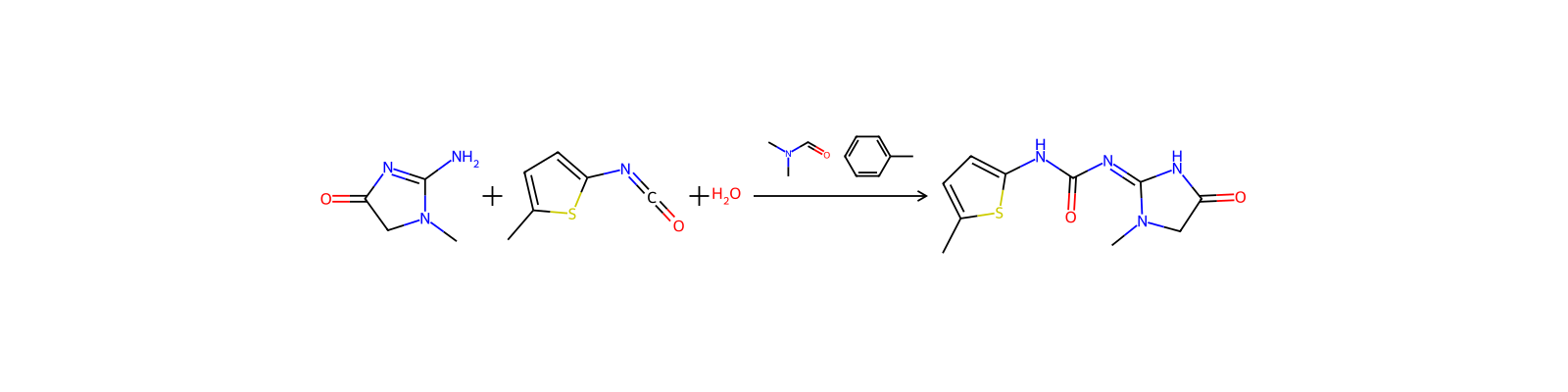
Creatinine is a lactam obtained by formal cyclocondensation of creatine. It is a metabolite of creatine. It has a role as a diagnostic agent and a human metabolite. It is a lactam and an imidazolidinone. It is functionally related to a creatine.
Chemical ClassesBiological Agents -> Other Biomolecules
CosmeticsSkin conditioning
LogP-1.76
Solubility80.1 mg/mL at 16 °C
Melting Point303 °C (decomposes)
Vapor Pressure0.000217 [mmHg]
Physical Description · 2 items
Solid; [Merck Index] White crystalline powder; [Alfa Aesar MSDS]
Solid
Collision Cross Section123.4 Ų [M+H]+
Physicochemical properties
Melting point
295 °C · 295 °C (dec.) (lit.)
Boiling point
211.83 °C · 211.83°C (rough estimate)
Safety & regulation
Safety information is for reference only and does not replace the supplier’s Safety Data Sheet (SDS), applicable regulations, or professional assessment.
GHS classification
GHS Classification · 5 items
This chemical does not meet GHS hazard criteria for 60% (6 of 10) of all reports.
P261, P264, P264+P265, P271, P280, P302+P352, P304+P340, P305+P351+P338, P319, P321, P332+P317, P337+P317, P362+P364, P403+P233, P405, and P501 (click each P-code to see the statement)
Aggregated GHS information provided per 10 reports by companies from 4 notifications to the ECHA C&L Inventory. Each notification may be associated with multiple companies.
Status: Active Update: 11-10-2022 https://echa.europa.eu/registration-dossier/-/registered-dossier/16337
Creatinine: Does not have an individual approval but may be used under an appropriate group standard
Other Safety InformationEvaluation - Chemicals that are unlikely to require further regulation to manage risks to environment
Hazards SummaryA skin and strong eye irritant; [Alfa Aesar MSDS]
Hazard Classes and CategoriesSkin Irrit. 2 (40%)
Safety data
F
9-23
PPE
Eyeshields, Gloves, type N95 (US)
wgk
3
tsca
TSCA listed
ridadr
UN 1789 8/PG 3
Chemistry & industry
Pharmacology
Tissue LocationsAdipose Tissue
Cellular LocationsCytoplasm
Uses & manufacturing
UsesUsed as a bulking agent for freeze drying; [ChemIDplus] Final metabolic product of creatine that is found in all bodily fluids; Used in determination of renal function; [Merck Index]
Use ClassificationCosmetics -> Skin conditioning
General Manufacturing Information4H-Imidazol-4-one, 2-amino-1,5-dihydro-1-methyl-: ACTIVE
Applications · 5 items
DescriptionCreatinine is together with urea, the most widely known "uremic toxin", and is usually assessed when- ever a reduction in kidney function is suspected. This is mainly because creatinine evaluation is cheap, widely accessible and relatively well reflects the renal function. It also forms the basis for estimation of estimated glomerular filtration rate (eGFR) and thus is a major component of all principal eGFR equations.Creatinine, which is nonenzymatically produced from the creatine pool in skeletal muscle, but is also to some extent generated from exogenous creatine present in meat, is the major guanidine compound retained in patients with diminished glomerular filtration rate. Creatinine is routinely determined in plasma or serum as a measure of impairment of renal function and it might be expected that a variety of uremic symptoms correlate with the plasma creatinine level; this does not, however, necessarily imply a causal relationship. In fact, high serum creatinine levels correlate with low mortality in HD patients, presumably because the creatinine generation rate reflects the size of the muscle mass. Creatinine seems to be relatively nontoxic. Large amounts of creatinine have been fed to healthy subjects without any adverse effects and animals also tolerate large doses.
A degradation product of creatine. Serum creatinine is elevated after eating meat. High serum creatinine may also be indicative of renal failure.
REACH Registrations
Active
hs_code
29332990
Toxicity
A degradation product of creatine. Serum creatinine is elevated after eating meat. High serum creatinine may also be indicative of renal failure.
risk_code
34-36/37/38-20/21/22
Signal word
Warning
Symbol(GHS)
GHS07
hazard_code
Xi,Xn
safety_code
26-36/37/39-45-24/25-36
Storage Class
13 - Non Combustible Solids
Hazard statements
H315-H319-H335
REACH Registrations
Active
Precautionary statements
P261-P280a-P304+P340-P305+P351+P338-P405-P501a
Usesmetabolic enhancer
UsesCreatinine levels in blood and urine may be used to calculate the creatinine clearance (CrCl), which reflects the glomerular filtration rate (GFR), an important clinical index of renal function. It is a substrate for creatininase.
UsesCreatinine is the end product of creatine catabolism. Creatinine is a normal constituent of urine. Also found together with creatine in muscle tissues and blood. Creatinine is found in all soils and i n grain seeds and other vegetable matter as well as in certain fish and in crab meat extract.
General DescriptionCreatinine is a breakdown product formed by the degradation of creatine phosphate from muscles. The kidneys extract creatinine from the body by filtering almost all of it from the blood and excreting it in the urine. Serum creatinine is the most commonly used indicator for renal functioning. In chemical synthesis, creatinine is used as a heterocyclic nitrogenous compound that produces electron-rich and highly basic creatinine derivatives.