
Isonicotinic Acid
Completing data — refresh the page later to see the latest

Basic information
- CAS
163751-04-0- Standard SMILES
O=C(O)c1ccncc1- InChIKey
TWBYWOBDOCUKOW-UHFFFAOYSA-N- Molecular formula
- C6H5NO2
- Average molar mass
- 123.11 g/mol
- Monoisotopic mass
- 123.0320284
Overview
Isonicotinic acid is a pyridinemonocarboxylic acid in which the carboxy group is at position 4 of the pyridine ring. It has a role as a human metabolite and an algal metabolite. It is a conjugate acid of an isonicotinate.
Names & identifiers
- Preferred name
- Isonicotinic Acid
- IUPAC
- pyridine-4-carboxylic acid
- English name
- Isonicotinic acid
- Molecular formula
- C6H5NO2
- Molecular weight
- 123.11
Names & synonyms
ISONICOTINIC ACID55-22-14-Pyridinecarboxylic acidPyridine-4-carboxylic acid4-Carboxypyridinegamma-Picolinic acidp-Pyridinecarboxylic acidgamma-Pyridinecarboxylic acidDTXSID8020757NSC-1483Y8SYN761TQDTXCID80757
Show more names
INAPYRIDINE-3-CARBOXYLIC ACIDIsonicotinicIsonicotic acidcotinic acid
CHEBI:6032Acid, IsonicotinicRefChem:791922200-228-24-Picolinic acid.gamma.-Picolinic acidAcide iso-nicotinique1,4-Dihydroisonicotinic acid
Database identifiers
- CAS
163751-04-0、55-22-1- PubChem CID
- 5922
- DTXSID
DTXSID8020757- ChEMBL
CHEMBL1203- ChEBI
CHEBI:6032- UNII
- Y8SYN761TQ
- EC Number
- 200-228-2
- Nikkaji
- J4.559D、J452.015G
Properties
Computed structural propertiesFilling in
- XLogP
- 0.4
- Topological polar surface area
- 50.2 Ų
- Hydrogen bond donors
- 1
- Hydrogen bond acceptors
- 3
- Rotatable bonds
- 1
- Heavy atoms
- 9
- Formal charge
- 0
- Complexity
- 108
Experimental & physicochemical properties
Chemical ClassesNitrogen Compounds -> Pyridines
SpringerMaterials PropertiesChemical shift
LogP-0.57
Vapor Pressure0.00789 [mmHg]
Physical DescriptionSolid; [Merck Index] Beige powder; [Sigma-Aldrich MSDS]
Dissociation Constants1.77
Physicochemical properties
- Melting point
- 300 °C · ≥300 °C (lit.)
- Boiling point
- 260 °C · 260 °C (15 mmHg)
- Density
- 1 · 1,47g/cm
- bulk density
- 500 kg/m3 · 500kg/m3
- refractive index
- 1.5423 · 1.5423 (estimate)
- Flash point
- 260 °C/15mm · 260°C/15mm
Safety & regulation
Safety information is for reference only and does not replace the supplier’s Safety Data Sheet (SDS), applicable regulations, or professional assessment.
GHS classification
GHS Classification
This chemical does not meet GHS hazard criteria for 35.8% (34 of 95) of reports.
Warning
H315 (57.9%): Causes skin irritation [Warning Skin corrosion/irritation]
P261, P264, P264+P265, P271, P280, P302+P352, P304+P340, P305+P351+P338, P319, P321, P332+P317, P337+P317, P362+P364, P403+P233, P405, and P501 (click each P-code to see the statement)
Aggregated GHS information provided per 95 reports by companies from 15 notifications to the ECHA C&L Inventory. Each notification may be associated with multiple companies.
Hazard information
Regulatory Information
Chemical: 4-Pyridinecarboxylic acid
Status: Active Update: 16-02-2018 https://echa.europa.eu/registration-dossier/-/registered-dossier/22523
4-Pyridinecarboxylic acid: Does not have an individual approval but may be used under an appropriate group standard
Other Safety InformationEvaluation - Chemicals that are unlikely to require further regulation to manage risks to human health
Hazards Summary
Causes somnolence, ataxia, and changes in motor activity in oral lethal-dose studies of rats; Causes other liver changes and multiple enzyme effects in 40-day intermittent oral studies of rats; [RTECS] A skin and strong eye irritant; [Sigma-Aldrich MSDS] See Nicotinic acid.
Hazard Classes and CategoriesSkin Irrit. 2 (57.9%)
Toxicology
Adverse EffectsOccupational hepatotoxin - Secondary hepatotoxins: the potential for toxic effect in the occupational setting is based on cases of poisoning by human ingestion or animal experimentation.
Chemistry & industry
Pharmacology
Tissue LocationsKidney
Uses & manufacturing
General Manufacturing Information4-Pyridinecarboxylic acid: ACTIVE
Applications
UsesIsonicotinic acid is a metabolite of isoniazid. It is an isomer of nicotinic acid. The chronic toxicity of isonicotinic acid is slightly higher than that of isonicotinic acid hydrazide ( INH ) .Isonicotinic acid is a moderately basic compound (based on its pKa). Isonicotinic acid is an organic compound with a carboxyl group on a pyridine ring. The carboxyl group for isonicotinic acid is on the 4-position instead of the 3-position for nicotinic acid. It is an isomer of nicotinic acid. Isonicotinic acid is a metabolite of isoniazid.Isonicotinic acid considered to be inactive isomer of nicotinic acid. Isonicotinic acid is a metabolite of pyridine-4-carboxy hydrazide (isonicotinyl hydrazide; isoniazid) a front-line weapon in the battle against tuberculosis. Isonicotinic acid and its derivatives are used in manufacturing pharmaceuticals and agrochemicals.Used in the biological study of differentiation induced by nicotinic acid, nicotinamide and isonicotinic acid in human leukemia cell lines
Preparation methods
PreparationIsonicotinic acid is synthesized by continuous oxidation with 4-methylpyridine as raw material and vanadium pentoxide as catalyst. The purity of the industrial product isonicotinic acid is more than 95%, and the yield of the above method is 70-75%. The consumption of 4-methylpyridine per ton of product is 1070kg.
Upstream & downstream products
Upstream raw materials
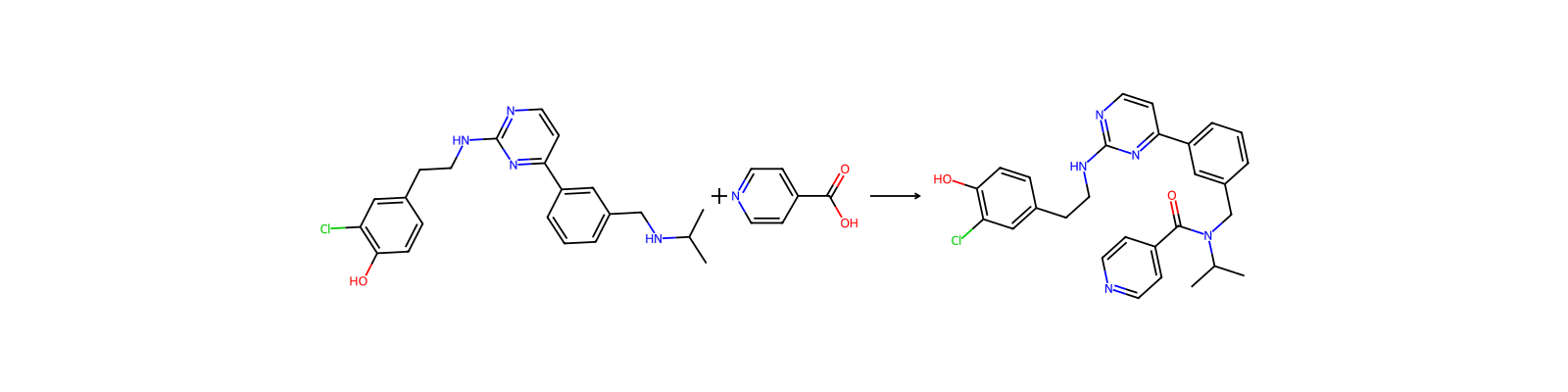
Related reactions
399 records


Compound notes
Loading…