HomeMCPWorkbenchSkills
HomeWorkbenchNotificationsMe
llms.txt · MCP GuidePrivacy Policy · Terms of Service · Supportv1.8.0
  1. Home
  2. /Compound

Benzyltrimethylammonium chloride

HCID 5963
New noteNew reactionRequest quotes
Print preview
Basic informationOverviewNames & identifiersPropertiesSafety & regulationChemistry & industryRelated reactionsCompound notes
Substructure searchFind similar structures

Basic information

CAS
56-93-9
Standard SMILES
C[N+](C)(C)Cc1ccccc1.[Cl-]
InChIKey
KXHPPCXNWTUNSB-UHFFFAOYSA-M
Molecular formula
C10H16N.Cl
Average molar mass
185.69 g/mol
Monoisotopic mass
185.09712719

Overview

Benzyltrimethylammonium chloride appears as light yellow liquid with a mild almond odor. May float or sink in water. (USCG, 1999)

Names & identifiers

Preferred name
Benzyltrimethylammonium chloride
IUPAC
benzyl(trimethyl)azanium chloride
English name
Benzyltrimethylammonium chloride
Molecular formula
C10H16ClN
Molecular weight
185.69

Names & synonyms

Benzyltrimethylammonium chloride56-93-9TmbacBenzenemethanaminium, N,N,N-trimethyl-, chlorideTRIMETHYLBENZYLAMMONIUM CHLORIDEBenzyl trimethylammonium chlorideAmmonium, benzyltrimethyl-, chlorideDTXSID8024600VNK45Y7BA1Hipochem migrator jN,N,N-Trimethylbenzenemethanaminium chlorideVARIQUAT B 200
Show more names
BTMBTMACBENZYL TRIMETHYL AMMONIUM CHLORIDE (BTMAC60) SURFACTANTN1,1,1,BZCl4-OH-Sudan I(+)-Benzotetramisole
BTMAC 100DTXCID604600Benzenemethanaminium, N,N,N-trimethyl-, chloride (1:1)RefChem:566996200-300-3N,N,N-Trimethyl-1-phenylmethanaminium chloridebenzyl(trimethyl)azanium;chlorideBenzyltrimethyl ammonium chloride

Database identifiers

CAS
56-93-9
PubChem CID
5963
DTXSID
DTXSID8024600
ChEMBL
CHEMBL1372143
UNII
VNK45Y7BA1
EC Number
200-300-3

Properties

Computed structural properties

Topological polar surface area
0 Ų
Hydrogen bond donors
0
Hydrogen bond acceptors
1
Rotatable bonds
2
Heavy atoms
12
Formal charge
0
Complexity
107

Experimental & physicochemical properties

Chemical ClassesNitrogen Compounds -> Quaternary Amines
LogPlog Kow = -2.17
OdorMild almond odor
Density · 3 items

1.07 at 68 °F (USCG, 1999) - Denser than water; will sink

1.07 @ 20 °C/20 °C

Properties of 60% soln; wt/gal /bulk density/: 8.90 lb; FP: less than -50 °C

Color/Form · 3 items

CRYSTALLIZED FROM ACETONE

Colorless crystals

Light yellow, liquid (@ 15 °C and 1 atm)

Solubility · 4 items

greater than or equal to 100 mg/mL at 65.3 °F (NTP, 1992)

VERY SOL IN WATER, SOL IN HOT ACETONE

Readily sol in ethanol, butanol, and water; slightly sol in butyl phthalate and tributyl phosphate

>27.9 [ug/mL] (The mean of the results at pH 7.4)

Boiling Point · 2 items

greater than 275 °F at 760 mmHg (decomposes) (NTP, 1992)

>135 °C (Some decomp)

DecompositionWhen heated to decomposition it emits very toxic fumes of /hydrogen chloride and nitrogen oxides/.

Safety & regulation

Safety information is for reference only and does not replace the supplier’s Safety Data Sheet (SDS), applicable regulations, or professional assessment.

GHS classification

GHS Classification · 6 items

This chemical does not meet GHS hazard criteria for 1.5% (5 of 339) of reports.

Danger

H301+H311 (36.3%): Toxic if swallowed or in contact with skin [Danger Acute toxicity, oral; acute toxicity, dermal]

P203, P261, P262, P264, P264+P265, P270, P271, P273, P280, P301+P316, P302+P352, P304+P340, P305+P351+P338, P316, P317, P318, P321, P330, P332+P317, P337+P317, P361+P364, P362+P364, P405, and P501 (click each P-code to see the statement)

Aggregated GHS information provided per 339 reports by companies from 16 notifications to the ECHA C&L Inventory. Each notification may be associated with multiple companies.

Danger

Hazard information

Regulatory Information · 4 items

Chemical: Benzenemethanaminium, N,N,N-trimethyl-, chloride (1:1)

Benzenemethanaminium, N,N,N-trimethyl-, chloride (1:1) is listed on the EPA's Chemical Data Reporting (CDR) system. Manufacturers and importers of Benzenemethanaminium, N,N,N-trimethyl-, chloride (1:1) are required to report information about their production and use of this chemical to the EPA under the Toxic Substances Control Act (TSCA). (40 eCFR Part 711)

Status: Active Update: 08-06-2016 https://echa.europa.eu/registration-dossier/-/registered-dossier/13489

Benzyltrimethylammonium chloride: Does not have an individual approval but may be used under an appropriate group standard

Fire HazardsSpecial Hazards of Combustion Products: Toxic oxides of nitrogen and hydrochloric acid fumes may form in fire. (USCG, 1999)
Health HazardsIngestion causes gastrointestinal disturbances. Contact with liquid irritates eyes and may irritate skin. (USCG, 1999)
Hazards SummaryA skin and eye irritant; [HSDB] Harmful if swallowed; A skin, eye, and respiratory tract irritant; [MSDSonline]

Chemistry & industry

Pharmacology

Mechanism of Action · 3 items

IT DECR THE RESTING MEMBRANE POTENTIALS & BLOCKED ACTION POTENTIAL OF BOTH INNERVATED & DENERVATED MUSCLES. BTM MAY HAVE DUAL MECHANISM OF ACTION, A DEPOLARIZING TYPE & A BLOCKING ACTION WHICH IS DOSE DEPENDENT.

ACETYLCHOLINE-LIKE AGONIST ACTIVITY ON CAT SUPERIOR CERVICAL GANGLION IN VIVO & FROG RECTUS ABDOMINIS IN VITRO WAS STUDIED. BENZYLTRIMETHYLAMMONIUM WAS MORE ACTIVE THAN ACETYLCHOLINE AS GANGLION STIMULANT.

IT WAS TESTED FOR MUSCARINIC ACTIVITY RELATIVE TO ACETYLCHOLINE DURING NONDEPOLARIZING BLOCKAGE DUE TO NICOTINE 1.2 MG/MIN IV & WAS FOUND TO BE MORE ACTIVE THAN ACETYLCHOLINE. IT IS CAPABLE OF STIMULATING BOTH NICOTINIC & MUSCARINIC RECEPTORS.

MeSH Pharmacological Classification · 2 items

Substances that prevent infectious agents or organisms from spreading or kill infectious agents in order to prevent the spread of infection.

Agents that modify interfacial tension of water; usually substances that have one lipophilic and one hydrophilic group in the molecule; includes soaps, detergents, emulsifiers, dispersing and wetting agents, and several groups of antiseptics.

Uses & manufacturing

Uses · 5 items

Used as a solvent for cellulose; a gelling inhibitor in polyester resins; an intermediate; a dye assistant; a phase-transfer catalyst; [HSDB] Used as a catalyst along with other quaternary ammonium salts; [Ullmann]

Plastic Composites Manufacturing [Category: Industry]

Solvent for cellulose; gelling inhibitor in polyester resins; intermediate

DYE ASSISTANT, EG, FOR ACRYLICS.

Phase-transfer catalyst

U.S. Production · 4 items

2023: 2,451,010 lb

(1977) 4.65X10+8 GRAMS (SALES)

(1979) 4.34X10+8 GRAMS

(1988) 3,985,000 lb

Industry UsesSurface modifier
Methods of Manufacturing

Related reactions

210 records
New reaction record
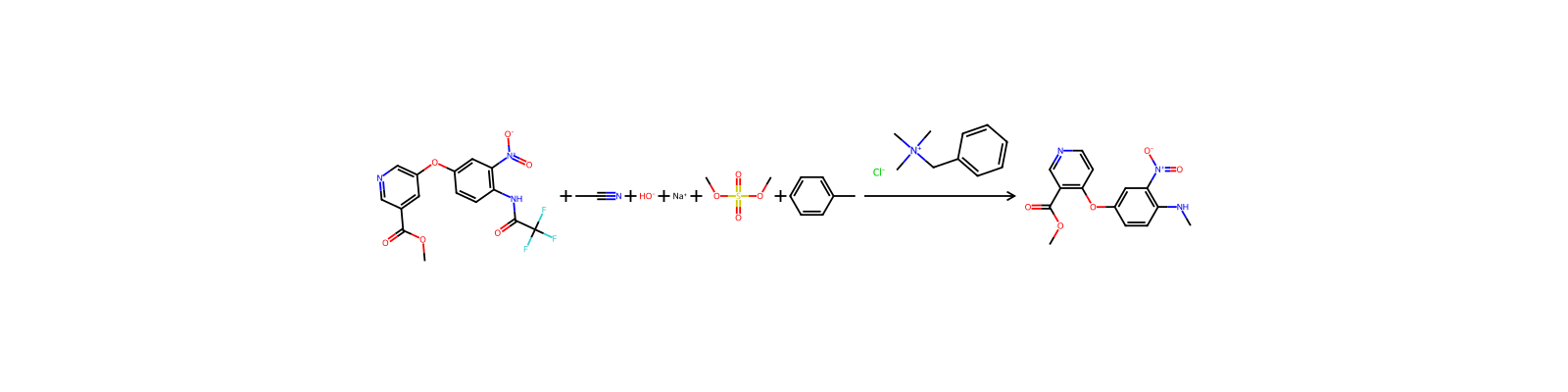
HRID 6453 reaction equation
HRID 6453As catalystuspto-grants-1993_09
HRID 8477 reaction equation
HRID 8477As catalystuspto-grants-2006_08
HRID 8478 reaction equation
HRID 8478As catalystuspto-grants-2006_08
HRID 13484 reaction equation
HRID 13484As catalystuspto-grants-2010_06
HRID 13503 reaction equation
HRID 13503As catalystuspto-grants-2010_06
HRID 22129 reaction equation
HRID 22129As catalystuspto-grants-1995_06
HRID 34887 reaction equation
HRID 34887As catalystuspto-grants-1988_08
HRID 36876 reaction equation
HRID 36876As catalystuspto-grants-1995_05
Page 1 of 27

Compound notes

Loading…

On this pageBasic informationOverviewNames & identifiersPropertiesSafety & regulationChemistry & industryRelated reactionsCompound notes
More actions
New noteNew reactionRequest quotes
Melting Point · 2 items

469 °F (NTP, 1992)

243 °C

Vapor Pressure0.00000022 [mmHg]
Food Contact SubstancesFCS -> FDA Inventory of Food Contact Substances Listed in 21 CFR
Physical Description · 3 items

Benzyltrimethylammonium chloride appears as light yellow liquid with a mild almond odor. May float or sink in water. (USCG, 1999)

Liquid

Colorless solid; [HSDB] Light yellow liquid; [CAMEO] Off-white to yellow powder, soluble in water; [MSDSonline]

Physicochemical properties

Melting point
239 °C · 239 °C (dec.) (lit.)
Boiling point
305.52 °C · 305.52°C (rough estimate)
Density
1.08 g/mL · 1.08 g/mL at 25 °C
vapor pressure
0.0001 hPa · <0.0001 hPa (20 °C)
refractive index
20 · n20/D 1.479
Flash point
50 ° · <50° (for 61%sol), d: 1.07 at 20°/20° (61% sol)
storage temp.
30 °C · Store below +30°C.
solubility
800 g/l · 800g/l
form
Crystalline Powder or Chunks
color
White to ivory
Odor
Faint, almond like odor
PH Range
6 · 6 - 8
PH
6 · 6-8 (100g/l, H2O, 20℃)
Evaporation Rate
1 · <1
Water Solubility
800 g/L · 800 g/L
Sensitive
Hygroscopic
BRN
3917255 · 3917255
Henry's Law Constant
2.9 · 2.9×108 mol/(m3Pa) at 25℃, HSDB (2015)
Stability
Stable. Hygroscopic. Incompatible with strong oxidizing agents.
InChI
1S/C10H16N.ClH/c1-11(2,3)9-10-7-5-4-6-8-10;/h4-8H,9H2,1-3H3;1H/q+1;/p-1
InChIKey
KXHPPCXNWTUNSB-UHFFFAOYSA-M
SMILES
[Cl-].C[N+](C)(C)Cc1ccccc1
CAS DataBase Reference
56 · 56-93-9(CAS DataBase Reference)
Indirect Additives used in Food Contact Substances
BENZYLTRIMETHYLAMMONIUM CHLORIDE
FDA 21 CFR
177.242 · 177.2420
FDA UNII
45 Y7BA1 · VNK45Y7BA1
EPA Substance Registry System
Benzyltrimethylammonium chloride (56-93-9)
UNSPSC Code
12352107 · 12352107
NACRES
22 · NA.22
Symbol(GHS)
6 · GHS06,GHS08
Signal word
Danger
Hazard statements
301 · H301+H311-H332-H341-H412
Precautionary statements
201 · P201-P273-P280-P301+P310-P302+P352+P312-P304+P340+P312
PPE
95 · dust mask type N95 (US), Eyeshields, Faceshields, Gloves
Hazard Codes
Xn
Risk Statements
22 · 22-36/38-36
Safety Statements
26 · 26-37/39
RIDADR
2811 · UN 2811 6.1/PG 3
WGK Germany
3 · 3
RTECS
8400000 · BO8400000
F
3 · 3
TSCA
TSCA listed
HazardClass
6.1 · 6.1
PackingGroup
III
HS Code
29239000 · 29239000
Storage Class
6.1 D · 6.1D - Non-combustible acute toxic Cat.3toxic hazardous materials or hazardous materials causing chronic effects
Hazard Classifications
3 DermalAcute · Acute Tox. 3 DermalAcute Tox. 3 OralAcute Tox. 4 InhalationAquatic Chronic 3Muta. 2
Hazardous Substances Data
56 · 56-93-9(Hazardous Substances Data)
Toxicity
50 orally · LD50 orally in Rabbit: 500 mg/kg
REACH Registrations
Active
Reactive GroupNon-Redox-Active Inorganic Compounds
Reactivity ProfileBENZYLTRIMETHYLAMMONIUM CHLORIDE can react with oxidizing materials (NTP, 1992). Toxic oxides of nitrogen and hydrochloric acid fumes may form in fire (USCG, 1999).
Air and Water ReactionsWater soluble.
Toxic Combustion ProductsPoisonous gases may be produced in fire.
Hazard Classes and Categories · 3 items

Acute Tox. 3 (90.9%)

Acute toxicity (Oral) - Category 3

Acute toxicity (Oral) - Category 3

Skin, Eye, and Respiratory IrritationsLiquid irritating to skin and eyes.

Safety & protection

Fire FightingFire Extinguishing Agents Not to Be Used: Water may be ineffective on fire. (USCG, 1999)
First Aid · 1 item

EYES: First check the victim for contact lenses and remove if present. Flush victim's eyes with water or normal saline solution for 20 to 30 minutes while simultaneously calling a hospital or poison control center. Do not put any ointments, oils, or medication in the victim's eyes without specific instructions from a physician. IMMEDIATELY transport the victim after flushing eyes to a hospital even if no symptoms (such as redness or irritation) develop.

Fire Fighting ProceduresWear goggles and self-contained breathing apparatus. Extinguish with dry chemical, foam or carbon dioxide. Water may be ineffective on fire.
Nonfire Spill Response · 1 item

SMALL SPILLS AND LEAKAGE: If you spill this chemical, you should dampen the solid spill material with water, then transfer the dampened material to a suitable container. Use absorbent paper dampened with water to pick up any remaining material. Seal your contaminated clothing and the absorbent paper in a vapor-tight plastic bag for eventual disposal. Wash all contaminated surfaces with a strong soap and water solution. Do not reenter the contaminated area until the Safety Officer (or other responsible person) has verified that the area has been properly cleaned.

Disposal Methods · 1 item

SRP: At the time of review, criteria for land treatment or burial (sanitary landfill) disposal practices are subject to significant revision. Prior to implementing land disposal of waste residue (including waste sludge), consult with environmental regulatory agencies for guidance on acceptable disposal practices.

Preventive Measures · 1 item

SRP: The scientific literature for the use of contact lenses in industry is conflicting. The benefit or detrimental effects of wearing contact lenses depend not only upon the substance, but also on factors including the form of the substance, characteristics and duration of the exposure, the uses of other eye protection equipment, and the hygiene of the lenses. However, there may be individual substances whose irritating or corrosive properties are such that the wearing of contact lenses would be harmful to the eye. In those specific cases, contact lenses should not be worn. In any event, the usual eye protection equipment should be worn even when contact lenses are in place.

Personal Protective Equipment (PPE)Goggles and rubber gloves (USCG, 1999)

Toxicology

Environmental Fate · 3 items

TERRESTRIAL FATE: Based on a classification scheme(1), an estimated Koc value of 900(SRC), determined from a log Kow of -2.17(2) and a regression-derived equation(3), indicates that trimethylbenzylammonium chloride is expected to have low mobility in soil(SRC). Volatilization of trimethylbenzylammonium chloride from moist soil surfaces is not expected to be an important fate process(SRC) given an estimated Henry's Law constant of 3.4X10⁻¹⁴ atm-cu m/mole(SRC), using a fragment constant estimation method(4). Trimethylbenzylammonium chloride is not expected to volatilize from dry soil surfaces(SRC) based upon an estimated vapor pressure of 2.2X10⁻⁷ mm Hg(SRC), determined from a fragment constant method(5). Studies on the influence of chemical structure on quaternary ammonium compound (QACs) biodegradability suggest that alkyltrimethylammonium QACs will be most rapidly degraded followed by alkyldimethylbenzylammonium and alkylpyridinium QACs, although at high concentrations it may be toxic to the microbial population(6).

AQUATIC FATE: Based on a classification scheme(1), an estimated Koc value of 900(SRC), determined from a log Kow of -2.17(2) and a regression-derived equation(3), indicates that trimethylbenzylammonium chloride is expected to adsorb to suspended solids and sediment in water(SRC). By analogy to other alkyldimethylbenzyl quaternary ammonium compounds, trimethylbenzylammonium chloride is expected to strongly adsorb to sediment and suspended organic matter(8). Volatilization from water surfaces is not expected(3) based upon an estimated Henry's Law constant of 3.4X10⁻¹⁴ atm-cu m/mole(SRC), developed using a fragment constant estimation method(4). Trimethylbenzylammonium chloride will not volatilize from water to the atmosphere(9,SRC) because it completely dissociates. According to a classification scheme(5), a BCF of <0.2(7), and a regression-derived equation(6), suggests the potential for bioconcentration in aquatic organisms is low. If released to water, trimethylbenzylammonium chloride will completely dissociate(SRC) since it is an ionic compound. By analogy to other alkyldimethylbenzyl quaternary ammonium compounds, trimethylbenzylammonium chloride may biodegrade in aquatic systems at low concentrations(8).

ATMOSPHERIC FATE: According to a model of gas/particle partitioning of semivolatile organic compounds in the atmosphere(1), trimethylbenzylammonium chloride, which has an estimated vapor pressure of 2.2X10⁻⁷ mm Hg at 25 °C(SRC), using a fragment onstant estimation method(2), will exist in both the vapor and particulate phases in the ambient atmosphere. Vapor-phase trimethylbenzylammonium chloride is degraded in the atmosphere by reaction with photochemically-produced hydroxyl radicals(SRC); the half-life for this reaction in air is estimated to be 1 day(SRC), calculated from its rate constant of 1.7X10⁻¹³ cu cm/molecule-sec at 25 °C(3) determined using a structure estimation method(3). Particulate-phase trimethylbenzylammonium chloride may be removed from the air by wet and dry deposition(SRC).

Ongoing Test Status · 1 item

The following link will take the user to the National Toxicology Program (NTP) Test Agent Search Results page, which tabulates all of the "Standard Toxicology & Carcinogenesis Studies", "Developmental Studies", and "Genetic Toxicity Studies" performed with this chemical. Clicking on the "Testing Status" link will take the user to the status (i.e., in review, in progress, in preparation, on test, completed, etc.) and results of all the studies that the NTP has done on this chemical. [http://ntp-apps.niehs.nih.gov/ntp_tox/index.cfm?fuseaction=ntpsearch.searchresults&searchterm=56-93-9]

Soil Adsorption/Mobility · 1 item

The Koc of trimethylbenzylammonium chloride is estimated as 900(SRC), using a log Kow of -2.17(1) and a regression-derived equation(2). According to a classification scheme(3), this estimated Koc value suggests that trimethylbenzylammonium chloride is expected to have low mobility in soil. Quaternary ammonium compounds (QACs) are strongly adsorbed by a wide variety of materials, and alkyldimethylbenzylammonium QACs are known to adsorb strongly to sewage sludge(4).

Human Toxicity ExcerptsLiquid irritating to skin and eyes.
Artificial Pollution Sources · 1 item

Trimethylbenzylammonium chloride's production and use as a solvent for cellulose, a gelling inhibitor in polyester resins and as an intermediate(1) and as a phase-transfer catalyst(2) may result in its release to the environment through various waste streams(SRC).

Environmental Biodegradation · 1 item

At an initial concentration of 100 mg/L, trimethylbenzylammonium chloride did not biodegrade when incubated with activated sludge for ten days(1), although at high concentrations it may be toxic to the microbial population(2). Studies on the influence of chemical structure on quaternary ammonium compound (QACs) biodegradability suggest that alkyltrimethylammonium QACs will be most rapidly degraded followed by alkyldimethylbenzylammonium and alkylpyridinium QACs; few, if any, of the QACs should be regarded as persistent(2). The acclimation of the microbial community may profoundly influence the biodegradability of alkyldimethylbenzylammonium QACs(2).

Environmental BioconcentrationA BCF of <0.2 was measured for trimethylbenzylammonium(1). According to a classification scheme(2), this BCF suggests the potential for bioconcentration in aquatic organisms is low.
Volatilization from Water/Soil · 1 item

The Henry's Law constant for trimethylbenzylammonium chloride is estimated as 3.4X10⁻¹⁴ atm-cu m/mole(SRC) using a fragment constant estimation method(1). This Henry's Law constant indicates that trimethylbenzylammonium chloride is expected to be essentially nonvolatile from water surfaces(2). Trimethylbenzylammonium chloride's Henry's Law constant(1) indicates that volatilization from moist soil surfaces will not occur(SRC). Trimethylbenzylammonium chloride is not expected to volatilize from dry soil surfaces(SRC) based upon an estimated vapor pressure of 2.2X10⁻⁷ mm Hg(SRC), determined from a fragment constant method(3).

Non-Human Toxicity Excerpts · 3 items

EFFECTS OF BENZYLTRIMETHYLAMMONIUM CHLORIDE ON BLOOD PRESSURE IN DOGS WAS STUDIED. IT WAS A MUSCARINIC VASODEPRESSOR.

IT WAS APPROX 1/4 TO 1/2 AS ACTIVE AS ACETYLCHOLINE CHLORIDE AS DEPRESSOR AGENT IN DOG & APPROX 4-15 TIMES AS ACTIVE IN ABILITY TO INDUCE SALIVA FORMATION. HIGHER DOSES DEMONSTRATED ANTICHOLINERGIC ACTIVITY & INHIBITION MAY BE NONCOMPETITIVE TYPE.

BENZYLTRIMETHYLAMMONIUM BROMIDE BLOCKED RESPONSES TO ACTYLCHOLINE, NICOTINE & POTASSIUM CHLORIDE IN FROG RECTUS ABDOMINIS PREPN. IT CAUSED INHIBITION OF RABBIT SCIATIC NERVE GASTROCNEMIUS MUSCLE PREPN.

Environmental Abiotic Degradation · 1 item

The rate constant for the vapor-phase reaction of trimethylbenzylammonium chloride with photochemically-produced hydroxyl radicals has been estimated as 1.7X10⁻¹³ cu cm/molecule-sec at 25 °C(SRC) using a structure estimation method(1). This corresponds to an atmospheric half-life of about 1 day at an atmospheric concentration of 5X10+5 hydroxyl radicals per cu cm(1).

Probable Routes of Human Exposure · 1 item

NIOSH (NOES Survey 1981-1983) has statistically estimated that 3,635 workers (2,606 of these are female) are potentially exposed to trimethylbenzylammonium chloride in the US(1). Occupational exposure to trimethylbenzylammonium chloride may occur through dermal contact with this compound at workplaces where trimethylbenzylammonium chloride is produced or used(SRC).

Environmental Fate/Exposure Summary · 1 item

Trimethylbenzylammonium chloride's production and use as a solvent for cellulose, a gelling inhibitor in polyester resins and as an intermediate and as a phase-transfer catalyst may result in its release to the environment through various waste streams. If released to air, an estimated vapor pressure of 2.2X10⁻⁷ mm Hg at 25 °C indicates trimethylbenzylammonium chloride will exist in both the vapor and particulate phases in the ambient atmosphere. Vapor-phase trimethylbenzylammonium chloride will be degraded in the atmosphere by reaction with photochemically-produced hydroxyl radicals; the half-life for this reaction in air is estimated to be 1 day. Particulate-phase trimethylbenzylammonium chloride will be removed from the atmosphere by wet and dry deposition. If released to soil, trimethylbenzylammonium chloride is expected to have low mobility based upon an estimated Koc of 900. By analogy to other alkyldimethylbenzyl quaternary ammonium compounds, trimethylbenzylammonium chloride is expected to strongly adsorb to sediment and suspended organic matter. Volatilization from moist soil surfaces is not expected to be an important fate process based upon an estimated Henry's Law constant of 3.4X10⁻¹⁴ atm-cu m/mole. If released into water, trimethylbenzylammonium chloride is expected to adsorb to suspended solids and sediment in water based upon the estimated Koc. Volatilization from water surfaces is not expected to be an important fate process based upon this compound's estimated Henry's Law constant. Studies on the influence of chemical structure on quaternary ammonium compound (QACs) biodegradability suggest that alkyltrimethylammonium QACs will be most rapidly degraded followed by alkyldimethylbenzylammonium and alkylpyridinium QACs, although at high concentrations it may be toxic to the microbial population. A BCF of <0.2 suggests bioconcentration in aquatic organisms is low. Occupational exposure to trimethylbenzylammonium chloride may occur through inhalation and dermal contact with this compound at workplaces where trimethylbenzylammonium chloride is produced or used. (SRC)

Safety data

F
3
PPE
dust mask type N95 (US), Eyeshields, Faceshields, Gloves
wgk
3
tsca
TSCA listed
rtecs
BO8400000
ridadr
UN 2811 6.1/PG 3
hs_code
29239000
Toxicity
LD50 orally in Rabbit: 500 mg/kg
risk_code
22-36/38-36
Signal word
Danger
Symbol(GHS)
GHS06,GHS08
hazard_code
Xn
safety_code
26-37/39
hazard_class
6.1
Storage Class
6.1D - Non-combustible acute toxic Cat.3toxic hazardous materials or hazardous materials causing chronic effects
packing_group
III
Hazard statements
H301+H311-H332-H341-H412
REACH Registrations
Active
Hazard Classifications
Acute Tox. 3 DermalAcute Tox. 3 OralAcute Tox. 4 InhalationAquatic Chronic 3Muta. 2
Precautionary statements
P201-P273-P280-P301+P310-P302+P352+P312-P304+P340+P312
Hazardous Substances Data
56-93-9(Hazardous Substances Data)
· 2 items

REACTION OF TRIMETHYLAMINE AND BENZYL CHLORIDE

Trimethylamine + benzyl chloride (quaternisation)

Formulations/Preparations · 2 items

Grades: 60-62% aq soln.

Grades: 50-60% solution in water

General Manufacturing Information · 2 items

All Other Chemical Product and Preparation Manufacturing

Benzenemethanaminium, N,N,N-trimethyl-, chloride (1:1): ACTIVE

Applications · 3 items

UsesSolvent for cellulose, gelling inhibitor in polyester resins, intermediate.

UsesBenzyltrimethylammonium chloride are Ccommercially important catalyst. Used in antistatic agent, detergent Sanitisers, softner for textiles and paper products, phase transfer catalyst.

General DescriptionLight yellow liquid with a mild almond odor. May float or sink in water.

Upstream & downstream products

Upstream raw materials

Benzyl chlorideTrimethylamine

Downstream products

Polycarbonate(R)-(+)-1-Boc-3-aminopyrrolidinePermanent Violet RL4-Difluoromethoxy-3-methoxy-benzaldehyde2-Chloro-3-nitro-5-(trifluoromethyl)pyridine