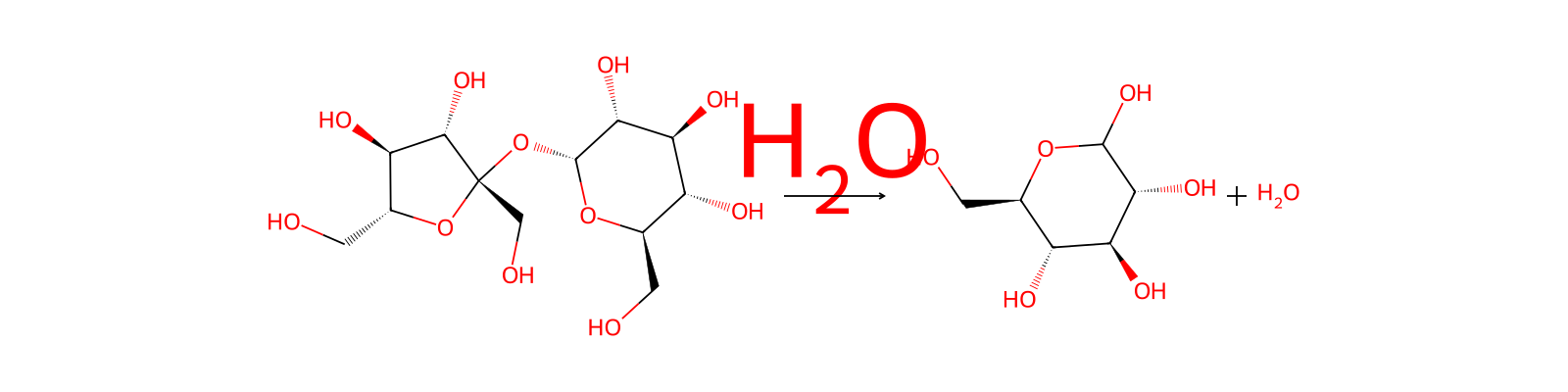
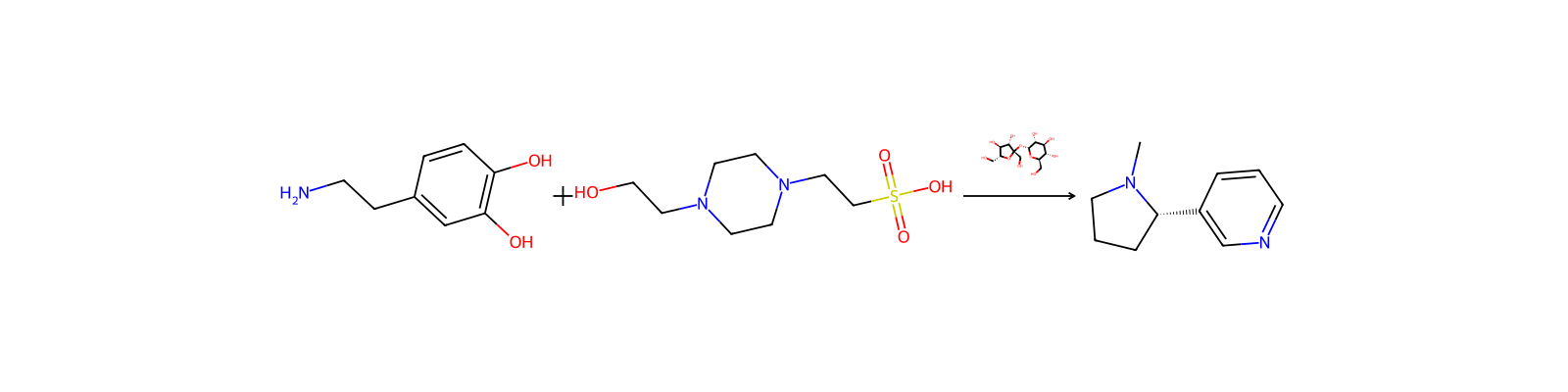
HRID 1762As solvent
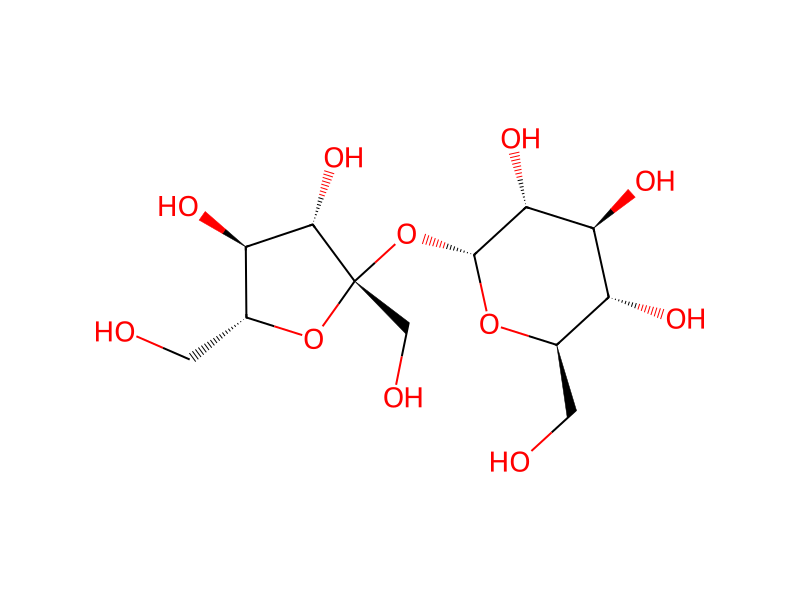
57-50-1OC[C@H]1O[C@@](CO)(O[C@H]2O[C@H](CO)[C@@H](O)[C@H](O)[C@H]2O)[C@@H](O)[C@@H]1OCZMRCDWAGMRECN-UGDNZRGBSA-NSucrose appears as white odorless crystalline or powdery solid. Denser than water.
57-50-1、92004-84-7DTXSID2021288CHEMBL253582CHEBI:17992Cosmetic ingredients (Sucrose) -> CIR (Cosmetic Ingredient Review)
Skin conditioning; Soothing; Humectant
Elicitors
Active substance -> EU Pesticides database: Approved
log Kow = -3.70
-3.70
-3.67
-2.7
Characteristic caramel
... Odorless ... [Note: May have a characteristic caramel odor when heated].
1.59 at 68 °F (USCG, 1999) - Denser than water; will sink
1.5805 g/cu cm @ 17 °C
1.6 g/cm³
1.59
1.59
Monoclinic sphenoidal crystals, crystalline masses, blocks, or powder
Hard, white ... crystals, lumps, or powder ...
Safety information is for reference only and does not replace the supplier’s Safety Data Sheet (SDS), applicable regulations, or professional assessment.
This chemical does not meet GHS hazard criteria for 95.7% (423 of 442) of all reports.
Not Classified
Aggregated GHS information provided per 442 reports by companies from 8 notifications to the ECHA C&L Inventory.
Chemical: .alpha.-D-Glucopyranoside, .beta.-D-fructofuranosyl
.alpha.-D-Glucopyranoside, .beta.-D-fructofuranosyl is listed on the EPA's Chemical Data Reporting (CDR) system. Manufacturers and importers of .alpha.-D-Glucopyranoside, .beta.-D-fructofuranosyl are required to report information about their production and use of this chemical to the EPA under the Toxic Substances Control Act (TSCA). (40 eCFR Part 711)
Reg. (EU) No 916/2014
Sucrose: Does not have an individual approval but may be used under an appropriate group standard
Special Hazards of Combustion Products: Irritating fumes may form in fires.
Combustible. Finely dispersed particles form explosive mixtures in air.
Residues of sucrose are exempted from the requirement of a tolerance when used as a solid diluent, carrier or safener in accordance with good agricultural practices as inert (or occasionally active) ingredients in pesticide formulations applied to growing crops or to raw agricultural commodities after harvest.
Sucrose is exempted from the requirement of a tolerance when used as a solid diluent or carrier in accordance with good agricultural practice as inert (or occasionally active) ingredients in pesticide formulations applied to animals.
Permissible Exposure Limit: Table Z-1 8-hr Time Weighted Avg: 15 mg/cu m. /Total dust/
Permissible Exposure Limit: Table Z-1 8-hr Time Weighted Avg: 5 mg/cu m. /Respirable fraction/
SUCROSE is a reducing agent. Can react explosively with oxidizing agents such as chlorates and perchlorates. Is hydrolyzed by dilute acids and by invertase (a yeast enzyme) (NTP, 1992). Chars rapidly and exothermically when mixed with concentrated sulfuric acid.
Fire Extinguishing Agents: Water (USCG, 1999)
Use water spray, powder, alcohol-resistant foam, carbon dioxide. In case of fire: keep drums, etc., cool by spraying with water.
Fresh air, rest.
Rinse skin with plenty of water or shower.
First rinse with plenty of water for several minutes (remove contact lenses if easily possible), then refer for medical attention.
EYES: First check the victim for contact lenses and remove if present. Flush victim's eyes with water or normal saline solution for 20 to 30 minutes while simultaneously calling a hospital or poison control center. Do not put any ointments, oils, or medication in the victim's eyes without specific instructions from a physician. If symptoms (such as redness or irritation) develop, immediately transport the victim to a hospital.
(General first aid procedures)
SMALL SPILLS AND LEAKAGE: If you spill this chemical, you should dampen the solid spill material with water, then transfer the dampened material to a suitable container. Use absorbent paper dampened with water to pick up any remaining material. Seal your contaminated clothing and the absorbent paper in a vapor-tight plastic bag for eventual disposal. Wash all contaminated surfaces with a soap and water solution. Do not reenter the contaminated area until the Safety Officer (or other responsible person) has verified that the area has been properly cleaned.
SRP: At the time of review, criteria for land treatment or burial (sanitary landfill) disposal practices are subject to significant revision. Prior to implementing land disposal of waste residue (including waste sludge), consult with environmental regulatory agencies for guidance on acceptable disposal practices.
The substance can be absorbed into the body by inhalation and by ingestion.
inhalation, skin and/or eye contact
Cough.
Redness. Roughness.
Redness.
irritation eyes, skin, upper respiratory system; cough
Occurs in low percentages in honey and maple sap
Sugar cane contains from 15-20% and sugar beet from 10-17% sucrose
The quantity of sucrose synthesized by all plants on earth is estimated to be 150X10+9 t/a.
Liquid medicines, particularly those intended for children, often formulated as syrups, usually based on sucrose. Total sugar content may be up to 80% (w/v). Complicated diabetes management. Increased dental caries especially in chronically sick children (eg, asthmatics or epileptics) who frequently take liquid medicine.
Sucrose is reported to be capable of producing dermatoses in bakers, candy makers, and related occupations. It is well established that uncontrolled glucose conc in maternal blood are associated with elevated embryonic and fetal death and increased neonatal morbidity and mortality.
EVIDENCE EXISTS THAT HIGHLY CONCN SOLN ARE LETHAL TO NEMATODES IN SOIL.
DIFFUSE PATHOLOGICAL CHANGES /IN POISONED ANIMALS/ INCL SHRINKAGE, SWELLING & NECROSIS OF RENAL TUBULAR EPITHELIUM, ARTERIOLITIS, MILD HEPATITIS, MYOCARDITIS, CONGESTIVE ENCEPHALITIS & SOME ADRENAL HYPERTROPHY.
SUCROSE HAS SHOWN NO TOXICITY TO CORNEAS OF RABBITS WHEN APPLIED FOR 3 TO 7 HR IN NEUTRAL AQ SOLN...
...CANE SUGAR...OBSERVED TO CAUSE DIARRHEA, COLIC, INFLAMMATION OF KIDNEYS &...PETECHIAL HEMORRHAGES IN SPINAL DURA MATER OF HORSES.
For more Non-Human Toxicity Excerpts (Complete) data for SUCROSE (14 total), please visit the HSDB record page.
Residues of sucrose are exempted from the requirement of a tolerance when used as a solid diluent, carrier or safener in accordance with good agricultural practices as inert (or occasionally active) ingredients in pesticide formulations applied to growing crops or to raw agricultural commodities after harvest.
Sucrose is exempted from the requirement of a tolerance when used as a solid diluent or carrier in accordance with good agricultural practice as inert (or occasionally active) ingredients in pesticide formulations applied to animals.
CIR ingredient: Sucrose
Obtained from cane sugar, sugar beet, and sorghum; Used as a sweetener; [ChemIDplus]
For Sucrose (USEPA/OPP Pesticide Code: 000023) there are 0 labels match. /SRP: Not registered for current use in the U.S., but approved pesticide uses may change periodically and so federal, state and local authorities must be consulted for currently approved uses./
FLAVOR BLENDER, ACCENTUATOR, MODIFIER & DISPERSING AGENT, SWEETENING, TEXTURE & BODYING AGENT FOR FOODS & BEVERAGES; RAW MATERIAL FOR NUMEROUS ORG CHEM & YEAST PRODN; LUBRICANT IN FOODS
Sweetener in foods and soft drinks, manufacture of syrups, source of invert sugar, confectionary, preserves and jams, demulcent, pharmaceutical products, caramel, chemical intermediate for detergents, emulsifying agents, and other sucrose derivatives.
Sweetening agent and food. Starting material in fermentative prodn of ethanol, butanol, glycerol, citric and levulinic acids. Used in pharmaceuticals as a flavor, as a preservative, as antioxidant (in form of invert sugar), as demulcent, as substitute for glycerol, as granulation agent and excipient for tablets, as coating for tablets. In plastics and cellulose industry, in rigid polyurethane foams, manuf of ink and of transparent soaps.
(1972) 7.06X10+8 G (CANE/BEET, RAW & REFINED)
(1975) 1.87X10+11 G
(1984) 2.79X10+10 g /Sugar cane, beet, crystalline structure or dry amorphous form, refined/
(1972) 4.77X10+12 G (CANE/BEET SUGAR & SYRUP)
(1975) 3.62X10+12 G
(1984) 3.28X10+12 g /Cane or beet sugars, syrups, molasses, NSPF (Raw Value)/
2023: 250,000 - <550,000 lb
(1972) 5.01X10+13 G (CANE & BEET SUGAR)
(1975) 5.19X10+13 G (CANE AND BEET SUGAR)
(DELIVERIES OF REFINED SUGAR): 35% WAS CONSUMED DIRECTLY FOR SWEETENING FOODS & BEVERAGES; THE REMAINING 65% WAS USED INDUSTRIALLY IN BEVERAGES (22%); IN BAKERY & CEREAL PRODUCTS (12%); IN CONFECTIONS (9%); IN CANNED, BOTTLED, & FROZEN FOODS (6%); IN ICE CREAM & DAIRY PRODUCTS (5%); IN MISC FOODS (5%); & IN NON-FOOD & UNSPECIFIED USES (6%) (1976)
Obtained from sugar cane (Saccharum officinarum L, Gramineae) and sugar beet (Beta valgaris L, Chenopodiaceae). Sugar cane contains from 15-20% and sugar beet form 10-17% sucrose. Structure: Avery et al, J Chem Soc 1927, 2308; Beevers, Cochrane, Proc Roy Soc 190a, 257 (1947).
By crushing and extraction of sugarcane (Saccharum officinarum) with water or extraction of the sugar beet (Beta vulgaris) with water, evaporating, and purifying with lime, carbon, and various liquids. Also obtainable from sorghum by conventional methods.
Sucrose is extracted commercially from sugar maple
USEPA/OPP Pesticide Code 000023; Trade Names: None.
Grade: Reagent, USP, technical, refined.
Also sold as syrup .. liquid sugar
EPA Safer Chemical Functional Use Classes -> Processing Aids and Additives
Safer Chemical Classes -> Green circle - The chemical has been verified to be of low concern
Cosmetics -> Skin conditioning; Soothing; Humectant
Construction
.alpha.-D-Glucopyranoside, .beta.-D-fructofuranosyl: ACTIVE
CARBOHYDRATE (QV) PRODUCT OF PHOTOSYNTHESIS COMPRISED OF 1, 2, OR MORE SACCHAROSE GROUPS. ... SUGAR IS IMPORTANT SOURCE OF METABOLIC ENERGY IN FOODS, & ITS FORMATION IN PLANTS IS ESSENTIAL FACTOR IN LIFE PROCESS.
Sucrose is the most important industrial sugar
Sucrose was first synthesized enzymatically in the laboratory from potassium D-glucosyl-1-phosphate and D-fructose. The first chemical synthesis was accomplished by reaction of 3,4,6-tri-O-acetyl-1,2-anhydro-alpha-D-glucopyranose with 1,3,4,6-tetra-O-acetyl-D-fructofuranose
Traditionally, the standard /sweetening agent/ is sucrose, both in terms of quality of taste and taste profile
UsesSucrose (C12H22O11) is one of many forms of sugars (carbohydrates) that are important organic compounds for maintaining life.
HistorySucrose is the white granulated compound referred to as sugar. Sucrose is a disaccharide made of glucose and fructose. The main sources of sucrose for the production of commercial sugar are sugarcane and sugar beets. Sugarcane is a tall perennial grass of the genus Saccharum native to Southeast Asia and the South Pacifi c. It has been consumed by chewing the stalk in areas where it grows for thousands of years. Sugarcane spread to India where it was processed to extract crude sugar as early as 2,500 years ago. Persian invaders discovered sugar after invading India and the plant and sugar production spread into the Middle East around 600 c.e. Europeans were introduced to sugar around 1100 c.e. when the first crusaders returned with knowledge of the sweet spice and the Arab Empire spread into Spain.The use of sugar beet to obtain sugar began when the German chemist Andreas Sigismund Marggraf (1709 1782) extracted sucrose from sugar beets using alcohol. The amount of sucrose obtained by Marggraf did not warrant commercial use of beets as a sucrose source. During the late 18th century, Franz Karl Archard (1753 1821), a student of Marggraf, selectively bred beets to increase the sucrose content to 5 6% and developed a commercial method to extract sucrose. Sucrose is predominantly associated with the food industry, but it does have industrial uses in other areas. Sucrose fatty acid esters are a mixture of mono, di, and tri esters of sucrose with fatty acids. Th ese are use in cosmetics, shampoos, resins, inks, paper processing, and pesticides. Sucrose benzoate is used as an emulsifi er and in nail polishes. Sucrose has also been used in making glues and treating leather.
UsesSaccharum is the Latin word for sugar and the derived term saccharide is the basis of a system of carbohydrate classification. The simplest sugars belong to the carbohydrate class, monosaccharide; they include fructose and glucose. Hydrolysis of sucrose yields D-glucose and D-fructose; the process is called inversion and the sugar mixture produced is known as invert sugar because, although sucrose itself rotates plane-polarized light to the right, the mixture inverts this light by rotating to the left. The carbohydrate class, polysaccharide, represents compounds in which the molecules contain many units of monosaccharides joined together by glycoside links. Upon complete hydrolysis, a polysaccharide yields monosaccharides. Starch is the most valuable polysaccharide. The starch molecules (amylose and anylopectin) are tree-like, containing 250 to 1000 or more glucose units per molecule joined together through alpha linkages. In commercial usage, the term sugar usually refers to sucrose. Sucrose is a disaccharide sugar that occurs naturally in every fruit and vegetable. It is a major product of photosynthesis, the process by which plants transform the energy of the sun into food. Sugar occurs in greatest quantities in sugarcane and sugar beets from which it is separated for commercial use.
UsesYuanzhen sugar is a polysaccharide polymer, containing a certain amount of fructooligosaccharides.
UsesSweetening agent and food. Starting material in the fermentative production of ethanol, butanol, glycerol, citric and levulinic acids. Used in pharmaceuticals as a flavor, as a preservative, as an antioxidant (in the form of invert sugar), as a demulcent, as substitute for glycerol, as granulation agent and excipient for tablets, as coating for tablets. In the plastics and cellulose industry, in rigid polyurethane foams, manufacture of ink and of transparent soaps.
Usessucrose (table sugar) is an emollient, mild emulsifier, and humectant. It can be used in place of glycerin.
UsesSucrose is a sweetener that is the disaccharide sucrose, consisting of one molecule of glucose and one molecule of fructose. It is obtained as cane or beet sugar. It has relatively constant solubility and is a universal sweetener because of its intense sweetness and solubility. It is available in various forms which include granulated, brown, and powdered. It is used in desserts, beverages, cakes, ice cream, icings, cereals, and baked goods. It is also termed beet sugar, cane sugar, and saccharose.
General DescriptionWhite odorless crystalline or powdery solid. Denser than water.
DefinitionChEBI: Sucrose is a disaccharide formed by glucose and fructose units joined by an acetal oxygen bridge from hemiacetal of glucose to the hemiketal of the fructose.
Definitionsaccharose: A sugar comprising onemolecule of glucose linked to a fructosemolecule. It occurs widely inplants and is particularly abundant insugar cane and sugar beet (15–20%),from which it is extracted andrefied for table sugar. If heated to200°C, sucrose becomes caramel.