Basic information
- CAS
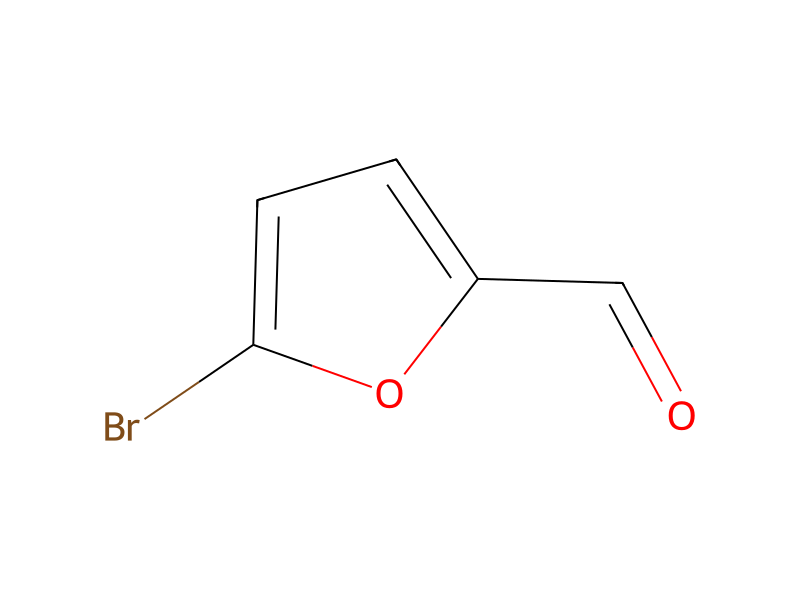
1899-24-7- Standard SMILES
O=Cc1ccc(Br)o1- InChIKey
WJTFHWXMITZNHS-UHFFFAOYSA-N- Molecular formula
- C5H3BrO2
- Average molar mass
- 174.98 g/mol
- Monoisotopic mass
- 173.93164
Names & identifiers
- Preferred name
- 5-Bromofuran-2-carbaldehyde
- IUPAC
- 5-bromofuran-2-carbaldehyde
- English name
- 5-Bromo-2-furaldehyde
- Molecular formula
- C5H3BrO2
- Molecular weight
- 174.98
Names & synonyms
5-bromofuran-2-carbaldehydeRefChem:534041628-757-85-Bromo-2-furaldehyde1899-24-75-Bromofurfural2-Furancarboxaldehyde, 5-bromo-5-bromo-2-furfural5-bromofuran-2-carboxaldehydeMFCD001595015-bromo-furfural2-Furaldehyde, 5-bromo-
Show more names
5-Bromo-2-furaldehyde acid5- Bromofural5-Bromo-2-furaL5-Bromofuraldehyde5-bromo-2-furaldehye
5-bromo-furan-2-carbaldehydeFurfural, 5-bromo-5-bromo-2-formylfuran2-Bromofuran-5-carboxaldehydeSTR06646AC-25746SY008053Z57041993
Database identifiers
- CAS
1899-24-7- PubChem CID
- 600328
- DTXSID
DTXSID40344910- ChEMBL
CHEMBL2335228- EC Number
- 628-757-8
- Nikkaji
- J27.236A
Properties
Computed structural properties
- XLogP
- 1.8
- Topological polar surface area
- 30.2 Ų
- Hydrogen bond donors
- 0
- Hydrogen bond acceptors
- 2
- Rotatable bonds
- 1
- Heavy atoms
- 8
- Formal charge
- 0
- Complexity
- 94
Physicochemical properties
- Melting point
- 82 · 82-85 °C (lit.)
- Boiling point
- 112 °C/16 · 112 °C/16 mmHg (lit.)
- Density
- 1.594 · 1.5940 (rough estimate)
- refractive index
- 1.445 · 1.4450 (estimate)
- Flash point
- 112 °C/6mm · 112°C/6mm
- storage temp.
- 2 · 2-8°C
- solubility
- Chloroform, Methanol
- form
- Powder
- color
- Slightly yellow
- Sensitive
- Air Sensitive
- BRN
- 108403 · 108403
- Stability
- Stable. Incompatible with strong oxidizing agents.
- InChI
- InChI=1S/C5H3BrO2/c6-5-2-1-4(3-7)8-5/h1-3H
- InChIKey
- WJTFHWXMITZNHS-UHFFFAOYSA-N
- SMILES
- O1C(Br)=CC=C1C=O
- CAS DataBase Reference
- 1899 · 1899-24-7(CAS DataBase Reference)
- UNSPSC Code
- 12352100 · 12352100
- NACRES
- 22 · NA.22
- Symbol(GHS)
- 7 · GHS07
- Signal word
- Warning
- Hazard statements
- 302 · H302+H312+H332-H315-H319-H335
- Precautionary statements
- 261 · P261-P280-P301+P312-P302+P352+P312-P304+P340+P312-P305+P351+P338
- target organs
- Respiratory system
- PPE
- 95 · dust mask type N95 (US), Eyeshields, Faceshields, Gloves
- Hazard Codes
- Xn,Xi
- Risk Statements
- 20 · 20/21/22-36/37/38
- Safety Statements
- 26 · 26-36-36/37/39
- WGK Germany
- 3 · 3
- Hazard Note
- Harmful
- HazardClass
- IRRITANT
- HS Code
- 29130000 · 29130000
- Storage Class
- 11 · 11 - Combustible Solids
- Hazard Classifications
- 4 DermalAcute · Acute Tox. 4 DermalAcute Tox. 4 InhalationAcute Tox. 4 OralEye Irrit. 2Skin Irrit. 2STOT SE 3
Safety & regulation
GHS classification
GHS Classification
Warning
H302 (95.7%): Harmful if swallowed [Warning Acute toxicity, oral];H312 (87.2%): Harmful in contact with skin [Warning Acute toxicity, dermal];H315 (100%): Causes skin irritation [Warning Skin corrosion/irritation];H319 (100%): Causes serious eye irritation [Warning Serious eye damage/eye irritation];H332 (87.2%): Harmful if inhaled [Warning Acute toxicity, inhalation];H335 (97.9%): May cause respiratory irritation [Warning Specific target organ toxicity, single exposure; Respiratory tract irritation]
P261, P264, P264+P265, P270, P271, P280, P301+P317, P302+P352, P304+P340, P305+P351+P338, P317, P319, P321, P330, P332+P317, P337+P317, P362+P364, P403+P233, P405, and P501 (click each P-code to see the statement)
Aggregated GHS information provided per 47 reports by companies from 7 notifications to the ECHA C&L Inventory. Each notification may be associated with multiple companies.;Information may vary between notifications depending on impurities, additives, and other factors. The percentage value in parenthesis indicates the notified classification ratio from companies that provide hazard codes. Only hazard codes with percentage values above 10% are shown. For more detailed information, please visit ECHA C&L website.
Hazard information
Hazard Classes and CategoriesAcute Tox. 4 (95.7%);Acute Tox. 4 (87.2%);Skin Irrit. 2 (100%);Eye Irrit. 2 (100%);Acute Tox. 4 (87.2%);STOT SE 3 (97.9%)
Safety data
- PPE
- dust mask type N95 (US), Eyeshields, Faceshields, Gloves
- wgk
- 3
- hs_code
- 29130000
- risk_code
- 20/21/22-36/37/38
- Signal word
- Warning
- Symbol(GHS)
- GHS07
- hazard_code
- Xn,Xi
- hazard_note
- Harmful
- safety_code
- 26-36-36/37/39
- hazard_class
- IRRITANT
- Storage Class
- 11 - Combustible Solids
- target organs
- Respiratory system
- Hazard statements
- H302+H312+H332-H315-H319-H335
- Hazard Classifications
- Acute Tox. 4 DermalAcute Tox. 4 InhalationAcute Tox. 4 OralEye Irrit. 2Skin Irrit. 2STOT SE 3
- Precautionary statements
- P261-P280-P301+P312-P302+P352+P312-P304+P340+P312-P305+P351+P338
Chemistry & industry
Applications
Uses5-Bromo-2-furaldehyde is used in the preparation of isoindolinones from furfural. Also used in the preparation of brominated nitrovinylfuran which displays antibacterial activity.
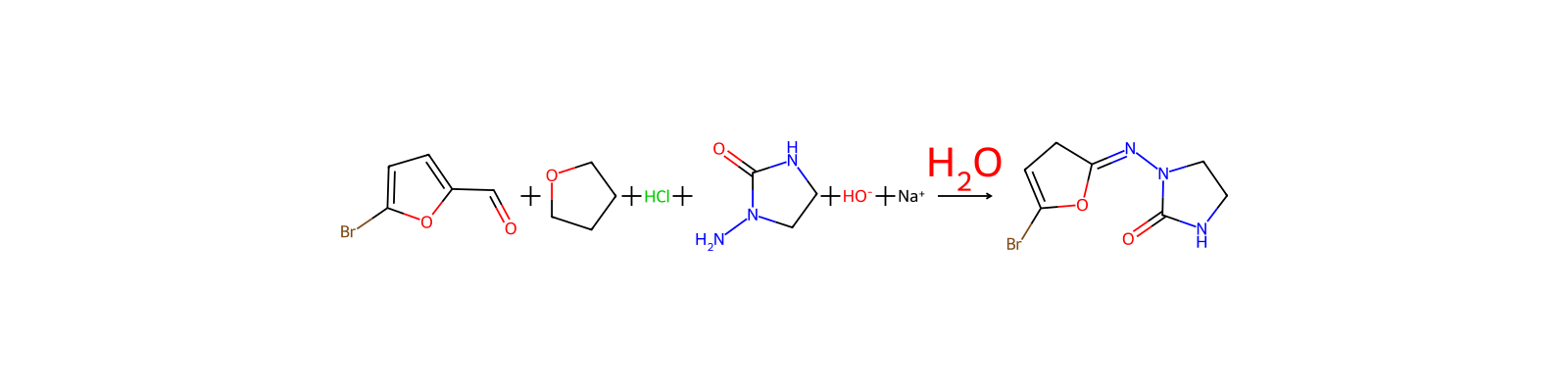
Uses5-Bromo-2-furaldehyde may be employed for the following syntheses:5-substituted 2-furaldehydesanilines, through a novel one-pot, two-step amination/Diels-Alder procedure5-(5′,8′-dimethyl-9′-tert-butoxycarbonyl-9′H-carbazol-3′-yl)-furan-2-carbaldehyde5-(6-hydroxyhexyl)-2-furaldehyde5-methylsulfonyl-2-furaldehyde5-phenylsulfonyl-2-furaldehyde5-(4-acetamidobenzylsulfonyl)-2-furaldehyde5-iodo-2-furaldehyde
Preparation methods
PreparationA three-necked 50 mL round bottom flask was charged with [bmim]Br3 (20 mmol) followed by dropwise addition of freshly distilled 2-furfural (20 mmol) over a period of 0.5 h and the reaction mixture was stirred for at 40 ℃ 2.5 h under nitrogen atmosphere. The mixture was extracted with petroleum ether (30 mL × 3), the organic layer was washed with water, dried (sodium sulfate) and concentrated. The crude product was purified by distillation and recrystallization with 10 % ethyl acetate-ether solution. 5-Bromo-2-furfural of yellowish crystal in 88 % yield was obtained. Mp. 82-85 ℃, 1H NMR (CDCl3), δ: 9.55 (s, 1H), 7.25 (s, 1H), 6.57 (s, 1H).
Upstream & downstream products
Upstream raw materials
Downstream products
Suppliers100 total
梯希爱(上海)化成工业发展有限公司021-67121386 · [email protected]
衢州润东化工有限公司0570-8789886 18892685668 · [email protected]
上海阿拉丁生化科技股份有限公司400-6206333 13167063860 · [email protected]
韶远科技(上海)有限公司021-50795510 4000665055 · [email protected]
科瑞迪化学400-821-5857 021-64326257 · [email protected]
南京凯天化工有限公司+86 (25) 5860-8846 · [email protected]
Syntechem Co.,Ltd[email protected]
上海迈瑞尔生化科技有限公司4006356688 18621169109 · [email protected]
北京华威锐科化工有限公司0757-86329057 18934348241 · [email protected]
宁波亿诺化学品有限公司86-574-27787657 · [email protected]
阿法埃莎(中国)化学有限公司400-6106006 · [email protected]
上海德默医药科技有限公司400-021-7337 2355568890 · [email protected]
安耐吉化学&3A(安徽泽升科技股份有限公司)400-0056266 · [email protected]
武汉凯威斯科技有限公司86-027-67849912 · [email protected]
上海恩诺生物科技有限公司+86 (21) 6435-5022
上海瀚鸿科技股份有限公司021-54306202 13764082696 · [email protected]
衢州市鸿通生物科技有限公司0571-64067827 13372408495 · [email protected]
上海钰康生物科技有限公司+86-18930848214 +86-021-56762820 · [email protected]
上海相辉医药科技有限公司13761987713 · [email protected]
上海景颜化工科技有限公司13817811078 · [email protected]
嘉兴市艾森化工有限公司0573-85285100 18627885956 · [email protected]
杭州东帆化学有限公司86-0571-85151182
玛雅试剂+86 (573) 82222445 (0)18006601000 452520369 · [email protected]
四川库利南科技有限公司400-1166-196 18981987031 · [email protected]
南京维奥化工有限公司Please Send Email 18652950785 · [email protected]
艾科试剂4008-755-333 18080918076 · [email protected]
上海思域化工科技有限公司86-21-34053660 · [email protected]
苏州思变化学技术有限公司0512-65617459 18915409046 · [email protected]
赛默飞世尔科技(中国)有限公司800-810-5118 · [email protected]
北京伊诺凯科技有限公司400-810-7969 010-59572699 · [email protected]
丹阳瑞辉化工有限公司0511-86883198 · [email protected]
TCI AMERICA800-4238616 · [email protected]
TOKYO CHEMICAL INDUSTRY CO., LTD.03-36680489 · [email protected]
TCI Europe320-37350700 · [email protected]
上海贤鼎生物科技有限公司4009209199 · [email protected]
越林试剂021-62960152 · [email protected]
无锡中坤生化科技有限公司+86 0510-85629785
宁波台康化工有限公司0574-87365517 18074210286 · [email protected]
上海将来实业股份有限公司400-0066400 13621662912 · [email protected]
北京阳光福润科技有限公司010-57495520 13521095525 · [email protected]
安徽科迪达化工有限公司0554-2106669 · [email protected]
山东友帮生化科技有限公司15098208899 · [email protected]
HBCChem, Inc.+1-510-219-6317 · [email protected]
雷丁试剂0510-85629785 18013409632 · [email protected]
郑州萃智医药科技有限公司19943855286 · [email protected]
上海御略医药科技有限公司021-60345187 13671753212 · [email protected]
上海鑫圭生物科技有限公司15121041756 · [email protected]
天津安浩生物科技有限公司[email protected]
上海麦克林生化科技股份有限公司15221275939 15221275939 · [email protected]
上海嵩爰化工科技有限公司010-1234567 18521000990 · [email protected]
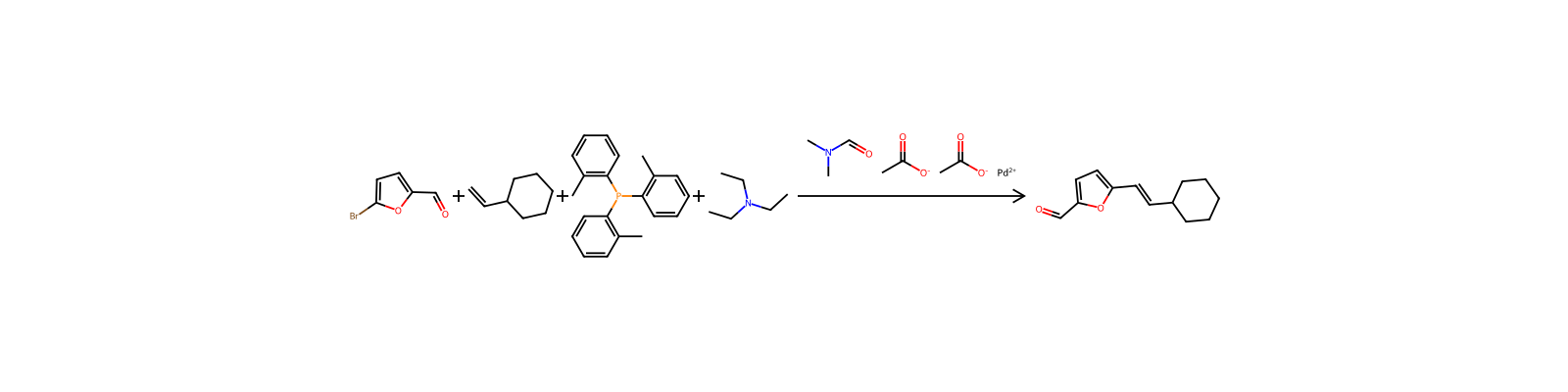
Related reactions
74 records


Compound notes
Loading…