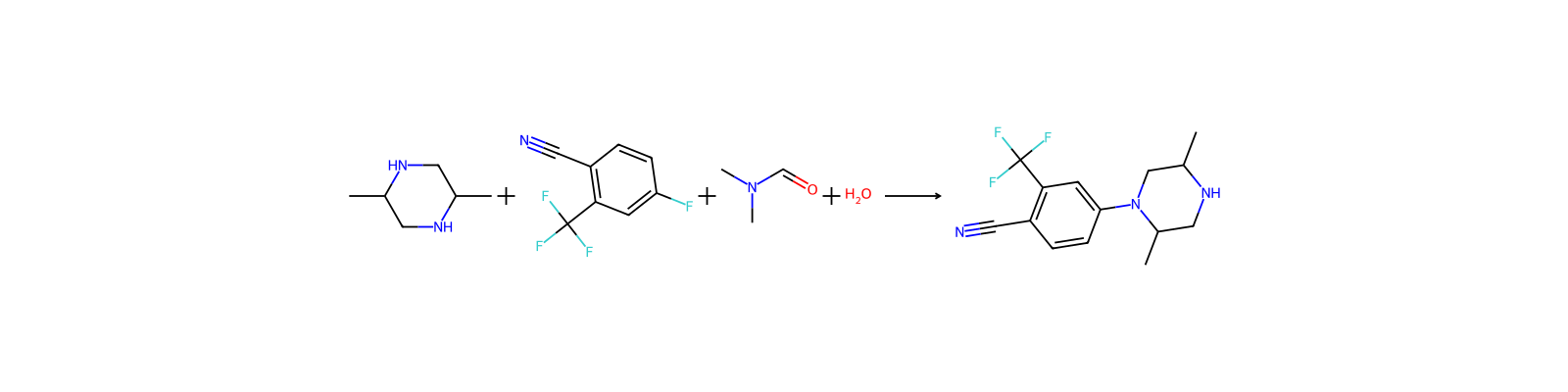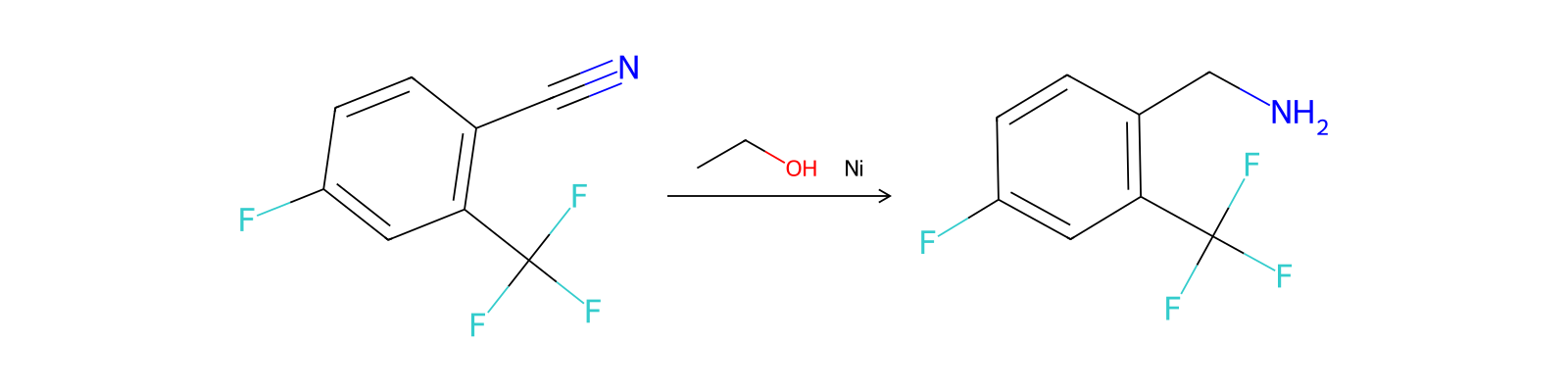
HRID 59253As reactant
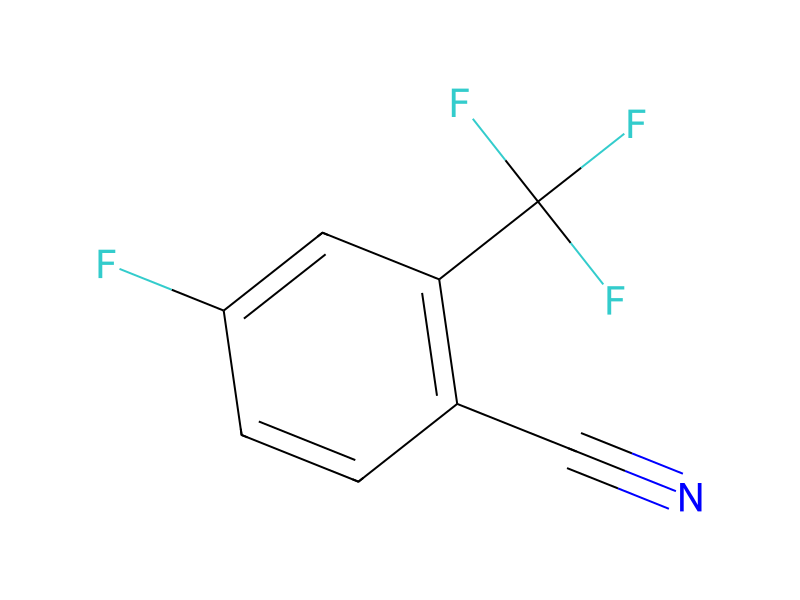
194853-86-6N#Cc1ccc(F)cc1C(F)(F)FLCCPQUYXMFXCAC-UHFFFAOYSA-N194853-86-6DTXSID80345507Safety information is for reference only and does not replace the supplier’s Safety Data Sheet (SDS), applicable regulations, or professional assessment.
Warning
H302 (91.7%): Harmful if swallowed [Warning Acute toxicity, oral]
P261, P264, P264+P265, P270, P271, P280, P301+P317, P302+P352, P304+P340, P305+P351+P338, P317, P319, P321, P330, P332+P317, P337+P317, P362+P364, P403+P233, P405, and P501 (click each P-code to see the statement)
Aggregated GHS information provided per 12 reports by companies from 6 notifications to the ECHA C&L Inventory. Each notification may be associated with multiple companies.
UsesIt is used as a pharmaceutical intermediate. It is also used for the synthesis of diphenylthioethers.
PreparationIn a 100 mL three-necked flask equipped with a stirrer, thermometer, and reflux condenser, 10.01 g (0.0487 mol) of 4-chloro-2-trifluoromethylbenzyl nitrile, 5.53 g (0.0953 mol) of spray-dried potassium fluoride (Morita Chemical Co., Ltd.), and 45 mL of dimethyl sulfoxide were added, and the mixture was reacted at 145 °C for 7 hours. The reaction mixture was cooled to room temperature, and 30 mL of water was added and stirred. The mixture was then extracted with 40 mL of diethyl ether. The extract was washed with water, and the ether layer was dried over anhydrous magnesium sulfate, filtered, and the ether in the filtrate was evaporated. Gas chromatography analysis yielded 8.0 g of product containing 95.5% 4-fluoro-2-(trifluoromethyl)benzonitrile, 0.1% 4-fluoro-2-trifluoromethylbenzaldehyde, 0.03% benzamide, and 1.25% 4-chloro-2-trifluoromethylbenzonitrile.