

Basic information
- CAS
104-09-6- Standard SMILES
Cc1ccc(CC=O)cc1- InChIKey
CIXAYNMKFFQEFU-UHFFFAOYSA-N- Molecular formula
- C9H10O
- Average molar mass
- 134.17 g/mol
- Monoisotopic mass
- 134.07316494
Overview
(4-Methylphenyl)acetaldehyde is a member of phenylacetaldehydes.
Names & identifiers
- Preferred name
- Lilac acetaldehyde
- IUPAC
- 2-(4-methylphenyl)acetaldehyde
- English name
- p-Methylphenylacetaldehyde
- Molecular formula
- C9H10O
- Molecular weight
- 134.18
Names & synonyms
104-09-6(4-Methylphenyl)acetaldehyde2-(4-methylphenyl)acetaldehydep-TolylacetaldehydeP-METHYLPHENYLACETALDEHYDEBENZENEACETALDEHYDE, 4-METHYL-Lilac acetaldehyde4-MethylbenzeneacetaldehydeAcetaldehyde, p-tolyl-FEMA No. 3071Methylphenylacetaldehyde, p-EINECS 203-173-2
Show more names
FEMA 3071Tolylacetaldehydp-Tolylacetaldehyd4-tolyacetaldehyde4-TOLYLACETALDEHYDEp-Toly-acetoaldehyde2-P-TOLYLACETALDEHYDE
7L6760H4LHDTXSID0051524P-TOLYLACETALDEHYDE [FHFI]RefChem:799163DTXCID6030073203-173-22-(p-tolyl)acetaldehydep-Tolyl-acetaldehyde
Database identifiers
- CAS
104-09-6- PubChem CID
- 61006
- DTXSID
DTXSID0051524- ChEBI
CHEBI:178623
Properties
Computed structural properties
- XLogP
- 1.9
- Topological polar surface area
- 17.1 Ų
- Hydrogen bond donors
- 0
- Hydrogen bond acceptors
- 1
- Rotatable bonds
- 2
- Heavy atoms
- 10
- Formal charge
- 0
- Complexity
- 101
Experimental & physicochemical properties
SpringerMaterials PropertiesViscosity
FragrancesFragrance Ingredient (p-Tolylacetaldehyde) -> IFRA transparency List
Food AdditivesFLAVORING AGENT OR ADJUVANT -> FDA Substance added to food
Density1.010-1.016
Flavoring AgentsEU Flavoring substances
Solubility
1162 mg/L @ 20 °C (exp)
Insoluble in water; soluble in oils
Miscible at room temperature (in ethanol)
Boiling Point
221.00 to 222.00 °C. @ 760.00 mm Hg
210 °C
Melting Point40 °C
Refractive Index1.530-1.549
Physical Description
Solid
Safety & regulation
GHS classification
GHS Classification
Danger
H317 (89.3%): May cause an allergic skin reaction [Warning Sensitization, Skin]
P261, P264+P265, P272, P280, P302+P352, P305+P354+P338, P317, P321, P333+P317, P362+P364, and P501 (click each P-code to see the statement)
Aggregated GHS information provided per 356 reports by companies from 3 notifications to the ECHA C&L Inventory. Each notification may be associated with multiple companies.
Hazard information
Regulatory Information
Chemical: Benzeneacetaldehyde, 4-methyl-
Commission Regulation (EC) No 1565/2000 (Repealed by Com. Implementing Reg. (EU) No 872/2012)
Benzeneacetaldehyde, 4-methyl-: Does not have an individual approval but may be used under an appropriate group standard
Other Safety InformationIMAP assessments - Benzeneacetaldehyde, 4-methyl-: Environment tier I assessment
Hazard Classes and CategoriesSkin Sens. 1A (89.3%)
Safety data
- tsca
- TSCA listed
- Signal word
- Warning
- Symbol(GHS)
- GHS07
- Hazard statements
- H317
- Precautionary statements
- P261-P272-P280-P302+P352-P333+P313-P321-P363-P501
Chemistry & industry
Pharmacology
Cellular LocationsCytoplasm
Uses & manufacturing
Use Classification
Fragrance Ingredients
Flavouring Agent -> FLAVOURING_AGENT -> JECFA Functional Classes
Flavoring Agents -> JECFA Flavorings Index
Flavouring Agent -> FLAVOURING_AGENT -> JECFA Functional Classes
General Manufacturing InformationBenzeneacetaldehyde, 4-methyl-: ACTIVE
Applications
Uses4-Methylphenylacetaldehyde (p-Tolylacetaldehyde) is used in perfumes, e.g., in soap, in tobacco fragrances, in the preparation of pesticides, etc.
Preparation methods
PreparationFrom p-methylbenzaldehyde; also from p-methylbenzyl chloride and hexamethylene tetramine.The methods of preparation correspond closely to those of phenylacetaldehyde. Thus, the compound can be prepared by glycidic ester synthesis from 4-methylbenzaldehyde and chloroacetate ester, by hydroformylation of 4-methylbenzylhalide with Co2(CO)8Na2CO3 in acetonitrile, or by oxidation of 4-methylstyrene.
Suppliers39 total
郑州阿尔法化工有限公司+86-18530059196 · [email protected]
湖北永阔科技有限公司027-59223108 15972152991 · [email protected]
上海麦克林生化科技股份有限公司021-50706066 15221275939 · [email protected]
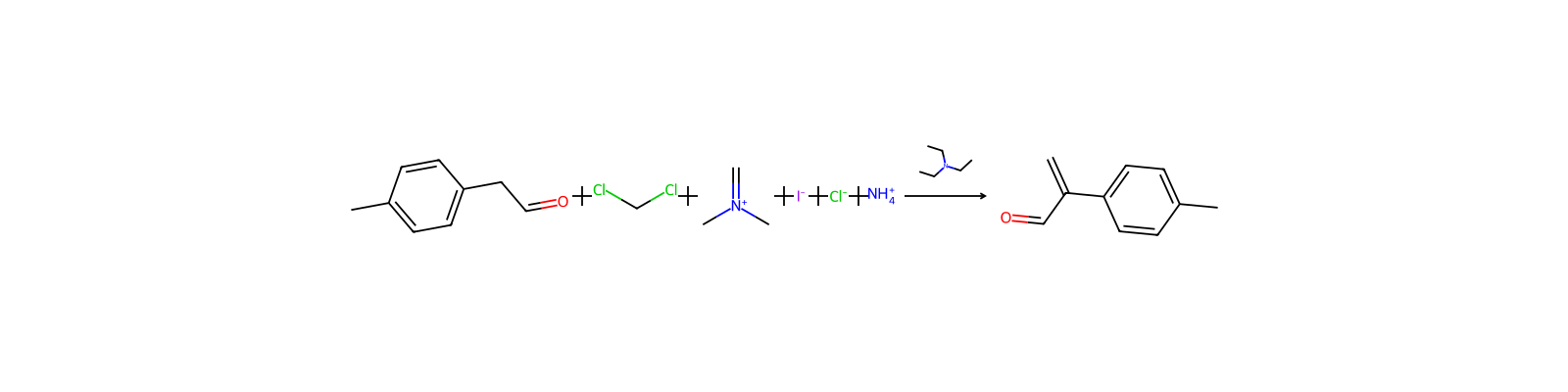
Related reactions
10 records



Compound notes
Loading…