HomeMCPWorkbenchSkills
HomeWorkbenchNotificationsMe
llms.txt · MCP GuidePrivacy Policy · Terms of Service · Supportv1.8.3
  1. Home
  2. /Compound

3-Methyl-2-butenal

HCID 61020
New reaction
Print
Basic informationOverviewNames & identifiersPropertiesSafety & regulationChemistry & industryRelated reactionsCompound notes
Substructure searchFind similar structures

Basic information

CAS
107-86-8
Standard SMILES
CC(C)=CC=O
InChIKey
SEPQTYODOKLVSB-UHFFFAOYSA-N
Molecular formula
C5H8O
Average molar mass
84.12 g/mol
Monoisotopic mass
84.05751487

Overview

3-methylbut-2-enal is an enal consisting of but-2-ene with a methyl substituent at position 3 and an oxo group at position 1. It has a role as a metabolite. It is functionally related to a 3-methylbut-2-enoic acid.

Names & identifiers

Preferred name
3-Methyl-2-butenal
IUPAC
3-methylbut-2-enal
English name
3-Methyl-2-butenal
Molecular formula
C5H8O
Molecular weight
84.12

Names & synonyms

3-Methyl-2-butenal3-Methylbut-2-enal107-86-8Senecialdehyde3-Methylcrotonaldehyde3,3-DimethylacroleinSenecioaldehyde2-BUTENAL, 3-METHYL-Crotonaldehyde, 3-methyl-beta-Methylcrotonaldehydebeta,beta-Dimethylacrolein3,3-Dimethyl-acrylaldehyde
Show more names
PRENALFEMA 36463-methyl-but-2-enal-2-butenaL3-methyl-2-butena
beta,beta-Dimethylacrylic aldehydeFEMA No. 3646DTXSID80296062JZ2B60W76NSC-149164DTXCID509606CHEBI:15825RefChem:884868

Database identifiers

CAS
107-86-8
PubChem CID
61020
DTXSID
DTXSID8029606
ChEMBL
CHEMBL453815
ChEBI
CHEBI:15825
UNII
2JZ2B60W76
EC Number
203-527-6
Nikkaji
J9.338F

Properties

Computed structural properties

XLogP
1.2
Topological polar surface area
17.1 Ų
Hydrogen bond donors
0
Hydrogen bond acceptors
1
Rotatable bonds
1
Heavy atoms
6
Formal charge
0
Complexity
68

Experimental & physicochemical properties

Chemical ClassesOther Classes -> Aldehydes
SpringerMaterials PropertiesOptical coefficient
FragrancesFragrance Ingredient (3-Methyl-2-butenal) -> IFRA transparency List
LogP0.53
Food AdditivesFLAVORING AGENT OR ADJUVANT -> FDA Substance added to food
Density · 3 items

0.9 g/cm³

Relative density of the vapour/air-mixture at 20 °C (air = 1): 1.01

0.870-0.875

Flavoring AgentsEU Flavoring substances
Solubility · 4 items

slightly

Solubility in water, g/100ml at 20 °C: 11 (good)

Slightly soluble in water; soluble in fats

soluble (in ethanol)

Flash Point37 °C

Safety & regulation

Safety information is for reference only and does not replace the supplier’s Safety Data Sheet (SDS), applicable regulations, or professional assessment.

GHS classification

GHS Classification · 6 items

Danger

H226 (100%): Flammable liquid and vapor [Warning Flammable liquids]

P210, P233, P240, P241, P242, P243, P260, P261, P264, P264+P265, P270, P271, P272, P280, P301+P317, P301+P330+P331, P302+P352, P302+P361+P354, P303+P361+P353, P304+P340, P305+P354+P338, P316, P317, P321, P330, P333+P317, P362+P364, P363, P370+P378, P403+P233, P403+P235, P405, and P501 (click each P-code to see the statement)

Aggregated GHS information provided per 1699 reports by companies from 12 notifications to the ECHA C&L Inventory. Each notification may be associated with multiple companies.

Danger

H226: Flammable liquid and vapor [Warning Flammable liquids]

Hazard information

Regulatory Information · 5 items

Chemical: 2-Butenal, 3-methyl-

Commission Regulation (EC) No 1565/2000 (Repealed by Com. Implementing Reg. (EU) No 872/2012)

PMN - indicates a commenced PMN (Pre-Manufacture Notices) substance.

REACH registered substance: 3-methyl-2-butenal (EC: 203-527-6)

2-Butenal, 3-methyl-: Does not have an individual approval but may be used under an appropriate group standard

Other Safety InformationIMAP assessments - 2-Butenal, 3-methyl-: Environment tier I assessment
Fire HazardsFlammable. Above 37 °C explosive vapour/air mixtures may be formed.
Hazards Summary · 1 item

A mucous membrane irritant; May have narcotic effects at high concentration; [Merck Index] Corrosive to skin and eyes; A respiratory tract irritant; Inhalation of high concentrations can cause lowering of consciousness; May cause skin sensitization; Chronic exposure may cause tissue lesions in the respiratory tract; Can be absorbed through skin; [ICSC] Safe when used as a flavoring agent in food; [JECFA] Causes burns; May cause skin sensitization; Harmful by ingestion and inhalation; [OECD SIDS: IUCLID Data Set] An irritant that may cause serious eye injury; May cause skin sensitization; Harmful by ingestion and inhalation; [Alfa Aesar MSDS]

Chemistry & industry

Pharmacology

Cellular LocationsExtracellular

Uses & manufacturing

UsesUsed as a flavoring agent; [FDA] Used to make citral and other chemicals and for the reconstitution of essential oils and other natural products; [OECD SIDS: IUCLID Data Set]
Use Classification · 6 items

Fragrance Ingredients

Flavouring Agent -> FLAVOURING_AGENT -> JECFA Functional Classes

Flavoring Agents -> JECFA Flavorings Index

Flavouring Agent -> FLAVOURING_AGENT -> JECFA Functional Classes

Flavouring Agent -> FLAVOURING_AGENT -> JECFA Functional Classes

Flavouring Agent -> FLAVOURING_AGENT -> JECFA Functional Classes

General Manufacturing Information2-Butenal, 3-methyl-: ACTIVE
Applications · 3 items

Description3-Methyl-2-butenal has an almond odor.

Uses3-Methyl-2-butenal is used in small quantities as food flavor in alcoholic beverages, chewing gums, confection frosting, frozen dairy, fruit ice, gelatin pudding, hard and soft candy and jam jelly. Used in daily flavor, and cosmetic flavor in perfumes. A starting material for the synthesis of vitamin A.

General Description3-Methylcrotonaldehyde is an α, β-unsaturated aldehyde. Electrochemical dimerization of 3-methylcrotonaldehyde was reported. The hydrogenation of 3-methylcrotonaldehyde over Ru, Pt and Rh was investigated.

Upstream & downstream products

Upstream raw materials

5-(tert-Butyldimethylsilyloxy)-1-pentanol

Related reactions

121 records
New reaction record
HRID 1244 reaction equation
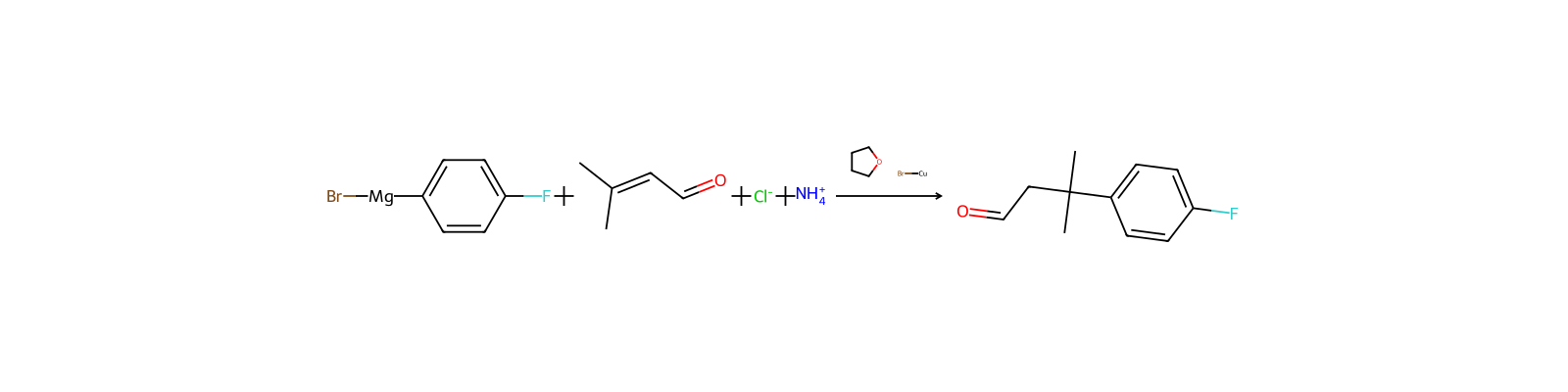
HRID 1244As reactant
HRID 3013 reaction equation
HRID 3013As reactant
HRID 21531 reaction equation
HRID 21531As reactant
HRID 54256 reaction equation
HRID 54256As reactant
HRID 54265 reaction equation
HRID 54265As reactant
HRID 110281 reaction equation
HRID 110281As reactant
HRID 138371 reaction equation
HRID 138371As reactant
HRID 141087 reaction equation
HRID 141087As reactant
PreviousPage 1 of 16

Compound notes

On this pageBasic informationOverviewNames & identifiersPropertiesSafety & regulationChemistry & industryRelated reactionsCompound notes
Boiling Point · 3 items

134 °C

136 °C

133-135 °C

Melting Point-20 °C
Vapor DensityRelative vapor density (air = 1): 2.9

Physicochemical properties

Melting point
-20 °C · -20 °C
Boiling point
135 °C · 135 °C
Density
0.88 · 0.88
vapor pressure
7 mm · 7 mm Hg ( 20 °C)
FEMA
3646 · 3646 | 3-METHYL-2-BUTENAL
FLAVIS Number
5.124 · 05.124 | 3-Methylcrotonaldehyde
refractive index
1.46 · 1.46
Flash point
37 °C · 37 °C
storage temp.
2 · 2-8°C
solubility
soluble
form
clear liquid
color
Colorless to Light orange to Yellow
Odor
1 % · at 1.00 % in dipropylene glycol. sweet fruity pungent brown nutty almond cherry
Odor Type
fruity
biological source
synthetic
Water Solubility
soluble
Sensitive
Air Sensitive
Merck
14 · 14,8448
JECFA Number
1202 · 1202
BRN
1734740 · 1734740
Major Application
flavors and fragrances
Cosmetics Ingredients Functions
PERFUMING
InChI
1S/C5H8O/c1-5(2)3-4-6/h3-4H,1-2H3
InChIKey
SEPQTYODOKLVSB-UHFFFAOYSA-N
SMILES
[H]C(=O)\C=C(\C)C
LogP
0.53 at · 0.53 at 25℃
CAS DataBase Reference
107 · 107-86-8(CAS DataBase Reference)
Substances Added to Food (formerly EAFUS)
3 · 3-METHYL-2-BUTENAL
FDA UNII
2 JZ2B60W76 · 2JZ2B60W76
NIST Chemistry Reference
3 · 3-methyl-2-butenal(107-86-8)
EPA Substance Registry System
2 · 2-Butenal, 3-methyl- (107-86-8)
UNSPSC Code
85151701 · 85151701
NACRES
24 · NA.24
Symbol(GHS)
2 · GHS02,GHS05,GHS06
Signal word
Danger
Hazard statements
226 · H226-H302-H314-H317-H331
Precautionary statements
210 · P210-P280-P301+P312-P303+P361+P353-P304+P340+P310-P305+P351+P338
Hazard Codes
Xn,Xi,C
Risk Statements
10 · 10-22-37/38-41-43-36/37/38-34-20/22-20/21/22
Safety Statements
26 · 26-36-37/39-16-45-36/37/39
RIDADR
1989 · UN 1989 3/PG 3
WGK Germany
2 · 2
F
9 · 9-13-23
TSCA
TSCA listed
HazardClass
3 · 3
PackingGroup
III
HS Code
2912190090 · 2912190090
Storage Class
3 · 3 - Flammable liquids
Hazard Classifications
3 InhalationAcute · Acute Tox. 3 InhalationAcute Tox. 4 OralEye Dam. 1Flam. Liq. 3Skin Corr. 1BSkin Sens. 1
REACH Registrations
Active
Limited Quantities
1 L · 1.0 L (0.3 gallons) (liquid) or 1 Kg (2.2 lbs) (solid)
Excepted Quantities
Max Inner Pack (30g or 30ml) and Max Outer Pack (500g or 500ml)
UN ClassificationUN Hazard Class: 3; UN Pack Group: III
Chemical DangersReacts with strong oxidants. This generates fire and explosion hazard.
Hazard Classes and Categories · 2 items

Flam. Liq. 3 (100%)

Flammable liquids - Category 3

Explosive Limits and PotentialExplosive limits , vol% in air: 1.8-7

Safety & protection

Fire FightingUse foam, powder, carbon dioxide. In case of fire: keep drums, etc., cool by spraying with water.
First Aid Measures · 4 items

Fresh air, rest. Half-upright position. Refer immediately for medical attention.

Remove contaminated clothes. Rinse skin with plenty of water or shower for at least 15 minutes. Refer immediately for medical attention.

Rinse with plenty of water (remove contact lenses if easily possible). Refer immediately for medical attention.

Rinse mouth. Do NOT induce vomiting. Give one or two glasses of water to drink. Refer immediately for medical attention.

Safe StorageFireproof. Well closed. Separated from strong oxidants. Store in an area without drain or sewer access.
Spillage Disposal · 1 item

Remove all ignition sources. Personal protection: chemical protection suit including self-contained breathing apparatus. Do NOT let this chemical enter the environment. Collect leaking liquid in sealable containers. Absorb remaining liquid in sand or inert absorbent. Then store and dispose of according to local regulations.

Eye PreventionWear face shield or eye protection in combination with breathing protection.
Fire PreventionNO open flames, NO sparks and NO smoking. NO contact with hot surfaces. Above 37 °C use a closed system, ventilation and explosion-proof electrical equipment. Use non-sparking handtools.
Inhalation RiskNo indication can be given about the rate at which a harmful concentration of this substance in the air is reached on evaporation at 20 °C.
Skin PreventionProtective gloves. Protective clothing.
Exposure PreventionAVOID ALL CONTACT! IN ALL CASES CONSULT A DOCTOR!
Ingestion PreventionDo not eat, drink, or smoke during work.
Inhalation PreventionUse ventilation, local exhaust or breathing protection.
Effects of Long Term ExposureRepeated or prolonged contact may cause skin sensitization. The substance may have effects on the respiratory tract. This may result in tissue lesions.

Toxicology

Adverse EffectsDermatotoxin - Skin burns.
Exposure RoutesThe substance can be absorbed into the body by inhalation of its vapour and by ingestion.
Signs and Symptoms · 4 items

Cough. Sore throat. Burning sensation in the throat and chest. Drowsiness.

Redness. Pain. Skin burns. Blisters.

Redness. Pain. Blurred vision.

Burning sensation in the throat and chest. Nausea. Abdominal pain. Drowsiness.

ICSC Environmental DataThe substance is harmful to aquatic organisms.
Toxicity DataLC50 (rat) = 3,700 mg/m3/4hr

Safety data

F
9-13-23
wgk
2
tsca
TSCA listed
ridadr
UN 1989 3/PG 3
hs_code
2912190090
risk_code
10-22-37/38-41-43-36/37/38-34-20/22-20/21/22
Signal word
Danger
Symbol(GHS)
GHS02,GHS05,GHS06
hazard_code
Xn,Xi,C
safety_code
26-36-37/39-16-45-36/37/39
hazard_class
3
Storage Class
3 - Flammable liquids
packing_group
III
Hazard statements
H226-H302-H314-H317-H331
Limited Quantities
1.0 L (0.3 gallons) (liquid) or 1 Kg (2.2 lbs) (solid)
Excepted Quantities
Max Inner Pack (30g or 30ml) and Max Outer Pack (500g or 500ml)
REACH Registrations
Active
Hazard Classifications
Acute Tox. 3 InhalationAcute Tox. 4 OralEye Dam. 1Flam. Liq. 3Skin Corr. 1BSkin Sens. 1
Precautionary statements
P210-P280-P301+P312-P303+P361+P353-P304+P340+P310-P305+P351+P338
2-Methyl-1-buten-3-yne
3-Methyl butynol

Downstream products

6-Methoxyquinaldine(E)-6-Methyl-3,5-heptadien-2-onecalanolide BZanthobungeanineAcetic acid lavandulyl ester2,2-Dimethyl-2H-chromene-6-carbonitrile3-Methyl-3-buten-2-onealpinumisoflavone3-Methyl-2-butanone1-(7-Hydroxy-5-methoxy-2,2-dimethyl-2H-chromen-8-yl)ethanoneButanal, 3-methyl-3-(phenylthio)-5,8-Dihydroxy-2,2-dimethyl-2H,6H-pyrano[3,2-b]xanthen-6-one

Additional notes

DefinitionChEBI: An enal consisting of but-2-ene with a methyl substituent at position 3 and an oxo group at position 1.