

Basic information
- Standard SMILES
NCCCN1CCOCC1- InChIKey
UIKUBYKUYUSRSM-UHFFFAOYSA-N- Molecular formula
- C7H16N2O
- Average molar mass
- 144.21 g/mol
- Monoisotopic mass
- 144.12626313
Overview
N-aminopropylmorpholine appears as a colorless liquid with a faint, fishlike odor. Burns, but requires some effort to ignite. Corrosive to tissue. Produces toxic oxides of nitrogen during combustion.
Names & identifiers
- Preferred name
- N-(3-Aminopropyl)morpholine
- IUPAC
- 3-morpholin-4-ylpropan-1-amine
- English name
- N-(3-Aminopropyl)morpholine
- Molecular formula
- C7H16N2O
- Molecular weight
- 144.21
Names & synonyms
123-00-2N-(3-Aminopropyl)morpholine3-Morpholinopropylamine3-morpholinopropan-1-amine4-MORPHOLINEPROPANAMINEN-Aminopropylmorpholine4-(3-Aminopropyl)morpholine3-(morpholin-4-yl)propan-1-amine1-Amino-3-morpholinopropane4-MorpholinepropylamineMorpholine, 4-(3-aminopropyl)-(3-Aminopropyl)morpholine
Show more names
NAPMNSC 10813-MorphoLinopropyLAKOS MSC-0738RARECHEM AL BW 1351LABOTEST-BB LT00731422
3-(4-Morpholinyl)-1-propanamine4-AminopropylmorpholineMorpholine, N-aminopropyl-Morpholine, 4-aminopropyl-3-Morpholinopropanaminegamma-MorpholinopropylamineAminopropylmorpholineN-(3-Aminopropyl)morfolin
Database identifiers
- CAS
123-00-2- PubChem CID
- 61055
- DTXSID
DTXSID4041521- ChEMBL
CHEMBL158697- ChEBI
CHEBI:86554- UNII
- 9A09425QD6
- EC Number
- 204-590-2
- Nikkaji
- J34.693D
Properties
Computed structural properties
- XLogP
- -0.7
- Topological polar surface area
- 38.5 Ų
- Hydrogen bond donors
- 1
- Hydrogen bond acceptors
- 3
- Rotatable bonds
- 3
- Heavy atoms
- 10
- Formal charge
- 0
- Complexity
- 81.7
Experimental & physicochemical properties
Chemical ClassesCorrosives
SpringerMaterials PropertiesOptical coefficient
Physical Description
N-aminopropylmorpholine appears as a colorless liquid with a faint, fishlike odor. Burns, but requires some effort to ignite. Corrosive to tissue. Produces toxic oxides of nitrogen during combustion.
CBI
Collision Cross Section128.3 Ų [M+H]+ [CCS Type: DT; Buffer gas: N2; Ionization: APCI+; Dataset: TOXCAST; Source Identifier: DTXSID4041521]
Physicochemical properties
- Melting point
- 15 °C · −15 °C(lit.)
- Boiling point
- 224 °C · 224 °C(lit.)
- Density
- 0.987 g/mL · 0.987 g/mL at 25 °C(lit.)
- vapor density
- 4.97 · 4.97
- vapor pressure
- 11.5 Pa · 11.5Pa at 20℃
- refractive index
- 20 · n20/D 1.4761(lit.)
- Flash point
- 210 °F · 210 °F
- storage temp.
- Keep in dark place,Inert atmosphere,Room temperature
- solubility
- 1000 g/l · 1000g/l
- pka
- 10.3 · 10.30±0.10(Predicted)
- form
- Liquid
- color
- Colorless to Almost colorless
- PH
- 12 · 12 (H2O, 20℃)
- Water Solubility
- Soluble
- Sensitive
- Air Sensitive
- BRN
- 105104 · 105104
- InChI
- 1S/C7H16N2O/c8-2-1-3-9-4-6-10-7-5-9/h1-8H2
- InChIKey
- UIKUBYKUYUSRSM-UHFFFAOYSA-N
- SMILES
- NCCCN1CCOCC1
- LogP
- -1.076 at · -1.076 at 20℃ and pH10.81-11.03
- Surface tension
- 70.3 mN/m · 70.3mN/m at 1g/L and 20℃
- Dissociation constant
- 10.08 · 10.08
- CAS DataBase Reference
- 123 · 123-00-2(CAS DataBase Reference)
- EWG's Food Scores
- 1 · 1
- FDA UNII
- 9 A09425QD6 · 9A09425QD6
- NIST Chemistry Reference
- 4 · 4-Morpholinepropanamine(123-00-2)
- EPA Substance Registry System
- 4 · 4-Morpholinepropanamine (123-00-2)
- UNSPSC Code
- 12352100 · 12352100
- NACRES
- 22 · NA.22
- Symbol(GHS)
- 5 · GHS05,GHS07
- Signal word
- Danger
- Hazard statements
- 302 · H302-H314
- Precautionary statements
- 280 · P280-P301+P312+P330-P301+P330+P331-P303+P361+P353-P305+P351+P338+P310
- PPE
- Faceshields, Gloves, Goggles, type ABEK (EN14387) respirator filter
- Hazard Codes
- C,Xi
- Risk Statements
- 21 · 21-34-21/22-36/37-R34-R21/22
- Safety Statements
- 26 · 26-36/37/39-45-S45-S36/37/39-S26
- RIDADR
- 2735 · UN 2735 8/PG 2
- WGK Germany
- 2 · 2
- RTECS
- 7700000 · QD7700000
- F
- 10 · 10-34
- TSCA
- TSCA listed
- HazardClass
- 8 · 8
- PackingGroup
- II
- HS Code
- 29349990 · 29349990
- Storage Class
- 8 A · 8A - Combustible corrosive hazardous materials
- Hazard Classifications
- 4 OralEye · Acute Tox. 4 OralEye Dam. 1Skin Corr. 1B
- Toxicity
- 50 orl-rat: · LD50 orl-rat: 3560 mg/kg UCDS** 3/25/70
- REACH Registrations
- Active
- Limited Quantities
- 5 L · 5.0 L (1.3 gallons) (liquid) or 5.0 kg (11 lbs) (solid)
- Excepted Quantities
- Max Inner Pack (30g or 30ml) and Max Outer Pack (1Kg or 1L)
Safety & regulation
GHS classification
GHS Classification
Danger
H302 (87.3%): Harmful if swallowed [Warning Acute toxicity, oral]
P260, P264, P264+P265, P270, P280, P301+P317, P301+P330+P331, P302+P352, P302+P361+P354, P304+P340, P305+P354+P338, P316, P317, P321, P330, P362+P364, P363, P405, and P501 (click each P-code to see the statement)
Aggregated GHS information provided per 711 reports by companies from 8 notifications to the ECHA C&L Inventory. Each notification may be associated with multiple companies.
Hazard information
Regulatory Information
Chemical: 4-Morpholinepropanamine
4-Morpholinepropanamine is listed on the EPA's Chemical Data Reporting (CDR) system. Manufacturers and importers of 4-Morpholinepropanamine are required to report information about their production and use of this chemical to the EPA under the Toxic Substances Control Act (TSCA). (40 eCFR Part 711)
Status: Active Update: 07-01-2019 https://echa.europa.eu/registration-dossier/-/registered-dossier/24742
4-Morpholinepropanamine: Does not have an individual approval but may be used under an appropriate group standard
The New Jersey Worker and Community Right to Know Act requires public and private employers to provide information about hazardous substances at their workplaces. (N.J.S.A. 34:5A-1 et. seq.)
DOT LabelCorrosive
Fire HazardsExcerpt from ERG Guide 153 [Substances - Toxic and/or Corrosive (Combustible)]:
Health HazardsExcerpt from ERG Guide 153 [Substances - Toxic and/or Corrosive (Combustible)]:
Reactive GroupAmines, Phosphines, and Pyridines
Reactivity Profile
N-AMINOPROPYLMORPHOLINE behaves as an amine. Amines are chemical bases. They neutralize acids to form salts plus water. These acid-base reactions are exothermic. The amount of heat that is evolved per mole of amine in a neutralization is largely independent of the strength of the amine as a base. Amines may be incompatible with isocyanates, halogenated organics, peroxides, phenols (acidic), epoxides, anhydrides, and acid halides. Flammable gaseous hydrogen is generated by amines in combination with strong reducing agents, such as hydrides.
Air and Water ReactionsSoluble in water.
Hazard Classes and Categories
Acute Tox. 4 (87.3%)
Corrosives
Safety & protection
Fire FightingExcerpt from ERG Guide 153 [Substances - Toxic and/or Corrosive (Combustible)]:
First AidExcerpt from ERG Guide 153 [Substances - Toxic and/or Corrosive (Combustible)]:
Nonfire Spill ResponseExcerpt from ERG Guide 153 [Substances - Toxic and/or Corrosive (Combustible)]:
Isolation and EvacuationExcerpt from ERG Guide 153 [Substances - Toxic and/or Corrosive (Combustible)]:
Personal Protective Equipment (PPE)Excerpt from ERG Guide 153 [Substances - Toxic and/or Corrosive (Combustible)]:
Safety data
- F
- 10-34
- PPE
- Faceshields, Gloves, Goggles, type ABEK (EN14387) respirator filter
- wgk
- 2
- tsca
- TSCA listed
- rtecs
- QD7700000
- ridadr
- UN 2735 8/PG 2
- hs_code
- 29349990
- Toxicity
- LD50 orl-rat: 3560 mg/kg UCDS** 3/25/70
- risk_code
- 21-34-21/22-36/37-R34-R21/22
- Signal word
- Danger
- Symbol(GHS)
- GHS05,GHS07
- hazard_code
- C,Xi
- safety_code
- 26-36/37/39-45-S45-S36/37/39-S26
- hazard_class
- 8
- Storage Class
- 8A - Combustible corrosive hazardous materials
- packing_group
- II
- Hazard statements
- H302-H314
- Limited Quantities
- 5.0 L (1.3 gallons) (liquid) or 5.0 kg (11 lbs) (solid)
- Excepted Quantities
- Max Inner Pack (30g or 30ml) and Max Outer Pack (1Kg or 1L)
- REACH Registrations
- Active
- Hazard Classifications
- Acute Tox. 4 OralEye Dam. 1Skin Corr. 1B
- Precautionary statements
- P280-P301+P312+P330-P301+P330+P331-P303+P361+P353-P305+P351+P338+P310
Chemistry & industry
Uses & manufacturing
U.S. Production2023: <75,000 lb
Consumer UsesSemiconductor and photovoltaic agent
Household ProductsInformation on 1 consumer products that contain N-Aminopropylmorpholine in the following categories is provided:
General Manufacturing Information4-Morpholinepropanamine: ACTIVE
Applications
UsesFiber synthesis; chemical intermediate.
Uses3-(4-Morpholinyl)propylamine is catalytic agent, petrochemical additive. It is an important raw material and intermediate used in organic synthesis, pharmaceuticals, agrochemicals and dyestuffs.
General DescriptionA colorless liquid with a faint, fishlike odor. Burns, but requires some effort to ignite. Corrosive to tissue. Produces toxic oxides of nitrogen during combustion.
Upstream & downstream products
Upstream raw materials
Downstream products
Suppliers50 total
梯希爱(上海)化成工业发展有限公司021-67121386 · [email protected]
衢州润东化工有限公司0570-8789886 18892685668 · [email protected]
上海阿拉丁生化科技股份有限公司400-6206333 13167063860 · [email protected]
武汉欣扬瑞和化学科技有限公司13720274133 · [email protected]
湖北金梭生物科技有限公司00123456789 · [email protected]
爱斯特(成都)生物制药股份有限公司+86-28-85122536 85324413 · [email protected]
Baoji Guokang Healthchem co.,ltd+8615604608665 15604608665 · [email protected]
山东前元高分子材料有限公司18678041314 18765609661 · [email protected]
Dayang Chem (Hangzhou) Co.,Ltd.+86-0571-88938639 17705817739 · [email protected]
韶远科技(上海)有限公司021-50795510 4000665055 · [email protected]
Syntechem Co.,Ltd[email protected]
上海迈瑞尔生化科技有限公司4006356688 18621169109 · [email protected]
阿法埃莎(中国)化学有限公司400-6106006 · [email protected]
安耐吉化学&3A(安徽泽升科技股份有限公司)400-0056266 · [email protected]
武汉凯威斯科技有限公司86-027-67849912 · [email protected]
上海瀚鸿科技股份有限公司021-54306202 13764082696 · [email protected]
嘉兴市艾森化工有限公司0573-85285100 18627885956 · [email protected]
上海隆盛化工有限公司58099637 13585536065 · [email protected]
山东西亚化学有限公司13355009207 13355009207 · [email protected]
玛雅试剂+86 (573) 82222445 (0)18006601000 452520369 · [email protected]
天津希恩思生化科技有限公司400 638 7771 · [email protected]
Xiamen AmoyChem Co., Ltd+86-86-5926051114 · [email protected]
河南多贝化工有限公司0370-2785118 17550508557 · [email protected]
艾科试剂4008-755-333 18080918076 · [email protected]
上海思域化工科技有限公司86-21-34053660 · [email protected]
北京伊诺凯科技有限公司400-810-7969 010-59572699 · [email protected]
张家港保税区凯利特化工有限公司18606289633 15862625988 · [email protected]
TCI AMERICA800-4238616 · [email protected]
TOKYO CHEMICAL INDUSTRY CO., LTD.03-36680489 · [email protected]
TCI Europe320-37350700 · [email protected]
深圳康特腾科技有限公司86-0755-86635001 · [email protected]
湖北隆信化工实业有限公司15271551270 · [email protected]
苏州爱玛特生物科技有限公司0512-56316828 4008675858 · [email protected]
上海将来实业股份有限公司021-61552785 · [email protected]
安徽科迪达化工有限公司0554-2106669 · [email protected]
HBCChem, Inc.+1-510-219-6317 · [email protected]
上海毕得医药科技股份有限公司400-164-7117 18317119277 · [email protected]
成都零六生物科技有限公司400-1166-196 13458535857 · [email protected]
上海馨远医药科技有限公司021-24206007 13764915196 · [email protected]
上海御略医药科技有限公司021-60345187 13671753212 · [email protected]
上海麦克林生化科技股份有限公司15221275939 15221275939 · [email protected]
杭州杰恒化工有限公司0571-87396432 · [email protected]
江苏艾康生物医药研发有限公司025-66028182 17714375163 · [email protected]
湖北巨胜科技有限公司027-59599241 18871490274 · [email protected]
Sigma-Aldrich西格玛奥德里奇(上海)贸易有限公司021-61415566 800-8193336 · [email protected]
潍坊市前进精细化工有限公司18753684562 · [email protected]
成都瑞欧克科技有限公司028-64353063 · [email protected]
九鼎化学(上海)科技有限公司4009209199 · [email protected]
Ring Specialty Chemicals Inc.+1 416 493 6870 · [email protected]
厦门志信化学有限公司+86-5922680277 +86-13806087780 · [email protected]
Additional notes
DefinitionChEBI: A member of the class of morpholines that is morpholine substituted by a 3-aminopropyl group a the N atom.
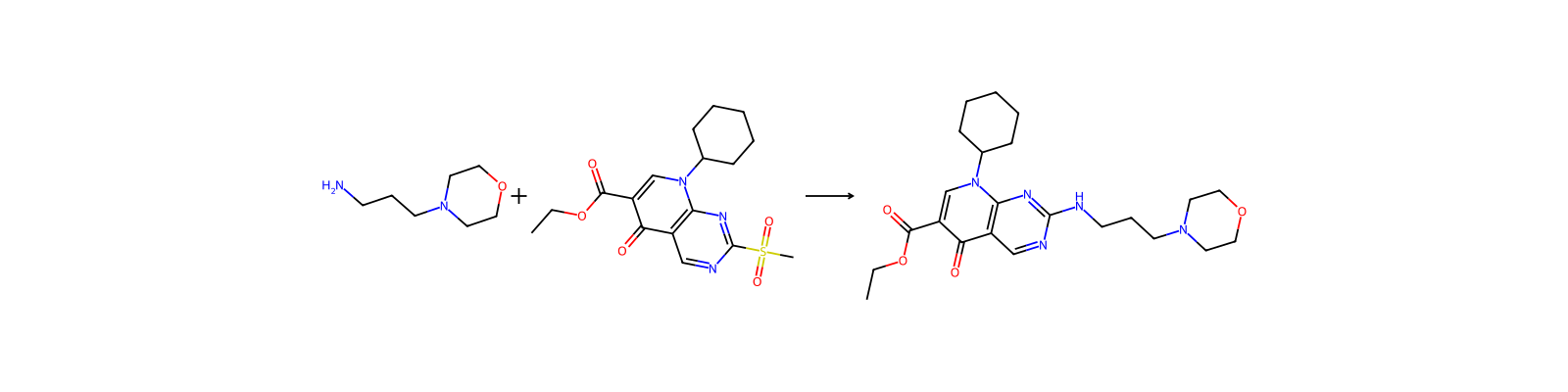
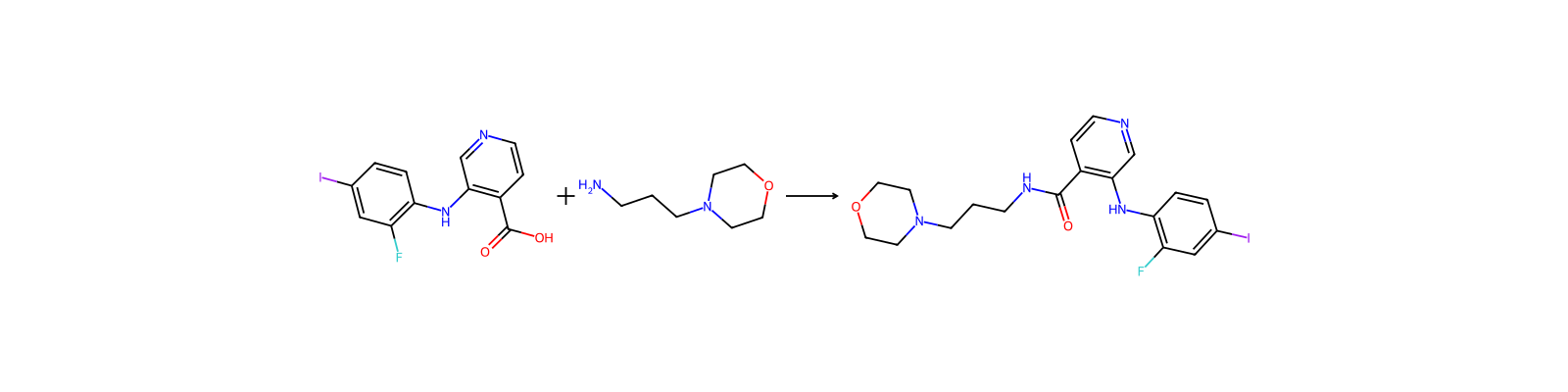
Related reactions
289 records



Linked notes
Loading…