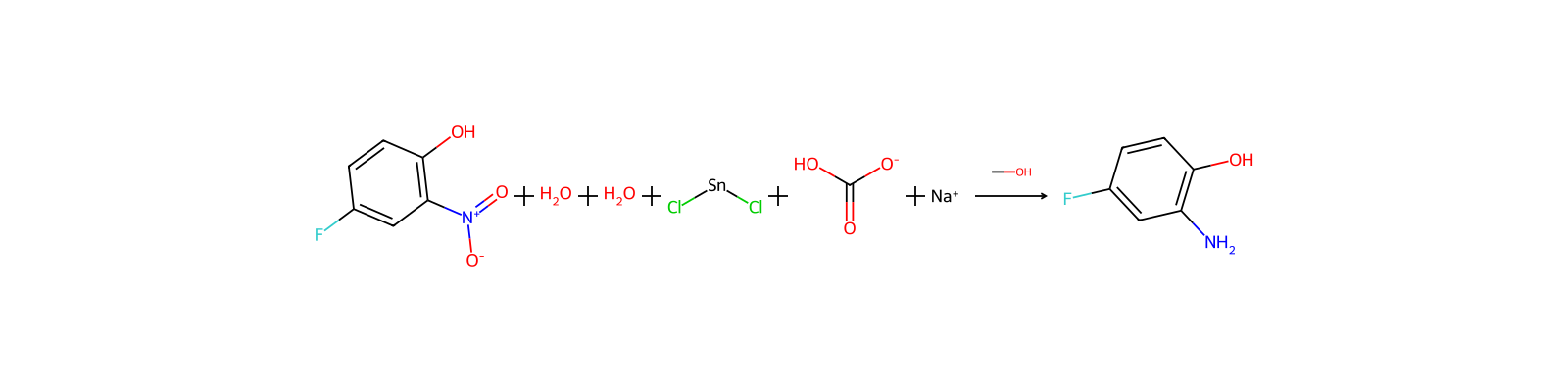
HRID 3125As reactant

10025-69-1O.O.[Cl][Sn][Cl]FWPIDFUJEMBDLS-UHFFFAOYSA-L10025-69-1Safety information is for reference only and does not replace the supplier’s Safety Data Sheet (SDS), applicable regulations, or professional assessment.
Uses(1) It can be used as a reducing agent, mordant, bleaching agent and for tin plating in the electroplating industry. (2) Stannous chloride dihydrate can be used for the colorimetric determination of silver, lead, arsenic and molybdenum, being also be used as a reducing agent and mordant (3) This product is mainly used in acidic tin plating as major salt. Tin is in bivalent in the bath with high efficiency cathode. The general usage amount is 40~60 kg/L. It can also be used for glass mirror industry, as silver nitrate sensitizer to enable excellent coating brightness. Addition of the plating layer of this product during the ABS electroplating is not easy to fall off. (4) Stannous chloride dihydrate can be used as the reducing agents in the manufacture of dyestuff intermediates. It can act as the components of super high pressure lubricating oil. It can be used as a bleaching agent for the sensitization of the mercury-plating during the manufacturing of mirror, enables excellent brightness of the formed silver film so that the combination of mercury and products is quite firm. Electroplating industry applied it for the tin-plating, copper-tin plating of the mechanical parts. During the ABS plastic plating, it is used for sensitization so that the coating is not easy to fall off. It can also be used in the synthesis of pharmaceuticals, as the catalyst in organic synthesis and the activator of the butyl rubber vulcanization. It can also be used as the mordant and the anti-dyeing agent in printing discharge process. It can be used as the stabilizers for perfumery industry, as food reductant and antioxidants used for canned asparagus, pineapple juice. (5) It can be used as analysis reagents and reducing agent. It can also be used as the reductant for the production of dye intermediates; it can also be used for electroplating; as brightening agent during galvanized silver plating and plastic plate plating; as perfume stabilizer, bleach, stabilizing soap aroma; oil anti-fouling agent; raw material for organic synthesis; the raw material of herbicide Oxadiazon. (6) It is a kind of strong reducing agent. It can be used for the determination of hydride via AAS; colorimetric determination of silver, lead, arsenic and molybdenum; determination of serum inorganic phosphorus and alkaline phosphatase activity, molybdenum blue method for the determination of soil and plant phosphorus content; the catalyst of the organic reaction. (7) As a strong reducing agent, it is used for carbonyl allylation reaction; as the Lewis acid catalyst in a C-C bond reaction; the catalyst for the co-acting with AgClO4 for the synthesis of α-glycosides, the synthesis of such olefins, diolefins, cis-vinyl ethylene oxide and allyl selenide and de-oxidation of internal peroxides; used for the protection of carboxylic acids in the presence of 1,3-dithianes and selective metho
UsesStannous chloride is used as a sensitizing agent in preparing glass and plastic for metalizing. It serves as a potent reducing agent. Other uses of stannous chloride are tin electroplating baths, corrosion inhibitors, polymers, thermoplastic elastomers, soldering flux, antioxidant, tanning agent and pharmaceuticals.
UsesTin(II) chloride dehydrate may be used:As a reducing agent for the determination of hydride forming species by AAS.In the conversion of organomercurials into inorganic mercury determined using a flow injection-cold vapor atomic absorption spectrometryIn the determination of total mercury content, using atomic fluorescence spectroscopy and mercury speciation was performed using gas chromatography inductively coupled plasma mass spectrometry (GC-ICPMS).
UsesPowerful reducing agent, particularly in manufacture of dyes and 99mTc radiopharmaceuticals; in tinning by galvanic methods; in liquor finishing of wire; in sensitizing of glass and plastics before metallizing; as soldering flux; as mordant in dyeing with cochineal; in manufacture of tin chemicals, color pigments, pharmaceuticals, sensitized paper, lubricating oil additives; as tanning agent; in removing ink stains; in yeast revivers; as reagent in analytical chemistry; as catalyst in organic reactions.
General DescriptionCrystals of SnCl2.2H2O exhibit monoclinic crystal system and space group P21/c.
DefinitionChEBI: A hydrate that is tin dichloride (anh.) combined with 2 mol eq. of water.