
Cupric chloride dihydrate
Completing data — refresh the page later to see the latest
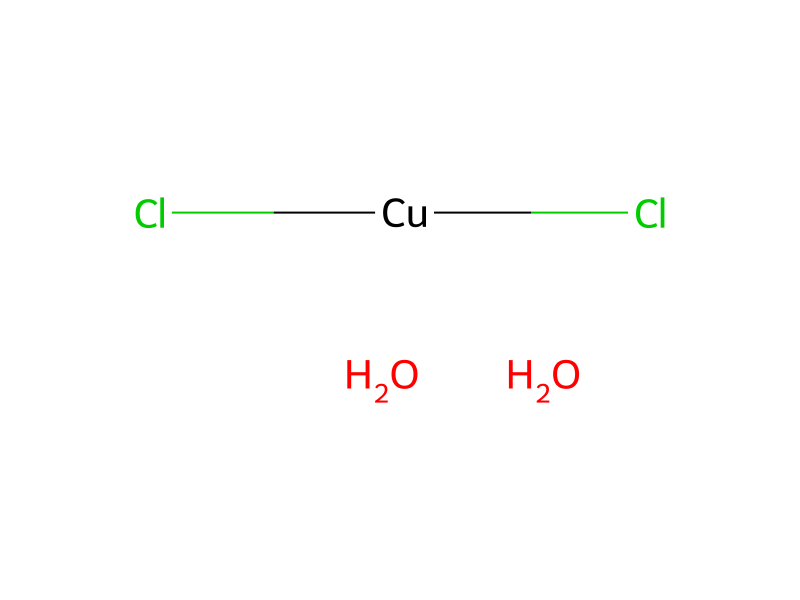
Basic information
- CAS
10125-13-0- Standard SMILES
O.O.[Cl][Cu][Cl]- InChIKey
MPTQRFCYZCXJFQ-UHFFFAOYSA-L- Molecular formula
- Cl2CuH4O2
- Average molar mass
- 170.48 g/mol
- Monoisotopic mass
- 168.88843223
Overview
Copper(II) chloride dihydrate is a hydrate that is the dihydrate form of copper(II) chloride. It occurs naturally as the mineral eriochalcite. It has a role as an EC 5.3.3.5 (cholestenol Delta-isomerase) inhibitor. It is a hydrate and a halide mineral. It contains a copper(II) chloride.
Names & identifiers
- Preferred name
- Cupric chloride dihydrate
- IUPAC
- dichlorocopper;dihydrate
- English name
- Copper(II) chloride dihydrate
- Molecular formula
- CuCl2.2H2O
- Molecular weight
- 170.48
Names & synonyms
Copper(II) chloride dihydrateCUPRIC CHLORIDE DIHYDRATECopper(II)chloride dihydrateCopper(2+) chloride dihydrateCupric chloride (USP)Cupric chloride [USP]DTXSID1049564CHEBI:86318RefChem:919273DTXCID8029523Coppertracedichlorocopper;dihydrate
Show more names
COPPER CHLORIDE DIHYDRATEchloride dihydrateCUPRIC CHLORIDE 2H2OCUPRIC CHLORIDE 2-HYDRATECOPPER(II) CHLORIDE-2-HYDRATECUPRIC CHLORIDE, DIHYDRATE REAGENT (ACS)CUPRIC CHLORIDE, DIHYDRATECUPRIC CHLORIDE, DIHYDRATECUPRIC CHLORIDE, DIHYDRATECUPRIC CHLORIDE, DIHYDRATECUPRIC CHLORIDE, DIHYDRATE, 99.999%CUPRIC CHLORIDE, DIHYDRATE, 99.999%CUPRIC CHLORIDE, DIHYDRATE, 99.999%CUPRIC CHLORIDE, DIHYDRATE, 99.999%
Copper (II) Chloride DihydrateCopric chloride dihydrateCaswell No. 235ACopper dichloride dihydrate; Copper(II) chloride dihydrate; Cupric chloride dihydrateEPA Pesticide Chemical Code 023701eriochalciteUNII-S2QG84156OCopper chloride (CuCl2), dihydrate
Properties
Computed structural propertiesFilling in
- Topological polar surface area
- 2 Ų
- Hydrogen bond donors
- 2
- Hydrogen bond acceptors
- 2
- Rotatable bonds
- 0
- Heavy atoms
- 5
- Formal charge
- 0
- Complexity
- 2.8
Physicochemical properties
- Melting point
- 100 °C · 100 °C (dec.)(lit.)
- Density
- 2.54 · 2.54
- bulk density
- 1070 kg/m3 · 1070kg/m3
- vapor density
- 1 · >1 (vs air)
- storage temp.
- 5 °C · Store at +5°C to +30°C.
- solubility
- 757 g/l · 757g/l
- form
- Solid
- color
- White
- Specific Gravity
- 2.54 · 2.54
- Flame Color
- Bluish-green
- PH
- 3 · 3.0-3.8 (50g/l, H2O, 20℃)
- biological source
- synthetic (inorganic)
- Water Solubility
- 1150 g/L · 1150 g/L
- Sensitive
- Air Sensitive & Hygroscopic
- Merck
- 14 · 14,2633
- Exposure limits
- 1 mg/m3NIOSH: · ACGIH: TWA 1 mg/m3NIOSH: IDLH 100 mg/m3; TWA 1 mg/m3
- Stability
Safety & regulation
Safety information is for reference only and does not replace the supplier’s Safety Data Sheet (SDS), applicable regulations, or professional assessment.
Hazard information
CSL Reaction Information
CSL00134
OXYGEN + COPPER(II) CHLORIDE DIHYDRATE + 2,6-DIBROMOPYRIDINE + N-BUTYLLITHIUM + DIETHYL ETHER
O2 reacted with the organocopper (or remaining organolithium) reagent to form some peroxides which exploded
Explosive
Ullmann coupling
ACS Safety Letters
Safety data
- PPE
- dust mask type N95 (US), Eyeshields, Gloves
- wgk
- 3
- tsca
- Yes
- rtecs
- GL7030000
- ridadr
- UN 2802 8/PG 3
- hs_code
- 28273990
- Toxicity
- LD50 orally in Rabbit: 584 mg/kg
- risk_code
- 22-36/37/38-50/53-50-41-38-21/22
- Signal word
- Danger
- Symbol(GHS)
- GHS05,GHS07,GHS09
- hazard_code
- Xn,N
- safety_code
- 26-60-61-36-36/37/39
- hazard_class
- 8
- Storage Class
- 8A - Combustible corrosive hazardous materials
- packing_group
- III
- Hazard statements
- H302+H312-H315-H318-H410
- Hazard Classifications
- Acute Tox. 4 DermalAcute Tox. 4 OralAquatic Acute 1Aquatic Chronic 2Eye Dam. 1Skin Irrit. 2
- Precautionary statements
- P264-P273-P280-P301+P312-P302+P352+P312-P305+P351+P338
Chemistry & industry
Applications
DescriptionCopper (II) chloride dihydrate is used in the preparation of copper oxychloride and as a catalyst in many organic chlorination reactions such as vinyl chloride and 1,2-dichloroethane. Copper chloride dihydrate may be also used as catalyst to cleave tetrahydropyranyl (THP) ethers and t-butyldimethylsilyl (TBDMS) ethers and to chemoselectively hydrolyze semicarbazones to carbonyl compounds. Solution of copper (II) chloride is used for plating on aluminum and for tinting germanium and tin.
UsesCopper(II) chloride is used as a mordant in dyeing and printing of fabrics; as an ingredient of isomerization and cracking catalysts; and as a desulfurizing and deodorizing agent in petroleum industry. Other important applications are in copper plating of aluminum; preparation of copper standard solutions; test for molybdenum; in tinting-baths for iron and tin; in pigments for ceramics and glasses; as a fixer and desensitizer reagent in photography; in mercury extraction from ores; in laundry-marking and invisible inks; and in manufacture of several copper salts.
UsesSupplement (trace mineral).
UsesCopper(II) chloride (CuCl2) or cupric chloride, is a brownish-yellow hygroscopic powder, or it may be formed as green deliquescent crystals. It is used in the dyeing and printing of textiles, as a disinfectant, as red pigment in the glass and ceramic industries, and for green-colored pyrotechnics, wood preservative, fungicide, deodorizer, water purification, feed additive, and electroplating baths.
UsesCopper(II) chloride dihydrate has been used as a positive control in dispersion of zebrafish embryo. It has also been used for the preparation of trace metals mixture.
Preparation methods
PreparationCopper(II) chloride may be synthesized by heating elemental copper with chlorine: Cu + Cl2 CuCl2 Alternatively, it may be prepared by treating copper carbonate with hydrochloric acid followed by crystallization: CuCO3 + 2HCl → CuCl2 + CO2 + H2O In the above preparation, the hydrate of the salt crystallizes, precipitates, and may be dehydrated by heating under vacuum.
Upstream & downstream products
Related reactions
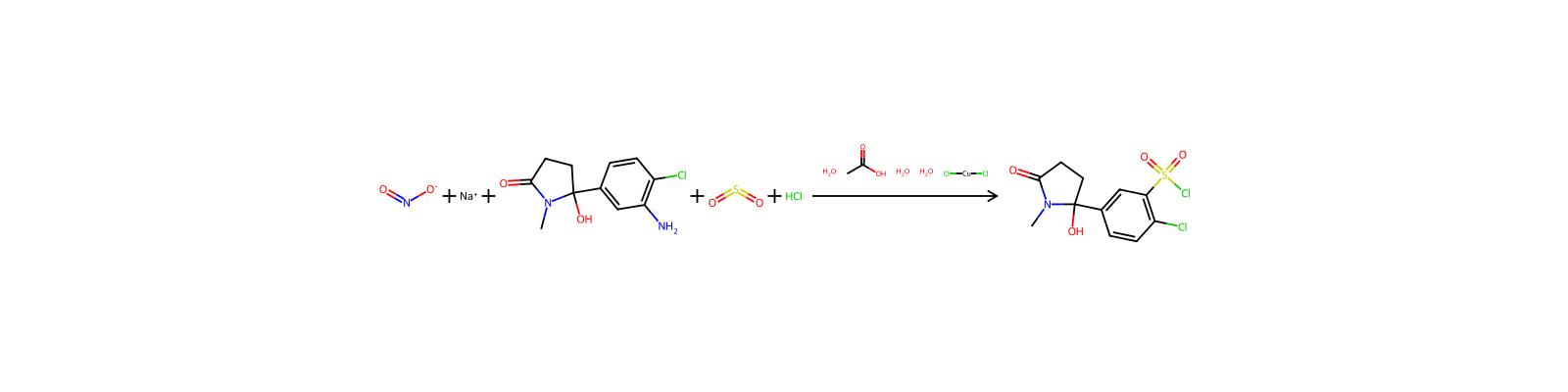
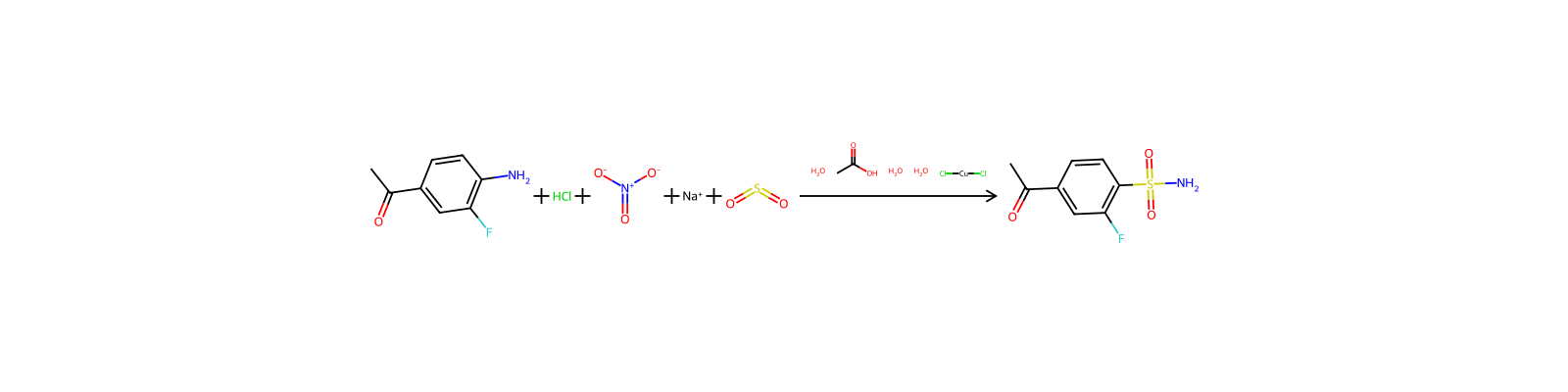
43 records





Compound notes
Loading…