
Hypochlorite
Completing data — refresh the page later to see the latest
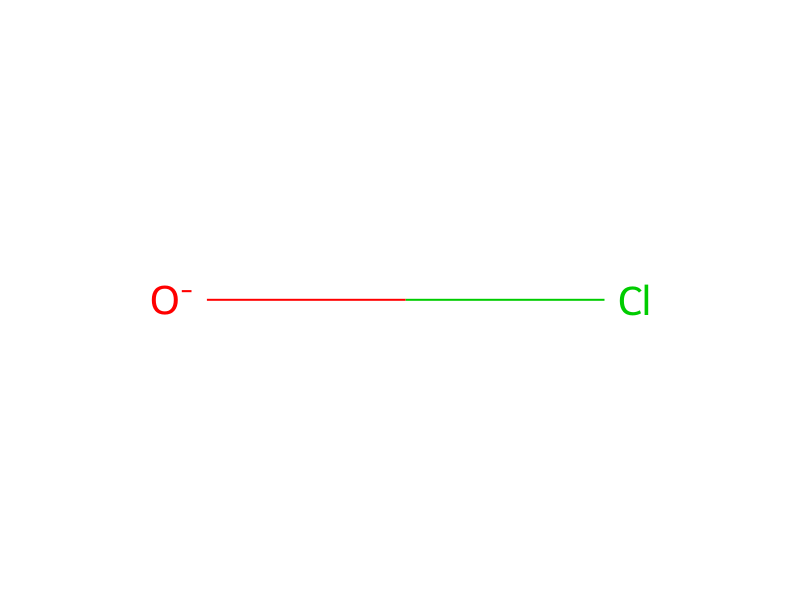
Basic information
- CAS
14380-61-1- Standard SMILES
[O-]Cl- InChIKey
WQYVRQLZKVEZGA-UHFFFAOYSA-N- Molecular formula
- ClO-
- Average molar mass
- 51.45 g/mol
- Monoisotopic mass
- 50.96431588
Overview
Salts between a metal ion (most commonly the sodium ion, calcium ion, or potassium ion) and the hypochlorite group ClO-. Toxic by ingestion and inhalation. Powerful irritants to the skin, eyes and mucous membranes. May cause ignition when in contact with organic materials. When involved in a fire they may accelerate combustion or cause an explosion.
Names & identifiers
- Preferred name
- Hypochlorite
- IUPAC
- hypochlorite
Names & synonyms
HypochloriteHypochlorite ion14380-61-1T5UM7HB19NDTXSID8073136CHEBI:29222RefChem:55382DTXCID6034689SUPERCLEAN Micro Acid Hypochlorite Disinfectant807-894-9HypochloritesUNII-T5UM7HB19N
Show more names
hypochioritehypochloridehypochoriteHypochloritoxidochlorate(1-)UN3212ClO(-)[ClO](-)
Database identifiers
- CAS
14380-61-1- PubChem CID
- 61739
- DTXSID
DTXSID8073136- ChEBI
CHEBI:29222- UNII
- T5UM7HB19N
- EC Number
- 807-894-9
- Nikkaji
- J1.587.829K
Properties
Computed structural propertiesFilling in
- XLogP
- 0.2
- Topological polar surface area
- 23.1 Ų
- Hydrogen bond donors
- 0
- Hydrogen bond acceptors
- 1
- Rotatable bonds
- 0
- Heavy atoms
- 2
- Formal charge
- -1
- Complexity
- 2
Experimental & physicochemical properties
SolubilitySoluble (sodium hypochlorite)
Boiling PointDecomposes at 40 (sodium hypochlorite)
Physical Description
Salts between a metal ion (most commonly the sodium ion, calcium ion, or potassium ion) and the hypochlorite group ClO-. Toxic by ingestion and inhalation. Powerful irritants to the skin, eyes and mucous membranes. May cause ignition when in contact with organic materials. When involved in a fire they may accelerate combustion or cause an explosion.
Safety & regulation
Safety information is for reference only and does not replace the supplier’s Safety Data Sheet (SDS), applicable regulations, or professional assessment.
Hazard information
DOT LabelOxidizer
Fire HazardsExcerpt from ERG Guide 140 [Oxidizers]:
Health HazardsExcerpt from ERG Guide 140 [Oxidizers]:
Reactive GroupSalts, Basic
Reactivity AlertsStrong Oxidizing Agent
Reactivity Profile
HYPOCHLORITES, INORGANIC, N.O.S. are oxidizing agents. Can generate chlorine, a toxic gas, if mixed with strong acids. May react with reducing agents to generate heat and products that may be gaseous (causing pressurization of closed containers). The products may themselves be capable of further reactions. May react vigorously with carbon; reacts potentially explosively with finely divided carbon. Reacts with acetylene to form explosive chloroacetylenes. Reactions with organic matter, oil, hydrocarbons; alcohols may lead to explosions. Reactions with nitromethane, methanol, ethanol (and other alcohols) can become violent after a delay. Reacts with possible ignition and/or explosion with organic sulfur compounds and with sulfides. Decomposes evolving oxygen, a change that can be catalyzed by rust on metal containers. Forms highly explosive NCl3 on contact with urea or ammonia. Evolves highly toxic gaseous chlorine gas when heated or on contact with acids [Sax, 9th ed., 1996, p. 1905]. A mixture with damp sulfur reacted violently, and molten sulfur was ejected [Chem Eng. News, 1965, 46(29), 6]. The combination of calcium hypochlorite, sodium hydrogen sulfate, starch, and sodium carbonate, when compressed, caused the materials to incandescence, followed by explosion, [Ind. Eng. Chem., 1937, 15, 282].
DOT Hazard Classification
Hypochlorites, inorganic, n.o.s
UN3212
Div 5.1 Oxidizer (49 eCFR § 173.127)
PG II: the degree of danger presented by the material is medium
Symbol G: The proper shipping name for which one or more technical names of the hazardous material must be entered in parentheses, in association with the basic description. (49 eCFR §172.203(k))
Chemistry & industry
Pharmacology
Protein BindingThis pharmacokinetic parameter does not apply for this drug.
PharmacodynamicsSodium hypochlorite exerts antimicrobial actions that depends on the concentration of the available chlorine and the pH of the solution. The concentration of the hypochlorite depends on the overall efficiency of disinfection.
Mechanism of Action
Sodium hypochlorite mediate its antimicrobial action by reacting with fatty acids and amino acids. Via saponification reaction, it acts as an organic and fat solvent, degrading fatty acids to form fatty acids and glycerol. This reduces the surface tension of the remaining solution. Sodium hypochlorite may react with amino acids to neutralize them and form water and salt. Hypochlorous acids (HOCl-) present in sodium hypochlorite solutions may act as solvents in contact with organic tissue to release chlorine, which forms chloramines when combined with the protein amino group that disrupt cell metabolism. Chlorine in the solution is a strong oxidant that inhibits essential bacterial enzymes leading to an irreversible oxidation of SH groups. Eventually hypochlorous acid and hypochlorite ions degrade and hydrolyze amino acids.
Biological Half-LifeThis pharmacokinetic parameter does not apply for this drug.
Metabolism/MetabolitesThis pharmacokinetic parameter does not apply for this drug. Hypochlorite salts are expected to undergo dissociation.
MeSH Pharmacological ClassificationElectron-accepting molecules in chemical reactions in which electrons are transferred from one molecule to another (OXIDATION-REDUCTION).
Absorption, Distribution and Excretion
This pharmacokinetic parameter does not apply for this drug.
This pharmacokinetic parameter does not apply for this drug.
This pharmacokinetic parameter does not apply for this drug.
This pharmacokinetic parameter does not apply for this drug.
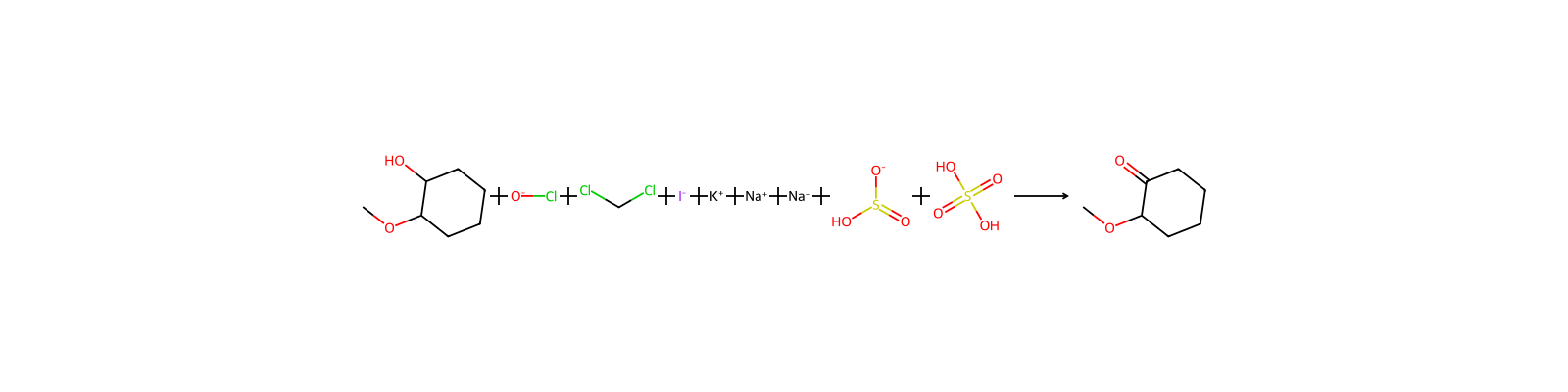
Related reactions
436 records



Compound notes
Loading…