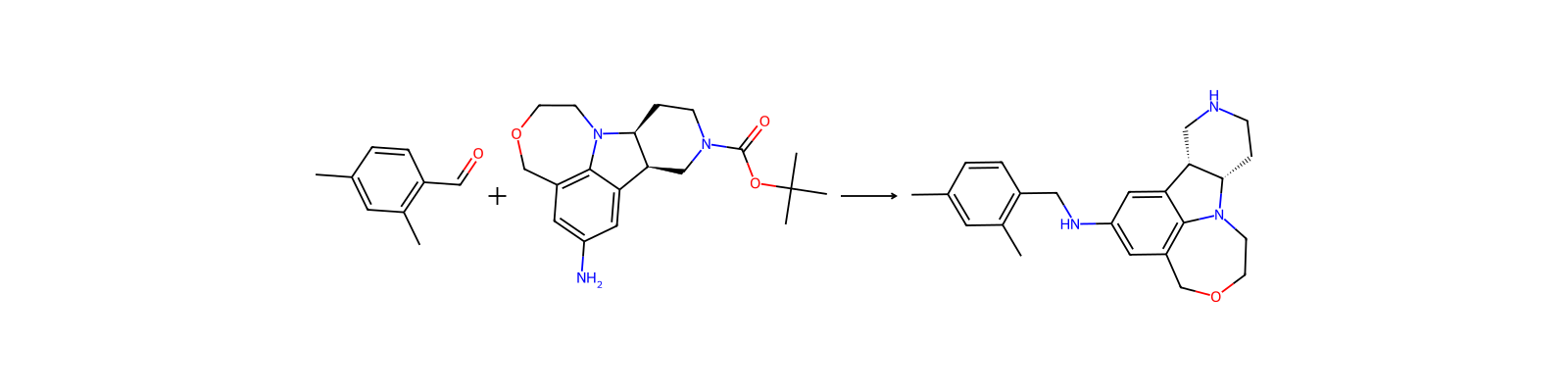
HRID 23278As reactant

15764-16-6Cc1ccc(C=O)c(C)c1GISVICWQYMUPJF-UHFFFAOYSA-N2,4-Dimethylbenzaldehyde is a carbonyl compound.
15764-16-6DTXSID60166297CHEBI:178624insoluble in water; soluble in organic solvents, oils
miscible at room temperature (in ethanol)
102.50 to 103.00 °C. @ 14.00 mm Hg
215 °C
Colorless or light yellow liquid; [MSDSonline]
Liquid
colourless liquid with a mild, sweet, bitter-almond odour
Safety information is for reference only and does not replace the supplier’s Safety Data Sheet (SDS), applicable regulations, or professional assessment.
This chemical does not meet GHS hazard criteria for 6.2% (89 of 1440) of reports.
Warning
H302 (89.4%): Harmful if swallowed [Warning Acute toxicity, oral]
P264, P270, P301+P317, P330, and P501 (click each P-code to see the statement)
Aggregated GHS information provided per 1440 reports by companies from 6 notifications to the ECHA C&L Inventory.
Chemical: Benzaldehyde, 2,4-dimethyl-
Commission Regulation (EC) No 1565/2000 (Repealed by Com. Implementing Reg. (EU) No 872/2012)
Benzaldehyde, 2,4-dimethyl-: Does not have an individual approval but may be used under an appropriate group standard
Flavouring Agent -> FLAVOURING_AGENT -> JECFA Functional Classes
Flavoring Agents -> JECFA Flavorings Index
Flavouring Agent -> FLAVOURING_AGENT -> JECFA Functional Classes
Flavouring Agent -> FLAVOURING_AGENT -> JECFA Functional Classes
Description2,4-dimethylbenzaldehyde is one isomer of dimethylbenzaldehyde. It can be used as a flavoring agent and pharmacological intermediate. It can be manufactured through the reaction between m-xylene and CO under the catalysis of powdery and anhydrous AlCl3.
OccurrenceReported found in cognac, brandy, black tea, grape, juniper berry and clam
Uses2,4-Dimethylbenzaldehyde can be used for antiproliferative activity.
General DescriptionThe D values of 2,4-Dimethylbenzaldehyde were studied.
PreparationBy passing HCl into a mixture of o-xylole, aluminum chloride, sodium cyanide at 100°C.
DefinitionChEBI: 2,4-Dimethylbenzaldehyde is a carbonyl compound.


