HomeMCPWorkbenchSkills
HomeWorkbenchNotificationsMe
llms.txt · MCP GuidePrivacy Policy · Terms of Service · Supportv1.8.3
  1. Home
  2. /Compound

Ruthenium trichloride

HCID 61850
New reaction
Print
Basic informationNames & identifiersPropertiesSafety & regulationChemistry & industryRelated reactionsCompound notes
Substructure searchFind similar structures

Basic information

CAS
10049-08-8
Standard SMILES
[Cl][Ru]([Cl])[Cl]
InChIKey
YBCAZPLXEGKKFM-UHFFFAOYSA-K
Molecular formula
Cl3Ru
Average molar mass
207.4 g/mol
Monoisotopic mass
206.810898

Names & identifiers

Preferred name
Ruthenium trichloride
IUPAC
trichlororuthenium
English name
Ruthenium(III) chloride
Molecular formula
RuCl3
Molecular weight
207.43

Names & synonyms

Ruthenium MuriaticumDTXSID101014308RefChem:57881DTXCID80227091233-167-510049-08-8Ruthenium chloride (RuCl3)Ruthenium trichlorideRY8V1UJV23TrichlororutheniumRuthenium chlorideruthenium (iii) chloride
Show more names
RUCl3RUTHENIUM(III) CHLORIDE ANHYDROUSRuthenic chlorideRuthenium(III) chLRuthenium(III) chlorRuthenium triehlorideRuthenium (Ⅲ) chlorideRUTHENIUM(III) CHLORIDE
Ruthenium trichioride12648-62-3RuCl3.xH2ORuthenium Chloride PowderMFCD00011208Ruthenium(III) chloride, anhydrousRuthenium (III)chlorideSCHEMBL52397

Database identifiers

CAS
10049-08-8、14898-67-0
PubChem CID
61850
DTXSID
DTXSID101014308
EC Number
233-167-5

Properties

Computed structural properties

Topological polar surface area
0 Ų
Hydrogen bond donors
0
Hydrogen bond acceptors
0
Rotatable bonds
0
Heavy atoms
4
Formal charge
0
Complexity
8

Experimental & physicochemical properties

Chemical ClassesMetals -> Metals, Inorganic Compounds
SpringerMaterials Propertiescrystal structure
Density3.11 @25 °C
Physical Descriptionalpha form: Black lustrous solid; beta form: Dark brown solid; [Merck Index] Black hygroscopic crystals with a pungent odor; [Alfa Aesar MSDS]

Physicochemical properties

Melting point
500 °C · 500 °C
Density
3.11 g/mL · 3.11 g/mL at 25 °C (lit.)
storage temp.
Keep in dark place,Inert atmosphere,Room temperature
solubility
2 O; · insoluble in H2O; slightly soluble in ethanol
form
Powder or Crystals
color
Black
PH
1 · 1-2
Water Solubility
INSOLUBLE
Sensitive

Safety & regulation

Safety information is for reference only and does not replace the supplier’s Safety Data Sheet (SDS), applicable regulations, or professional assessment.

GHS classification

GHS Classification · 4 items

Danger

H290 (18.5%): May be corrosive to metals [Warning Corrosive to Metals]

P234, P260, P264, P264+P265, P270, P273, P280, P301+P317, P301+P330+P331, P302+P361+P354, P304+P340, P305+P354+P338, P316, P317, P321, P330, P363, P390, P391, P405, P406, and P501 (click each P-code to see the statement)

Aggregated GHS information provided per 205 reports by companies from 18 notifications to the ECHA C&L Inventory. Each notification may be associated with multiple companies.

Hazard information

Regulatory Information · 3 items

Chemical: Ruthenium chloride (RuCl3)

Ruthenium chloride (RuCl3): Does not have an individual approval but may be used under an appropriate group standard

Ruthenium (III) chloride: Does not have an individual approval but may be used under an appropriate group standard

Other Safety InformationIMAP assessments - Ruthenium chloride (RuCl3): Human health tier I assessment
Hazards SummaryIntraperitoneal LD50 (rat) = 360 mg/kg; [RTECS] Causes burns; Inhalation may cause corrosive injuries to upper respiratory tract and lungs; [Alfa Aesar MSDS]
Hazard Classes and CategoriesMet. Corr. 1 (18.5%)

Safety & protection

Protective Action Criteria (PAC) · 3 items

2.2 [mg/m3]

24 [mg/m3]

140 [mg/m3]

Toxicology

Chemistry & industry

Uses & manufacturing

General Manufacturing InformationRuthenium chloride (RuCl3): ACTIVE
Applications · 1 item

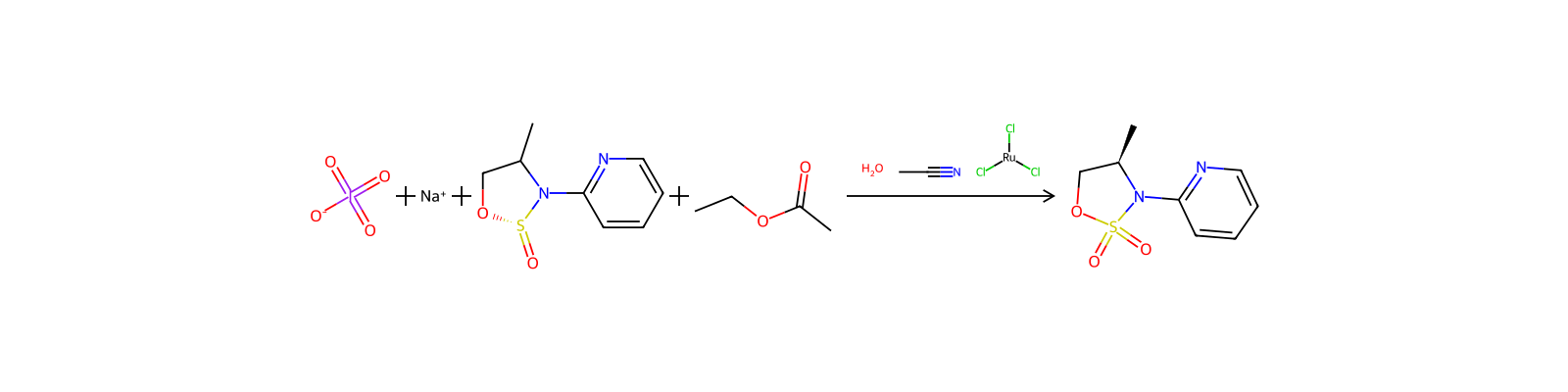
UsesRuthenium(III) chloride is widely used as a starting material of ruthenium complexes. It acts as a catalyst used in the oxidative cyclization of 1,7-dienes to oxepane diols. It is used in the hydroxylation of tertiary hydrocarbons in combination of periodate or bromate. It is involved as a catalyst in the synthesis of 2,3-pyridinedicarboxylic acid-13C3, 15N, where the unlabelled analog is an inhibitor of glucose synthesis.

Upstream & downstream products

Upstream raw materials

Sodium hypochloriteRuthenium(IV) oxide hydrateRutheniumRuthenium metalHydrochloric acid

Downstream products

(3S,4R)-4-Acetoxy-3-[(R)-1-(tert-butyldimethylsilyloxy)ethyl]azetidin-2-oneDichloro(cycloocta-1,5-diene)ruthenium(II)(1R,2R)-N-Boc-1-amino-2-phenylcyclopropanecarboxylic acid[Ru(bpm)3][Cl]2

Related reactions

177 records
New reaction record
HRID 894 reaction equation
HRID 894As catalyst
HRID 2881 reaction equation
HRID 2881As catalyst
HRID 48104 reaction equation
HRID 48104As solvent
HRID 59564 reaction equation
HRID 59564As catalyst
HRID 80825 reaction equation
HRID 80825As catalyst
HRID 88483 reaction equation
HRID 88483As reactant
HRID 91030 reaction equation
HRID 91030As reactant
HRID 91902 reaction equation
HRID 91902As reactant
PreviousPage 1 of 23

Compound notes

On this pageBasic informationNames & identifiersPropertiesSafety & regulationChemistry & industryRelated reactionsCompound notes
Hygroscopic
Crystal Structure
3 type · AlCl3 type
crystal system
Monoclinic
Merck
14 · 14,8302
Space group
2 · C2/m
Lattice constant
a/nm
Symbol(GHS)
5 · GHS05,GHS07,GHS09
Signal word
Danger
Hazard statements
302 · H302-H314-H411
Precautionary statements
260 · P260-P273-P280-P301+P312-P303+P361+P353-P305+P351+P338
Hazard Codes
C
Risk Statements
34 · 34-52/53-22
Safety Statements
26 · 26-36/37/39-45-61
RIDADR
3260 · UN 3260 8/PG 2
WGK Germany
2 · 2
RTECS
2650000 · VM2650000
TSCA
TSCA listed
HazardClass
8 · 8
PackingGroup
III
HS Code
28439000 · 28439000
Storage Class
8 A · 8A - Combustible corrosive hazardous materials
Hazard Classifications
4 OralAquatic · Acute Tox. 4 OralAquatic Chronic 2Eye Dam. 1Skin Corr. 1B
Adverse EffectsDermatotoxin - Skin burns.

Safety data

wgk
2
tsca
TSCA listed
rtecs
VM2650000
ridadr
UN 3260 8/PG 2
hs_code
28439000
risk_code
34-52/53-22
Signal word
Danger
Symbol(GHS)
GHS05,GHS07,GHS09
hazard_code
C
safety_code
26-36/37/39-45-61
hazard_class
8
Storage Class
8A - Combustible corrosive hazardous materials
packing_group
III
Hazard statements
H302-H314-H411
Hazard Classifications
Acute Tox. 4 OralAquatic Chronic 2Eye Dam. 1Skin Corr. 1B
Precautionary statements
P260-P273-P280-P301+P312-P303+P361+P353-P305+P351+P338
Ruthenium tetroxide