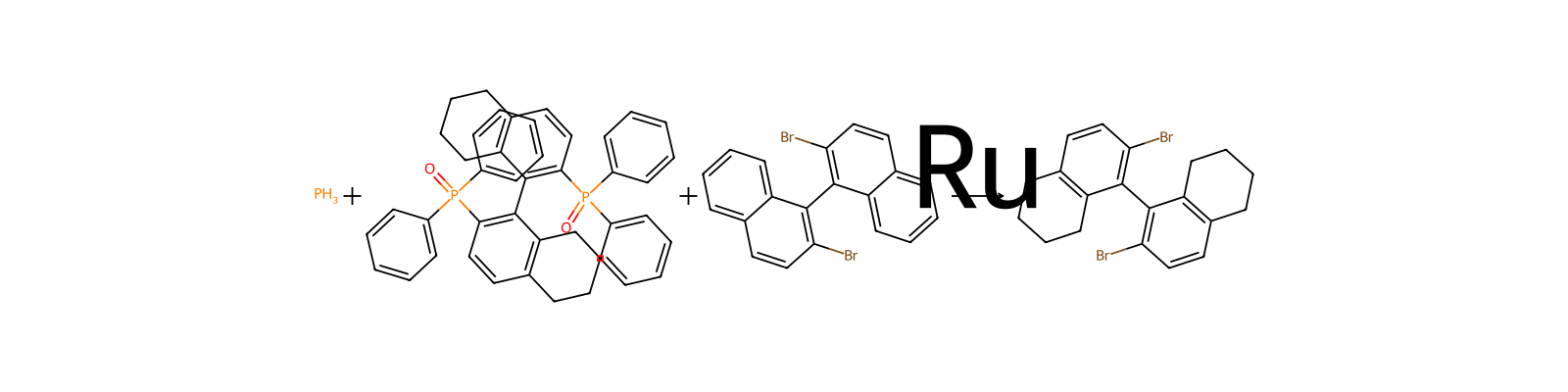
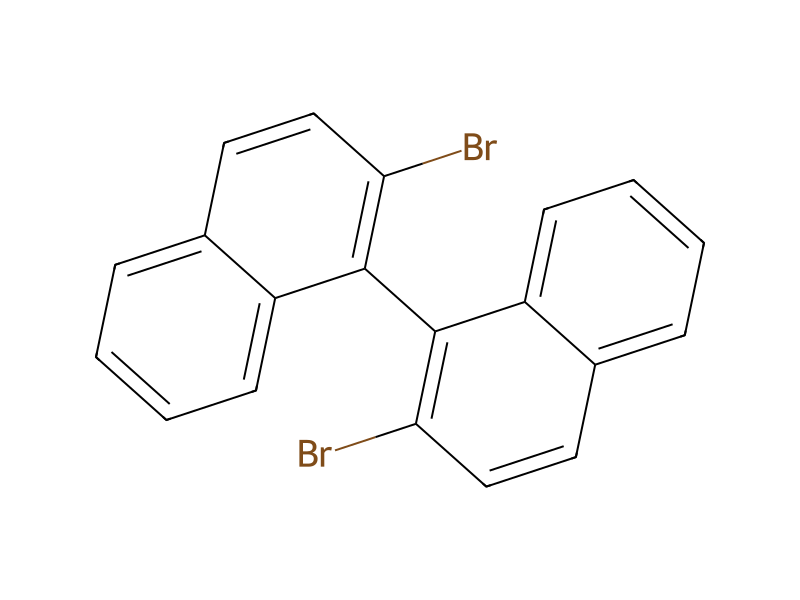
Basic information
- Standard SMILES
Brc1ccc2ccccc2c1-c1c(Br)ccc2ccccc12- InChIKey
IJUDEFZBMMRSNM-UHFFFAOYSA-N- Molecular formula
- C20H12Br2
- Average molar mass
- 412.1 g/mol
- Monoisotopic mass
- 409.93058
Names & identifiers
- Preferred name
- 2,2'-Dibromo-1,1'-binaphthyl
- IUPAC
- 2-bromo-1-(2-bromonaphthalen-1-yl)naphthalene
- English name
- 2,2'-Dibromo-1,1'-binaphthyl
- Molecular formula
- C20H12Br2
- Molecular weight
- 412.12
Names & synonyms
74866-28-72,2'-DIBROMO-1,1'-BINAPHTHYLDTXSID60347302RefChem:440257DTXCID50298374626-733-1150024-49-02,2'-Dibromo-1,1'-binaphthalene86688-08-62,2-dibromo-1,1-binaphthyl(1S)-2,2'-Dibromo-1,1'-binaphthalene(1R)-2,2'-Dibromo-1,1'-binaphthalene
Show more names
SKL192JACS-74866-28-7Binaphthalene dibromide2,2'-diboromo-binaphthyl2,2`-DibroMo-1,1`-Binaphtyl1,1'-Bi(2-bromonaphthalene)2,2'-Dibromo-1,1'-binapthyl2,2'-DIBROMO-1,1'-DINAPHTHYL
2-bromo-1-(2-bromonaphthalen-1-yl)naphthalene(S)-2,2'-Dibromo-1,1'-binaphthaleneMFCD00188005(R)-2,2'-Dibromo-1,1'-binaphthalene1,1'-Binaphthalene, 2,2'-dibromo-()-2,2-Dibromo-1,1-binaphthyl(+/-)-2,2-Dibromo-1,1-Binaphthyl2-bromo-1-(2-bromo-1-naphthyl)naphthalene
Database identifiers
- CAS
74866-28-7- PubChem CID
- 619909
- DTXSID
DTXSID60347302- EC Number
- 626-733-1
- Nikkaji
- J134.905H、J2.936.462A
Properties
Computed structural properties
- XLogP
- 7.4
- Topological polar surface area
- 0 Ų
- Hydrogen bond donors
- 0
- Hydrogen bond acceptors
- 0
- Rotatable bonds
- 1
- Heavy atoms
- 22
- Formal charge
- 0
- Complexity
- 346
Physicochemical properties
- Melting point
- 178 · 178-183 °C
- Boiling point
- 178 · 178-183°C
- Density
- 1.614 · 1.614±0.06 g/cm3(Predicted)
- Flash point
- 178 · 178-183°C
- storage temp.
- Sealed in dry,Room Temperature
- solubility
- soluble in Toluene
- form
- Powder
- color
- white to off-white
- Water Solubility
- Sparingly Soluble in water.
- InChI
- 1S/C20H12Br2/c21-17-11-9-13-5-1-3-7-15(13)19(17)20-16-8-4-2-6-14(16)10-12-18(20)22/h1-12H
- InChIKey
- IJUDEFZBMMRSNM-UHFFFAOYSA-N
- SMILES
- Brc1ccc2ccccc2c1-c3c(Br)ccc4ccccc34
- CAS DataBase Reference
- 74866 · 74866-28-7(CAS DataBase Reference)
- UNSPSC Code
- 12352100 · 12352100
- NACRES
- 22 · NA.22
- Symbol(GHS)
- 7 · GHS07
- Signal word
- Warning
- Hazard statements
- 302 · H302-H413
- Precautionary statements
- 273 · P273-P301+P312+P330
- PPE
- 95 · dust mask type N95 (US), Eyeshields, Gloves
- Hazard Codes
- Xn
- Risk Statements
- 36 · 36/37/38-22
- Safety Statements
- 26 · 26-36/37/39
- WGK Germany
- 3 · 3
- HS Code
- 2903.99 · 2903.99.8001
- Storage Class
- 11 · 11 - Combustible Solids
- Hazard Classifications
- 4 OralAquatic · Acute Tox. 4 OralAquatic Chronic 4
Safety & regulation
GHS classification
GHS Classification
Warning
H302 (88.6%): Harmful if swallowed [Warning Acute toxicity, oral];H315 (11.4%): Causes skin irritation [Warning Skin corrosion/irritation];H319 (11.4%): Causes serious eye irritation [Warning Serious eye damage/eye irritation];H413 (88.6%): May cause long lasting harmful effects to aquatic life [Hazardous to the aquatic environment, long-term hazard]
P264, P264+P265, P270, P273, P280, P301+P317, P302+P352, P305+P351+P338, P321, P330, P332+P317, P337+P317, P362+P364, and P501 (click each P-code to see the statement)
Aggregated GHS information provided per 44 reports by companies from 3 notifications to the ECHA C&L Inventory. Each notification may be associated with multiple companies.;Information may vary between notifications depending on impurities, additives, and other factors. The percentage value in parenthesis indicates the notified classification ratio from companies that provide hazard codes. Only hazard codes with percentage values above 10% are shown. For more detailed information, please visit ECHA C&L website.
Hazard information
Hazard Classes and CategoriesAcute Tox. 4 (88.6%);Skin Irrit. 2 (11.4%);Eye Irrit. 2 (11.4%);Aquatic Chronic 4 (88.6%)
Safety data
- PPE
- dust mask type N95 (US), Eyeshields, Gloves
- wgk
- 3
- hs_code
- 2903.99.8001
- risk_code
- 36/37/38-22
- Signal word
- Warning
- Symbol(GHS)
- GHS07
- hazard_code
- Xn
- safety_code
- 26-36/37/39
- Storage Class
- 11 - Combustible Solids
- Hazard statements
- H302-H413
- Hazard Classifications
- Acute Tox. 4 OralAquatic Chronic 4
- Precautionary statements
- P273-P301+P312+P330
Chemistry & industry
Applications
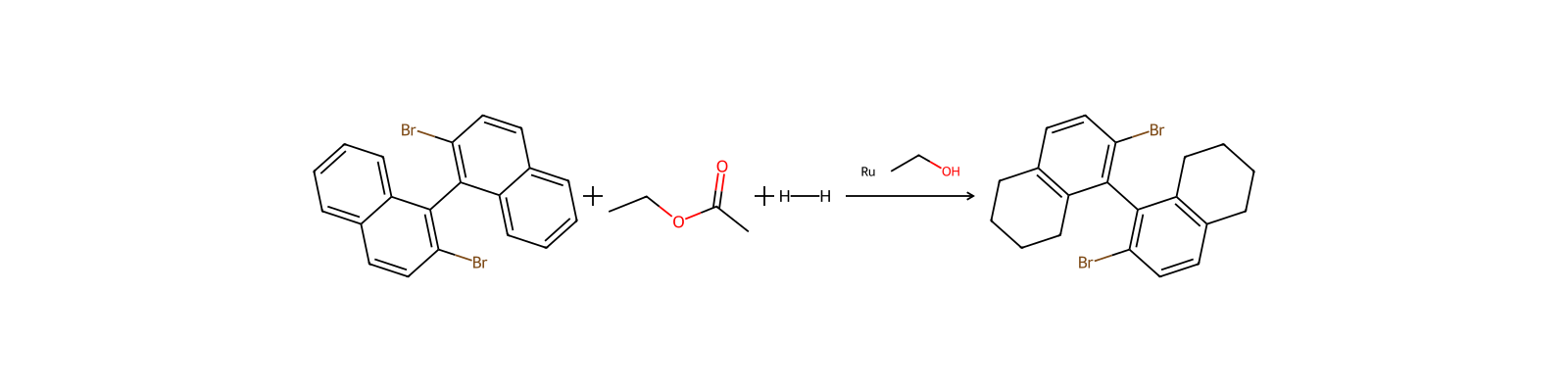
UsesThe synthesis of this class of compounds relies on the lithiation of racemic 2,2'-dibromo-1,1'-binaphthyl with t-BuLi followed by addition of Ph 2 PCl.
Upstream & downstream products
Upstream raw materials
Suppliers50 total
梯希爱(上海)化成工业发展有限公司021-67121386 · [email protected]
郑州阿尔法化工有限公司+86-18530059196 · [email protected]
湖北永阔科技有限公司027-59223108 15972152991 · [email protected]
上海阿拉丁生化科技股份有限公司400-6206333 13167063860 · [email protected]
郑州海阔光电材料有限公司67759225 13526468238 · [email protected]
湖北万得化工有限公司15377098680 15377098680 · [email protected]
武汉敬康恩生物医药科技有限公司13720134139 086-15871494362 13720134139 · [email protected]
上海麦克林生化科技股份有限公司021-50706066 15221275939 · [email protected]
杭州品高化工有限公司0571-87658025 · [email protected]
INTATRADE GmbH+49 3493/605464 · [email protected]
湖北云镁科技有限公司027-59206672 18995657604 · [email protected]
Dayang Chem (Hangzhou) Co.,Ltd.+86-0571-88938639 17705817739 · [email protected]
毕佳索(上海毕得医药科技股份有限公司)400-6005915 · [email protected]
上海迈瑞尔生化科技有限公司4006356688 18621169109 · [email protected]
北京索莱宝科技有限公司010-50973130 17801761073 · [email protected]
阿法埃莎(中国)化学有限公司400-6106006 · [email protected]
安耐吉化学&3A(安徽泽升科技股份有限公司)400-0056266 · [email protected]
欧利希(湖北)医药科技有限公司17316404525 17316404525 · [email protected]
北京绿百草科技发展有限公司010-61136123 · [email protected]
上海瀚鸿科技股份有限公司021-54306202 13764082696 · [email protected]
郑州研德生物科技有限公司0371-63682289 15538176268 · [email protected]
湖北广奥生物科技有限公司027-02702759223056 18162699093 · [email protected]
南京药石科技股份有限公司4000255188 · [email protected]
湖北成海化工有限公司027-59220433 18327245847 · [email protected]
大赛璐药物手性技术(上海)有限公司021-50460086-9 15921403865 · [email protected]
上海钰康生物科技有限公司15618758386 15618758386 · [email protected]
南京诺利斯医药科技有限公司13901585132 · [email protected]
TCI AMERICA800-4238616 · [email protected]
TOKYO CHEMICAL INDUSTRY CO., LTD.03-36680489 · [email protected]
TCI Europe320-37350700 · [email protected]
重庆福腾医药有限公司18696571988 · [email protected]
上海毕得医药科技股份有限公司400-164-7117 18317119277 · [email protected]
北京奥秘佳得医药科技有限公司+86-13522808617 · [email protected]
杭州杰恒化工有限公司0571-87396432 · [email protected]
湖北巨胜科技有限公司027-59599241 18871490274 · [email protected]
Sigma-Aldrich西格玛奥德里奇(上海)贸易有限公司021-61415566 800-8193336 · [email protected]
上海皓之翔生物科技有限公司(原上海拓青化工有限公司)526763801 13301653310 · [email protected]
九鼎化学(上海)科技有限公司4009209199 · [email protected]
上海凯睿生物科技有限公司021-5068 3667/17749785980/1029026415; 17749785980 · [email protected]
武汉峰耀同辉化学制品有限公司027-87466205 15377579727 · [email protected]
上海烁点生物科技有限公司18221553137
上海源叶生物科技有限公司13636370518 · [email protected]
众鑫辰实(武汉)科技有限公司18942922096 · [email protected]
成都标样生物科技有限公司028-81700200 13308200041 · [email protected]
湖北齐飞医药化工有限公司027-59322506 18071128681 · [email protected]
山东西亚化学有限公司4009903999 13395398332 · [email protected]
安泰精细化工技术有限公司18503026267 · [email protected]
成都华纯科技有限公司400-1166-196 15982826727 · [email protected]
郑州艾克姆化工有限公司0371-0371-55629727 13323845623 · [email protected]
濮阳惠成新材料产业技术研究院有限公司15039333257
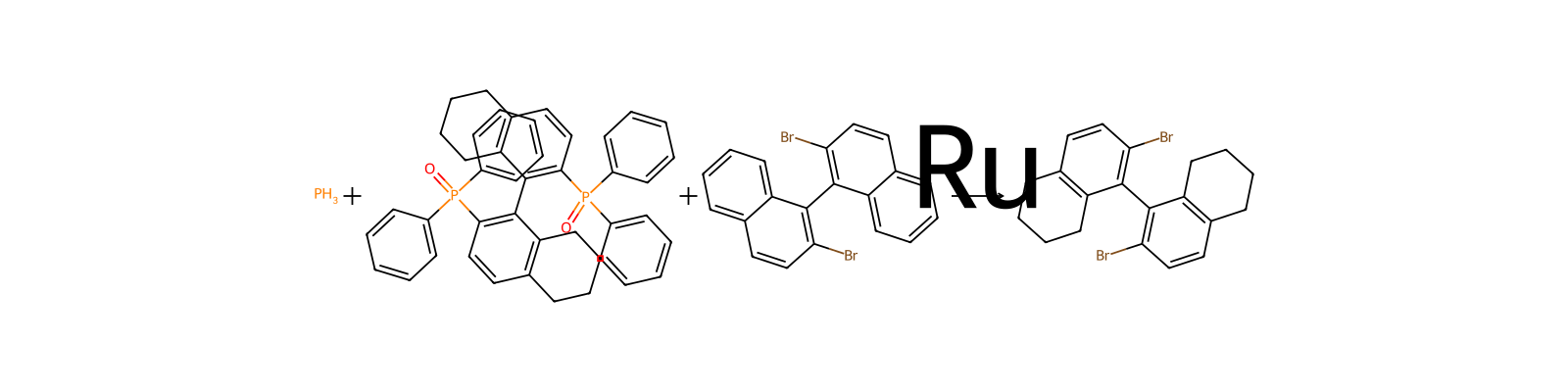
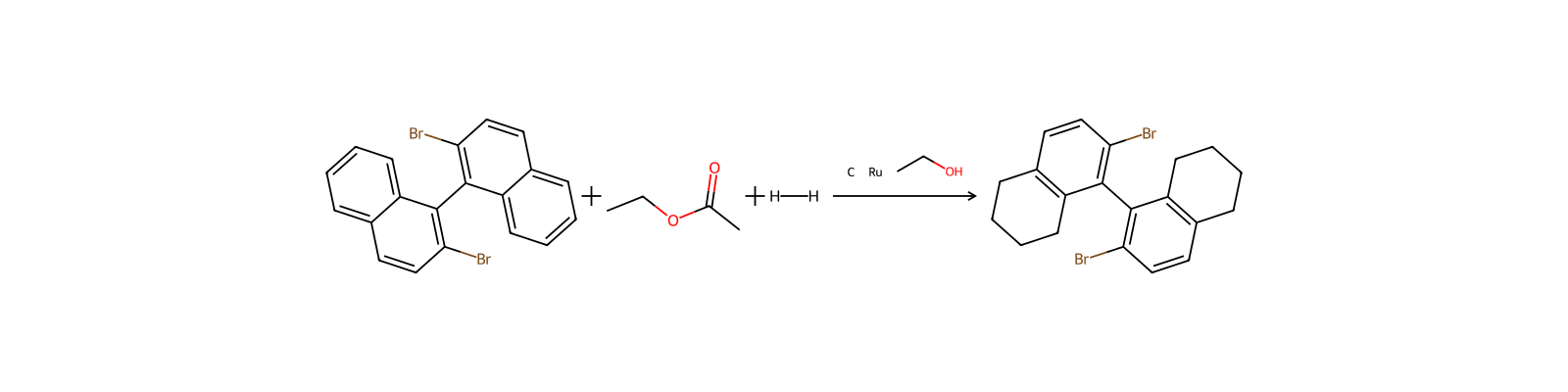
Related reactions
4 records
Linked notes
Loading…