
Basic information
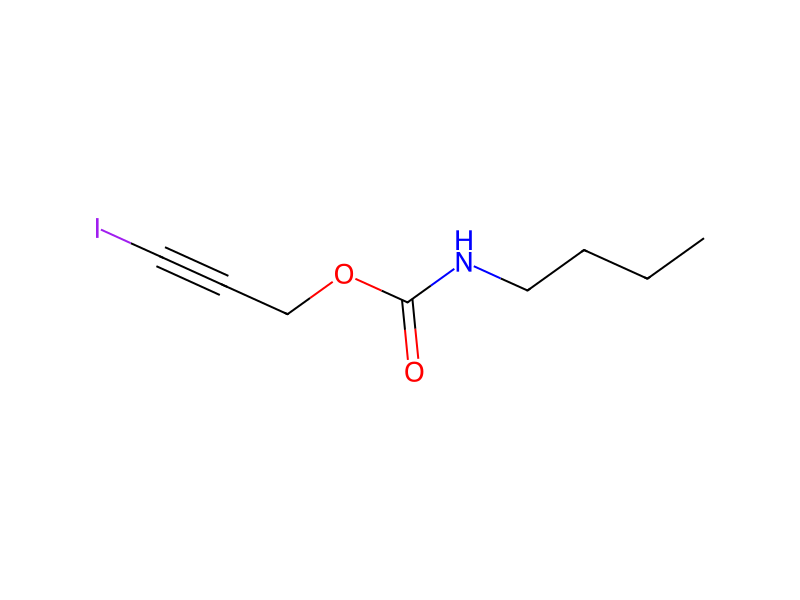
- Standard SMILES
CCCCNC(=O)OCC#CI- InChIKey
WYVVKGNFXHOCQV-UHFFFAOYSA-N- Molecular formula
- C8H12INO2
- Average molar mass
- 281.09 g/mol
- Monoisotopic mass
- 280.99127662
Overview
3-iodo-2-propynyl butylcarbamate is an off-white solid.
Names & identifiers
- Preferred name
- 3-Iodo-2-propynyl butylcarbamate
- IUPAC
- 3-iodoprop-2-ynyl N-butylcarbamate
- English name
- Iodopropynyl butylcarbamate
- Molecular formula
- C8H12INO2
- Molecular weight
- 281.09
Names & synonyms
55406-53-6Iodopropynyl butylcarbamate3-Iodo-2-propynyl butylcarbamateIpbcWoodlifeTroysan KK-108ACaswell No. 501AButyl-3-iodo-2-propynylcarbamate3-Iodo-2-propynyl butyl carbamate3-iodoprop-2-yn-1-yl N-butylcarbamate603P14DHEB3-iodo-2-propynyl-butylcarbamate
Show more names
IODOCARB3-IODO-2-PROPYNYL N-BUTYLCARBAMATElodopropynyl butylcarbamateIBPIodopropynyltroysanpolyphaseanti-mildewIPBC-99
3-iodo-2-propyn-1-yl N-butylcarbamateCarbamic acid, butyl-3-iodo-2-propynyl ester3-iodoprop-2-ynyl butylcarbamate3-IPBCRefChem:502679iodopropynyl butyl carbamate259-627-53-Iodo-2-propynylbutylcarbamate
Database identifiers
- CAS
55406-53-6、85045-09-6- PubChem CID
- 62097
- DTXSID
DTXSID0028038- ChEMBL
CHEMBL1893913- ChEBI
CHEBI:83279- UNII
- 603P14DHEB
- EC Number
- 259-627-5、617-662-7
- Nikkaji
- J94.789J
Properties
Computed structural properties
- XLogP
- 2.1
- Topological polar surface area
- 38.3 Ų
- Hydrogen bond donors
- 1
- Hydrogen bond acceptors
- 2
- Rotatable bonds
- 5
- Heavy atoms
- 12
- Formal charge
- 0
- Complexity
- 192
Experimental & physicochemical properties
Chemical ClassesOther Uses -> Biocides/Disinfectants
Cosmetics
Cosmetic ingredients (Iodopropynyl Butylcarbamate) -> CIR (Cosmetic Ingredient Review)
Cosmetic ingredients (Iodopropynyl Butylcarbamate (IPBC)) -> CIR (Cosmetic Ingredient Review)
Preservative
PesticidesBiocide
LogPlog Kow = 2.4 /Estimated/
OdorSharp pungent odor
Density
1.575 g/mL
1.575 @25 °C
Color/Form
Off-white, dull color powder
White, crystalline powder
SolubilityIn water, 156 mg/L at 20 °C
Endocrine DisruptorsPotential endocrine disrupting compound
Melting Point
66 °C
66 °C
Vapor Pressure
0.0000525 [mmHg]
5.25X10⁻⁵ mm Hg at 30 °C
0.0000525 [mm Hg] @30 °C
Food Contact SubstancesFCS -> FDA Inventory of Food Contact Substances Listed in 21 CFR
Physicochemical properties
- Melting point
- 64 · 64-68 °C(lit.)
- Boiling point
- 321.8 · 321.8±25.0 °C(Predicted)
- Density
- 1.606 · 1.606±0.06 g/cm3(Predicted)
- vapor pressure
- 0.005 Pa · 0.005Pa at 25℃
- storage temp.
- 2 · Keep in dark place,Sealed in dry,2-8°C
- solubility
- soluble in Methanol
- form
- Solid
- pka
- 12.03 · 12.03±0.46(Predicted)
- color
- White to Almost white
- Water Solubility
- 168 mg/L · 168mg/L at 20℃
- Merck
- 14 · 14,5069
- Henry's Law Constant
- 8.2 · 8.2×101 mol/(m3Pa) at 25℃, HSDB (2015)
- Stability
- Stable. Incompatible with strong oxidizing agents.
- Major Application
- cleaning productscosmeticsfood and beveragespersonal care
- Cosmetics Ingredients Functions
- PRESERVATIVE
- Cosmetic Ingredient Review (CIR)
- Iodopropynyl butylcarbamate (55406-53-6)
- InChI
- 1S/C8H12INO2/c1-2-3-6-10-8(11)12-7-4-5-9/h2-3,6-7H2,1H3,(H,10,11)
- InChIKey
- WYVVKGNFXHOCQV-UHFFFAOYSA-N
- SMILES
- CCCCNC(=O)OCC#CI
- LogP
- 2.81 at · 2.81 at 25℃
- CAS DataBase Reference
- 55406 · 55406-53-6(CAS DataBase Reference)
- Indirect Additives used in Food Contact Substances
- 3 · 3-IODO-2-PROPYNYL-N-BUTYL CARBAMATE
- FDA 21 CFR
- 175.105 · 175.105
- EWG's Food Scores
- 3 · 3-6
- FDA UNII
- 603 P14DHEB · 603P14DHEB
- Pesticides Freedom of Information Act (FOIA)
- -108 A · Troysan KK-108A
- EPA Substance Registry System
- 3 · 3-Iodo-2-propynyl butylcarbamate (55406-53-6)
- UNSPSC Code
- 85151701 · 85151701
- NACRES
- 24 · NA.24
- Symbol(GHS)
- 5 · GHS05,GHS06,GHS08,GHS09
- Signal word
- Danger
- Hazard statements
- 302 · H302-H317-H318-H331-H372-H410
- Precautionary statements
- 273 · P273-P280-P301+P312-P304+P340+P311-P305+P351+P338-P314
- Hazard Codes
- N
- Risk Statements
- 50 · 50/53-50
- Safety Statements
- 60 · 60-61-29
- RIDADR
- 3077 · 3077
- WGK Germany
- 3 · 3
- RTECS
- 950000 · EZ0950000
- TSCA
- TSCA listed
- HazardClass
- 9 · 9
- PackingGroup
- III
- HS Code
- 29241990 · 29241990
- Storage Class
- 6.1 C · 6.1C - Combustible acute toxic Cat.3toxic compounds or compounds which causing chronic effects
- Hazard Classifications
- 3 InhalationAcute · Acute Tox. 3 InhalationAcute Tox. 4 OralAquatic Acute 1Aquatic Chronic 1Eye Dam. 1Skin Sens. 1STOT RE 1
- Hazardous Substances Data
- 55406 · 55406-53-6(Hazardous Substances Data)
- Toxicity
- 50 orally · LD50 orally in rats: 1580 mg/kg; dermally in rabbit: >2000 mg/kg; LC50 (96 hr) in bluegill sunfish, rainbow trout, bobwhite quail: 1.12, 0.31, >7683 ppm; LC50 (8 day) in mallard duck: >7182 ppm (Hansen)
- REACH Registrations
- Active
Safety & regulation
GHS classification
GHS Classification
Danger
H302: Harmful if swallowed [Warning Acute toxicity, oral]
P260, P261, P264, P264+P265, P270, P271, P272, P273, P280, P301+P317, P302+P352, P304+P340, P305+P354+P338, P316, P317, P319, P321, P330, P333+P317, P362+P364, P391, P403+P233, P405, and P501 (click each P-code to see the statement)
This chemical does not meet GHS hazard criteria for 0.3% (6 of 1729) of reports.
Danger
H302+H332 (25.6%): Harmful if swallowed or if inhaled [Warning Acute toxicity, oral; acute toxicity, inhalation]
Hazard information
Regulatory Information
Chemical: Carbamic acid, butyl-, 3-iodo-2-propynyl ester
Carbamic acid, N-butyl-, 3-iodo-2-propyn-1-yl ester is listed on the EPA's Chemical Data Reporting (CDR) system. Manufacturers and importers of Carbamic acid, N-butyl-, 3-iodo-2-propyn-1-yl ester are required to report information about their production and use of this chemical to the EPA under the Toxic Substances Control Act (TSCA). (40 eCFR Part 711)
Status: Active Update: 01-09-2022 https://echa.europa.eu/registration-dossier/-/registered-dossier/23059
Iodocarb: HSNO Approval: HSR002733 Approved with controls
Other Safety InformationEvaluation - Carbamic acid, butyl-, 3-iodo-2-propynyl ester (IPBC)
DOT LabelClass 9
Fire HazardsExcerpt from ERG Guide 171 [Substances (Low to Moderate Hazard)]:
Health HazardsExcerpt from ERG Guide 171 [Substances (Low to Moderate Hazard)]:
Hazards Summary
Positive patch tests reported in worker in a paint factory and in patients sensitized by cosmetics; Animals in high-dose feeding studies have cardiomegaly and injury to the kidneys and liver; [HSDB] Danger of skin sensitization; [MAK] Causes allergic contact dermatitis in cosmetics, sanitary wipes, and metalworking fluids; [Kanerva, p. 1804] May cause irritation; [MSDSonline]
FDA Requirements3-Iodo-2-propynyl-N-butyl carbamate is an indirect food additive for use only as a component of adhesives. For use only as an antifungal preservative.
Reactive GroupCarbamates
Special Reports
USEPA/Office of Pesticide Programs; Reregistration Eligibility Decision Document - 3-Iodo-2-propynyl butylcarbamate( IPBC). EPA 738-R-97-003 March 1997. Available from the Database Query page at http://cfpub.epa.gov/oppref/rereg/status .cfm?show=rereg as of January 31, 2005. The RED summarizes the risk assessment conclusions and outlines any risk reduction measures necessary for the pesticide to continue to be registered in the U.S.
FIFRA Requirements
As the federal pesticide law FIFRA directs, EPA is conducting a comprehensive review of older pesticides to consider their health and environmental effects and make decisions about their future use. Under this pesticide reregistration program, EPA examines health and safety data for pesticide active ingredients initially registered before November 1, 1984, and determines whether they are eligible for reregistration. In addition, all pesticides must meet the new safety standard of the Food Quality Protection Act of 1996. Pesticides for which EPA had not issued Registration Standards prior to the effective date of FIFRA '88 were divided into three lists based upon their potential for human exposure and other factors, with List B containing pesticides of greater concern and List D pesticides of less concern. 3-Iodo-2-propynyl butylcarbamate is found on List B. Case No: 2725; Pesticide type: fungicide; Case Status: RED Approved 3/97; OPP has made a decision that some/all uses of the pesticide are eligible for reregistration, as reflected in a Reregistration Eligibility Decision (RED) document .; Active ingredient (AI): 3-iodo-2-propynyl butylcarbamate; Data Call-in (DCI) Date(s): 4/30/91, 5/29/97; AI Status: OPP has completed a Reregistration Eligibility Decision (RED) for the case/AI.
Based on the reviews of the generic data for the active ingredient IPBC, the Agency has sufficient information on the health effects of IPBC, and on its potential for causing adverse effects in fish and wildlife and the environment, for all uses except industrial wood protection treatments to milled forest products, textile uses, HVAC uses, and certain non-industrial 34 applications to wood. The Agency has determined that IPBC products, labeled and used as specified in this Reregistration Eligibility Decision, will not pose unreasonable risks or adverse effects to humans or the environment, and that products containing IPBC, with the exceptions noted below, are eligible for reregistration. ... Eligibility decisions on products containing the industrial treatments to milled forest products use, HVAC use, textile uses, and non-industrial wood treatments using methods other than brush, roller and airless or compressed air sprayer, will be made after the exposure data specified in section V.A.1 are received and evaluated. Products containing these uses are not eligible for reregistration at this time. The Agency has determined that all other uses, except those specifically noted above, are eligible for reregistration.
Reactivity Profile
3-IODO-2-PROPYNYL BUTYLCARBAMATE is a carbamate ester. Carbamates are chemically similar to, but more reactive than amides. Like amides they form polymers such as polyurethane resins. Carbamates are incompatible with strong acids and bases, and especially incompatible with strong reducing agents such as hydrides. Flammable gaseous hydrogen is produced by the combination of active metals or nitrides with carbamates. Strongly oxidizing acids, peroxides, and hydroperoxides are incompatible with carbamates.
Air and Water ReactionsNo rapid reaction with air. No rapid reaction with water.
Safety & protection
Fire FightingExcerpt from ERG Guide 171 [Substances (Low to Moderate Hazard)]:
First AidExcerpt from ERG Guide 171 [Substances (Low to Moderate Hazard)]:
Exposure Control and Personal Protection0.05 [mg/m3], (can also occur as vapor and aerosol)[German Research Foundation (DFG)]
Nonfire Spill ResponseExcerpt from ERG Guide 171 [Substances (Low to Moderate Hazard)]:
Disposal Methods
SRP: The most favorable course of action is to use an alternative chemical product with less inherent propensity for occupational exposure or environmental contamination. Recycle any unused portion of the material for its approved use or return it to the manufacturer or supplier. Ultimate disposal of the chemical must consider: the material's impact on air quality; potential migration in soil or water; effects on animal, aquatic, and plant life; and conformance with environmental and public health regulations.
Isolation and EvacuationExcerpt from ERG Guide 171 [Substances (Low to Moderate Hazard)]:
Protective Action Criteria (PAC)
0.116 [mg/m3]
49 [mg/m3]
290 [mg/m3]
Personal Protective Equipment (PPE)Excerpt from ERG Guide 171 [Substances (Low to Moderate Hazard)]:
Toxicology
Treatment
If the compound has been ingested, rapid gastric lavage should be performed using 5% sodium bicarbonate. For skin contact, the skin should be washed with soap and water. If the compound has entered the eyes, they should be washed with large quantities of isotonic saline or water. In serious cases, atropine and/or pralidoxime should be administered. Anti-cholinergic drugs work to counteract the effects of excess acetylcholine and reactivate AChE. Atropine can be used as an antidote in conjunction with pralidoxime or other pyridinium oximes (such as trimedoxime or obidoxime), though the use of '-oximes' has been found to be of no benefit, or possibly harmful, in at least two meta-analyses. Atropine is a muscarinic antagonist, and thus blocks the action of acetylcholine peripherally.
Health Effects
Acute exposure to cholinesterase inhibitors can cause a cholinergic crisis characterized by severe nausea/vomiting, salivation, sweating, bradycardia, hypotension, collapse, and convulsions. Increasing muscle weakness is a possibility and may result in death if respiratory muscles are involved. Accumulation of ACh at motor nerves causes overstimulation of nicotinic expression at the neuromuscular junction. When this occurs symptoms such as muscle weakness, fatigue, muscle cramps, fasciculation, and paralysis can be seen. When there is an accumulation of ACh at autonomic ganglia this causes overstimulation of nicotinic expression in the sympathetic system. Symptoms associated with this are hypertension, and hypoglycemia. Overstimulation of nicotinic acetylcholine receptors in the central nervous system, due to accumulation of ACh, results in anxiety, headache, convulsions, ataxia, depression of respiration and circulation, tremor, general weakness, and potentially coma. When there is expression of muscarinic overstimulation due to excess acetylcholine at muscarinic acetylcholine receptors symptoms of visual disturbances, tightness in chest, wheezing due to bronchoconstriction, increased bronchial secretions, increased salivation, lacrimation, sweating, peristalsis, and urination can occur. Chronically high (>10 years) exposure leads to neuropsychological consequences including disturbances in perception and visuo-motor processing (A15321).
Ecotoxicity Values
LC50 Anas platyrhyncos (Mallard duck, 10 days old) dietary >5620 ppm/8 days
LD50 Colinus virginianus (Northern bobwhite, 21 weeks old) oral 970 mg/kg/21 days
LD50 Colinus virginianus (Northern bobwhite, 23 weeks old) oral 749 mg/kg/14 days
LC50 Colinus virginianus (Northern bobwhite, 10 days old) dietary >5620 ppm/8 days
For more Ecotoxicity Values (Complete) data for 3-IODO-2-PROPYNYL BUTYLCARBAMATE (15 total), please visit the HSDB record page.
Environmental Fate
TERRESTRIAL FATE: Based on a classification scheme(1), Koc values ranging from 62-310(2) indicate that 3-iodo-2-propynyl butylcarbamate is expected to have high to moderate mobility in soil(SRC). Volatilization of 3-iodo-2-propynyl butylcarbamate from moist soil surfaces is not expected to be an important fate process(SRC) given an estimated Henry's Law constant of 1.2X10⁻⁷ atm-cu m/mole(SRC) based upon its vapor pressure, 5.25X10⁻⁵ mm Hg(2), and water solubility, 156 mg/L(2). 3-Iodo-2-propynyl butylcarbamate is not expected to volatilize from dry soil surfaces(SRC) based upon its vapor pressure(2). 3-Iodo-2-propynyl butylcarbamate is expected to biodegrade quickly in soil based on a half-life of 2.13 hours(2). A hydrolysis half-life of 0.947 days at pH 9(2) indicates that hydrolysis will also be an important fate process in basic soils. 3-Iodo-2-propynyl butylcarbamate was not detected in soil samples from a spill area several days following the incident(2). The concentration of 3-iodo-2-propynyl butylcarbamate that was spilled ranged from 700-2000 mg/L.
AQUATIC FATE: Based on a classification scheme(1), Koc values ranging from 62-310(2), indicate that 3-iodo-2-propynyl butylcarbamate is not expected to adsorb to suspended solids and sediment(SRC). Volatilization from water surfaces is not expected(3) based upon an estimated Henry's Law constant of 1.2X10⁻⁷ atm-cu m/mole(SRC), derived from its vapor pressure, 5.25X10⁻⁵ mm Hg(2), and water solubility, 156 mg/L(2). According to a classification scheme(4), an estimated BCF of 36(SRC), from a water solubility of 156 mg/L(2) and a regression-derived equation(5), suggests the potential for bioconcentration in aquatic organisms is moderate(SRC). This substance is expected to biodegrade quickly in water based on a biodegradation half-life 1.5 hours in a static, anaerobic sediment water system(2). Hydrolysis may be an important fate process under basic conditions based on a half life of 0.947 days at pH 9(2). The half-life of 3-iodo-2-propynyl butylcarbamate in an anaerobic, non-sterile, static, sediment-water system was 1.5 hours compared to 13.3 hours in a sterile, static, sediment-water system(2).
ATMOSPHERIC FATE: According to a model of gas/particle partitioning of semivolatile organic compounds in the atmosphere(1), 3-iodo-2-propynyl butyl carbamate, which has a vapor pressure of 5.25X10⁻⁵ mm Hg at 30 °C(2), is expected to exist in both the vapor and particulate phases in the ambient atmosphere. Vapor-phase 3-iodo-2-propynyl butylcarbamate is degraded in the atmosphere by reaction with photochemically-produced hydroxyl radicals(SRC); the half-life for this reaction in air is estimated to be 1.5 hours(SRC), calculated from its rate constant of 2.6X10⁻¹¹ cu cm/molecule-sec at 25 °C(SRC) that was derived using a structure estimation method(3). Particulate-phase 3-iodo-2-propynyl butylcarbamate may be removed from the air by wet and dry deposition(SRC).
Adverse EffectsOccupational hepatotoxin - Secondary hepatotoxins: the potential for toxic effect in the occupational setting is based on cases of poisoning by human ingestion or animal experimentation.
Exposure RoutesInhalation (L793) ; oral (L793); dermal (L793)
Toxicity Summary
On the basis of the data presented in this report, the CIR Expert Panel concludes that Iodopropynyl Butylcarbamate (IPBC) is safe as a cosmetic ingredient at concentrations ≤ 0.1%. IPBC should not be used in products intended to be aerosolized.
Safe for use in cosmetics, with qualifications
On the basis of the data presented in this report, the CIR Expert Panel concludes that Iodopropynyl Butylcarbamate (IPBC) is safe as a cosmetic ingredient at concentrations ≤ 0.1%. IPBC should not be used in products intended to be aerosolized.
Safe for use in cosmetics, with qualifications
3-Iodo-2-propynyl butyl carbamate is a cholinesterase or acetylcholinesterase (AChE) inhibitor. Carbamates form unstable complexes with chlolinesterases by carbamoylation of the active sites of the enzymes. This inhibition is reversible. A cholinesterase inhibitor suppresses the action of acetylcholine esterase. Because of its essential function, chemicals that interfere with the action of acetylcholine esterase are potent neurotoxins, causing excessive salivation and eye-watering in low doses. Headache, salivation, nausea, vomiting, abdominal pain and diarrhea are often prominent at higher levels of exposure. Acetylcholine esterase breaks down the neurotransmitter acetylcholine, which is released at nerve and muscle junctions, in order to allow the muscle or organ to relax. The result of acetylcholine esterase inhibition is that acetylcholine builds up and continues to act so that any nerve impulses are continually transmitted and muscle contractions do not stop.
Ecotoxicity Excerpts
/AQUATIC SPECIES/ The antisapstain chemicals DDAC and IPBC were tested for acute toxicity with juvenile rainbow trout. The 96-hr LC50 estimates were 537 ug DDAC and 67 ug IPBC/L. The two chemicals were also tested as a mixture (10:1) and as the commercial formulation NP-1. The 96-hr LC50 for NP-1 was 581 ug DDAC + IPBC/L and was 494 ug DDAC + IPBC/L for the 10:1 mixture. The two chemicals exhibited mildly antagonistic behavior when present in the mixture or formulation.
Signs and Symptoms
As with organophosphates, the signs and symptoms are based on excessive cholinergic stimulation. Unlike organophosphate poisoning, carbamate poisonings tend to be of shorter duration because the inhibition of nervous tissue acetylcholinesterase is reversible, and carbamates are more rapidly metabolized. Muscle weakness, dizziness, sweating and slight body discomfort are commonly reported early symptoms. Headache, salivation, nausea, vomiting, abdominal pain and diarrhea are often prominent at higher levels of exposure. Contraction of the pupils with blurred vision, incoordination, muscle twitching and slurred speech have been reported. (L795)
Soil Adsorption/MobilityReported Koc values for 3-iodo-2-propynyl butylcarbamate range from 62-310(1). According to a classification scheme(2), this Koc range suggests that 3-iodo-2-propynyl butylcarbamate is expected to have high to moderate mobility in soil.
Human Toxicity Excerpts
/HUMAN EXPOSURE STUDIES/ ...From 1996 to 1999, a total of 3168 persons (2093 women and 1075 men) were patch tested with IPBC, and 7 cases were found to be positive. In 2 cases, sensitization could be attributed to cosmetics, and in a further 2 cases cosmetics were the most likely cause of sensitization.
/CASE REPORTS/ ... A 34-year-old female production worker at a paint factory developed dermatitis on exposed skin areas. Patch testing showed a positive reaction to IPBC 0.01% in petrolatum.
/CASE REPORTS/ A 63-year old man developed severe perianal and palmar contact dermatitis caused by sensitization to iodopropynyl butylcarbamate in moist sanitary wipes.
/EPIDEMIOLOGY STUDIES/ ... An analysis was made of data filed by 26 centers of dermatology on patch tests performed with one or two concentrations of IPBC (0.1%, 0.2%, 0.3% or 0.5%) in 8106 unselected patients. ...IPBC 0.1%, 0.2%, 0.3% and 0.5% yielded 0.5%, 0.8%, 1.3% and 1.7% positive reactions, but this increase was accompanied by an even greater increase in doubtful and irritant reactions. These figures and the other criteria examined suggested the range of suitable test concentrations of IPBC to lie between 0.2% and 0.3%. A detailed analysis of MOAHLFA indices and of associations between reactions to IPBC and reactions to other allergens and to SLS showed that most of the positive reactions to IPBC 0.2% can be assumed to be allergic ones and that with IPBC 0.2% fewer false-positive reactions can be expected than with IPBC 0.3%.
/BIOMONITORING/ The preservative iodopropynyl butylcarbamate (IPBC) (0.1% in petrolatum) was tested in 4883 consecutive patients for 18 months between January 1998 and June 1999. ...According to readings at D3, 0.3% were allergic to IPBC, with 14 + and 2 + + reactions. Doubtful or irritant reactions occurred twice as frequently. Patients exposed for 24 hr (n=1814) reacted less frequently (0.1%) than the remaining patients exposed for 48 hr (0.5%). ...More than 80% of the positive reactions displayed a crescendo or plateau time pattern. Furthermore, 18 of 43 doubtful reactions appeared as late as D3 (thus, these could be false negative), whereas the majority of doubtful reactions occurred earlier and displayed a decrescendo pattern (corresponding to a typical irritant pattern).
Artificial Pollution Sources
3-Iodo-2-propynyl butyl carbamate's production may result in its release to the environment through various waste streams; it's use as a fungicide in paint, adhesives, emulsion, paper coatings, metal cutting fluids, oil recovery drilling fluids, plastics, textiles, inks, canvas, air conditioner and furnace filters, and wood products(1) will result in its direct release to the environment(SRC).
Regulatory information
FDA Requirements3-Iodo-2-propynyl-N-butyl carbamate is an indirect food additive for use only as a component of adhesives. For use only as an antifungal preservative.
FIFRA Requirements
As the federal pesticide law FIFRA directs, EPA is conducting a comprehensive review of older pesticides to consider their health and environmental effects and make decisions about their future use. Under this pesticide reregistration program, EPA examines health and safety data for pesticide active ingredients initially registered before November 1, 1984, and determines whether they are eligible for reregistration. In addition, all pesticides must meet the new safety standard of the Food Quality Protection Act of 1996. Pesticides for which EPA had not issued Registration Standards prior to the effective date of FIFRA '88 were divided into three lists based upon their potential for human exposure and other factors, with List B containing pesticides of greater concern and List D pesticides of less concern. 3-Iodo-2-propynyl butylcarbamate is found on List B. Case No: 2725; Pesticide type: fungicide; Case Status: RED Approved 3/97; OPP has made a decision that some/all uses of the pesticide are eligible for reregistration, as reflected in a Reregistration Eligibility Decision (RED) document .; Active ingredient (AI): 3-iodo-2-propynyl butylcarbamate; Data Call-in (DCI) Date(s): 4/30/91, 5/29/97; AI Status: OPP has completed a Reregistration Eligibility Decision (RED) for the case/AI.
Based on the reviews of the generic data for the active ingredient IPBC, the Agency has sufficient information on the health effects of IPBC, and on its potential for causing adverse effects in fish and wildlife and the environment, for all uses except industrial wood protection treatments to milled forest products, textile uses, HVAC uses, and certain non-industrial 34 applications to wood. The Agency has determined that IPBC products, labeled and used as specified in this Reregistration Eligibility Decision, will not pose unreasonable risks or adverse effects to humans or the environment, and that products containing IPBC, with the exceptions noted below, are eligible for reregistration. ... Eligibility decisions on products containing the industrial treatments to milled forest products use, HVAC use, textile uses, and non-industrial wood treatments using methods other than brush, roller and airless or compressed air sprayer, will be made after the exposure data specified in section V.A.1 are received and evaluated. Products containing these uses are not eligible for reregistration at this time. The Agency has determined that all other uses, except those specifically noted above, are eligible for reregistration.
Safety data
- wgk
- 3
- tsca
- TSCA listed
- rtecs
- EZ0950000
- ridadr
- 3077
- hs_code
- 29241990
- Toxicity
- LD50 orally in rats: 1580 mg/kg; dermally in rabbit: >2000 mg/kg; LC50 (96 hr) in bluegill sunfish, rainbow trout, bobwhite quail: 1.12, 0.31, >7683 ppm; LC50 (8 day) in mallard duck: >7182 ppm (Hansen)
- risk_code
- 50/53-50
- Signal word
- Danger
- Symbol(GHS)
- GHS05,GHS06,GHS08,GHS09
- hazard_code
- N
- safety_code
- 60-61-29
- hazard_class
- 9
- Storage Class
- 6.1C - Combustible acute toxic Cat.3toxic compounds or compounds which causing chronic effects
- packing_group
- III
- Hazard statements
- H302-H317-H318-H331-H372-H410
- REACH Registrations
- Active
- Hazard Classifications
- Acute Tox. 3 InhalationAcute Tox. 4 OralAquatic Acute 1Aquatic Chronic 1Eye Dam. 1Skin Sens. 1STOT RE 1
- Precautionary statements
- P273-P280-P301+P312-P304+P340+P311-P305+P351+P338-P314
- Hazardous Substances Data
- 55406-53-6(Hazardous Substances Data)
Chemistry & industry
Pharmacology
Metabolism/Metabolites
...IPBC undergoes reductive dehalogenation followed by dealkylation to form the URM-9 and URM-10 metabolites. In addition, de-carboxylation following reductive dehalogenation yields carbon dioxide. Various other metabolites formed from dehalogenation are glucuronidated and constitute minor metabolites of IPBC.
The carbamates are hydrolyzed enzymatically by the liver; degradation products are excreted by the kidneys and the liver. (L793)
Absorption, Distribution and Excretion
...IPBC was administered orally in 0.5% carboxymethylcellulose to groups of male and female Crl:CD/BR rats in the following manner: Groups of 5 male and 5 female rats (groups A and B) received either a single oral high dose of radiolabelled IPBC (125 mg/kg) or a repeated low oral dose of non-radiolabelled IPBC followed by a single radiolabelled dose (20 mg/kg). Separate groups of rats (9/sex/group, groups C and D) received single oral doses (20 and 125 mg/kg) of radiolabelled IPBC, and 3 rats/sex were sacrificed at 2, 4, and 120 hours post-dose for determination of tissue distribution of radioactivity. Urine, feces and expired air were collected at 24 hr intervals for groups A and B, while urine and feces were collected from groups C and D. Absorption of test chemical at the low and high dose was between 80-90% for all dose groups, as suggested by excretion data showing the majority of a dose eliminated through urine or exhaled air. Excretion of IPBC-derived radioactivity was mainly via the urine, with between 50-70% of an administered dose excreted by this route at 168 hours post-dose. Feces was a minor route of excretion in all dose groups (4-7% of the administered dose), while radiolabelled CO2 constituted between 18-24% of the administered dose. Repeated low oral dosing or a single high oral dose appeared to result in a decrease in the percentage of radioactivity excreted as 14-CO2 compared to a single low dose.
Uses & manufacturing
Uses
CIR ingredient: Iodopropynyl Butylcarbamate
CIR ingredient: Iodopropynyl Butylcarbamate (IPBC)
Used as a fungicide and mildewcide; Also used as a preservative in cosmetics, paints, coatings, wood, and metalworking fluids; [Merck Index]
Metal Machining [Category: Heat or Machine]
For 3-iodo-2-propynyl butylcarbamate (USEPA/OPP Pesticide Code: 107801) ACTIVE products with label matches. /SRP: Registered for use in the U.S. but approved pesticide uses may change periodically and so federal, state and local authorities must be consulted for currently approved uses./
3-iodo-2-propynl butyl carbamate (IPBC) is a fungicide and antimicrobial used in both industrial processes and residential settings. IPBC is used in the following industrial products and processes: paint/adhesive/emulsion manufacturing, metal cutting fluids, oil recovery drilling mud/packer fluids, plastics manufacturing, textile manufacturing, ink manufacturing, paper coating, canvas manufacturing, and milled wood products manufacturing. IPBC is also a wood preservative used to combat fungal wood rot/decay. For residential use, IPBC can be applied with a paint brush, paint roller, and airless sprayer. IPBC is also applied to heating, ventilation and air conditioning (HVAC) ducts to control mold and fungi.
U.S. Production2023: <75,000 lb
Consumer UsesPreservative
Industry UsesPreservative
Formulations/Preparations
Polyphase P-100, an antisapstain wood preservative, ...contains 97% 3-iodo-2-propynyl butyl carbamate.
Trade and Other Names: Troysan Polyphase Anti-Mildew; Troysan Polyphase KK-108A; Permatox IBP; ASC 67000.
IPBC is formulated as solids and liquids (0.05 to 97% active ingredient). ...Formulation Types: Single Active Ingredient Products: Emulsifiable concentrate- 4-5.97%; Soluble concentrate liquid- 2.4-40%; Liquid ready to use- 0.4-0.8%; Soluble concentrate solid- 20-97%. Multiple Active Ingredient Products: Liquid ready to use- 0.05-0.5% + one other /active ingredient/.
Household ProductsInformation on 357 consumer products that contain 3-Iodo-2-propynylbutylcarbamate in the following categories is provided:
Use ClassificationCosmetics -> Preservative
General Manufacturing Information
All Other Chemical Product and Preparation Manufacturing
Carbamic acid, N-butyl-, 3-iodo-2-propyn-1-yl ester: ACTIVE
Applications
DescriptionIodopropynyl butylcarbamate is a preservative that has been used as an industrial fungicide since the 1970s and more recently has been combined with formaldehydereleasing agents for use in cosmetics. The North American Contact Dermatitis Group patch tested with 0.1%iodopropynyl butylcarbamate in petrolatum and found 0.2% of their patch test clinic patients had positive reactions to this chemical. Most cosmetic applications appear to require less than 0.012% of this preservative.
UsesGlycacil(R) 2000 is used as a preservative in personal care formulations.
UsesGlycacil(R) L is used as a preservative in personal care formulations.
UsesGlycacil(R) S is used as a preservative in personal care formulations.
Usesiodopropynyl butylcarbamate is a preservative with broad fungicidal activity used in skin care products. It is recommended for use in difficult formulation systems.
UsesAn antibacterial agent.
UsesFungicide; mildewcide; preservative in cosmetics, paints and coatings, metal working fluids; wood protection.
General DescriptionOff-white solid.
Upstream & downstream products
Upstream raw materials
Suppliers50 total
国药集团化学试剂有限公司86-21-63210123 · [email protected]
北京华美互利生物化工010-56205725 · [email protected]
梯希爱(上海)化成工业发展有限公司021-67121386 · [email protected]
上海阿拉丁生化科技股份有限公司400-6206333 13167063860 · [email protected]
杭州埃肯新材料有限公司15258847994
河北创海生物科技有限公司+86-86-13131129325 · [email protected]
T&W GROUP021-61551611 13296011611 · [email protected]
Hebei Yanxi Chemical Co., Ltd.+86-17531190177 · [email protected]
Syntechem Co.,Ltd[email protected]
上海迈瑞尔生化科技有限公司4006356688 18621169109 · [email protected]
太原市瑞和丰科贸有限公司+86 351 7031519 · [email protected]
安耐吉化学&3A(安徽泽升科技股份有限公司)400-0056266 · [email protected]
上海瀚鸿科技股份有限公司021-54306202 13764082696 · [email protected]
山东洛克化工有限公司17653113209 13065062079 · [email protected]
上海相辉医药科技有限公司13761987713 · [email protected]
Pure Chemistry Scientific Inc.001-857-928-2050 or 1-888-588-9418 · [email protected]
上海泰坦科技股份有限公司400-6009262 15618770481 · [email protected]
合肥天健化工有限公司551-65418679 15856988503;15837135945 · [email protected]
孝感深远化工有限公司15527621225; 15527621225 · [email protected]
Beckmann-Kenko GmbH+49 4241 9308 88 · [email protected]
山东西亚化学有限公司13355009207 13355009207 · [email protected]
四川库利南科技有限公司400-1166-196 18981987031 · [email protected]
天津希恩思生化科技有限公司400 638 7771 · [email protected]
上海源叶生物科技有限公司13636370518 · [email protected]
艾科试剂4008-755-333 18080918076 · [email protected]
上海思域化工科技有限公司86-21-34053660 · [email protected]
上海遐瑞医药科技有限公司+86 21 61551611
南京诺利斯医药科技有限公司13901585132 · [email protected]
TCI AMERICA800-4238616 · [email protected]
TOKYO CHEMICAL INDUSTRY CO., LTD.03-36680489 · [email protected]
TCI Europe320-37350700 · [email protected]
宁波台康化工有限公司0574-87365517 18074210286 · [email protected]
上海将来实业股份有限公司400-0066400 13621662912 · [email protected]
日照力德士化工有限公司010-51268198 · [email protected]
美岚实业(上海)有限公司021-58958189 · [email protected]
上海御略医药科技有限公司021-60345187 13671753212 · [email protected]
江苏艾康生物医药研发有限公司025-66028182 17714375163 · [email protected]
凯试(上海)科技有限公司021-50135380 · [email protected]
湖北巨胜科技有限公司027-59599241 18871490274 · [email protected]
池州凯隆进出口贸易有限公司[email protected]
Sigma-Aldrich西格玛奥德里奇(上海)贸易有限公司021-61415566 800-8193336 · [email protected]
天津阿尔塔科技有限公司022-6537-8550 15522853686 · [email protected]
上海波以尔化工有限公司021-50182298 021-50180596 · [email protected]
九鼎化学(上海)科技有限公司4009209199 · [email protected]
山东智尚新材料有限公司+8617653113209 · [email protected]
Alfa Chemistry+1-5166625404 · [email protected]
sgtlifesciences pvt ltd+91-8790379245 · [email protected]
湖北昱盛和生物科技有限公司13307209205 · [email protected]
南京艾比克斯生化科技有限公司025-87193546 18652950785 · [email protected]
南京熙朗化工产品有限公司18936048580 · [email protected]
Additional notes
DefinitionChEBI: A carbamate ester that is carbamic acid in which the nitrogen has been substituted by a butyl group and in which the hydrogen of the carboxy group is replaced by a 1-iodoprop-2-yn-3-yl group. A fungicide, it is used as a preservative and sapstain control c emical in wood products and as a preservative in adhesives, paints, latex paper coating, plastic, water-based inks, metal working fluids, textiles, and numerous consumer products.
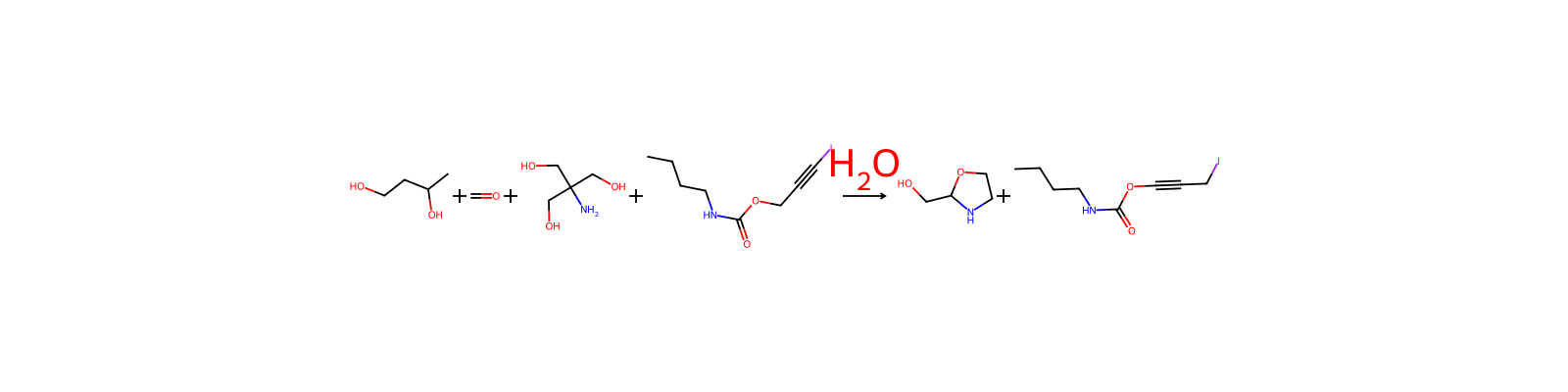
Related reactions
6 records



Linked notes
Loading…