

Basic information
- Standard SMILES
COc1cc(CO)ccc1O- InChIKey
ZENOXNGFMSCLLL-UHFFFAOYSA-N- Molecular formula
- C8H10O3
- Average molar mass
- 154.16 g/mol
- Monoisotopic mass
- 154.06299418
Overview
Vanillyl alcohol is a monomethoxybenzene that is 2-methoxyphenol substituted by a hydroxymethyl group at position 4. It has a role as a plant metabolite. It is a member of guaiacols and a member of benzyl alcohols.
Names & identifiers
- Preferred name
- Vanillyl alcohol
- IUPAC
- 4-(hydroxymethyl)-2-methoxyphenol
- English name
- Vanillyl alcohol
- Molecular formula
- C8H10O3
- Molecular weight
- 154.16
Names & synonyms
Vanillyl alcohol498-00-04-Hydroxy-3-methoxybenzyl alcohol4-(Hydroxymethyl)-2-methoxyphenolVanillin alcoholVanillic alcohol4-Hydroxy-3-methoxybenzenemethanolFEMA No. 3737X7EA1JUA6MNSC-3993DTXSID20198074V0018
Show more names
FEMA 3737VanillylVanillinolVANILLYL ALCOHOL(RG)4-Hydroxy-3-Methoxybenze-neMenthanol4-HYDROXY-3-METHOXYBENZYL ALCOHOL (VANILLYL ALCOHOL)
CHEBI:18353V-0018RefChem:901716DTXCID50120565207-852-4Benzenemethanol, 4-hydroxy-3-methoxy-vanillol4-Hydroxy-3-methoxyphenylmethanol
Database identifiers
- CAS
498-00-0- PubChem CID
- 62348
- DTXSID
DTXSID20198074- ChEMBL
CHEMBL4297450- ChEBI
CHEBI:18353- UNII
- X7EA1JUA6M
- EC Number
- 207-852-4
- Nikkaji
- J28.483A
Properties
Computed structural properties
- XLogP
- 0
- Topological polar surface area
- 49.7 Ų
- Hydrogen bond donors
- 2
- Hydrogen bond acceptors
- 3
- Rotatable bonds
- 2
- Heavy atoms
- 11
- Formal charge
- 0
- Complexity
- 116
Experimental & physicochemical properties
DrugsPharmaceuticals -> Listed in ZINC15
PolymersOther Classes -> Alcohols and Polyols, Other
LogP0.420
Food AdditivesFLAVORING AGENT OR ADJUVANT -> FDA Substance added to food
Flavoring AgentsEU Flavoring substances
Solubility
2 mg/mL at 20 °C
soluble in hot water, organic solvents, oils
soluble (in ethanol)
Boiling Point
312.00 to 313.00 °C. @ 760.00 mm Hg
(decomposes at the melting point)
Melting Point114 - 115 °C
Physical Description
Off-white powder; [Alfa Aesar MSDS]
Solid
white or colourless crystals with a mild, sweet, balsamic, vanilla-like odour
Physicochemical properties
- Melting point
- 110 · 110-117 °C (lit.)
- Boiling point
- 237.52 °C · 237.52°C (rough estimate)
- Density
- 1.169 · 1.1690 (rough estimate)
- refractive index
- 1.462 · 1.4620 (estimate)
- FEMA
- 3737 · 3737 | VANILLYL ALCOHOL
- FLAVIS Number
- 2.213 · 02.213 | Vanillyl alcohol
- storage temp.
- Inert atmosphere,Room Temperature
- solubility
- soluble in Methanol
- form
- Fine Crystalline Powder
- pka
- 9.75 · 9.75±0.18(Predicted)
- color
- Off-white to beige
- Odor
- 100 % · at 100.00 %. sweet creamy vanilla caramellic coconut graham cracker tonka milky powdery
- Odor Type
- creamy
- biological source
- synthetic
- Water Solubility
- 95 % · Soluble in 95% ethanol (5 %), water, and oils.
- JECFA Number
- 886 · 886
- BRN
- 1910044 · 1910044
- Henry's Law Constant
- 9.6 · 9.6×104 mol/(m3Pa) at 25℃, McFall et al. (2020)
- Stability
- Stable. Incompatible with strong oxidizing agents, strong acids.
- InChI
- 1S/C8H10O3/c1-11-8-4-6(5-9)2-3-7(8)10/h2-4,9-10H,5H2,1H3
- InChIKey
- ZENOXNGFMSCLLL-UHFFFAOYSA-N
- SMILES
- COc1cc(CO)ccc1O
- LogP
- 0.42 · 0.42
- Substances Added to Food (formerly EAFUS)
- VANILLYL ALCOHOL
- CAS DataBase Reference
- 498 · 498-00-0(CAS DataBase Reference)
- EWG's Food Scores
- 1 · 1
- FDA UNII
- 7 EA1JUA6M · X7EA1JUA6M
- NIST Chemistry Reference
- 4 · 4-Hydroxy-3-methoxybenzyl alcohol(498-00-0)
- UNSPSC Code
- 12164502 · 12164502
- NACRES
- 22 · NA.22
- Symbol(GHS)
- 7 · GHS07
- Signal word
- Warning
- Hazard statements
- 315 · H315-H319-H335
- Precautionary statements
- 261 · P261-P280a-P304+P340-P305+P351+P338-P405-P501a
- PPE
- 95 · dust mask type N95 (US), Eyeshields, Gloves
- Hazard Codes
- Xi
- Risk Statements
- 36 · 36/37/38
- Safety Statements
- 26 · 26-36
- WGK Germany
- 3 · 3
- Hazard Note
- Irritant
- HS Code
- 29095090 · 29095090
- Storage Class
- 11 · 11 - Combustible Solids
- REACH Registrations
- Active
Safety & regulation
GHS classification
GHS Classification
This chemical does not meet GHS hazard criteria for 58.6% (82 of 140) of all reports.
Warning
H315 (40.7%): Causes skin irritation [Warning Skin corrosion/irritation]
P261, P264, P264+P265, P271, P280, P302+P352, P304+P340, P305+P351+P338, P319, P321, P332+P317, P337+P317, P362+P364, P403+P233, P405, and P501 (click each P-code to see the statement)
Aggregated GHS information provided per 140 reports by companies from 9 notifications to the ECHA C&L Inventory. Each notification may be associated with multiple companies.
Hazard information
Regulatory Information
Chemical: Benzenemethanol, 4-hydroxy-3-methoxy
Commission Regulation (EC) No 1565/2000 (Repealed by Com. Implementing Reg. (EU) No 872/2012)
Status: Active Update: 29-03-2023 https://echa.europa.eu/registration-dossier/-/registered-dossier/34654
Benzenemethanol, 4-hydroxy-3-methoxy-: Does not have an individual approval but may be used under an appropriate group standard
Hazards SummarySafe when used as a flavoring agent in food; [JECFA] A skin and strong eye irritant; [Alfa Aesar MSDS] See Vanillin.
Hazard Classes and CategoriesSkin Irrit. 2 (40.7%)
Safety data
- PPE
- dust mask type N95 (US), Eyeshields, Gloves
- wgk
- 3
- hs_code
- 29095090
- risk_code
- 36/37/38
- Signal word
- Warning
- Symbol(GHS)
- GHS07
- hazard_code
- Xi
- hazard_note
- Irritant
- safety_code
- 26-36
- Storage Class
- 11 - Combustible Solids
- Hazard statements
- H315-H319-H335
- REACH Registrations
- Active
- Precautionary statements
- P261-P280a-P304+P340-P305+P351+P338-P405-P501a
Chemistry & industry
Pharmacology
Cellular LocationsCytoplasm
Uses & manufacturing
UsesUsed as a flavoring agent; [FDA]
Use Classification
Flavouring Agent -> FLAVOURING_AGENT -> JECFA Functional Classes
Flavoring Agents -> JECFA Flavorings Index
Flavouring Agent -> FLAVOURING_AGENT -> JECFA Functional Classes
Applications
Description4-hydroxy-3-methoxybenzyl alcohol (also known as vanillyl alcohol) is often used as a deodorant component that is active in preventing the formation of body odor. It can also be used as a flavoring agent. Recent studies have also demonstrated that it has certain pharmacological effects. For example, it has been confirmed that it has certain neuro-protective effects through suppressing the oxidative stress and anti-apoptotic activity in toxin-induced dopaminergic MN9D cells, making it a potential candidate for the treatment of neurodegenerative diseases such as Parkinson’s disease.
UsesUsed as a flavoring agent. Other possible uses, vanilla, coconut, cream and other dairy nuances, coumarin.
General DescriptionVanillyl alcohol belongs to the phenolic group of compounds which are widely used as oxidants in food products.
Upstream & downstream products
Downstream products
Suppliers50 total
国药集团化学试剂有限公司86-21-63210123 · [email protected]
梯希爱(上海)化成工业发展有限公司021-67121386 · [email protected]
上海阿拉丁生化科技股份有限公司400-6206333 13167063860 · [email protected]
INTATRADE GmbH+49 3493/605464 · [email protected]
北京安司莫森技术有限公司010-82954736 13391601435 · [email protected]
科瑞迪化学400-821-5857 021-64326257 · [email protected]
Syntechem Co.,Ltd[email protected]
上海迈瑞尔生化科技有限公司4006356688 18621169109 · [email protected]
阿法埃莎(中国)化学有限公司400-6106006 · [email protected]
安耐吉化学&3A(安徽泽升科技股份有限公司)400-0056266 · [email protected]
上海瀚鸿科技股份有限公司021-54306202 13764082696 · [email protected]
上海诗丹德标准技术服务有限公司021-021-57127007-6622-6622 17621252073 · [email protected]
成都普思生物科技股份有限公司028-85370565-229 18080489829 · [email protected]
山东西亚化学有限公司13355009207 13355009207 · [email protected]
玛雅试剂+86 (573) 82222445 (0)18006601000 452520369 · [email protected]
四川库利南科技有限公司400-1166-196 18981987031 · [email protected]
天津希恩思生化科技有限公司400 638 7771 · [email protected]
天津佶品佳化工科技有限公司18622448868 · [email protected]
斯百全化学(上海)有限公司021-021-021-67601398-809-809-809 15221380277 · [email protected]
上海源叶生物科技有限公司13636370518 · [email protected]
艾科试剂4008-755-333 18080918076 · [email protected]
上海思域化工科技有限公司86-21-34053660 · [email protected]
西安康培基生物科技有限公司86-029-85456576 · [email protected]
赛默飞世尔科技(中国)有限公司800-810-5118 · [email protected]
北京伊诺凯科技有限公司400-810-7969 010-59572699 · [email protected]
TOKYO CHEMICAL INDUSTRY CO., LTD.03-36680489 · [email protected]
深圳振强药物研发有限公司0755-66853366 13670046396 · [email protected]
成都瑞芬思德丹生物科技有限公司2355253622; 18981954830 · [email protected]
安徽科迪达化工有限公司0554-2106669 · [email protected]
HBCChem, Inc.+1-510-219-6317 · [email protected]
四川省维克奇生物科技有限公司028-81700200 18116577057 · [email protected]
成都零六生物科技有限公司400-1166-196 13458535857 · [email protected]
雷丁试剂0510-85629785 18013409632 · [email protected]
上海麦克林生化科技股份有限公司15221275939 15221275939 · [email protected]
上海永叶生物科技有限公司86-021-61559134 15921386130 · [email protected]
上海有朋化工有限公司021-69005955 13701776567 · [email protected]
北京海力扬化学科技有限公司13718199399 · [email protected]
北京欣赛维化学科技有限公司010-56218822 13717722232 · [email protected]
四川海诺威科技有限公司13708085536 13708085536 · [email protected]
江苏艾康生物医药研发有限公司025-66028182 17714375163 · [email protected]
上海凯赛化工有限公司021-33516722 13701817765 · [email protected]
上海彤源化工有限公司021-021-69182866 13701855675 · [email protected]
成都润泽本土化工有限公司13096311329 028-88469284 616445927 · [email protected]
北京华扬致成科技有限公司13716033033 · [email protected]
上海蓝润化学有限公司021-69515658 ; 69515628 13701998368 · [email protected]
上海容立化学科技有限公司021-69992220 13701886816 · [email protected]
上海康拓化工有限公司021-69185552 13701777608 · [email protected]
Sigma-Aldrich西格玛奥德里奇(上海)贸易有限公司021-61415566 800-8193336 · [email protected]
TargetMol中国(陶术生物)021-021-33632979 15002134094 · [email protected]
武汉天植生物技术有限公司18607101326 15172504745 · [email protected]
Additional notes
DefinitionChEBI: Vanillyl alcohol is a monomethoxybenzene that is 2-methoxyphenol substituted by a hydroxymethyl group at position 4. It has a role as a plant metabolite. It is a member of guaiacols and a member of benzyl alcohols.
Related reactions
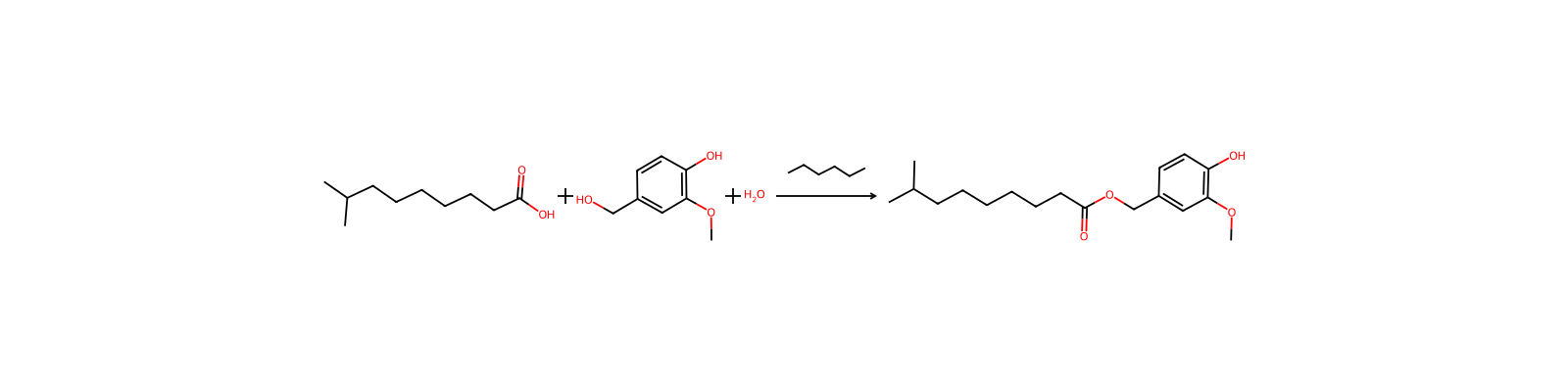
31 records


Linked notes
Loading…