HomeMCPWorkbenchSkills
HomeWorkbenchNotificationsMe
llms.txt · MCP GuidePrivacy Policy · Terms of Service · Supportv1.8.0
  1. Home
  2. /Compound

Isobutyl chloroformate

HCID 62365
New noteNew reactionRequest quotes
Print preview
Basic informationOverviewNames & identifiersPropertiesSafety & regulationChemistry & industryRelated reactionsCompound notes
Substructure searchFind similar structures

Basic information

CAS
543-27-1
Standard SMILES
CC(C)COC(=O)Cl
InChIKey
YOETUEMZNOLGDB-UHFFFAOYSA-N
Molecular formula
C5H9ClO2
Average molar mass
136.58 g/mol
Monoisotopic mass
136.0291072

Overview

Isobutyl chloroformate appears as a colorless to light-colored liquid. Insoluble in water and denser than water. Very corrosive to skin, eyes, and mucous membranes. Very toxic by ingestion, inhalation and skin absorption. Combustible.

Names & identifiers

Preferred name
Isobutyl chloroformate
IUPAC
2-methylpropyl carbonochloridate
English name
Isobutyl chloroformate
Molecular formula
C5H9ClO2
Molecular weight
136.58

Names & synonyms

Isobutyl chloroformate543-27-12-Methylpropyl chloroformate2-Methylpropyl carbonochloridateIsobutyl chlorocarbonateChloroformic acid isobutyl esterCARBONOCHLORIDIC ACID, 2-METHYLPROPYL ESTERChlorocarbonic acid isobutyl esterFormic acid, chloro-, isobutyl ester6S785TC0OBNSC-8429DTXSID8052194
Show more names
IBCFisobutyl chloformateIsobuthyl chloroforMate2-methyl-1-propylchlorocarbonateoroformateIsobutyl chloroforma
RefChem:149079DTXCID3030765208-840-1isobutyl carbonochloridatei-Butyl chloroformateIsobutylchloroformateIsobutyl chloridocarbonateNSC 8429

Database identifiers

CAS
543-27-1
PubChem CID
62365
DTXSID
DTXSID8052194
UNII
6S785TC0OB
EC Number
208-840-1
Nikkaji
J95.612K

Properties

Computed structural properties

XLogP
2.8
Topological polar surface area
26.3 Ų
Hydrogen bond donors
0
Hydrogen bond acceptors
2
Rotatable bonds
3
Heavy atoms
8
Formal charge
0
Complexity
80.5

Experimental & physicochemical properties

Chemical Classes · 2 items

Toxic Gases & Vapors -> Acid Halides

Flammable agents - 3rd degree

SpringerMaterials PropertiesDielectric constant
LogP1.54 (calculated)
Density · 3 items

1.04 g/cm³

Relative density of the vapour/air-mixture at 20 °C (air = 1): 1.04

1.053 @25 °C

SolubilitySolubility in water: reaction
Flash Point27 °C c.c.
Boiling Point · 2 items

129 °C

128.7 °C @760 [mm Hg]

Vapor DensityRelative vapor density (air = 1): 4.71
Vapor Pressure · 2 items

16.5 [mmHg]

Vapor pressure, kPa at 20 °C: 2.2

Physical Description

Safety & regulation

Safety information is for reference only and does not replace the supplier’s Safety Data Sheet (SDS), applicable regulations, or professional assessment.

GHS classification

GHS Classification · 6 items

Danger

H226 (100%): Flammable liquid and vapor [Warning Flammable liquids]

P210, P233, P234, P240, P241, P242, P243, P260, P261, P264, P264+P265, P270, P271, P280, P301+P317, P301+P330+P331, P302+P361+P354, P303+P361+P353, P304+P340, P305+P354+P338, P316, P317, P319, P321, P330, P363, P370+P378, P390, P403+P233, P403+P235, P405, P406, and P501 (click each P-code to see the statement)

Aggregated GHS information provided per 163 reports by companies from 8 notifications to the ECHA C&L Inventory. Each notification may be associated with multiple companies.

Warning

H226: Flammable liquid and vapor [Warning Flammable liquids]

Hazard information

Regulatory Information · 4 items

Chemical: Carbonochloridic acid, 2-methylpropyl ester

REACH registered substance: Isobutyl chloroformate (EC: 208-840-1)

Isobutylchlorofomate: Does not have an individual approval but may be used under an appropriate group standard

The New Jersey Worker and Community Right to Know Act requires public and private employers to provide information about hazardous substances at their workplaces. (N.J.S.A. 34:5A-1 et. seq.)

Other Safety InformationEvaluation - Chemicals that are unlikely to require further regulation to manage risks to human health
DOT LabelPoison Corrosive Flammable Liquid
Fire Hazards · 2 items

Excerpt from ERG Guide 155 [Substances - Toxic and/or Corrosive (Flammable / Water-Sensitive)]:

Flammable. Gives off irritating or toxic fumes (or gases) in a fire. Above 27 °C explosive vapour/air mixtures may be formed.

Health HazardsExcerpt from ERG Guide 155 [Substances - Toxic and/or Corrosive (Flammable / Water-Sensitive)]:

Chemistry & industry

Uses & manufacturing

UsesUsed as A peptide reagent; [Hawley]
General Manufacturing InformationCarbonochloridic acid, 2-methylpropyl ester: ACTIVE

Applications

UsesIsobutyl chloroformate is used as a peptide reagent. It is also used in the preparation of phenethyl-carbamic acid isobutyl ester by reaction with phenethylamine.

General DescriptionA colorless to light-colored liquid. Insoluble in water and denser than water. Very corrosive to skin, eyes, and mucous membranes. Very toxic by ingestion, inhalation and skin absorption. Combustible.

Upstream & downstream products

Downstream products

Gly-7-amino-4-methylcoumarinCefpiramide acidIsobutyl carbonateisoglutamine(S)-2-(N-Methyl-3-(Methyldisulfanyl)propanaMido)propanoic acid4-Hydroxybutanoic acid methyl esterFmoc-aspartimol(OtBu)Isopropylmalonic acidZ-Pro-betanaCarbamic acid, (2-amino-1-methyl-2-oxoethyl)-, 2-methylpropyl ester (9CI)

Related reactions

3,801 records
New reaction record
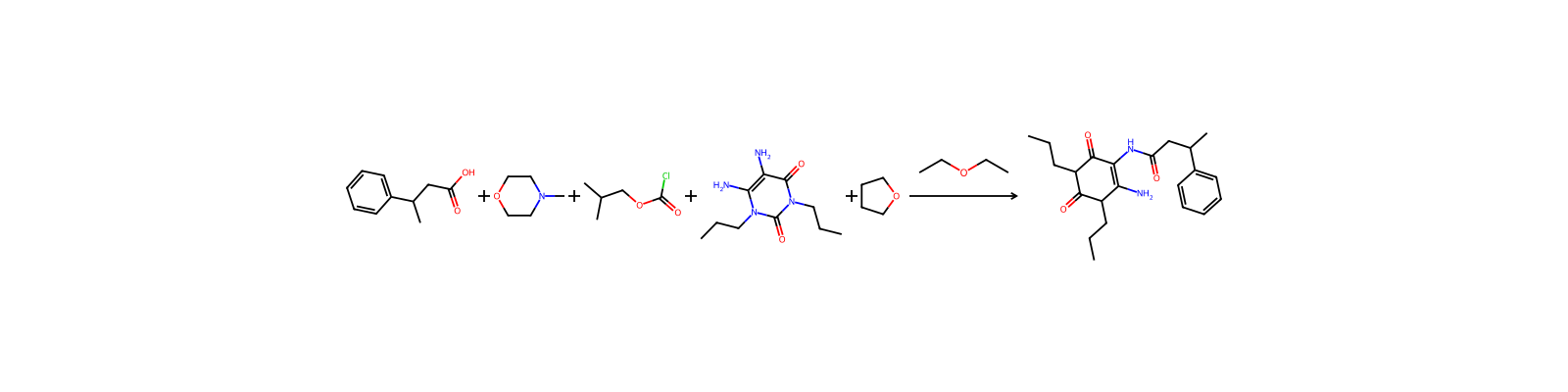
HRID 929 reaction equation
HRID 929As reactantuspto-grants-1998_03
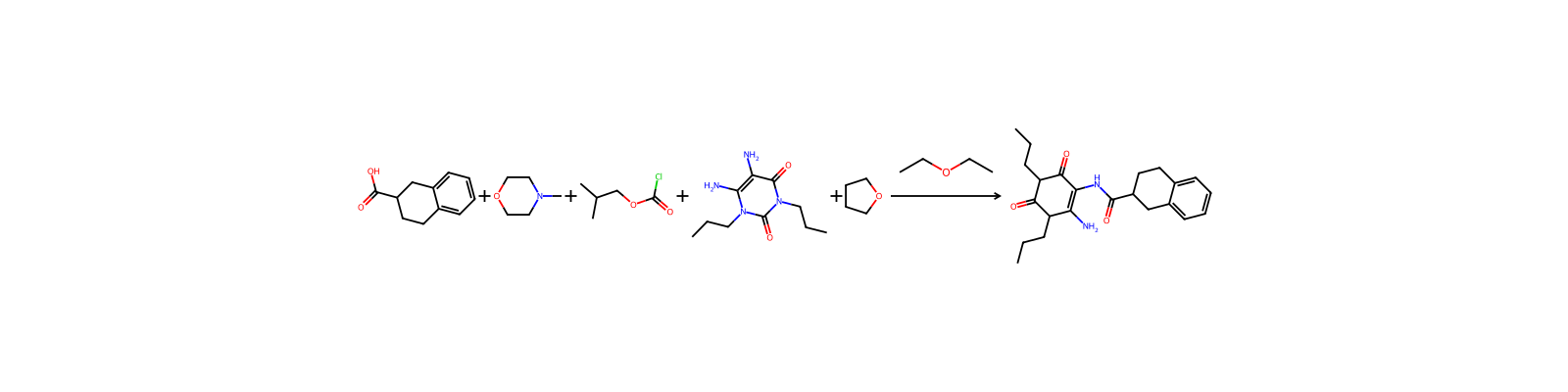
HRID 2473 reaction equation
HRID 2473As reactantuspto-grants-1998_03
HRID 3037 reaction equation
HRID 3037As reactantuspto-grants-1998_03
HRID 3614 reaction equation
HRID 3614As reactantuspto-grants-1998_03
HRID 3656 reaction equation
HRID 3656As reactantuspto-grants-1998_03
HRID 3657 reaction equation
HRID 3657As reactantuspto-grants-1998_03
HRID 3661 reaction equation
HRID 3661As reactantuspto-grants-1998_03
HRID 3783 reaction equation
HRID 3783As reactantuspto-grants-1988_02
Page 1 of 476

Compound notes

Loading…

On this pageBasic informationOverviewNames & identifiersPropertiesSafety & regulationChemistry & industryRelated reactionsCompound notes
More actions
New noteNew reactionRequest quotes
· 3 items

Isobutyl chloroformate appears as a colorless to light-colored liquid. Insoluble in water and denser than water. Very corrosive to skin, eyes, and mucous membranes. Very toxic by ingestion, inhalation and skin absorption. Combustible.

Clear liquid; [Merck Index] Colorless liquid with a pungent odor; [ICSC]

COLOURLESS LIQUID WITH PUNGENT ODOUR.

Physicochemical properties

Melting point
-80 °C · -80°C
Boiling point
128.8 °C · 128.8 °C(lit.)
Density
1.053 g/mL · 1.053 g/mL at 25 °C(lit.)
vapor pressure
0.33 mm · 0.33 mm Hg ( 20 °C)
refractive index
20 · n20/D 1.407(lit.)
Flash point
82 °F · 82 °F
storage temp.
2 · 2-8°C
solubility
benzene: miscible
form
Liquid
color
Clear
Water Solubility
Immiscible with water.
Sensitive
Moisture Sensitive
Merck
14 · 14,5139
BRN
956590 · 956590
Dielectric constant
9.2 · 9.2(20℃)
Stability
Moisture Sensitive
Major Application
peptide synthesis
InChI
1S/C5H9ClO2/c1-4(2)3-8-5(6)7/h4H,3H2,1-2H3
InChIKey
YOETUEMZNOLGDB-UHFFFAOYSA-N
SMILES
ClC(=O)OCC(C)C
CAS DataBase Reference
543 · 543-27-1(CAS DataBase Reference)
FDA UNII
6 S785TC0OB · 6S785TC0OB
NIST Chemistry Reference
Isobutyl chloroformate(543-27-1)
EPA Substance Registry System
Isobutyl chloroformate (543-27-1)
UNSPSC Code
12352108 · 12352108
NACRES
22 · NA.22
Symbol(GHS)
2 · GHS02,GHS05,GHS06
Signal word
Danger
Hazard statements
330 · H330-H302-H314-H226
Precautionary statements
501 · P501-P270-P240-P260-P210-P233-P243-P241-P242-P271-P264-P280-P284-P370+P378-P303+P361+P353-P301+P330+P331-P363-P301+P312+P330-P304+P340+P310-P305+P351+P338+P310-P403+P233-P403+P235-P405
Hazard Codes
T
Risk Statements
10 · 10-22-23-34
Safety Statements
26 · 26-36/37/39-45
RIDADR
3390 · UN 3390 6.1/PG 1
WGK Germany
2 · 2
F
10 · 10-19
TSCA
TSCA listed
HazardClass
6.1 · 6.1
PackingGroup
I
HS Code
29159000 · 29159000
Storage Class
3 · 3 - Flammable liquids
Hazard Classifications
2 InhalationAcute · Acute Tox. 2 InhalationAcute Tox. 4 OralEye Dam. 1Flam. Liq. 3Skin Corr. 1B
Toxicity
50 orally · LD50 orally in Rabbit: 1400 mg/kg
REACH Registrations
Active
Excepted Quantities
Forbidden
Hazards Summary · 1 item

An eye and mucous membrane irritant (vapors); [Merck Index] Corrosive; [Hawley] Reacts with water evolving hydrogen chloride; A corrosive substance that can cause injury to the skin, eyes, and respiratory tract; Inhalation may cause pulmonary edema; [ICSC] Highly flammable; Reacts with water exothermically forming hydrogen chloride gas; Highly corrosive to skin, eyes, and mucous membranes; [CAMEO] Corrosive to skin and eyes; [eChemPortal: ERMA] A lachrymator; A corrosive substance that can cause injury to the skin, eyes, and respiratory tract; Inhalation may cause chemical pneumonitis; [MSDSonline] See CHLOROFORMATES.

Reactive GroupEsters, Sulfate Esters, Phosphate Esters, Thiophosphate Esters, and Borate Esters
UN ClassificationUN Hazard Class: 6.1; UN Subsidiary Risks: 3 and 8; UN Pack Group: II
Reactivity AlertsHighly Flammable
Reactivity Profile · 1 item

ISOBUTYL CHLOROFORMATE is incompatible with water, with strong oxidizing agents, alcohols, bases (including amines). May react vigorously or explosively if mixed with diisopropyl ether or other ethers in the presence of trace amounts of metal salts [J. Haz. Mat., 1981, 4, 291].

Chemical DangersDecomposes on burning. This produces toxic and corrosive fumes. Reacts with water and moisture. This produces hydrogen chloride.
Packaging and LabellingDo not transport with food and feedstuffs. Unbreakable packaging. Put breakable packaging into closed unbreakable container.

Safety & protection

Fire Fighting · 2 items

Excerpt from ERG Guide 155 [Substances - Toxic and/or Corrosive (Flammable / Water-Sensitive)]:

NO water. Use dry powder, carbon dioxide, alcohol-resistant foam. In case of fire: keep drums, etc., cool by spraying with water. NO direct contact with water.

First Aid Measures · 4 items

Fresh air, rest. Half-upright position. Artificial respiration may be needed. Refer for medical attention.

Remove contaminated clothes. Rinse skin with plenty of water or shower. Refer for medical attention .

First rinse with plenty of water for several minutes (remove contact lenses if easily possible), then refer for medical attention.

Rinse mouth. Do NOT induce vomiting. Give one or two glasses of water to drink. Refer for medical attention .

First AidExcerpt from ERG Guide 155 [Substances - Toxic and/or Corrosive (Flammable / Water-Sensitive)]:
Safe StorageFireproof. Dry. Well closed. Provision to contain effluent from fire extinguishing. Separated from food and feedstuffs. Store in an area without drain or sewer access.
Exposure Control and Personal Protection · 2 items

TIH (Toxic Inhalation Hazard) - Term used to describe gases and volatile liquids that are toxic when inhaled. Some are TIH materials themselves, e.g., chlorine, and some release TIH gases when spilled in water, e.g., chlorosilanes. [ERG 2016].

0.2 [ppm]

Nonfire Spill ResponseExcerpt from ERG Guide 155 [Substances - Toxic and/or Corrosive (Flammable / Water-Sensitive)]:
Spillage Disposal · 1 item

Evacuate danger area! Consult an expert! Personal protection: chemical protection suit including self-contained breathing apparatus. Do NOT let this chemical enter the environment. Collect leaking and spilled liquid in sealable dry plastic containers as far as possible. Absorb remaining liquid in dry sand or inert absorbent. Then store and dispose of according to local regulations.

Isolation and EvacuationExcerpt from ERG Guide 155 [Substances - Toxic and/or Corrosive (Flammable / Water-Sensitive)]:
Eye PreventionWear face shield or eye protection in combination with breathing protection.
Fire PreventionNO open flames, NO sparks and NO smoking. Above 27 °C use a closed system, ventilation and explosion-proof electrical equipment.
Inhalation RiskA harmful contamination of the air will be reached very quickly on evaporation of this substance at 20 °C.
Skin PreventionProtective gloves. Protective clothing.

Toxicology

Adverse EffectsDermatotoxin - Skin burns.
Exposure RoutesThe substance can be absorbed into the body by inhalation of its vapour and by ingestion.
Signs and Symptoms · 4 items

Sore throat. Burning sensation. Cough. Laboured breathing. Shortness of breath. Symptoms may be delayed.

Redness. Pain. Skin burns.

Redness. Pain. Severe deep burns.

Abdominal pain. Burning sensation. Shock or collapse.

ICSC Environmental DataThe substance is toxic to aquatic organisms.

Safety data

F
10-19
wgk
2
tsca
TSCA listed
ridadr
UN 3390 6.1/PG 1
hs_code
29159000
Toxicity
LD50 orally in Rabbit: 1400 mg/kg
risk_code
10-22-23-34
Signal word
Danger
Symbol(GHS)
GHS02,GHS05,GHS06
hazard_code
T
safety_code
26-36/37/39-45
hazard_class
6.1
Storage Class
3 - Flammable liquids
packing_group
I
Hazard statements
H330-H302-H314-H226
Excepted Quantities
Forbidden
REACH Registrations
Active
Hazard Classifications
Acute Tox. 2 InhalationAcute Tox. 4 OralEye Dam. 1Flam. Liq. 3Skin Corr. 1B
Precautionary statements
P501-P270-P240-P260-P210-P233-P243-P241-P242-P271-P264-P280-P284-P370+P378-P303+P361+P353-P301+P330+P331-P363-P301+P312+P330-P304+P340+P310-P305+P351+P338+P310-P403+P233-P403+P235-P405
Z-Leu-NH2