HomeMCPWorkbenchSkills
HomeWorkbenchNotificationsMe
Huagongshe Open Program:[email protected]AI access: llms.txt · MCP GuidePrivacy Policy · Terms of Service · Supportv1.7.8
  1. Home
  2. /Compound

Trifluridine

HCID 6256
NotesReactions
Basic informationOverviewNames & identifiersPropertiesSafety & regulationChemistry & industryRelated reactionsCompound notes
Substructure searchFind similar structures

Basic information

CAS
70-00-8
Standard SMILES
O=c1[nH]c(=O)n([C@H]2C[C@H](O)[C@@H](CO)O2)cc1C(F)(F)F
InChIKey
VSQQQLOSPVPRAZ-RRKCRQDMSA-N
Molecular formula
C10H11F3N2O5
Average molar mass
296.2 g/mol
Monoisotopic mass
296.06200611

Overview

Trifluridine is a pyrimidine 2'-deoxyribonucleoside compound having 5-trifluoromethyluracil as the nucleobase. An antiviral drug used mainly in the treatment of primary keratoconjunctivitis and recurrent epithelial keratitis. It has a role as an antimetabolite, an antineoplastic agent, an antiviral drug and an EC 2.1.1.45 (thymidylate synthase) inhibitor. It is a pyrimidine 2'-deoxyribonucleoside, an organofluorine compound and a nucleoside analogue.

Names & identifiers

Preferred name
Trifluridine
IUPAC
1-[(2R,4S,5R)-4-hydroxy-5-(hydroxymethyl)oxolan-2-yl]-5-(trifluoromethyl)pyrimidine-2,4-dione
English name
Trifluridine
Molecular formula
C10H11F3N2O5
Molecular weight
296.2

Names & synonyms

TrifluridineTRIFLUOROTHYMIDINE70-00-8ViropticF3DThdTrifluoromethyldeoxyuridineTrifluridinumTrifluridinaF3TDR5-(Trifluoromethyl)deoxyuridineTFDU5-Trifluoromethyl-2-deoxyuridine
Show more names
TFTf3tFTDnsc75520TriflurdineTriflurdine (Viroptic)Thymidine, α,α,α-trifluoro-2,4(1h,3h)-pyrimidinedione,1-(2-deoxy-beta-d-ribofuranosyl)-5-(trifluorometh
2'-Deoxy-5-(trifluoromethyl)uridineTrifluorothymine deoxyriboside5-Trifluoromethyl-2'-deoxyuridine2'-Deoxy-5-trifluoromethyluridine5-Trifluoro-2'-deoxythymidineDTXSID4046602RMW9V5RW38CCRIS 2348

Database identifiers

CAS
70-00-8
PubChem CID
6256
DTXSID
DTXSID4046602
ChEMBL
CHEMBL1129
ChEBI
CHEBI:75179

Properties

Computed structural properties

XLogP
-0.5
Topological polar surface area
99.1 Ų
Hydrogen bond donors
3
Hydrogen bond acceptors
8
Rotatable bonds
2
Heavy atoms
20
Formal charge
0
Complexity
464

Experimental & physicochemical properties

Drugs · 2 items

Pharmaceuticals -> Sensory organs -> Ophthalmologicals

Pharmaceuticals -> Listed in ZINC15

LogP · 3 items

log Kow = -0.46

-0.7

-0.46

Color/FormCrystals from ethyl acetate
Solubility · 3 items

Soluble

6.69e+00 g/L

>44.4 [ug/mL] (The mean of the results at pH 7.4)

Human Drugs · 2 items

FDA approved drugs -> Active ingredient

FDA approved drugs -> Active ingredient

DecompositionWhen heated to decomposition, material emits toxic fumes of /hydrogen fluoride/ and /nitrogen oxides/.
Melting Point · 3 items

186-189

186-189 °C

186 - 189 °C

Physical DescriptionSolid
Dissociation Constants · 2 items

Safety & regulation

Safety information is for reference only and does not replace the supplier’s Safety Data Sheet (SDS), applicable regulations, or professional assessment.

GHS classification

GHS Classification · 4 items

Warning

H302 (95.6%): Harmful if swallowed [Warning Acute toxicity, oral]

P203, P261, P264, P270, P271, P280, P301+P317, P302+P352, P304+P340, P317, P318, P321, P330, P362+P364, P405, and P501 (click each P-code to see the statement)

Aggregated GHS information provided per 45 reports by companies from 4 notifications to the ECHA C&L Inventory. Each notification may be associated with multiple companies.

Hazard information

FDA Requirements · 1 item

The Approved Drug Products with Therapeutic Equivalence Evaluations identifies currently marketed prescription drug products, including trifluridine, approved on the basis of safety and effectiveness by FDA under sections 505 of the Federal Food, Drug, and Cosmetic Act.

Toxic Combustion ProductsEmits toxic fumes under fire conditions.
Hazard Classes and CategoriesAcute Tox. 4 (95.6%)
Skin, Eye, and Respiratory Irritations · 3 items

Trifluridine may cause mild local irritation of the conjunctiva and cornea when instilled but these effects are usually transient.

May cause skin, eye, and /mucous membrane/ irritation.

The most common adverse effects of trifluridine 1% ophthalmic solution are mild, transient burning or stinging upon installation (4.6%) and palpebral edema (2.8%). Local irritation of the conjunctiva and cornea usually are transient...

Safety & protection

Fire Fighting Procedures · 2 items

Chemistry & industry

Pharmacology

ATC Code · 3 items

L01BC59

S - Sensory organs

QS - Sensory organs

Protein Binding · 1 item

_In vitro_ findings suggest that the protein binding of trifluridine in human plasma is greater than 96%, where it is mainly bound to human serum albumin. Protein binding of trifluridine is independent of drug concentration and presence of tipiracil.

Pharmacodynamics · 1 item

Trifluridine exhibits an antiviral effect against herpes simplex virus, types 1 and 2 and vacciniavirus both in vitro and in vivo. Some strains of adenovirus that contribute to the pathology of keratoconjunctivitis were shown to be susceptible to trifluridine _in vitro_. While there is evidence from a study that cross-resistance may develop between trifluridine and [idoxuridine] or [vidarabine], trifluridine was shown to effective in treating dendritic ulcers in patients with herpetic keratitis who are unresponsive to [idoxuridine] or [vidarabine] based on the results from masked comparative trials. In nonclinical studies, trifluridine/tipiracil hydrochloride demonstrated antitumour activity against both 5-fluorouracil (5-FU) sensitive and resistant colorectal cancer cell lines. The cytotoxic activity of trifluridine and tipiracil against several human tumour xenografts show high correlation with the amount of trifluridine incorporated into DNA, indicating that the primary mechanism of action of trifluridine involves the direct incorporation into the cancer cell DNA. Trifluridine and tipiracil demonstrated anti-tumor activity against KRAS wild-type and mutant human colorectal cancer xenografts in mice. In clinical studies comprised of patients with previously treated metastatic colorectal cancer, treatment of trifluridine in combination with tipiracil in addition to best supportive care over a 5- or 7-month period resulted in increased progression-free survival (PFS), overall response rate (ORR) and disease control rate (DCR) compared to placebo. In an open-label study, administration of trifluridine at the recommended dosage in patients with advanced solid tumors had no clinically relevant effect on QT/QTc prolongation compared with placebo. Two out of 48 patients displayed had QTc greater than 500 msec and 1 of 42 patients (2.4%) had a QTc increase from baseline greater than 60 msec.

Mechanism of Action · 4 items

Related reactions

12 records
New reaction record
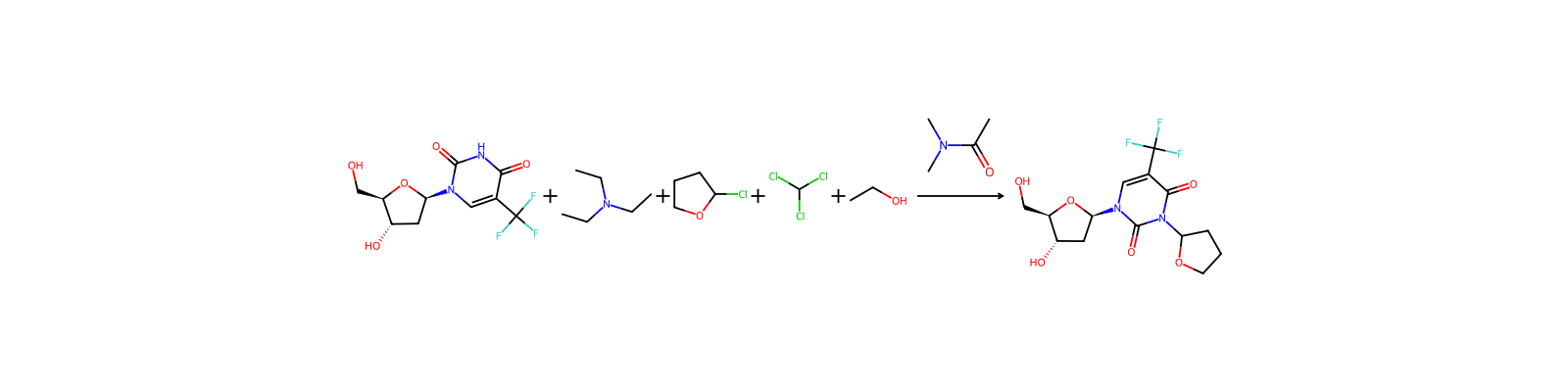
HRID 37063 reaction equation
HRID 37063As reactantuspto-grants-1995_05
HRID 359887 reaction equation
HRID 359887As reactantuspto-grants-1991_03
HRID 477166 reaction equation
HRID 477166As reactantuspto-grants-1989_12
HRID 477167 reaction equation
HRID 477167As reactantuspto-grants-1989_12
HRID 477169 reaction equation
HRID 477169As reactantuspto-grants-1989_12
HRID 703730 reaction equation
HRID 703730As reactantuspto-grants-1991_01
HRID 1363445 reaction equation
HRID 1363445As productuspto-grants-2011_02
HRID 1494190 reaction equation
HRID 1494190As reactantuspto-grants-1991_06
Page 1 of 2

Compound notes

Loading…

On this pageBasic informationOverviewNames & identifiersPropertiesSafety & regulationChemistry & industryRelated reactionsCompound notes
UNII
RMW9V5RW38
EC Number
200-722-8
Nikkaji
J2.814B

7.95

pKa = 7.95

Collision Cross Section166.36 Ų [M+K]+ [CCS Type: TW; Method: calibrated with polyalanine and drug standards]

Physicochemical properties

Melting point
190 · 190-193 °C (lit.)
Density
1.4365 · 1.4365 (estimate)
refractive index
50 ° · 50 ° (C=1, H2O)
storage temp.
2 · 2-8°C
solubility
Soluble in DMSO (up to 25 mg/ml) or in Water (up to 14 mg/ml)
form
solid
pka
7.85 · pKa 7.85 (Uncertain)
color
Off-white
biological source
synthetic
Water Solubility
50 mg/mL, · water: 50mg/mL, clear, colorless
Merck
14 · 14,9687
Henry's Law Constant
1 · 1.0×1011 mol/(m3Pa) at 25℃, HSDB (2015)
Stability
1 year · Stable for 1 year from date of purchase as supplied. Solutions in DMSO or distilled water may be stored at -20°C for up to 1 month.
InChI
InChI=1S/C10H11F3N2O5/c11-10(12,13)4-2-15(9(19)14-8(4)18)7-1-5(17)6(3-16)20-7/h2,5-7,16-17H,1,3H2,(H,14,18,19)/t5-,6-,7-/m1/s1
InChIKey
VSQQQLOSPVPRAZ-FSDSQADBSA-N
SMILES
[C@H]1(O)[C@@H](CO)O[C@@H](N2C=C(C(F)(F)F)C(=O)NC2=O)C1
CAS DataBase Reference
70 · 70-00-8(CAS DataBase Reference)
FDA UNII
9 V5RW38 · RMW9V5RW38
NCI Drug Dictionary
trifluridine
ATC code
1 BC59,S01AD02 · L01BC59,S01AD02
UNSPSC Code
41116107 · 41116107
NACRES
51 · NA.51
Symbol(GHS)
8 · GHS08
Signal word
Warning
Hazard statements
341 · H341-H351-H361d
Precautionary statements
201 · P201-P202-P280-P308+P313-P405-P501
PPE
95 · dust mask type N95 (US), Eyeshields, Gloves
Hazard Codes
Xn,Xi
Risk Statements
20 · 20/21/22-40
Safety Statements
22 · 22-36
WGK Germany
3 · 3
RTECS
2087500 · XP2087500
Hazard Note
Keep Cold
HS Code
29349990 · 29349990
Storage Class
11 · 11 - Combustible Solids
Hazard Classifications
2 Muta · Carc. 2Muta. 2Repr. 2
Hazardous Substances Data
70 · 70-00-8(Hazardous Substances Data)
Toxicity
50 intraperitoneal · LD50 intraperitoneal in mouse: 1931mg/kg

Water spray, dry chemical, carbon dioxide, or foam as appropriate for surrounding fire and materials.

As with all fires, evacuate personnel to a safe area. Firefighters should use self-contained breathing equipment and protective clothing.

Storage Conditions · 2 items

Store under refrigeration 2-8 °C (36-46 °F).

Store in tight, light-resistant container as defined in the USP-NF. This material should be handled and stored per label instructions to ensure product integrity.

Cleanup Methods · 1 item

Wear approved respiratory protection, chemically compatible gloves, and protective clothing. Wipe up spillage or collect spillage using a high-efficiency vacuum cleaner. Avoid breathing dust. Place spillage in appropriately labeled container for disposal. Wash spill site.

Disposal Methods · 1 item

SRP: Expired or waste pharmaceuticals shall carefully take into consideration applicable DEA, EPA, and FDA regulations. It is not appropriate to dispose by flushing the pharmaceutical down the toilet or discarding to trash. If possible return the pharmaceutical to the manufacturer for proper disposal being careful to properly label and securely package the material. Alternatively, the waste pharmaceutical shall be labeled, securely packaged and transported by a state licensed medical waste contractor to dispose by burial in a licensed hazardous or toxic waste landfill or incinerator.

Preventive Measures · 5 items

This material is assumed to be combustible. As with all dry powders, it is advisable to ground mechanical equipment in contact with dry material to dissipate the potential buildup of static electricity.

As a general rule, when handling USP Reference Standards, avoid all contact and inhalation of dust, mists, and/or vapors associated with the material. Wash thoroughly after handling.

Wear chemically compatible gloves, safety glasses or goggles, and protect exposed skin.

SRP: Local exhaust ventilation should be applied wherever there is an incidence of point source emissions or dispersion of regulated contaminants in the work area. Ventilation control of the contaminant as close to its point of generation is both the most economical and safest method to minimize personnel exposure to airborne contaminants. Ensure that the local ventilation moves the contaminant away from the worker.

SRP: The scientific literature for the use of contact lenses by industrial workers is inconsistent. The benefits or detrimental effects of wearing contact lenses depend not only upon the substance, but also on factors including the form of the substance, characteristics and duration of the exposure, the uses of other eye protection equipment, and the hygiene of the lenses. However, there may be individual substances whose irritating or corrosive properties are such that the wearing of contact lenses would be harmful to the eye. In those specific cases, contact lenses should not be worn. In any event, the usual eye protection equipment should be worn even when contact lenses are in place.

Personal Protective Equipment (PPE) · 2 items

Engineering controls such as exhaust ventilation are recommended.

Use a NIOSH-approved respirator, if it is determined to be necessary by an industrial hygiene survey involving air monitoring. In the event that a respirator is not required, an approved dust mask should be used.

Toxicology

Hepatotoxicity · 1 item

Pooled analyses of preregistration clinical trials reported that serum enzyme elevations occurred in up to 24% of patients on trifluridine/tipiracil therapy, but were also elevated in 27% of controls. Similarly, ALT values above 5 times ULN occurred in 2% of trifluridine/tipiracil treated compared to 4% of placebo treated subjects. In these and subsequent studies, clinically apparent liver adverse reactions attributed to trifluridine/tipiracil were not reported.

Environmental Fate · 3 items

TERRESTRIAL FATE: Based on a classification scheme(1), an estimated Koc value of 10(SRC), determined from a structure estimation method(2), indicates that trifluridine is expected to have very high mobility in soil(SRC). The pKa of trifluridine is 7.95(3), indicating that this compound will exist partially in the anion form in the environment and anions generally do not adsorb more strongly to soils containing organic carbon and clay than their neutral counterparts(4). Volatilization of trifluridine from moist soil surfaces is not expected to be an important fate process(SRC) given an estimated Henry's Law constant of 9.5X10⁻¹⁷ atm-cu m/mole(SRC), using a fragment constant estimation method(5). Trifluridine is not expected to volatilize from dry soil surfaces(SRC) based upon an estimated vapor pressure of 2.5X10⁻¹³ mm Hg at 25 °C(SRC), determined from a fragment constant method(2). Biodegradation data in soil were not available(SRC, 2013).

AQUATIC FATE: Based on a classification scheme(1), an estimated Koc value of 10(SRC), determined from a structure estimation method(2), indicates that trifluridine is not expected to adsorb to suspended solids and sediment(SRC). Volatilization from water surfaces is not expected(3) based upon an estimated Henry's Law constant for the neutral species of 9.5X10⁻¹⁷ atm-cu m/mole(SRC), developed using a fragment constant estimation method(4). According to a classification scheme(5), an estimated BCF of 3(SRC), from its log Kow of -0.46(6) and a regression-derived equation(2), suggests the potential for bioconcentration in aquatic organisms is low(SRC). Biodegradation data in water were not available(SRC, 2013).

ATMOSPHERIC FATE: According to a model of gas/particle partitioning of semivolatile organic compounds in the atmosphere(1), trifluridine, which has an estimated vapor pressure of 2.5X10⁻¹³ mm Hg at 25 °C(SRC), determined from a fragment constant method(2), is expected to exist solely in the particulate phase in the ambient atmosphere. Particulate-phase trifluridine may be removed from the air by wet and dry deposition(SRC). Trifluridine absorbs UV light at wavelengths of 260 nm(4) and, therefore, could susceptible to direct photolysis by sunlight(SRC).

Milk Concentrations · 1 item

It is unlikely that trifluridine is distributed into milk following topical application to the eye because of the relatively small dosage used, dilution in body fluids, and the short half-life of the drug (approximately 12 minutes). However, the drug should not be used in nursing women unless the potential benefits justify the possible risks to the infant.

Soil Adsorption/Mobility · 1 item

Using a structure estimation method based on molecular connectivity indices(1), the Koc of trifluridine can be estimated to be 10(SRC). According to a classification scheme(2), this estimated Koc value suggests that trifluridine is expected to have very high mobility in soil. The pKa of trifluridine is 7.95(3), indicating that this compound will exist partially in the anion form in the environment and anions generally do not adsorb more strongly to soils containing organic carbon and clay than their neutral counterparts(4).

Human Toxicity Excerpts · 4 items

/HUMAN EXPOSURE STUDIES/ The literature has been reviewed for contact dermatitis from topical antiviral drugs. 15 agents have been identified including acyclovir, imiquimod, podophyllin, podofilox, cidofovir, penciclovir, vidarabine, idoxuridine, trifluridine, tromantadine, lamivudine, interferon intralesional injections and ophthalmic solution, fomivirsen and foscarnet intravitreal injections and ganciclovir intraocular implants. Patch testing has been documented in certain individuals and cross-sensitization has been observed to contribute significantly to some allergic reactions.

/SIGNS AND SYMPTOMS/ Acute overdosage by accidental oral ingestion of trifluridine has not occurred. However, should such ingestion occur, the 75 mg dosage of trifluridine in a 7.5 mL bottle of Trifluridine Ophthalmic Solution is not likely to produce adverse effects. Single intravenous doses of 1.5 to 30 mg/kg/day in children and adults with neoplastic disease produce reversible bone marrow depression as the only potentially serious toxic effect and only after three to five courses of therapy.

/CASE REPORTS/ Prolonged topical trifluridine treatment of herpes simplex keratitis in three elderly patients produced slightly raised dysplastic corneal epithelial lesions. The involved epithelium had a ground-glass appearance and exhibited opaque cells, edema, and spindle-shaped surface cells. Histopathology demonstrated severe cellular atypism, loss of cell polarity, dyskeratosis, parakeratosis, and a few mitotic figures. The pathological change was apparently intraepithelial. After scraping, the edema and opaque cells in the regenerated epithelium gradually disappeared in 3-4 months on cessation of trifluridine therapy. In one patient recurrence of dendritic keratitis, 5 weeks after scraping, was treated by topical bromovinyldeoxyuridine eye drops. Since severe epithelial dysplasia may represent a precancerous condition, prolonged use of trifluridine should be avoided.

/ALTERNATIVE and IN VITRO TESTS/ To study the effects of antiviral agents on human keratocytes in vitro. Cultured human keratocytes were incubated with either ganciclovir, idoxuridine, trifluridine, or cidofovir at concentrations from 0.0001 to 10 mg/mL. Phase-contrast microscopy and XTT (sodium [2,3-bis [2-methoxy-4-nitro-5-sulphophenyl]-2h-tetrazolium-5-carboxanilide, inner salt) colorimetric assay were performed after 24, 48, and 72 hours of incubation. When adjustments were made for time of incubation and concentration, trifluridine reduced cell viability significantly more than ganciclovir, idoxuridine, and cidofovir (p<0.001, three-way analysis of variance). There was significant time-and dose-dependent reduction of cell viability (p<0.001) with trifluridine and cidofovir. After a 72-hour incubation with ganciclovir or idoxuridine, cell viability was reduced as compared with 24- and 48-hour incubation (p<0.001); only the effects of the highest concentration tested (1.0 mg/mL) were significantly different from those of the lower concentrations (p<0.002). At a concentration of 1.0 mg/mL, trifluridine and cidofovir produced moderate to severe signs of cytotoxicity, whereas ganciclovir and idoxuridine displayed much less severe morphologic signs. /These/ results indicate that antiviral agents may have both time- and concentration-related toxic effects on stromal keratocytes. These findings may impact the selection of the most appropriate antiviral drug when it is needed to treat infections involving the corneal stroma.

Artificial Pollution SourcesTrifluridine's production and administration as an ophthalmic antiviral(1) may result in its release to the environment through various waste streams(SRC).
Environmental BiodegradationBiodegradation data in soil or water were not available. (SRC, 2013)
Environmental Bioconcentration · 1 item

An estimated BCF of 3 was calculated in fish for trifluridine(SRC), using a log Kow of 0.46(1) and a regression-derived equation(2). According to a classification scheme(3), this BCF suggests the potential for bioconcentration in aquatic organisms is low(SRC).

Volatilization from Water/Soil · 1 item

A pKa of 7.95(1) indicates trifluridine will exist partially in the anion form at pH values of 5 to 9 and, therefore, volatilization of the anion form from water surfaces is not expected to be an important fate process(SRC). The Henry's Law constant for the neutral species of trifluridine is estimated as 9.5X10⁻¹⁷ atm-cu m/mole(SRC) using a fragment constant estimation method(2). This Henry's Law constant indicates that trifluridine is expected to be essentially nonvolatile from water and moist soil surfaces(3). Trifluridine is not expected to volatilize from dry soil surfaces(SRC) based upon an estimated vapor pressure of 2.5X10⁻¹³ mm Hg(SRC), determined from a fragment constant method(4).

Non-Human Toxicity Excerpts · 5 items

/LABORATORY ANIMALS: Subchronic or Prechronic Exposure/ Corneal wound healing studies in rabbits showed that trifluridine did not significantly retard closure of epithelial wounds. However, mild toxic changes such as intracellular edema of the basal cell layer, mild thinning of the overlying epithelium and reduced strength of stromal wounds were observed.

/LABORATORY ANIMALS: Chronic Exposure or Carcinogenicity/ Whereas instillation of trifluridine into rabbit eyes during a subchronic toxicity study produced some degree of corneal epithelial thinning, a 12-month chronic toxicity study in rabbits in which trifluridine was instilled into eyes in intermittent, multiple, full-therapy courses showed no drug-related changes in the cornea.

/LABORATORY ANIMALS: Chronic Exposure or Carcinogenicity/ Lifetime carcinogenicity bioassays in rats and mice given daily subcutaneous doses of trifluridine have been performed. Rats tested at 1.5, 7.5, and 15 mg/kg/day had increased incidences of adenocarcinomas of the intestinal tract and mammary glands, hemangiosarcomas of the spleen and liver, carcinosarcomas of the prostate gland and granulosathecal cell tumors of the ovary. Mice were tested at 1, 5 and 10 mg/kg/day; those given 10mg/kg/day trifluridine had significantly increased incidences of adenocarcinomas of the intestinal tract and uterus. Those given 10 mg/kg/day also had a significantly increased incidence of testicular atrophy as compared to vehicle control mice.

/LABORATORY ANIMALS: Developmental or Reproductive Toxicity/ In a non-standard test, trifluridine solution has been shown to be teratogenic when injected directly into the yolk sac of chicken eggs.

For more Non-Human Toxicity Excerpts (Complete) data for Trifluridine (9 total), please visit the HSDB record page.

Environmental Abiotic Degradation · 1 item

Trifluridine is not expected to undergo hydrolysis in the environment due to the lack of functional groups that hydrolyze under environmental conditions(1). Trifluridine absorbs light at wavelengths of 260 nm(2) and, therefore, could be susceptible to direct photolysis by sunlight(SRC).

Probable Routes of Human Exposure · 1 item

NIOSH (NOES Survey 1981-1983) has statistically estimated that 82 workers (14 of these were female) were potentially exposed to trifluridine in the US(1). Occupational exposure to trifluridine may occur through inhalation and dermal contact with this compound at workplaces where trifluridine is produced or used. Exposure to trifluridine among the general population may be limited to those administered the drug(SRC).

Regulatory information

FDA Requirements · 1 item

The Approved Drug Products with Therapeutic Equivalence Evaluations identifies currently marketed prescription drug products, including trifluridine, approved on the basis of safety and effectiveness by FDA under sections 505 of the Federal Food, Drug, and Cosmetic Act.

Safety data

PPE
dust mask type N95 (US), Eyeshields, Gloves
wgk
3
rtecs
XP2087500
hs_code
29349990
Toxicity
LD50 intraperitoneal in mouse: 1931mg/kg
risk_code
20/21/22-40
Signal word
Warning
Symbol(GHS)
GHS08
hazard_code
Xn,Xi
hazard_note
Keep Cold
safety_code
22-36
Storage Class
11 - Combustible Solids
Hazard statements
H341-H351-H361d
Hazard Classifications
Carc. 2Muta. 2Repr. 2
Precautionary statements
P201-P202-P280-P308+P313-P405-P501
Hazardous Substances Data
70-00-8(Hazardous Substances Data)

The mechanism of action of trifluridine as an antiviral agent has not been fully elucidated, but appears to involve the inhibition of viral replication. Trifluridine gets incorporated into viral DNA during replication, which leads to the formation of defective proteins and an increased mutation rate. Trifluridine also mediates antineoplastic activities via this mechanism; following uptake into cancer cells, trifluridine is rapidly phosphorylated by thymidine kinase to its active monophosphate form. Subsequent phosphorylation produces trifluridine triphosphate, which is readily incorporated into the DNA of tumour cells in place of thymidine bases to perturb DNA function, DNA synthesis, and tumour cell proliferation. As trifluridine is subject to rapid degradation by TPase and readily metabolised by a first-pass effect following oral administration, tipiracil is added in the antineoplastic combination product as an inhibitor of TPase to increase the bioavailability of trifluridine. Trifluridine monophosphate also reversibly inhibits thymidylate synthetase (TS), an enzyme that is necessary for DNA synthesis and which levels are shown to be elevated different cancer cell lines. Up-regulation of the expression of the TS enzyme may also lead to the resistance to antineoplastic therapies, such as 5-fluorouracil (5-FU). [A35289 However, this inhibitory effect is not considered to be sufficient enough to fully contribute to the cytotoxicity in cancer cells.

Trifluridine is a fluorinated pyrimidine nucleoside with in vitro and in vivo activity against herpes simplex virus, types 1 and 2 and vacciniavirus. Some strains of adenovirus are also inhibited in vitro. ...Trifluridine interferes with DNA synthesis in cultured mammalian cells. However, its antiviral mechanism of action is not completely known

The exact mechanism of antiviral activity of trifluridine has not been fully elucidated, but appears to involve inhibition of viral replication. Trifluridine, instead of thymidine, is incorporated into viral DNA during replication which results in the formation of defective proteins and an increased mutation rate. Trifluridine also reversibly inhibits thymidylate synthetase, an enzyme required for DNA synthesis.

Trifluridine has shown antiviral activity in vitro and in vivo against herpes simplex virus types 1 and 2 (HSV-1 and HSV-2). The drug is active in vitro against vaccinia virus and has shown in vivo activity in the treatment of vaccinia keratitis in rabbits. Trifluridine also has shown antiviral activity in cell culture against some strains of adenovirus. Trifluridine is inactive against bacteria, fungi, and Chlamydia.

Biological Half-Life · 1 item

After administration of LONSURF 35 mg/m<sup>2</sup>, the mean elimination and steady-state half-life (t<sub>1/2</sub>) of trifluridine was 1.4 hours and 2.1 hours respectively. For the ophthalmic formulation, the half-life is significantly shorter, approximately only 12 minutes.

Metabolism/Metabolites · 3 items

Trifluridine is not metabolized by cytochrome P450 (CYP) enzymes. Trifluridine is mainly eliminated by metabolism via thymidine phosphorylase to form an inactive metabolite, 5-(trifluoromethyl) uracil (FTY). No other major metabolites were detected in plasma or urine. Other minor metabolites, such as 5-carboxy-2'-deoxyuridine found on the endothelial side of the cornea or 5-carboxyuraci, were also detected, but only at low or trace level in plasma and urine.

The major metabolite of trifluridine (5-carboxy-2'-deoxyuridine appears) to have some antiviral activity but substantially less than that of the parent drug.

19F NMR spectroscopy has been used to study further the metabolism of 5-trifluoromethyl-2'-deoxyuridine (trifluridine; F3TdR). The synthesis and characterization of alpha-trifluoromethyl-beta-alanyl glycine (F3MBAG), a putative new metabolite of F3TdR, are now reported. This study describes ex vivo and in vivo detection of F3MBAG and other previously reported metabolites of trifluridine, using 19F NMR spectroscopy, in male BALB/C mice bearing EMT-6 tumors. A parallel 19F NMR spectroscopic study was also performed on rats dosed with F3TdR, to observe the qualitative pattern of F3TdR metabolism in another species. Unexpectedly, 5-trifluoromethyl-5,6-dihydroxyuracil (DOHF3T), alpha-trifluoromethyl-beta-ureidopropionic acid (F3MUPA) and fluoride, which result from the metabolic degradation of F3TdR and which were detected in various biological samples from mice dosed with F3TdR, could not be identified in rat urine or in homogenized tissue extracts. The presence of these metabolites in intact tissues is uncertain since in this study 19F NMR spectroscopy of these samples always displayed a broad resonance "hump" across the range of chemical shifts that would encompass these metabolites. No clear explanation for the loss of spectroscopic resolution in this region has been rationalized. N-Carboxy-alpha-trifluoromethyl-beta-alanine (F3MBA-CO2), alpha-trifluoromethyl-beta-alanyl alanine (F3MBAA) and N-acetyl-alpha-trifluoromethyl-beta-alanine (Ac-F3MBA) were synthesized and characterized, but were not detected as metabolites in any of the biological specimens examined.

FDA Pharmacological Classification · 6 items

RMW9V5RW38

TRIFLURIDINE

Nucleoside Analog [EXT]

Established Pharmacologic Class [EPC] - Nucleoside Analog Antiviral

Established Pharmacologic Class [EPC] - Nucleoside Metabolic Inhibitor

Mechanisms of Action [MoA] - Nucleic Acid Synthesis Inhibitors

MeSH Pharmacological Classification · 2 items

Drugs that are chemically similar to naturally occurring metabolites, but differ enough to interfere with normal metabolic pathways. (From AMA Drug Evaluations Annual, 1994, p2033)

Agents used in the prophylaxis or therapy of VIRUS DISEASES. Some of the ways they may act include preventing viral replication by inhibiting viral DNA polymerase; binding to specific cell-surface receptors and inhibiting viral penetration or uncoating; inhibiting viral protein synthesis; or blocking late stages of virus assembly.

Absorption, Distribution and Excretion · 6 items

After oral administration of LONSURF with [14C]-trifluridine, at least 57% of the administered trifluridine was absorbed. Following a single dose of LONSURF (35 mg/m2) in patients with advanced solid tumors, the mean times to peak plasma concentrations (Tmax) of trifluridine was around 2 hours. Trifluridine area under the concentration-time curve from time 0 to the last measurable concentration (AUC0-last) was approximately 3-fold higher and maximum concentration (Cmax) was approximately 2-fold higher after multiple dose administration (twice daily for 5 days a week with 2 days rest for 2 weeks followed by a 14-day rest, repeated every 4 weeks) than after single-dose administration. Following a single oral administration of LONSURF at 35 mg/m2 in patients with cancer, the mean time to peak plasma concentration (Tmax) of trifluridine was around 2 hours. For the ophthalmic formulation, systemic absorption appears to be negligible. A standardized high-fat, high-calorie meal decreased trifluridine Cmax by approximately 40% but did not change trifluridine AUC compared to those in a fasting state in patients with cancer following administration of a single dose of LONSURF 35 mg/m2. In a dose finding study (15 to 35 mg/m2 twice daily), the AUC from time 0 to 10 hours (AUC0-10) of trifluridine tended to increase more than expected based on the increase in dose.

After single oral administration of LONSURF (60 mg) with [14C]-trifluridine, the total cumulative excretion of radioactivity was 60% of the administered dose. The majority of recovered radioactivity was eliminated into urine (55% of the dose) as FTY and trifluridine glucuronide isomers within 24 hours and the excretion into feces and expired air was <3% for both. The unchanged trifluridine was <3% of administered dose recovered in the urine and feces.

Following a single dose of LONSURF (35 mg/m<sup>2</sup>) in patients with advanced solid tumours, the apparent volume of distribution (Vd/F) for trifluridine was 21 L.

Following a single dose of LONSURF (35 mg/m<sup>2</sup>) in patients with advanced solid tumours, the oral clearance (CL/F) for trifluridine was 10.5 L/hr.

Following topical application of trifluridine to the eye, the drug penetrates the cornea and can be detected in the aqueous humor.

Systemic absorption following ocular application of trifluridine appears to be negligible. In one study in healthy individuals, topical application of trifluridine 1% ophthalmic solution to the eyes 7 times daily for 14 consecutive days did not result in detectable serum concentrations of trifluridine or 5-carboxy-2'-deoxyuridine.

Cellular LocationsCytoplasm

Uses & manufacturing

UsesMEDICATION
Methods of Manufacturing · 2 items

Synthesis: prepared by treatment of 5-trifluoromethyluracil with a bacterial enzyme.

Preparation ... C. Heidelberger, United States of America 3201387 (1965 to US Dept HEW)

Formulations/Preparations · 2 items

Trifluridine Ophthalmic Solution, 1% in a 7.5 mL fill packaged in a natural plastic bottle with a natural plastic flat tip and a white plastic closure.

Trifluridine sterile ophthalmic solution contains 1% trifluridine in an aqueous solution with acetic acid and sodium acetate (buffers), sodium chloride, and thimerosal 0.001% (added as a preservative).

General Manufacturing Information · 1 item

Trifluridine, a fluorinated pyrimidine nucleoside, is structurally related to idoxuridine (no longer commercially available in the US) and thymidine. Trifluridine differs structurally from thymidine in the presence of 3 fluorine atoms in place of 3 hydrogen atoms in the methyl group of the latter compound.

Applications · 3 items

DescriptionTrifluridine (trifluorothymidine, TFT), a fluorinated pyrimidine nucleoside, is an anti-herpesvirus agent and an antitumor antimetabolite agent. It is an analog of thymidine which inhibits thymidylate synthase possesses antiviral and anticancer activity. After phosphorylation by thymidine kinase, it is incorporated into DNA where it induces DNA-damage and interferes with repair enzymes. Enhances frame shift insertion and deletion in CRISPR genome editing in pluripotent stem cells.

UsesTrifluridine is used as anti-herpesvirus antiviral agent in ophthalmie preparations.

General DescriptionTrifluridine, 5-trifluoromethyl-29-deoxyuridine (Viroptic),is a fluorinated pyrimidine nucleoside that demonstrates invitro inhibitory activity against HSV-1 and HSV-2, CMV,vaccinia, and some adenoviruses.Trifluridine possesses atrifluoromethyl group instead of an iodine atom at the 5-position of the pyrimidine ring. synthetase, and the biologically generated triphosphatecompetitively inhibits thymidine triphosphate incorporationinto DNA by DNA polymerase. In addition, trifluridine inits triphosphate form is incorporated into viral and cellularDNA, creating fragile, poorly functioning DNA.Trifluridine is approved in the United States for the treatmentof primary keratoconjunctivitis and recurrent epithelialkeratitis caused by HSV types 1 and 2. Topical trifluridineshows some efficacy in patients with acyclovir-resistantHSV cutaneous infections.

Upstream & downstream products

Upstream raw materials

DiisopropylamineTrifluorothymine

Suppliers100 total

国药集团化学试剂有限公司86-21-63210123 · [email protected]
北京华美互利生物化工010-56205725 · [email protected]
梯希爱(上海)化成工业发展有限公司021-67121386 · [email protected]
上海阿拉丁生化科技股份有限公司400-6206333 13167063860 · [email protected]
北京颖喏生物医药科技有限公司15600141006 · [email protected]
T&W GROUP021-61551611 13296011611 · [email protected]
上海如吉生物科技发展有限公司+86-21-65211385-8001 36031160 · [email protected]
LGM Pharma1-(800)-881-8210 · [email protected]
上海迈瑞尔生化科技有限公司4006356688 18621169109 · [email protected]
北京华威锐科化工有限公司0757-86329057 18934348241 · [email protected]
上海波以尔化工有限公司[email protected]
宁波亿诺化学品有限公司86-574-27787657 · [email protected]
太原市瑞和丰科贸有限公司+86 351 7031519 · [email protected]
安耐吉化学&3A(安徽泽升科技股份有限公司)400-0056266 · [email protected]
上海瀚鸿科技股份有限公司021-54306202 13764082696 · [email protected]
Pure Chemistry Scientific Inc.001-857-928-2050 or 1-888-588-9418 · [email protected]
上海隆盛化工有限公司58099637 13585536065 · [email protected]
MedChemexpress LLC021-58955995 · [email protected]
上海瀚香生物科技有限公司177-54423994 17754423994 · [email protected]
杭州东帆化学有限公司86-0571-85151182
上海特伯化学科技有限公司+86-21-60341587 · [email protected]
Wuhan NCE Biomedical Co.,Ltd.4000-027-021 |24 +86-13986109188 | +86-15623472865 | +81-08033611988
TOKYO CHEMICAL INDUSTRY CO., LTD.03-36680489 · [email protected]
深圳振强药物研发有限公司0755-66853366 13670046396 · [email protected]
Clearsynth Labs Limited+91-22-26355700 · [email protected]
广州爱纯医药科技有限公司020-39119399 18927568969 · [email protected]
湖北鑫源顺医药化工有限公司13971561712, 13995564702, 027-50664929 · [email protected]
安徽科迪达化工有限公司0554-2106669 · [email protected]
HBCChem, Inc.+1-510-219-6317 · [email protected]
四川爱元生物医药科技有限公司0838-6510595 13402890778 15102836436 · [email protected]
成都零六生物科技有限公司400-1166-196 13458535857 · [email protected]
雷丁试剂0510-85629785 18013409632 · [email protected]
上海御略医药科技有限公司021-60345187 13671753212 · [email protected]
上海麦克林生化科技股份有限公司15221275939 15221275939 · [email protected]
上海安奕康生物科技有限公司021-021-20956531 15121039011 · [email protected]
杭州杰恒化工有限公司0571-87396432 · [email protected]
南京百鑫德诺生物科技有限公司025-58849295 · [email protected]
上海孚一生物科技有限公司+86 (21) 61124340
凯试(上海)科技有限公司021-50135380 · [email protected]
池州凯隆进出口贸易有限公司[email protected]
Sigma-Aldrich西格玛奥德里奇(上海)贸易有限公司021-61415566 800-8193336 · [email protected]
铜陵恒优生物科技有限公司021-50426030 13856289449;13124863828 · [email protected]
桦特昇生物科技(武汉)有限公司027-59207879 1972026995 18140587686 · [email protected]
上海泽涵生物医药科技有限公司021-61350663 13052117465 · [email protected]
上海蓓琅生物科技有限公司17764003753 · [email protected]
TargetMol中国(陶术生物)021-021-33632979 15002134094 · [email protected]
上海昕凯医药科技有限公司21-619849051-1 18521059765 · [email protected]
芜湖诺威化学技术有限公司0553-8233716 18055326116 · [email protected]
九鼎化学(上海)科技有限公司4009209199 · [email protected]
南京玖思诺生物医药技术有限公司19822625399 · [email protected]
Additional notes · 1 item

DefinitionChEBI: Trifluridine is a pyrimidine 2'-deoxyribonucleoside compound having 5-trifluoromethyluracil as the nucleobase. An antiviral drug used mainly in the treatment of primary keratoconjunctivitis and recurrent epithelial keratitis. It has a role as an antiviral drug, an antimetabolite, an EC 2.1.1.45 (thymidylate synthase) inhibitor and an antineoplastic agent. It is a nucleoside analogue, an organofluorine compound and a pyrimidine 2'-deoxyribonucleoside.