
Basic information
- CAS
7195-45-1- Standard SMILES
O=C(OCC1CO1)c1ccccc1C(=O)OCC1CO1- InChIKey
JRPRCOLKIYRSNH-UHFFFAOYSA-N- Molecular formula
- C14H14O6
- Average molar mass
- 278.26 g/mol
- Monoisotopic mass
- 278.07903816
Names & identifiers
- Preferred name
- 1,2-Bis(2-oxiranylmethyl) 1,2-benzenedicarboxylate
- IUPAC
- bis(oxiran-2-ylmethyl) benzene-1,2-dicarboxylate
- English name
- bis(2,3-epoxypropyl) phthalate
- Molecular formula
- C14H14O6
- Molecular weight
- 278.25736
Names & synonyms
7195-45-11,2-DIGLYCIDYL PHTHALATEDTXSID109582651,2-Bis(2-oxiranylmethyl) 1,2-benzenedicarboxylateRefChem:411348DTXCID101386177230-566-6Diglycidyl phthalatebis(oxiran-2-ylmethyl) benzene-1,2-dicarboxylate1,2-Benzenedicarboxylic acid, bis(oxiranylmethyl) esterBis(oxiran-2-ylmethyl) phthalateBis(2,3-epoxypropyl) phthalate
Show more names
Ak-838DIGLYCIDYLESTEROFPHTHALICACIDPhthalic acid diglycidyl estero-Phthalic acid diglycidyl ester
Phthalic acid, diglycidyl esterDiglycidyl ester of phthalic acidEINECS 230-566-6BRN 1256529Diglycidylester kyseliny ftalove [Czech]bis(2,3-epoxypropyl)phthalateDiglycidylester kyseliny ftalovediglycidyl orthophthalate
Database identifiers
- CAS
7195-45-1- PubChem CID
- 62629
- DTXSID
DTXSID10958265- EC Number
- 230-566-6
- Nikkaji
- J15.013D
Properties
Computed structural properties
- XLogP
- 1.1
- Topological polar surface area
- 77.7 Ų
- Hydrogen bond donors
- 0
- Hydrogen bond acceptors
- 6
- Rotatable bonds
- 8
- Heavy atoms
- 20
- Formal charge
- 0
- Complexity
- 346
Physicochemical properties
- Boiling point
- 341.08 °C · 341.08°C (rough estimate)
- Density
- 1.2373 · 1.2373 (rough estimate)
- vapor pressure
- 0.004 Pa · 0.004Pa at 25℃
- refractive index
- 1.458 · 1.4580 (estimate)
- EPA Substance Registry System
- Diglycidyl phthalate (7195-45-1)
- Symbol(GHS)
- 7 · GHS07,GHS08
- Signal word
- Danger
- Hazard statements
- 360 · H360-H319-H302-H341-H350-H317
- Precautionary statements
- 264 · P264-P280-P305+P351+P338-P337+P313P-P261-P272-P280-P302+P352-P333+P313-P321-P363-P501-P201-P202-P281-P308+P313-P405-P501-P264-P270-P301+P312-P330-P501
- REACH Registrations
- Active
Safety & regulation
GHS classification
GHS Classification
Danger
H302 (100%): Harmful if swallowed [Warning Acute toxicity, oral];H317 (100%): May cause an allergic skin reaction [Warning Sensitization, Skin];H319 (100%): Causes serious eye irritation [Warning Serious eye damage/eye irritation];H341 (100%): Suspected of causing genetic defects [Warning Germ cell mutagenicity];H350 (100%): May cause cancer [Danger Carcinogenicity];H360 (100%): May damage fertility or the unborn child [Danger Reproductive toxicity]
P203, P261, P264, P264+P265, P270, P272, P280, P301+P317, P302+P352, P305+P351+P338, P318, P321, P330, P333+P317, P337+P317, P362+P364, P405, and P501 (click each P-code to see the statement)
The GHS information provided by 1 company from 1 notification to the ECHA C&L Inventory.
Hazard information
Regulatory InformationStatus: Active Update: 21-01-2021 https://echa.europa.eu/registration-dossier/-/registered-dossier/26593
Hazard Classes and CategoriesAcute Tox. 4 (100%);Skin Sens. 1A (100%);Eye Irrit. 2 (100%);Muta. 2 (100%);Carc. 1B (100%);Repr. 1B (100%)
Regulatory information
Regulatory InformationStatus: Active Update: 21-01-2021 https://echa.europa.eu/registration-dossier/-/registered-dossier/26593
Safety data
- Signal word
- Danger
- Symbol(GHS)
- GHS07,GHS08
- Hazard statements
- H360-H319-H302-H341-H350-H317
- REACH Registrations
- Active
- Precautionary statements
- P264-P280-P305+P351+P338-P337+P313P-P261-P272-P280-P302+P352-P333+P313-P321-P363-P501-P201-P202-P281-P308+P313-P405-P501-P264-P270-P301+P312-P330-P501
Chemistry & industry
Applications
UsesIt is used in epoxy-based industrial coatings and paints.
Suppliers14 total
河南科聚恒昌新材料科技有限公司18436626777 18436626777 · [email protected]
陕西缔都新材料有限公司029-63373950 17392216152 · [email protected]
南通合润生物科技有限公司18362409333 · [email protected]
天津荣燊化工有限公司18317763565; 18317763565 · [email protected]
郑州九亿时光新材料有限公司+86-15225627621 +86-13213167925 · [email protected]
陕西缔都医药化工有限公司+86-29-81139210 +86-17392587031 · [email protected]
南通市苏北化工原料有限公司0513-85290972 18762756250 · [email protected]
Shaanxi Dideu New Materials Co. Ltd18192503167 · [email protected]
河南天孚化工有限公司+86-0371-55170693 +86-19937530512 · [email protected]
河南伊诺凯新材料有限公司18836288690 18836288690 · [email protected]
广州安纳医药科技有限公司020-86211473 13925088720 · [email protected]
溧阳市瑞普新材料有限公司0519-18951201333 18951201333 · [email protected]
河南伊诺凯新材料有限公司15090072163 · [email protected]
南通众合化工新材料有限公司0513-85666561 15950816326 · [email protected]
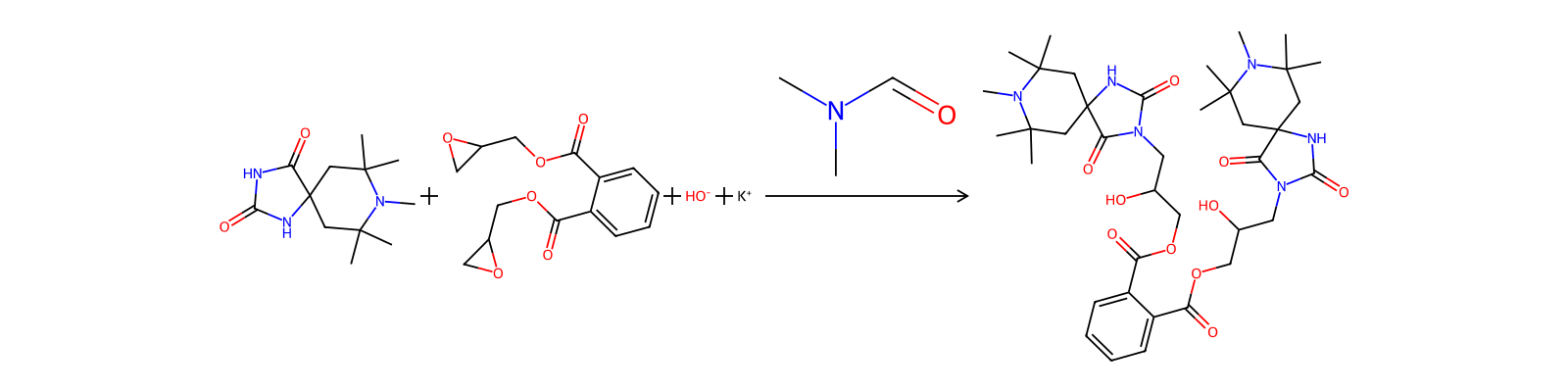
Related reactions
3 records


Compound notes
Loading…