
Basic information
- CAS
22128-62-7- Standard SMILES
O=C(Cl)OCCl- InChIKey
JYWJULGYGOLCGW-UHFFFAOYSA-N- Molecular formula
- C2H2Cl2O2
- Average molar mass
- 128.94 g/mol
- Monoisotopic mass
- 127.94318466
Overview
Chloromethyl chloroformate appears as a colorless liquid with a penetrating, irritating odor. Denser than water. Contact may irritate skin, eyes and mucous membranes. Toxic by ingestion, inhalation and skin absorption. Used to make other chemicals.
Names & identifiers
- Preferred name
- Chloromethyl chloroformate
- IUPAC
- chloromethyl carbonochloridate
- English name
- Chloromethyl chloroformate
- Molecular formula
- C2H2Cl2O2
- Molecular weight
- 128.94
Names & synonyms
Chloromethyl chloroformatechloromethyl carbonochloridatechloromethylchloroformateCarbonochloridic acid, chloromethyl esterPaliteEINECS 244-793-3DTXSID9074567UN 2745Formic acid, chloro-, chloromethyl esterRefChem:125439DTXCID2036613CHLOROMETHOXYCARBONYL CHLORIDE
Show more names
JMCCMCFTenofovir Impurity 42Tenofovir Impurity 65Tenofovir Impurity 241Tenofovir Impurity 42 CRSChloromethylchloroformate,97%Chloromethyl chloromethanoate
244-793-3JYWJULGYGOLCGW-UHFFFAOYSA-N22128-62-7Chloroformic Acid Chloromethyl EsterChlorocarbonic acid chloromethyl esterMFCD00077688Chloro-formic acid Chloromethyl Ester; Chloromethoxycarbonyl Chloride; Chloromethyl Carbonochloridate; Chloromethyl Chlorocarbonate; Chloromethyl ChloroformateUN2745
Database identifiers
- CAS
22128-62-7- PubChem CID
- 62754
- DTXSID
DTXSID9074567- UNII
- V6LT723843
- EC Number
- 244-793-3
- Nikkaji
- J26.283H
Properties
Computed structural properties
- XLogP
- 1.9
- Topological polar surface area
- 26.3 Ų
- Hydrogen bond donors
- 0
- Hydrogen bond acceptors
- 2
- Rotatable bonds
- 2
- Heavy atoms
- 6
- Formal charge
- 0
- Complexity
- 53.5
Experimental & physicochemical properties
Chemical ClassesCorrosives
SpringerMaterials PropertiesSchoenflies notation
Physical Description
Chloromethyl chloroformate appears as a colorless liquid with a penetrating, irritating odor. Denser than water. Contact may irritate skin, eyes and mucous membranes. Toxic by ingestion, inhalation and skin absorption. Used to make other chemicals.
Physicochemical properties
- Melting point
- -20 °C · <-20°C
- Boiling point
- 107 · 107-108 °C(lit.)
- Density
- 1.449 g/mL · 1.449 g/mL at 20 °C
- refractive index
- 20 · n20/D 1.428
- Flash point
- 95 °C · 95°C
- storage temp.
- 2 · 2-8°C
- solubility
- Chloroform (Soluble), Methanol (Slightly)
- form
- clear liquid
- color
- Colorless to Light yellow to Light orange
- Water Solubility
- Slightly miscible with water.
- Sensitive
- Moisture Sensitive
- BRN
- 506426 · 506426
- Stability
- Extremely Moisture Sensitive, Hygroscopic
- InChI
- 1S/C2H2Cl2O2/c3-1-6-2(4)5/h1H2
- InChIKey
- JYWJULGYGOLCGW-UHFFFAOYSA-N
- SMILES
- ClCOC(Cl)=O
- CAS DataBase Reference
- 22128 · 22128-62-7(CAS DataBase Reference)
- EPA Substance Registry System
- Carbonochloridic acid, chloromethyl ester (22128-62-7)
- UNSPSC Code
- 12352100 · 12352100
- NACRES
- 22 · NA.22
- Symbol(GHS)
- 5 · GHS05,GHS06
- Signal word
- Danger
- Hazard statements
- 314 · H314-H331
- Precautionary statements
- 261 · P261-P271-P280-P303+P361+P353-P304+P340+P310-P305+P351+P338
- PPE
- Faceshields, Gloves, Goggles, type ABEK (EN14387) respirator filter
- Hazard Codes
- T
- Risk Statements
- 23 · 23-34
- Safety Statements
- 26 · 26-36/37/39-45
- RIDADR
- 2745 · UN 2745
- WGK Germany
- 3 · 3
- F
- 10 · 10-19-21
- HS Code
- 2915.9 · 2915.90.5050
- HazardClass
- 6.1 · 6.1
- PackingGroup
- II
- Storage Class
- 6.1 A · 6.1A - Combustible acute toxic Cat. 1 and 2very toxic hazardous materials
- Hazard Classifications
- 3 InhalationSkin · Acute Tox. 3 InhalationSkin Corr. 1B
Safety & regulation
GHS classification
GHS Classification
Danger
H302 (11.8%): Harmful if swallowed [Warning Acute toxicity, oral]
P260, P261, P264, P270, P271, P280, P301+P317, P301+P330+P331, P302+P361+P354, P304+P340, P305+P354+P338, P316, P321, P330, P363, P403+P233, P405, and P501 (click each P-code to see the statement)
Aggregated GHS information provided per 51 reports by companies from 4 notifications to the ECHA C&L Inventory. Each notification may be associated with multiple companies.
Hazard information
Regulatory InformationThe New Jersey Worker and Community Right to Know Act requires public and private employers to provide information about hazardous substances at their workplaces. (N.J.S.A. 34:5A-1 et. seq.)
DOT LabelPoison Corrosive
Fire Hazards
Excerpt from ERG Guide 157 [Substances - Toxic and/or Corrosive (Non-Combustible / Water-Sensitive)]:
· Non-combustible, substance itself does not burn but may decompose upon heating to produce corrosive and/or toxic fumes.
Health Hazards
Excerpt from ERG Guide 157 [Substances - Toxic and/or Corrosive (Non-Combustible / Water-Sensitive)]:
· TOXIC and/or CORROSIVE; inhalation, ingestion or contact (skin, eyes) with vapors, dusts or substance may cause severe injury, burns or death.
DOT ID and Guide2745 157
Reactive GroupHalogenated Organic Compounds
Reactivity AlertsWater-Reactive
Reactivity Profile
CHLOROMETHYL CHLOROFORMATE is water reactive. Incompatible with strong oxidizing agents, alcohols, bases (including amines). May react vigorously or explosively if mixed with diisopropyl ether or other ethers in the presence of trace amounts of metal salts [J. Haz. Mat., 1981, 4, 291].
DOT Hazard Classification
Chloromethyl chloroformate
UN2745
Div 6.1 Poisonous materials (49 eCFR § 173.132)
Div 6.1 Poisonous materials (49 eCFR § 173.132)
PG II: the degree of danger presented by the material is medium
Air and Water ReactionsReacts with moisture in air to generate heat and hydrochloric acid fumes [Merck, 11th ed., 1989]. Reacts with water.
Hazard Classes and Categories
Acute Tox. 4 (11.8%)
Corrosives, Reactive agents - 1st degree
Safety & protection
Fire FightingExcerpt from ERG Guide 157 [Substances - Toxic and/or Corrosive (Non-Combustible / Water-Sensitive)]:
Accidental Release Measures
· CALL 911. Then call emergency response telephone number on shipping paper. If shipping paper not available or no answer, refer to appropriate telephone number listed on the inside back cover.
· ELIMINATE all ignition sources (no smoking, flares, sparks or flames) from immediate area.
First Aid
Excerpt from ERG Guide 157 [Substances - Toxic and/or Corrosive (Non-Combustible / Water-Sensitive)]:
General First Aid:
Exposure Control and Personal Protection· Wear positive pressure self-contained breathing apparatus (SCBA).
Nonfire Spill ResponseExcerpt from ERG Guide 157 [Substances - Toxic and/or Corrosive (Non-Combustible / Water-Sensitive)]:
Isolation and Evacuation
Excerpt from ERG Guide 157 [Substances - Toxic and/or Corrosive (Non-Combustible / Water-Sensitive)]:
Immediate precautionary measure
Personal Protective Equipment (PPE)Excerpt from ERG Guide 157 [Substances - Toxic and/or Corrosive (Non-Combustible / Water-Sensitive)]:
Emergency Response Planning Guidelines· Note: Some foams will react with the material and release corrosive/toxic gases.
Safety data
- F
- 10-19-21
- PPE
- Faceshields, Gloves, Goggles, type ABEK (EN14387) respirator filter
- wgk
- 3
- ridadr
- UN 2745
- hs_code
- 2915.90.5050
- risk_code
- 23-34
- Signal word
- Danger
- Symbol(GHS)
- GHS05,GHS06
- hazard_code
- T
- safety_code
- 26-36/37/39-45
- hazard_class
- 6.1
- Storage Class
- 6.1A - Combustible acute toxic Cat. 1 and 2very toxic hazardous materials
- packing_group
- II
- Hazard statements
- H314-H331
- Hazard Classifications
- Acute Tox. 3 InhalationSkin Corr. 1B
- Precautionary statements
- P261-P271-P280-P303+P361+P353-P304+P340+P310-P305+P351+P338
Chemistry & industry
Applications
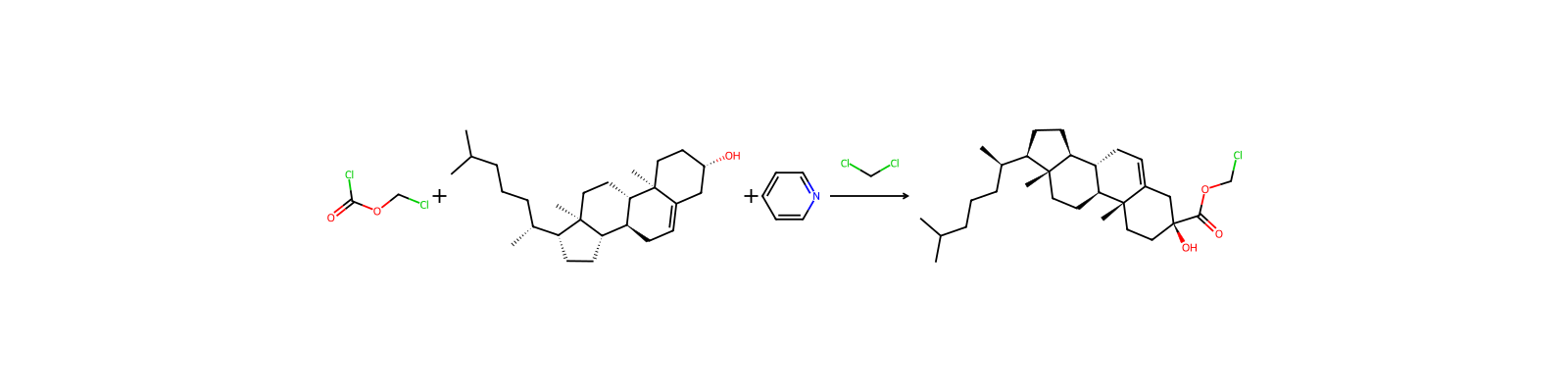
UsesChloromethyl chloroformate is used as a reagent in the synthesis of carbamates and carbonates.
UsesChloromethyl chloroformate is used as an intermediate in pharmaceuticals and in manufacture other chemicals. It acts as a reactant in the synthesis of aminocarbonyloxymethyl esters of diclofenac, flufenamic acid and in monomethoxypoly(ethyleneglycol) prodrugs of cyclosporin A.
General DescriptionChloromethyl chloroformate is a colorless liquid with a penetrating, irritating odor. Denser than water. Contact may irritate skin, eyes and mucous membranes. Toxic by ingestion, inhalation and skin absorption. Used to make other chemicals.
Upstream & downstream products
Downstream products
Related reactions
199 records


Compound notes
Loading…