HomeMCPWorkbenchSkills
HomeWorkbenchNotificationsMe
llms.txt · MCP GuidePrivacy Policy · Terms of Service · Supportv1.8.0
  1. Home
  2. /Compound

4-Chlorobenzoic Acid

HCID 6318
New noteNew reactionRequest quotes
Print preview

Completing data — refresh the page later to see the latest

Basic informationOverviewNames & identifiersPropertiesSafety & regulationChemistry & industryRelated reactionsCompound notes
Substructure searchFind similar structures

Basic information

CAS
138534-66-4
Standard SMILES
O=C(O)c1ccc(Cl)cc1
InChIKey
XRHGYUZYPHTUJZ-UHFFFAOYSA-N
Molecular formula
C7H5ClO2
Average molar mass
156.56 g/mol
Monoisotopic mass
155.9978071

Overview

Triclinic crystals or light fluffy white powder. (NTP, 1992)

Names & identifiers

Preferred name
4-Chlorobenzoic Acid
IUPAC
4-chlorobenzoic acid
English name
4-Chlorobenzoic acid
Molecular formula
C7H5ClO2
Molecular weight
156.57

Names & synonyms

4-Chlorobenzoic acid74-11-3P-CHLOROBENZOIC ACIDBenzoic acid, 4-chloro-Chlorodracylic acidp-Chlorbenzoic acidpara-Chlorobenzoic acidBenzoic acid, p-chloro-4-CHLORO-BENZOIC ACIDp-CarboxychlorobenzeneAcido p-clorobenzoicoDTXSID9024772
Show more names
PCBA4-CHLOROBENZOATEAcemetacin impurity A CRSIndomethacin Related Compound B4-chlorobenzoicMycosidNSC 8444NSC 32738
IC7888DF4LNSC-32738DTXCID704772CHEBI:30747RefChem:98552200-805-9695-032-0MFCD00002531

Database identifiers

CAS
138534-66-4、74-11-3
PubChem CID
6318
DTXSID
DTXSID9024772
ChEMBL
CHEMBL618
ChEBI
CHEBI:30747
UNII
IC7888DF4L
EC Number
200-805-9、695-032-0
Nikkaji
J5.259K

Properties

Computed structural propertiesFilling in

XLogP
2.7
Topological polar surface area
37.3 Ų
Hydrogen bond donors
1
Hydrogen bond acceptors
2
Rotatable bonds
1
Heavy atoms
10
Formal charge
0
Complexity
128

Experimental & physicochemical properties

Chemical ClassesOther Classes -> Benzoic Acid Derivatives
DrugsPharmaceuticals -> Listed in ZINC15
SpringerMaterials PropertiesChemical shift
PesticidesEnvironmental transformation -> Pesticide transformation products (metabolite, successor)
LogP · 3 items

log Kow = 2.65

2.65

2.53

Density · 3 items

1.541 at 75 °F (NTP, 1992) - Denser than water; will sink

1.5 g/cm³

Relative density of the vapour/air-mixture at 20 °C (air = 1): 1

Color/FormTriclinic prisms from alcohol and ether
Solubility · 5 items

less than 1 mg/mL at 59 °F (NTP, 1992)

In water, 77 mg/L at 25 °C

Soluble in 5290 parts water

Insoluble in benzene, carbon tetrachloride; very soluble in ethanol; slightly soluble in ethyl ether, chloroform

Safety & regulation

Safety information is for reference only and does not replace the supplier’s Safety Data Sheet (SDS), applicable regulations, or professional assessment.

GHS classification

GHS Classification · 6 items

This chemical does not meet GHS hazard criteria for 26.4% (37 of 140) of reports.

Danger

H301 (20.7%): Toxic if swallowed [Danger Acute toxicity, oral]

P261, P264, P264+P265, P270, P271, P273, P280, P301+P316, P301+P317, P302+P352, P304+P340, P305+P351+P338, P319, P321, P330, P332+P317, P337+P317, P362+P364, P391, P403+P233, P405, and P501 (click each P-code to see the statement)

Aggregated GHS information provided per 140 reports by companies from 13 notifications to the ECHA C&L Inventory. Each notification may be associated with multiple companies.

Warning

Hazard information

Regulatory Information · 4 items

Chemical: Benzoic acid, 4-chloro-

Commission Regulation (EU) No 188/2011

REACH registered substance: 4-chlorobenzoic acid (EC: 200-805-9)

4-Chlorobenzoic acid: Does not have an individual approval but may be used under an appropriate group standard

Fire Hazards · 2 items

Flash point data for this compound are not available; however, it is probably combustible. (NTP, 1992)

Combustible. Gives off irritating or toxic fumes (or gases) in a fire.

Health HazardsSYMPTOMS: Symptoms resulting from exposure to this compound include eye and skin irritation.
Hazards SummaryNo listed effects of short-term or long-term exposure; Insufficient data available; [ICSC] A skin, eye, mucous membrane, and upper respiratory tract irritant; [CAMEO] An irritant; [MSDSonline]
Reactive GroupAcids, Carboxylic
Reactivity Profile

Chemistry & industry

Pharmacology

Mechanism of Action · 1 item

Octanoate, salicylate, valproic acid, p-octyl-, p-nitro-, and p-chlorobenzoic acids were effective inhibitors of benzoic acid activation to benzoyl-CoA by mitochondrial extracts. p-Aminobenzoic acid was much less effective. Of these compounds, only salicylate and p-nitrobenzoic acid were not activated to their respective CoA esters. Salicylate, p-chloro- and p-nitrobenzoic acids effectively prevented inhibition of glucose synthesis and alpha-keto[1-(14)C]isovalerate oxidation by valproic acid, p-octyl-, and p-aminobenzoic acids, p-Octyl- and p-aminobenzoic acids greatly depleted hepatocyte free CoA and acetyl-CoA contents and increased the content of acid-insoluble and acid-soluble CoA esters respectively. p-Chloro- and p-nitrobenzoic acids prevented the sequestration of CoA as p-octylbenzoyl-CoA or p-aminobenzoyl-CoA in hepatocytes incubated with these compounds. p-Chlorobenzoic acid not only prevented but also reversed the inhibition of gluconeogenesis in hepatocytes incubated with p-octylbenzoic acid. These results suggest that p-chloro- or p-nitrobenzoic acids might be effectively used to reverse some of the hepatotoxic effects of the CoA esters of valproic acid or naturally-occurring organic acids, such as those which accumulate in Reye's Syndrome or organic acidemias.

Metabolism/Metabolites · 4 items

P-chlorobenzoyl-beta-d-glucuronic acid in rabbit. /From table/

Yields p-chlorohippuric acid in man. /From table/

Pseudomonas sp. WR912 was isolated by continuous enrichment in three steps with 3-chloro-, 4-chloro-, and finally 3,5-dichlorobenzoate as sole source of carbon and energy. The doubling times of the pure culture with these growth substrates were 2.6, 3.3, and 5.2 h, respectively. Stoichiometric amounts of chloride were eliminated during growth. Oxygen uptake rates with chlorinated benzoates revealed low stereospecificity of the initial benzoate 1,2-dioxygenation. Dihydrodi-hydroxybenzoate dehydrogenase, catechol 1,2-dixoygenase, and muconate cycloisomerase activities were found in cell-free extracts. The ortho cleavage activity for catechols appeared to involve induction of isoenzymes with different stereospecificity towards chlorocatechols. A catabolic pathway for chlorocatechols was proposed on the basis of similarity to chlorophenoxyacetate catabolism, and cometabolism of 3,5-dimethylbenzoate by chlorobenzoate-induced cells yielded 2,5-dihydro-2,4-dimethyl-5-oxo-furan-2-acetic acid.

A mixed population, enriched and established in a defined medium, from a sewage sludge inoculum was capable of complete mineralization of 4-chlorobenzoate. An organism, identified as Arthrobacter sp., was isolated from the consortium and shown to be capable of utilizing 4-chlorobenzoate as the sole carbon and energy source in pure culture. This organism (strain TM-1), dehalogenated 4-chlorobenzoate as the initial step in the degradative pathway. The product, 4-hydroxybenzoate, was further metabolized via protocatechuate. The ability of strain TM-1 to degrade 4-chlorobenzoate in liquid medium at 25 °C was improved by the use of continuous culture and repeated sequential subculturing. Other chlorinated benzoates and the parent compound benzoate did not support growth of strain TM-1. An active cell extract was prepared and shown to dehalogenate 4-chloro-, 4-fluoro-, and 4-bromobenzoate. Dehalogenase activity had an optimum pH of 6.8 and an optimum temperature of 20 °C and was inhibited by dissolved oxygen and stimulated by manganese (Mn). Strain improvement resulted in an increase in the specific activity of the cell extract from 0.09 to 0.85 nmol of 4-hydroxybenzoate per min per mg of protein and a decrease in the doubling time of the organism from 50 to 1.6 hr.

Related reactions

255 records
New reaction record
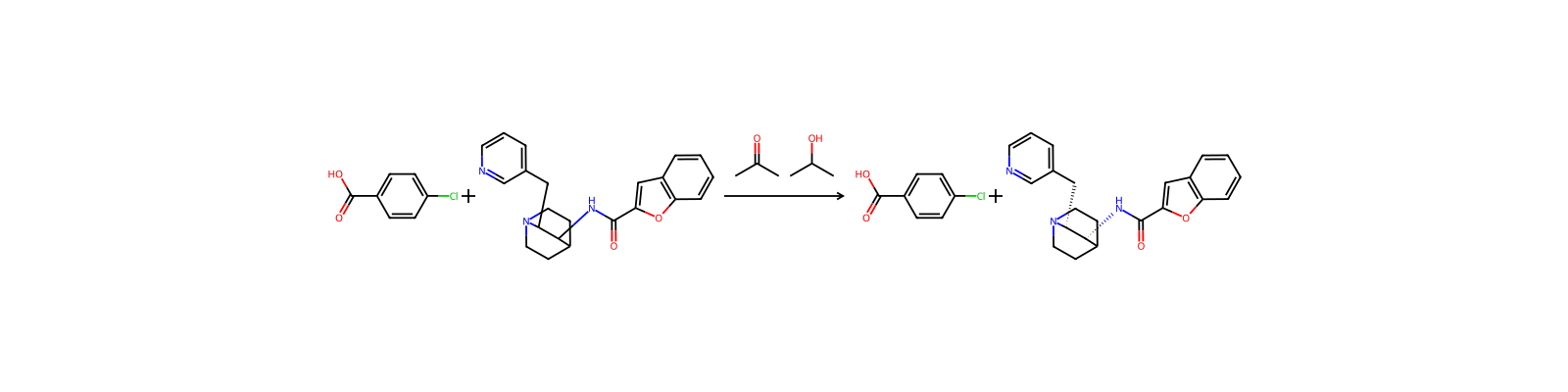
HRID 9750 reaction equation
HRID 9750As productuspto-grants-2006_08
HRID 14749 reaction equation
HRID 14749As reactantuspto-grants-2010_06
HRID 16962 reaction equation
HRID 16962As reactantuspto-grants-2010_06
HRID 45294 reaction equation
HRID 45294As reactantuspto-grants-2013_09
HRID 82435 reaction equation
HRID 82435As reactantuspto-grants-2014_09
HRID 88666 reaction equation
HRID 88666As reactantTraining data from https://doi.org/10.1039/C8SC04228D (2/10)
HRID 91709 reaction equation
HRID 91709As reactantTraining data from https://doi.org/10.1039/C8SC04228D (2/10)
HRID 103574 reaction equation
HRID 103574As reactantTraining data from https://doi.org/10.1039/C8SC04228D (2/10)
Page 1 of 32

Compound notes

Loading…

On this pageBasic informationOverviewNames & identifiersPropertiesSafety & regulationChemistry & industryRelated reactionsCompound notes
More actions
New noteNew reactionRequest quotes

Freely soluble in alcohol, ether

Flash Point · 3 items

238 °C

238 °C (460 °F) (Closed cup)

238 °C

Boiling PointSublimes (NTP, 1992)
DecompositionWhen heated to decomposition is emits toxic vapors of chloride.
Melting Point · 4 items

469 °F (NTP, 1992)

243 °C

MP: 44 °C /p-Chlorobenzoic acid, methyl ester/

243 °C

Physicochemical properties

Melting point
238 · 238-241 °C(lit.)
Boiling point
274 · 274-276 °C
Density
1.54 · 1.540
bulk density
350 kg/m3 · 350kg/m3
refractive index
1.5812 · 1.5812 (estimate)
Flash point
238 °C · 238 °C
storage temp.
room temp
solubility
1 %, · methanol: soluble1%, clear, colorless to faintly yellow
form
Crystalline Powder
pka
3.98 · 3.98(at 25℃)
color
White to yellow
PH
4.3 · 4.3 (0.08g/l, H2O, 20℃)
Water Solubility
soluble in hot water
Specific Heat Capacity
1.04 J/ · Cp(crystal): 1.04 J/(g·K), at 25℃
λmax
284 nm · 284nm(EtOH)(lit.)
Merck
14 · 14,2125
BRN
907196 · 907196
Henry's Law Constant
2.5 · 2.5×101 mol/(m3Pa) at 25℃, Abraham and Jr. (2019)
Stability
Stable. Combustible. Incompatible with bases, strong oxidizing agents.
InChI
1S/C7H5ClO2/c8-6-3-1-5(2-4-6)7(9)10/h1-4H,(H,9,10)
InChIKey
XRHGYUZYPHTUJZ-UHFFFAOYSA-N
SMILES
OC(=O)c1ccc(Cl)cc1
LogP
2.65 · 2.650
CAS DataBase Reference
74 · 74-11-3(CAS DataBase Reference)
EWG's Food Scores
1 · 1
FDA UNII
7888 DF4L · IC7888DF4L
NIST Chemistry Reference
4 · Benzoic acid, 4-chloro-(74-11-3)
EPA Substance Registry System
p-Chlorobenzoic acid (74-11-3)
UNSPSC Code
41116107 · 41116107
NACRES
24 · NA.24
Symbol(GHS)
7 · GHS07
Signal word
Warning
Hazard statements
302 · H302
Precautionary statements
264 · P264-P270-P301+P312-P501
PPE
95 · dust mask type N95 (US), Eyeshields, Gloves
Hazard Codes
Xn
Risk Statements
22 · 22-36/37/38
Safety Statements
26 · 26-36-37/39
WGK Germany
2 · 2
RTECS
4976010 · DG4976010
Autoignition Temperature
545 °C · 545 °C
TSCA
TSCA listed
HS Code
29163900 · 29163900
Storage Class
11 · 11 - Combustible Solids
Hazard Classifications
4 Oral · Acute Tox. 4 Oral
Hazardous Substances Data
74 · 74-11-3(Hazardous Substances Data)
Toxicity
50 orally · LD50 orally in Rabbit: 1170 mg/kg
REACH Registrations
Active
P-CHLOROBENZOIC ACID is incompatible with strong oxidizing agents and strong bases. (NTP, 1992)
Atmospheric Standards · 1 item

This action promulgates standards of performance for equipment leaks of Volatile Organic Compounds (VOC) in the Synthetic Organic Chemical Manufacturing Industry (SOCMI). The intended effect of these standards is to require all newly constructed, modified, and reconstructed SOCMI process units to use the best demonstrated system of continuous emission reduction for equipment leaks of VOC, considering costs, non air quality health and environmental impact and energy requirements. Chlorobenzoic acid is produced, as an intermediate or final product, by process units covered under this subpart. /Chlorobenzoic acid/

Chemical DangersOn combustion, forms toxic and corrosive fumes including hydrogen chloride. The solution in water is a weak acid.
Air and Water ReactionsInsoluble in water.
Hazard Classes and Categories · 3 items

Acute Tox. 3 (20.7%)

Acute Tox. 4 (100%)

Acute toxicity (Oral) - Category 4

Hazardous Reactivities and IncompatibilitiesIncompatible materials: Strong oxidizing agents, strong bases.

Safety & protection

Fire Fighting · 2 items

Fires involving this compound can be controlled with a dry chemical, carbon dioxide or Halon extinguisher. (NTP, 1992)

Use water spray, powder.

First Aid Measures · 4 items

Fresh air, rest.

Rinse and then wash skin with water and soap.

First rinse with plenty of water for several minutes (remove contact lenses if easily possible), then refer for medical attention.

Rinse mouth. Refer for medical attention .

First Aid · 1 item

EYES: First check the victim for contact lenses and remove if present. Flush victim's eyes with water or normal saline solution for 20 to 30 minutes while simultaneously calling a hospital or poison control center. Do not put any ointments, oils, or medication in the victim's eyes without specific instructions from a physician. IMMEDIATELY transport the victim after flushing eyes to a hospital even if no symptoms (such as redness or irritation) develop.

Firefighting HazardsSpecial hazards arising from the substance or mixture: Carbon oxides, hydrogen chloride gas.
Fire Fighting Procedures · 2 items

Suitable extinguishing media: Use water spray, alcohol-resistant foam, dry chemical or carbon dioxide.

Advice for firefighters: Wear self contained breathing apparatus for fire fighting if necessary.

Storage ConditionsConditions for safe storage, including any incompatibilities: Keep container tightly closed in a dry and well-ventilated place. Keep in a dry place.
Cleanup Methods · 1 item

Accidental Release Measures. Personal precautions, protective equipment and emergency procedures: Use personal protective equipment. Avoid dust formation. Avoid breathing vapours, mist or gas. Ensure adequate ventilation. Evacuate personnel to safe areas. Avoid breathing dust. Environmental precautions: Do not let product enter drains. Methods and materials for containment and cleaning up: Pick up and arrange disposal without creating dust. Sweep up and shovel. Keep in suitable, closed containers for disposal.

Nonfire Spill Response · 1 item

SMALL SPILLS AND LEAKAGE: Should a spill occur while you are handling this chemical, FIRST REMOVE ALL SOURCES OF IGNITION, then you should dampen the solid spill material with 60-70% ethanol and transfer the dampened material to a suitable container. Use absorbent paper dampened with 60-70% ethanol to pick up any remaining material. Seal the absorbent paper, and any of your clothes, which may be contaminated, in a vapor-tight plastic bag for eventual disposal. Solvent wash all contaminated surfaces with 60-70% ethanol followed by washing with a soap and water solution. Do not reenter the contaminated area until the Safety Officer (or other responsible person) has verified that the area has been properly cleaned.

Disposal Methods · 2 items

SRP: The most favorable course of action is to use an alternative chemical product with less inherent propensity for occupational harm/injury/toxicity or environmental contamination. Recycle any unused portion of the material for its approved use or return it to the manufacturer or supplier. Ultimate disposal of the chemical must consider: the material's impact on air quality; potential migration in soil or water; effects on animal and plant life; and conformance with environmental and public health regulations.

Waste treatment methods. Product: Offer surplus and non-recyclable solutions to a licensed disposal company. Contact a licensed professional waste disposal service to dispose of this material. Contaminated packaging: Dispose of as unused product.

Spillage DisposalSweep spilled substance into covered containers. If appropriate, moisten first to prevent dusting. Carefully collect remainder. Then store and dispose of according to local regulations.
Preventive Measures · 4 items

Precautions for safe handling: Avoid contact with skin and eyes. Avoid formation of dust and aerosols. Provide appropriate exhaust ventilation at places where dust is formed. Normal measures for preventive fire protection.

Appropriate engineering controls: Handle in accordance with good industrial hygiene and safety practice. Wash hands before breaks and at the end of workday.

Gloves must be inspected prior to use. Use proper glove removal technique (without touching glove's outer surface) to avoid skin contact with this product. Dispose of contaminated gloves after use in accordance with applicable laws and good laboratory practices. Wash and dry hands.

SRP: Local exhaust ventilation should be applied wherever there is an incidence of point source emissions or dispersion of regulated contaminants in the work area. Ventilation control of the contaminant as close to its point of generation is both the most economical and safest method to minimize personnel exposure to airborne contaminants. Ensure that the local ventilation moves the contaminant away from the worker.

Eye PreventionWear safety spectacles.

Toxicology

Ecotoxicity Values · 2 items

EC50; Species: Daphnia magna (Water Flea); Conditions: freshwater, static; Concentration: >20000 ug/L for 24 hr; Effect: behavior, equilibrium /formulation/

LC50; Species: Daphnia pulex (Water Flea) age 12 hr; Conditions: freshwater, renewal, 20 °C; Concentration: >100000 ug/L for 96 hr /formulation/

Environmental Fate · 3 items

TERRESTRIAL FATE: Based on a classification scheme(1), an estimated Koc value of 42(SRC), determined from a log Kow of 2.65(2) and a regression-derived equation(3), indicates that p-chlorobenzoic acid is expected to have very high mobility in soil(SRC). The pKa of p-chlorobenzoic acid is 3.98(4), indicating that this compound will exist almost entirely in the anion form in the environment and anions generally do not adsorb more strongly to soils containing organic carbon and clay than their neutral counterparts(5). Volatilization from moist soil is not expected because the compound exists as an anion and anions do not volatilize(SRC). p-Chlorobenzoic acid is not expected to volatilize from dry soil surfaces(SRC) based upon an estimated vapor pressure of 2.9X10⁻⁵ mm Hg at 25 °C(SRC), determined from a fragment constant method(3). Using an activated sludge inoculum, 6% CO2 evolution after 5 days incubation(6) suggests that biodegradation is not an important environmental fate process in soil(SRC).

AQUATIC FATE: Based on a classification scheme(1), an estimated Koc value of 42(SRC), determined from a log Kow of 2.65(2) and a regression-derived equation(3), indicates that p-chlorobenzoic acid is not expected to adsorb to suspended solids and sediment(SRC). A pKa of 3.98(4) indicates p-chlorobenzoic acid will exist almost entirely in the anion form at pH values of 5 to 9 and, therefore, volatilization from water surfaces is not expected to be an important fate process(SRC). The BCF for p-chlorobenzoic acid was < 10 in golden ide fish(5), which suggests the potential for bioconcentration in aquatic organisms is low(SRC). A range of 2.03% to 79% 14-CO2 recovered using varying concentrations in the river die-away test(6) suggests that biodegradation may be an important environmental fate process in water, subject to conditions(SRC).

ATMOSPHERIC FATE: According to a model of gas/particle partitioning of semivolatile organic compounds in the atmosphere(1), p-chlorobenzoic acid, which has an estimated vapor pressure of 2.9X10⁻⁵ mm Hg at 25 °C(SRC), determined from a fragment constant method(2), will exist in both the vapor and particulate phases in the ambient atmosphere. Vapor-phase p-chlorobenzoic acid is degraded in the atmosphere by reaction with photochemically-produced hydroxyl radicals(SRC); the half-life for this reaction in air is estimated to be 10 days(SRC), calculated from its rate constant of 1X10-12 cu cm/molecule-sec at 25 °C(SRC), that was derived using a structure estimation method(3). Particulate-phase p-chlorobenzoic acid may be removed from the air by wet and dry deposition(SRC). p-Chlorobenzoic acid absorbs light at wavelengths >290 nm(4) and, therefore, may be susceptible to direct photolysis by sunlight(SRC).

Exposure RoutesThe substance can be absorbed into the body by ingestion.
Toxicity Summary · 1 item

IDENTIFICATION AND USE: P-chlorobenzoic acid is white, odorless, crystalline powder. It is used as a laboratory reagent, and in manufacture of chemicals. P-Chlorobenzoic acid is a degradation product of indomethacin. HUMAN EXPOSURE AND TOXICITY: No human studies could be located. ANIMAL STUDIES: P-Chlorobenzoic acid is a potent inhibitor of rat brain and liver mitochondrial 4-hydroxybenzoate:polyphenyl transferase. After single oral administration to animals urokaninase and histidase activities were found in blood serum within 8 hr after the intoxication, reaching the maximum within 15 hr and exhibited the constant level during 25 hr. Then the enzymatic activity was gradually decreased but it did not reach the control values within 70 hr.

Ongoing Test Status · 1 item

The following link will take the user to the National Toxicology Program (NTP) Test Agent Search Results page, which tabulates all of the "Standard Toxicology & Carcinogenesis Studies", "Developmental Studies", and "Genetic Toxicity Studies" performed with this chemical. Clicking on the "Testing Status" link will take the user to the status (i.e., in review, in progress, in preparation, on test, completed, etc.) and results of all the studies that the NTP has done on this chemical.[Available from, as of September 4, 2014: http://ntp-apps.niehs.nih.gov/ntp_tox/index.cfm?fuseaction=ntpsearch.searchresults&searchterm=74-11-3]

Effluent Concentrations · 1 item

p-Chlorobenzoic acid was detected, not quantified in 6 out of 18 samples of advanced treatment concentrate collected from Lake Tahoe, CA, Oct 1974; Pomona, CA, Sept 1974; Escondido, CA July 1975; and Dallas, TX, Nov 1974(1). p-Chlorobenzoic acid was detected in the emissions of a municipal waste incineration plant in Germany at a concentration of 1.16 ug/cu m(2).

Soil Adsorption/Mobility · 1 item

The Koc of p-chlorobenzoic acid is estimated as 42(SRC), using a log Kow of 2.65(1) and a regression-derived equation(2). According to a classification scheme(3), this estimated Koc value suggests that p-chlorobenzoic acid is expected to have very high mobility in soil. The pKa of p-chlorobenzoic acid is 3.98(4), indicating that this compound will exist almost entirely in the anion form in the environment and anions generally do not adsorb more strongly to soils containing organic carbon and clay than their neutral counterparts(5).

Artificial Pollution Sourcesp-Chlorobenzoic acid's production and use as a laboratoryy reagent and chemical intermediate(1) may result in its release to the environment through various waste streams(SRC).
Environmental Biodegradation · 4 items

AEROBIC: The biodegradation of p-chlorobenzoic acid varies considerably; biodegradation can be rapid under some conditions and slow under other conditions(SRC). p-Chlorobenzoic acid was degraded at 65 BOD% after 5 days in river water collected from the Songhua river of Jillin Province, China(1). Biodegradation of p-chlorobenzoic acid, present at 50 ug/L in activated sludge, was approximately 6% CO2 after 5 days(2). The percentage of 14-C02 recovered from river die-away tests using freshwater from Fall Creek, Ithaca, NY, and 14-C labeled p-chlorobenzoic acid following 4, 6, 8 and 12 days of aerobic incubation were 47.6%, 51.3%, 60.3%, no data at 47 pg/mL; 17.1%, 33.0%, 48.0%, no data at 4.7 ng/mL; 2.03%, 3.6%, no data, 79% at 470 ng/mL; and 1.2%, 1.4%, no data, 5.9% at 47 ug/mL(3). No degradation was found after > 25 days for p-chlorobenzoic acid present at 16 mg/L in both wastewater sludge and a soil inoculum(4). 100% decomposition (as measured by UV absorption loss) of p-chlorobenzoic acid was observed after 64 days in the soil(5).

PURE CULTURE: It was found that an Acinetobacter sp., utilized p-chlorobenzoic acid as an exclusive carbon and energy source, resulting in the total biodegradation of p-chlorobenzoic acid in the soil(1).

ANAEROBIC: No anaerobic degradation was observed at > 65 weeks in freshwater lake sediment and > 8 weeks in municipal digested sludge(1). 4-Chlorobenzoic acid was degraded under denitrifying conditions in the sediment of the Hudson river, New York City, NY, near Albany, NY, and the East River, NY and was metabolized at rates of 32 umol/liter/day(2). The half-life of 4-chlorobenzoic acid was reported to be 235 days in anaerobic sediment (3). This compound is expected to have slow anaerobic biodegradation.

Occurrence of plasmid pAC21 specifying bioconversion of p-chlorobiphenyl to p-chlorobenzoate, has been previously shown in a strain of Klebsiella pneumoniae isolated from PCB-contaminated areas of Hudson River. Conjugative plasmid pAC25, characterized in a strain of Pseudomonas putida, specifies biodegradation of 3-chlorobenzoic acid by a modified ortho pathway that involves maleylacetate, but not beta-ketoadipate, as an intermediate. Introduction of putida strains harboring pAC25 & other degradative plasmids in a chemostat & continued selection on 4-chlorobenzoic acid as major carbon source has led to the emergence of cells that harbor plasmid pAC27 encoding the 4-chlorobenzoate degradative pathway.

Sediment/Soil Concentrations · 1 item

SEDIMENT: p-Chlorobenzoic acid was detected, not quantified in contaminated sediment enrichments collected from Bloody Run Creek and Devil's Hole Creek, located in the Niagara River watershed, Niagara Falls, NY. Samples were collected during May and November 1992 and May, August, November 1993(1).

Environmental BioconcentrationThe BCF in golden ide (Leuciscus idus melanotus) fish was reported to be < 10 in a 3-day experiment(1). According to a classification scheme(2), this BCF suggests the potential for bioconcentration in aquatic organisms is low(SRC).
Volatilization from Water/Soil · 1 item

A pKa of 3.98(1) indicates p-chlorobenzoic acid will exist almost entirely in the anion form at pH values of 5 to 9 and, therefore, volatilization from water surfaces is not expected to be an important fate process(SRC). Volatilization from moist soil is not expected because the compound exists as an anion and anions do not volatilize(SRC). p-Chlorobenzoic acid is not expected to volatilize from dry soil surfaces(SRC) based upon an estimated vapor pressure of 2.9X10⁻³ mm Hg(SRC), determined from a fragment constant method(3).

Regulatory information

Atmospheric Standards · 1 item

This action promulgates standards of performance for equipment leaks of Volatile Organic Compounds (VOC) in the Synthetic Organic Chemical Manufacturing Industry (SOCMI). The intended effect of these standards is to require all newly constructed, modified, and reconstructed SOCMI process units to use the best demonstrated system of continuous emission reduction for equipment leaks of VOC, considering costs, non air quality health and environmental impact and energy requirements. Chlorobenzoic acid is produced, as an intermediate or final product, by process units covered under this subpart. /Chlorobenzoic acid/

Safety data

PPE
dust mask type N95 (US), Eyeshields, Gloves
wgk
2
tsca
TSCA listed
rtecs
DG4976010
hs_code
29163900
Toxicity
LD50 orally in Rabbit: 1170 mg/kg
risk_code
22-36/37/38
Signal word
Warning
Symbol(GHS)
GHS07
hazard_code
Xn
safety_code
26-36-37/39
Storage Class
11 - Combustible Solids
Hazard statements
H302
REACH Registrations
Active
Hazard Classifications
Acute Tox. 4 Oral
Autoignition Temperature
545 °C
Precautionary statements
P264-P270-P301+P312-P501
Hazardous Substances Data
74-11-3(Hazardous Substances Data)

Uses & manufacturing

Uses · 6 items

Used as an intermediate (dyes, fungicides, and pharmaceuticals) and preservative (adhesives and paints); [HSDB]

Painting (Pigments, Binders, and Biocides) [Category: Paint]

CHEM INT FOR M-CHLOROPHENOL

CHEM INT FOR IODAMIDE (MEDICAL RADIOPAQUE)

CHEM INT FOR PLASTICIZERS

Laboratory reagent, manufacture of chemicals

U.S. Imports · 2 items

(1979) 2.00X10+5 GRAMS (PRINCPL CUSTMS DISTS)

(1981) 6.01X10+5 GRAMS (PRINCPL CUSTMS DISTS)

U.S. Production · 2 items

(1979) NOT PRODUCED COMMERCIALLY IN USA

(1981) NOT PRODUCED COMMERCIALLY IN USA

Methods of Manufacturing · 2 items

Preparation by catalytic oxidation of 1-chloro-4-ethylbenzene; ... Manufacture by oxidation of p-chlorobenzaldehyde.

Produced by the oxidation of 4-chlorotoluene.

Use ClassificationEnvironmental transformation -> Pesticide transformation products (metabolite, successor)
General Manufacturing InformationBenzoic acid, 4-chloro-: ACTIVE
Applications · 3 items

Uses4-Chlorobenzoic acid is a benzoic acid analogue that showed antifungal activity against strains of Aspergillus flavus, Aspergillus fumigatus and Aspergillus terreus, causative agents of human aspergillosis, in in vitro bioas says. It is used as a preservative.P-chlorobenzoic acid is the intermediate of fungicide dimethomorph, rodenticide Warfarin, Coumatetralyl and insecticide flumethrin, and also the intermediate of dye and medicine.

Uses4-Chlorobenzoic acid can be used:As a ligand to synthesize luminescent lanthanide complexes for bio-labeling or fiber communication applications.To prepare organotin(IV) chlorobenzoates exhibiting anticorrosion properties.As a ligand to synthesize di-n-butyl(4-chlorobenzoxy)(4-chlorobenzohydroxamato)tin(IV).

General DescriptionTriclinic crystals or light fluffy white powder.4-Chlorobenzoic acid is a degradation product of indomethacin. It is degraded by Acinetobacter sp. strain ST-1 and causes its dehalogenation to yield 4-hydroxybenzoic acid under both aerobic and anaerobic conditions.

Preparation methods · 1 item

Preparation4-Chlorobenzoic acid is obtained by oxidation of p-chlorotoluene: add potassium permanganate solution to the mixture of p-chlorotoluene and water in stages. The reaction is refluxed under stirring for 5-6h, then acidified with hydrochloric acid to pH 2, filtered to obtain the crude product, and recrystallized with ethanol to obtain the finished product.

Upstream & downstream products

Upstream raw materials

Potassium permanganate4-Chlorotoluene

Downstream products

Moclobemide4-Chloro-3,5-dinitrobenzoic acid2-Amino-5-nitrobenzophenone3-Amino-4-methoxybenzanilide4-Chloro-3-nitrobenzoic acid4-Chlorobenzoyl chlorideBumetanideDimethyl terephthalateMebendazole2-chloro-4-(4-chlorophenyl)-6-phenyl-1,3,5-triazine4-Fluoro-2-methylbenzoic acid4-CHLOROBENZOYL ISOTHIOCYANATE4-Chloro-5-sulphamoylbenzoic acidSODIUM P-CHLOROBENZOATEMETHYL (4-CHLOROBENZOYL)ACETATE4-CHLORO-3-NITROBENZAMIDE

Additional notes

DefinitionChEBI: 4-chlorobenzoic acid is a monochlorobenzoic acid carrying a chloro substituent at position 4. It has a role as a bacterial xenobiotic metabolite. It derives from a benzoic acid. It is a conjugate acid of a 4-chlorobenzoate.