HomeMCPWorkbenchSkills
HomeWorkbenchNotificationsMe
llms.txt · MCP GuidePrivacy Policy · Terms of Service · Supportv1.8.0
  1. Home
  2. /Compound

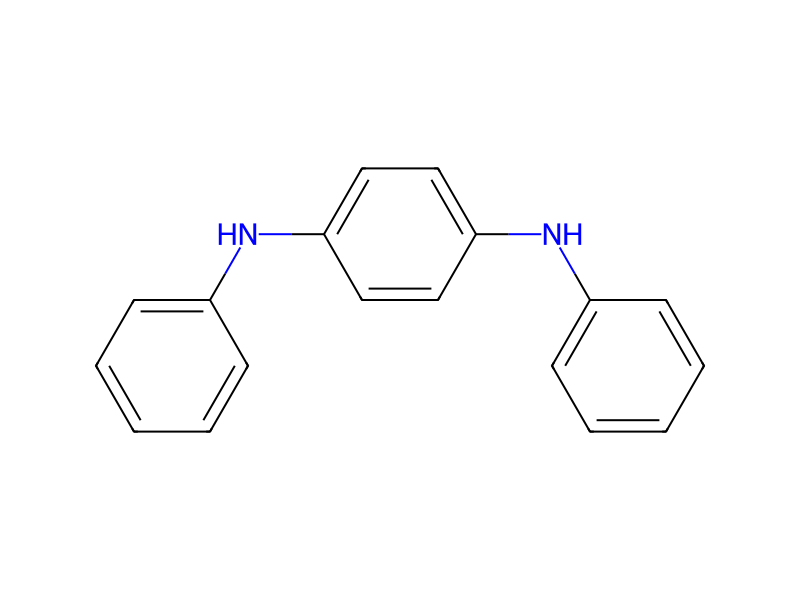
N,N'-Diphenyl-P-Phenylenediamine
HCID 6319
New noteNew reactionRequest quotes
Print preview
Basic informationOverviewNames & identifiersPropertiesSafety & regulationChemistry & industryRelated reactionsCompound notes
Substructure searchFind similar structures

Basic information

CAS
74-31-7
Standard SMILES
c1ccc(Nc2ccc(Nc3ccccc3)cc2)cc1
InChIKey
UTGQNNCQYDRXCH-UHFFFAOYSA-N
Molecular formula
C18H16N2
Average molar mass
260.3 g/mol
Monoisotopic mass
260.13134851

Overview

N,n'-diphenyl-p-phenylenediamine appears as gray or dark gray powder or flakes. (NTP, 1992)

Names & identifiers

Preferred name
N,N'-Diphenyl-P-Phenylenediamine
IUPAC
1-N,4-N-diphenylbenzene-1,4-diamine
English name
N,N-Diphenyl-p-phenylenediamine
Molecular formula
C18H16N2
Molecular weight
260.33

Names & synonyms

74-31-7N,N'-Diphenyl-p-phenylenediamineN,N'-Diphenyl-1,4-phenylenediamineDPPDDiphenyl-p-phenylenediamineAgeRite DPPD1,4-DianilinobenzeneFlexamine GNonflex HDiafen FFNonox DPPDAntioxidant H
Show more names
JZFDiafennaugardjnocracdpnonflexhantagedpdiafenffusafgy-2
DFFDStabilizer DPPDAltofane DIP1,4-Bis(phenylamino)benzenePermanax 18Usaf gy-2p-PhenylaminodiphenylamineAntigene P

Database identifiers

CAS
74-31-7
PubChem CID
6319
DTXSID
DTXSID9020538
ChEMBL
CHEMBL1333512
ChEBI
CHEBI:34860
UNII
DD517SCM92
EC Number
200-806-4
Nikkaji
J11.021C

Properties

Computed structural properties

XLogP
5
Topological polar surface area
24.1 Ų
Hydrogen bond donors
2
Hydrogen bond acceptors
2
Rotatable bonds
4
Heavy atoms
20
Formal charge
0
Complexity
231

Experimental & physicochemical properties

PolymersNitrogen Compounds -> Amines, Polyaromatic
SpringerMaterials PropertiesDensity
Density · 3 items

1.21 (NTP, 1992) - Denser than water; will sink

1.20

Relative density (water = 1): 1.2

Viscosity5.48X10-1 Pa.s (liquid)
Color/Form · 3 items

Colorless leaflets from alcohol; commercial grades are greenish-brown

Gray powder

White solid

Solubility · 3 items

less than 1 mg/mL at 68 °F (NTP, 1992)

Sol in monochlorobenzene, benzene, DMF, ether, chloroform, acetone, ethyl acetate, isopropyl acetate, glacial acetic acid. Slightly sol in alcohol. Almost insol in petr ether, water.

Solubility in water: none

Flash Point · 2 items

400 °F (NTP, 1992)

232 °C c.c.

Endocrine DisruptorsPotential endocrine disrupting compound

Safety & regulation

Safety information is for reference only and does not replace the supplier’s Safety Data Sheet (SDS), applicable regulations, or professional assessment.

GHS classification

GHS Classification · 6 items

Warning

H317: May cause an allergic skin reaction [Warning Sensitization, Skin]

P261, P272, P273, P280, P302+P352, P321, P333+P317, P362+P364, and P501 (click each P-code to see the statement)

Warning

H317 (100%): May cause an allergic skin reaction [Warning Sensitization, Skin]

P203, P261, P272, P273, P280, P302+P352, P318, P321, P333+P317, P362+P364, P391, P405, and P501 (click each P-code to see the statement)

Hazard information

Regulatory Information · 4 items

Chemical: 1,4-Benzenediamine, N,N'-diphenyl-

1,4-Benzenediamine, N1,N4-diphenyl- is listed on the EPA's Chemical Data Reporting (CDR) system. Manufacturers and importers of 1,4-Benzenediamine, N1,N4-diphenyl- are required to report information about their production and use of this chemical to the EPA under the Toxic Substances Control Act (TSCA). (40 eCFR Part 711)

Status: Active Update: 26-05-2018 https://echa.europa.eu/registration-dossier/-/registered-dossier/22932

1,4-Benzenediamine, N,N'-diphenyl-: Does not have an individual approval but may be used under an appropriate group standard

DOT LabelPoison
Fire Hazards · 2 items

This chemical is combustible. This chemical may form explosive dust-air mixtures. (NTP, 1992)

Combustible. Gives off irritating or toxic fumes (or gases) in a fire. Finely dispersed particles form explosive mixtures in air.

Fire Potential · 2 items

COMBUSTIBLE.

SLIGHT, WHEN EXPOSED TO HEAT OR FLAME.

Health HazardsSYMPTOMS: Symptoms of exposure to this compound may include irritation of the eyes and skin sensitization.

Chemistry & industry

Pharmacology

FDA Pharmacological Classification · 6 items

DD517SCM92

N,N'-DIPHENYL-1,4-PHENYLENEDIAMINE

Established Pharmacologic Class [EPC] - Standardized Chemical Allergen

Physiologic Effects [PE] - Increased Histamine Release

Physiologic Effects [PE] - Cell-mediated Immunity

Chemical Structure [CS] - Allergens

MeSH Pharmacological ClassificationNaturally occurring or synthetic substances that inhibit or retard oxidation reactions. They counteract the damaging effects of oxidation in animal tissues.

Uses & manufacturing

Uses · 6 items

Used as antioxidant (rubber, polyethylene, feedstuffs, petroleum, vegetable oils, animal fats, and oils), polymerization inhibitor, copper degradation inhibitor, and as an intermediate (dyes, drugs, plastics, and detergents); [HSDB]

Petroleum Production and Refining [Category: Industry]

ANTIOXIDANT FOR RUBBER, POLYETHYLENE, FEEDSTUFFS, PETROLEUM, VEGETABLE OILS, ANIMAL FATS & OILS; POLYMERIZATION INHIBITOR

Polymerization inhibitor, antioxidant for rubber, petr oils, feedstuffs.

THERAP CAT (VET): Antioxidant for feedstuffs

Flex-resistant antioxidant in rubbers; stabilizer; polymerization inhibitor; retards copper degradation; intermediate for dyes, drugs, plastics and detergents.

U.S. Production · 3 items

2023: <75,000 lb

(1972) 8.13X10+8 GRAMS

(1975) 4.85X10+8 GRAMS

Consumer UsesLubricating agent
Industry UsesOther
Methods of Manufacturing · 2 items

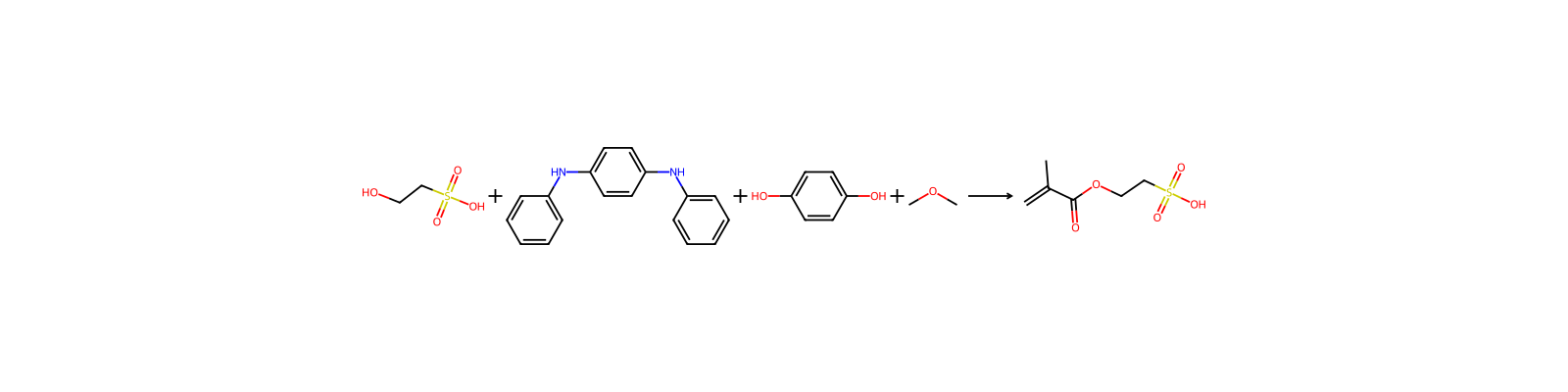
Prepd by condensing hydroquinone or p-aminophenol with aniline: Calm, Ber 16, 2805 (1883); Clemens, Magoffin, US patent 2,503,712 (1950 to Kodak). Purification: Pecherer, US patent 2,833,824 (1958 to Hoffmann-La Roche).

Related reactions

19 records
New reaction record
HRID 2325 reaction equation
HRID 2325As reactantuspto-grants-1998_03
HRID 6575 reaction equation
HRID 6575As reactantuspto-grants-2006_08
HRID 249207 reaction equation
HRID 249207As reactantuspto-grants-1993_05
HRID 394823 reaction equation
HRID 394823As reactantuspto-grants-2003_08
HRID 697624 reaction equation
HRID 697624As reactantTraining data from https://doi.org/10.1039/C8SC04228D (3/10)
HRID 704480 reaction equation
HRID 704480As reactantuspto-grants-1991_01
HRID 716594 reaction equation
HRID 716594As reactantuspto-grants-2015_11
HRID 851517 reaction equation
HRID 851517As productuspto-grants-1983_05
Page 1 of 3

Compound notes

Loading…

On this pageBasic informationOverviewNames & identifiersPropertiesSafety & regulationChemistry & industryRelated reactionsCompound notes
More actions
New noteNew reactionRequest quotes
Boiling Point · 2 items

428 to 437 °F at 0.5 mmHg (NTP, 1992)

220-225 °C @ 0.5 mm Hg

DecompositionWHEN HEATED TO DECOMP, IT EMITS HIGHLY TOXIC FUMES...
Melting Point · 4 items

293 to 306 °F (NTP, 1992)

150-151 °C

Specific gravity: 1.28; melting point: 145-152 °C

150-151 °C

Vapor Density · 3 items

9 (NTP, 1992) - Heavier than air; will sink (Relative to Air)

9.0 (Air= 1)

Relative vapor density (air = 1): 9.0

Physicochemical properties

Melting point
143 · 143-145 °C(lit.)
Boiling point
220 · 220-225 °C0.5 mm Hg(lit.)
Density
1.2 · 1.2
bulk density
560 kg/m3 · 560kg/m3
refractive index
1.63 · 1.6300 (estimate)
Flash point
220 · 220-225°C/1mm
storage temp.
30 °C · Store below +30°C.
solubility
DMSO (Slightly), Methanol (Slightly)
form
Solid
pka
1.85 · 1.85±0.20(Predicted)
color
Pale Grey to Very Dark Grey
Water Solubility
0.1 g/100 · <0.1 g/100 mL at 20 ºC
Merck
14 · 14,3329
BRN
2215944 · 2215944
Henry's Law Constant
4.7 · 4.7×104 mol/(m3Pa) at 25℃, HSDB (2015)
Stability
Stable. Incompatible with strong acids, strong oxidizing agents
InChI
1S/C18H16N2/c1-3-7-15(8-4-1)19-17-11-13-18(14-12-17)20-16-9-5-2-6-10-16/h1-14,19-20H
InChIKey
UTGQNNCQYDRXCH-UHFFFAOYSA-N
SMILES
N(c1ccccc1)c2ccc(Nc3ccccc3)cc2
LogP
4.536 · 4.536 (est)
CAS DataBase Reference
74 · 74-31-7(CAS DataBase Reference)
Indirect Additives used in Food Contact Substances
N,N'-DIPHENYL-P-PHENYLENEDIAMINE
FDA 21 CFR
175.105 · 175.105; 175.320; 176.170
FDA UNII
517 SCM92 · DD517SCM92
NIST Chemistry Reference
1 · 1,4-Benzenediamine, N,N'-diphenyl-(74-31-7)
EPA Substance Registry System
N,N'-Diphenyl-p-phenylenediamine (74-31-7)
UNSPSC Code
12352116 · 12352116
NACRES
23 · NA.23
Symbol(GHS)
7 · GHS07
Signal word
Warning
Hazard statements
317 · H317-H412
Precautionary statements
273 · P273-P280-P302+P352
PPE
95 · dust mask type N95 (US), Eyeshields, Faceshields, Gloves
Hazard Codes
Xi
Risk Statements
43 · 43-52/53
Safety Statements
24 · 24-37-61
WGK Germany
1 · 1
RTECS
2275000 · ST2275000
TSCA
TSCA listed
HS Code
2921 · 2921 51 90
Storage Class
11 · 11 - Combustible Solids
Hazard Classifications
3 Skin · Aquatic Chronic 3Skin Sens. 1
Hazardous Substances Data
74 · 74-31-7(Hazardous Substances Data)
Toxicity
50 orally · LD50 orally in Rabbit: 2370 mg/kg LD50 dermal Rat 4500 mg/kg
REACH Registrations
Active
Hazards Summary · 1 item

May cause skin sensitization; [ICSC] Danger of skin sensitization; [MAK] Food concentrations as low as 0.005% increase frequency of stillbirths in pregnant rats; Emergency treatment: Paraphenylenediamine; In sensitized individuals, paraphenylenediamine may cause allergic contact dermatitis following application as a hair dye and asthma following inhalation; Following ingestion, can cause angioneurotic edema, methemoglobinemia, acute tubular necrosis, and hepatotoxicity; An adult died after ingestion of 3 grams of p-phenylenediamine; Another adult who ingested 1800 mg developed angioneurotic edema and acute renal failure; [HSDB] May cause skin sensitization; [eChemPortal: ESIS] A mild eye irritant; Causes changes in liver weight, renal tubules, and clotting factors in repeated feeding studies of rats; [RTECS] See p-Phenylenediamine.

FDA Requirements...ITS DISTRIBUTION WAS...STOPPED IN 1956 BY US FDA.
Reactive GroupAmines, Phosphines, and Pyridines
Reactivity Profile · 1 item

N,N'-DIPHENYL-P-PHENYLENEDIAMINE may react with oxidizing materials (NTP, 1992). Neutralizes acids in exothermic reactions to form salts plus water. May be incompatible with isocyanates, halogenated organics, peroxides, phenols (acidic), epoxides, anhydrides, and acid halides. Flammable gaseous hydrogen may be generated in combination with strong reducing agents, such as hydrides.

Chemical DangersDecomposes on heating. This produces toxic fumes including carbon monoxide and nitrogen oxides. Reacts with oxidants. This generates fire and explosion hazard.
Physical DangersDust explosion possible if in powder or granular form, mixed with air.
Air and Water ReactionsInsoluble in water.

Safety & protection

Fire Fighting · 2 items

Fires involving this material can be controlled with a dry chemical, carbon dioxide or Halon extinguisher. A water spray may also be used. (NTP, 1992)

Use water spray, powder, foam, carbon dioxide.

First Aid Measures · 4 items

Fresh air, rest.

Wear protective gloves when administering first aid. Remove contaminated clothes. Rinse and then wash skin with water and soap.

Rinse with plenty of water (remove contact lenses if easily possible).

Rinse mouth.

First Aid · 1 item

EYES: First check the victim for contact lenses and remove if present. Flush victim's eyes with water or normal saline solution for 20 to 30 minutes while simultaneously calling a hospital or poison control center. Do not put any ointments, oils, or medication in the victim's eyes without specific instructions from a physician. IMMEDIATELY transport the victim after flushing eyes to a hospital even if no symptoms (such as redness or irritation) develop.

Safe StorageSeparated from strong oxidants. Keep in a well-ventilated room.
Storage Conditions · 1 item

...MATERIALS WHICH ARE TOXIC AS STORED OR WHICH CAN DECOMP INTO TOXIC COMPONENTS DUE TO CONTACT WITH HEAT, MOISTURE, ACID, OR ACID FUMES, SHOULD BE STORED IN COOL, WELL-VENTILATED PLACE, OUT OF DIRECT RAYS OF SUN, AWAY FROM AREAS OF HIGH FIRE HAZARD & SHOULD BE PERIODICALLY INSPECTED & MONITORED.

Nonfire Spill Response · 1 item

SMALL SPILLS AND LEAKAGE: If a spill of this chemical occurs, FIRST REMOVE ALL SOURCES OF IGNITION, then you should dampen the solid spill material with acetone and transfer the dampened material to a suitable container. Use absorbent paper dampened with acetone to pick up any remaining material. Seal your contaminated clothing and the absorbent paper in a vapor-tight plastic bag for eventual disposal. Solvent wash all contaminated surfaces with acetone followed by washing with a soap and water solution. Do not reenter the contaminated area until the Safety Officer (or other responsible person) has verified that the area has been properly cleaned.

Disposal Methods · 1 item

SRP: At the time of review, criteria for land treatment or burial (sanitary landfill) disposal practices are subject to significant revision. Prior to implementing land disposal of waste residue (including waste sludge), consult with environmental regulatory agencies for guidance on acceptable disposal practices.

Spillage Disposal · 1 item

Personal protection: particulate filter respirator adapted to the airborne concentration of the substance. Sweep spilled substance into covered containers. If appropriate, moisten first to prevent dusting. Carefully collect remainder. Then store and dispose of according to local regulations.

Isolation and EvacuationExcerpt from ERG Guide 153 [Substances - Toxic and/or Corrosive (Combustible)]:
Eye PreventionWear face shield.
Fire PreventionNO open flames. Prevent deposition of dust.
Inhalation RiskA nuisance-causing concentration of airborne particles can be reached quickly when dispersed.

Toxicology

Interactions/IN/ 1962.../IT WAS SHOWN THAT/ DIPHENYL-P-PHENYLENEDIAMINE (DPPD)...GAVE SOME MEASURE OF PROTECTION /TO CARBON TETRACHLORIDE LETHALITY IN RATS/. THE PROTECTIVE EFFECT OF DPPD WAS CONFIRMED.../IN/ 1965.
Environmental Fate · 3 items

TERRESTRIAL FATE: Based on a classification scheme(1), an estimated Koc value of 1.3X10+5(SRC), determined from a structure estimation method(2), indicates that N,N'-diphenyl-p-phenylenediamine is expected to be immobile in soil(SRC). Volatilization of N,N'-diphenyl-p-phenylenediamine from moist soil surfaces is not expected to be an important fate process(SRC) given an estimated Henry's Law constant of 2.1X10⁻¹⁰ atm-cu m/mole(3), using a fragment constant estimation method(3). N,N'-Diphenyl-p-phenylenediamine is not expected to volatilize from dry soil surfaces(SRC) based upon a vapor pressure of 6.35X10⁻⁹ mm Hg(4).

AQUATIC FATE: Based on a classification scheme(1), an estimated Koc value of 1.3X10+5(SRC), determined from an estimation method(2), indicates that N,N'-diphenyl-p-phenylenediamine is expected to adsorb to suspended solids and sediment(SRC). Volatilization from water surfaces is not expected(3) based upon an estimated Henry's Law constant of 2.1X10⁻¹⁰ atm-cu m/mole(4), developed using a fragment constant estimation method(4). According to a classification scheme(5), an estimated BCF of 260(SRC), from an estimated log Kow of 4.0(6) and a regression-derived equation(7), suggests the potential for bioconcentration in aquatic organisms is moderate. BCFs for N,N'-diphenyl-p-phenylenediamine were determined to be greater than 100(8,9). N,N'-Diphenyl-p-phenylenediamine was determined to be non-biodegradable using the Japanese MITI test(9), attaining 0.2% of its theoretical BOD in 2 weeks(9).

ATMOSPHERIC FATE: According to a model of gas/particle partitioning of semivolatile organic compounds in the atmosphere(1), N,N'-diphenyl-p-phenylenediamine, which has a vapor pressure of 6.35X10⁻⁹ mm Hg at 25 °C(2) is expected to exist solely in the particulate phase in the ambient atmosphere. Particulate-phase N,N'-diphenyl-p-phenylenediamine may be removed from the air by wet and dry deposition. N,N'-Diphenyl-p-phenylenediamine absorbs light in the environmental UV spectrum, and has the potential for direct photolysis(3).

Adverse EffectsOccupational hepatotoxin - Secondary hepatotoxins: the potential for toxic effect in the occupational setting is based on cases of poisoning by human ingestion or animal experimentation.
Exposure RoutesThe substance can be absorbed into the body by inhalation.
ICSC Environmental DataAvoid release to the environment in circumstances different to normal use. Bioaccumulation of this chemical may occur along the food chain, for example in fish. Environmental effects from the substance have not been investigated adequately.
Soil Adsorption/Mobility · 1 item

Using a structure estimation method based on molecular connectivity indices(1), the Koc for N,N'-diphenyl-p-phenylenediamine can be estimated to be 1.3X10+5(SRC). According to a classification scheme(2), this estimated Koc value suggests that N,N'-diphenyl-p-phenylenediamine is expected to be immobile in soil(SRC).

Human Toxicity ExcerptsLOW TOXICITY.
Artificial Pollution SourcesN,N'-Diphenyl-p-phenylenediamine's production and use as an flex-resistant antioxidant in rubbers(1) may result in its release to the environment through various waste streams(SRC).
Environmental BiodegradationAEROBIC: N,N'-diphenyl-p-phenylenediamine, present at 100 mg/l, reached 0.2% of its theoretical BOD in 2 weeks using an activated sludge inoculum at 30 mg/l in the Japanese MITI test(1).
Environmental Bioconcentration · 1 item

An estimated BCF of 260 was calculated for N,N'-diphenyl-p-phenylenediamine(SRC), using an estimated log Kow of 4.0(1) and a regression-derived equation(2). The BCF for N,N'-diphenyl-p-phenylenediamine was determined to be greater than 100(4). The bioconcentration of N,N'-diphenyl-p-phenylenediamine in the lipids of fish (8 week exposure period) were between 264-1418 and 495-2146 for test concentrations of 0.1 mg/l and 0.01 mg/l, respectively(5). According to a classification scheme(3), BCF values of 500 to 2000 are low and from 50 to 150 are high.

Volatilization from Water/Soil · 1 item

The Henry's Law constant for N,N'-diphenyl-p-phenylenediamine is estimated as 2.1X10⁻¹⁰ atm-cu m/mole(SRC) using a fragment constant estimation method(1). This Henry's Law constant indicates that N,N'-diphenyl-p-phenylenediamine is expected to be essentially nonvolatile from water surfaces(2). N,N'-Diphenyl-p-phenylenediamine is not expected to volatilize from dry soil surfaces(SRC) based upon a vapor pressure of 6.35X10⁻⁹ mm Hg(3).

Non-Human Toxicity ExcerptsIT WAS SHOWN THAT DPPD IN CONCN IN FOOD OF AS LOW AS 0.005% COULD LEAD TO HIGH INCIDENCE OF STILLBIRTHS IN PREGNANT RATS...

Regulatory information

FDA Requirements...ITS DISTRIBUTION WAS...STOPPED IN 1956 BY US FDA.

Safety data

PPE
dust mask type N95 (US), Eyeshields, Faceshields, Gloves
wgk
1
tsca
TSCA listed
rtecs
ST2275000
hs_code
2921 51 90
Toxicity
LD50 orally in Rabbit: 2370 mg/kg LD50 dermal Rat 4500 mg/kg
risk_code
43-52/53
Signal word
Warning
Symbol(GHS)
GHS07
hazard_code
Xi
safety_code
24-37-61
Storage Class
11 - Combustible Solids
Hazard statements
H317-H412
REACH Registrations
Active
Hazard Classifications
Aquatic Chronic 3Skin Sens. 1
Precautionary statements
P273-P280-P302+P352
Hazardous Substances Data
74-31-7(Hazardous Substances Data)

... from hydroquinone and aniline, acid cat.

Formulations/Preparations · 2 items

Purity: 9.2% (min)

Flexamine G /is/ trademark for mixt of N,N'-diphenyl-para-phenylenediamine and complex diarylamine-ketone reaction product. Uses: antioxidant used in tires, camelback, wire insulation, neoprene belting and soles. /Flexamine G/

General Manufacturing Information · 4 items

Plastics Material and Resin Manufacturing

1,4-Benzenediamine, N1,N4-diphenyl-: ACTIVE

...ITS DISTRIBUTION WAS...STOPPED IN 1956 BY US FDA.

IN ORDER TO PREVENT OXIDATION OF VITAMIN E & TO STABILIZE VITAMIN A & CAROTENE IN MIXED ANIMAL FEEDS IT.../BECAME/ COMMERCIAL PRACTICE TO ADD ANTIOXIDANTS. PROBABLY MOST WIDELY USED COMPD WAS DPPD...WHICH WAS USUALLY ADDED TO POULTRY FEEDS IN CONCN OF 0.025%.

Applications · 5 items

DescriptionN,N'-Diphenyl-4-phenylenediamine (DPPD) is a rubber accelerant, formerly contained in the "black rubber mix". The most frequent occupational categories are in metal industry, homemakers, health services and laboratories, and building industries.

UsesPolymerization inhibitor. Antioxidant for rubber, petroleum oils, feedstuffs.

UsesN1,N4-Diphenylbenzene-1,4-diamine can be used to prepare low pressure change, high temperature resistant flame retardant silicone rubber.

UsesN,N'-Diphenyl-4-phenylene diamine is an antioxidant for rubber, petroleum oils, and feed stuffs; stabilizer; a polymerization inhibitor; used to retard copper degradation; as an intermediate for dyes, drugs, plasties and detergents; antidegradant for nitrile-butadiene rubber, natural, styrene-butadiene, isoprene, butadiene, and ehloroprene rubbers.

General DescriptionGray or dark gray powder or flakes.

Upstream & downstream products

Upstream raw materials

Aniline

Downstream products

1 4-Bis(diphenylamino)benzeneN,N'-Bis-(4-bromo-phenyl)-N,N'-diphenyl-benzene-1,4-diamine

Additional notes

DefinitionChEBI: An N-substituted diamine that is 1,4-phenylenediamine in which one hydrogen from each amino group is replaced by a phenyl group.