

Basic information
- Standard SMILES
CBr- InChIKey
GZUXJHMPEANEGY-UHFFFAOYSA-N- Molecular formula
- CH3Br
- Average molar mass
- 94.94 g/mol
- Monoisotopic mass
- 93.9418122
Overview
Bromomethane is a manufactured chemical. It also occurs naturally in small amounts in the ocean where it is formed, probably by algae and kelp. It is a colorless, nonflammable gas with no distinct smell. Other names for bromomethane are methyl bromide, mono-bromomethane, and methyl fume. Trade names include Embafume and Terabol. Bromomethane is used to kill a variety of pests including rats, insects, and fungi. It is also used to make other chemicals or as a solvent to get oil out of nuts, seeds, and wool.
Names & identifiers
- Preferred name
- Methyl Bromide
- IUPAC
- bromomethane
- English name
- Methyl bromide
- Molecular formula
- CH3Br
- Molecular weight
- 0
Names & synonyms
BromomethaneMETHYL BROMIDE74-83-9MonobromomethaneEmbafumeTerabolmethylbromideCurafumeMetafumeHaltoxCH3BrMebr
Show more names
Methane, bromo-IscobromeKayafumeMethogasMethylbromidPestmasterCelfumeZytox
Database identifiers
- CAS
74-83-9- PubChem CID
- 6323
- DTXSID
DTXSID8020832- ChEMBL
CHEMBL48339- ChEBI
CHEBI:39275- UNII
- 9V42E1Z7B6
- EC Number
- 200-813-2
- Nikkaji
- J1.245.460K、J2.381G、J895.767C
Properties
Computed structural properties
- XLogP
- 1
- Topological polar surface area
- 0 Ų
- Hydrogen bond donors
- 0
- Hydrogen bond acceptors
- 0
- Rotatable bonds
- 0
- Heavy atoms
- 2
- Formal charge
- 0
- Complexity
- 2
Experimental & physicochemical properties
Chemical Classes
Hazardous Air Pollutants (HAPs)
Mutagens
SpringerMaterials PropertiesCoriolis coupling
Pesticides
Pesticide -> EPA IRIS
Fungicides, Herbicides, Insecticides, Nematicides
Active substance -> EU Pesticides database: Not approved
Pesticides -> Fumigants
Volatile Organic Compound (VOC) (Pesticide/Volatile Organic Compound (VOC))
LogP
log Kow = 1.19
1.19
1.19
Odor
Usually odorless; sweetish, chloroform-like odor at high concentrations
Methyl bromide has practically no odor or irritating effects in low concentration and therefore does not provide any warning of physiologically dangerous concentrations.
TasteBurning taste
Density
1.73 at 32 °F (EPA, 1998) - Denser than water; will sink
1.6755 g/cu cm at 20 °C
Density: 1.730 at 0 °C/4 °C (liquid); 3.974 g/L at 20 °C (gas)
Transition Point: -99.4 °C; Absolute density of gas at 101.325 kPa at 25 °C: 3.974 kg/cu m; Critical volume: 1.639 d cu m/kg; Critical density: 0.610 kg/d cu m; Critical compressibility factor: 0.209; Heat of transition at -99.4 °C = 1.195 kcal/kg
Saturated liquid density: 107.700 lb/cu ft at 35 °F; Liquid heat capacity: 0.198 Btu/lb-feet at 35 °F; Liquid thermal conductivity: 0.700 Btu-inch/hr-sq ft-F at 30 °F; Saturated vapor pressure: 27.710 lb/sq in at 70 °F; Saturated vapor density: 0.46270 lb/cu ft at 70 °F; Ideal gas heat capacity: 0.106 Btu/lb-F at 75 °F
Relative density (water = 1): 1.7 (liquid, 0 °C)
Viscosity0.397 cP at 0 °C
Color/Form
Colorless, transparent, easily liquified gas or volatile liquid
Colorless gas [Note: A liquid below 38 degrees F. Shipped as a liquefied compressed gas].
Solubility
2 % (NIOSH, 2024)
In water, 15,200 mg/L at 25 °C
In water, 18.5 g/L at 20 °C
In water, 13.4 g/L at 25 °C
Slightly soluble in water
For more Solubility (Complete) data for Methyl bromide (7 total), please visit the HSDB record page.
Corrosivity
Corrosive to aluminum, magnesium & their alloys
In presence of moisture, corrosive to tin, zinc, & other alloys.
When dry (<100 ppm water), methyl bromide is inert toward most materials of construction. Aluminum, magnesium, zinc, and alloys of these metals should not be used because under some conditions, dangerous pyrophoric Grignard-type compounds may be formed. ... Nylon and polyvinyl chloride should be avoided for handling methyl bromide.
Flash Point
None (EPA, 1998)
194 °C /Open cup vs closed cup not specified/
194 °C
NA (Gas)
Physicochemical properties
- RIDADR
- 1062 · UN 1062
- HazardClass
- 2.3 · 2.3
Safety & regulation
GHS classification
GHS Classification
Danger
H301: Toxic if swallowed [Danger Acute toxicity, oral]
P203, P260, P261, P264, P264+P265, P270, P271, P273, P280, P301+P316, P302+P352, P304+P340, P305+P351+P338, P316, P318, P319, P321, P330, P332+P317, P337+P317, P362+P364, P391, P403+P233, P405, P501, and P502 (click each P-code to see the statement)
Danger
H221 (45.8%): Flammable gas [Danger Flammable gases]
P203, P210, P260, P261, P264, P264+P265, P270, P271, P273, P280, P284, P301+P316, P302+P352, P304+P340, P305+P351+P338, P316, P318, P319, P320, P321, P330, P332+P317, P337+P317, P362+P364, P377, P381, P391, P403, P403+P233, P405, P410+P403, P501, and P502 (click each P-code to see the statement)
Hazard information
Hazards IdentificationToxic/poison by inhalation (TIH/PIH)
Regulatory Information
Chemical: Methane, bromo-
Hazard Traits - Developmental Toxicity; Hepatotoxicity and Digestive System Toxicity; Nephrotoxicity and Other Toxicity to the Urinary System; Neurotoxicity; Reproductive Toxicity; Respiratory Toxicity
Commission Regulation (EC) No 33/2008
Methane, bromo- is listed on the EPA's Chemical Data Reporting (CDR) system. Manufacturers and importers of Methane, bromo- are required to report information about their production and use of this chemical to the EPA under the Toxic Substances Control Act (TSCA). (40 eCFR Part 711)
Methyl bromide is listed in the dataset of EPA Human Health Benchmarks for Pesticides under the Safe Drinking Water Act (40 eCFR 141)
Status: Active Update: 22-04-2021 https://echa.europa.eu/registration-dossier/-/registered-dossier/5298
Other Safety InformationIMAP assessments - Methane, bromo-: Environment tier II assessment
DOT LabelPoison Gas
Fire Hazards
When heated to decomposition, it emits toxic fumes of bromides. Hazardous polymerization may not occur. (EPA, 1998)
· Some may burn but none ignite readily.
Combustible under specific conditions. Gives off irritating or toxic fumes (or gases) in a fire. Risk of fire and explosion on contact with aluminium, zinc, magnesium or oxygen.
Fire Potential
Not ordinarily combustible except in the presence of high heat or strong oxidizers.
Mixtures of 10-15% with air may be ignited with difficulty.
Health Hazards
Methyl bromide is a dangerous cumulative poison with delayed symptoms of central nervous system intoxication that may appear as long as several months after exposure. High concentrations can produce fatal pulmonary edema. Chronic exposure can cause central nervous system depression and kidney injury. It may cause severe and permanent brain damage. Severe neurological signs may appear when there is a sudden exposure to high concentrations following continuous slight exposure. Methyl bromide has practically no odor or irritating effects and therefore no warning, even at hazardous concentrations. (EPA, 1998)
· TOXIC; may be fatal if inhaled or absorbed through skin.
Hazards Summary
Bromomethane is a manufactured chemical. It also occurs naturally in small amounts in the ocean where it is formed, probably by algae and kelp. It is a colorless, nonflammable gas with no distinct smell. Other names for bromomethane are methyl bromide, mono-bromomethane, and methyl fume. Trade names include Embafume and Terabol. Bromomethane is used to kill a variety of pests including rats, insects, and fungi. It is also used to make other chemicals or as a solvent to get oil out of nuts, seeds, and wool.
Methyl bromide is used as a fumigant and pesticide. Exposure may occur during fumigation activities. Methyl bromide is highly toxic. Studies in humans indicate that the lung may be severely injured by the acute (short-term) inhalation of methyl bromide. Acute and chronic (long-term) inhalation of methyl bromide can lead to neurological effects in humans. Neurological effects have also been reported in animals. Degenerative and proliferative lesions in the nasal cavity developed in rats chronically exposed to methyl bromide by inhalation. Chronic inhalation exposure of male animals has resulted in effects on the testes at high concentrations. EPA has classified methyl bromide as a Group D, not classifiable as to human carcinogenicity.
Liquid causes second degree burns after contact for a few minutes; [CHRIS] Corrosive to skin; [Quick CPC] Methyl bromide is a neurotoxic gas that can cause convulsions, coma, and long-term neuromuscular and cognitive deficits. Exposure to high concentrations of pure methyl bromide may cause inflammation of the bronchi or lungs, an accumulation of fluid in the lung, and irritation of the eyes and nose. [ATSDR Medical Management] Methyl bromide causes liver injury in acute inhalation studies of laboratory animals. [ACGIH] Acts as an alkylating agent of glutathione and other cellular molecules; Poor warning properties, so 2% chloropicrin often added; [Olson, p. 321-2] Effects on the CNS, kidneys, and lungs (possible lung edema after inhalation); [ICSC]
The major hazards encountered in the use and handling of methyl bromide stem from its toxicologic properties. Toxic by all routes (ie, inhalation, ingestion, and dermal absorption), exposure to this colorless, nearly odorless gas may occur from its use as a fumigant for soil, grain and other commodities, as a solvent, methylating agent, and extracting agent. Effects from exposure may include contact burns to the skin and eyes, dizziness, headache, nausea, respiratory irritation, ventricular fibrillation, pulmonary edema (sometimes delayed 4 to 5 days), convulsions, coma, and death. The OSHA PEL is set at a ceiling limit of 20 ppm, with a notation that skin contact is to be prevented. The ACGIH has recommended a TWA of 5 ppm. Levels should be controlled by local exhaust ventilation, with a continuous monitoring system to warn of excursions. In activities or situations where over-exposure may occur, wear a self-contained breathing apparatus with a full facepiece, and full chemical protective clothing (including gloves and boots) which is specifically recommended by the shipper or producer to prevent skin contact with methyl bromide. If contact should result, immediately flush affected skin or eyes with running water for at least 15 minutes. Remove contaminated clothing and shoes at the site. While methyl bromide does not ignite easily, it may burn with the production of irritating and poisonous gases. Also, containers may explode violently in the heat of a fire. Fires involving methyl bromide may be extinguished with dry chemical, CO2, Halon, or standard foam. Water spray, if used, should be applied with caution because it may cause frothing. Dike runoff from fire-control water. Methyl bromide should be stored in dry, well-ventilated areas, away from sources of ignition, direct sunlight, and sources of physical damage. Choice of containers should take into account methyl bromide's reactivity with aluminum, magnesium, tin, zinc, and other alloys. Certain methods of shipment are forbidden for methyl bromide. Consult with the regulatory requirements of the US Department of Transportation for detailed shipping and labelling instructions. If methyl bromide should spill or leak from a small container or pressurized cylinder, first remove ignition sources, then ventilate the spill area and stop the leak. Isolate the area 75 feet in all directions from the spill. For a large spill, water spray or mist may be necessary to knock down vapor. Dike any surface flow with soil or sandbags to keep the material out of water sources or sewers. Absorb bulk liquid with fly ash or cement powder. Before implementing land disposal of waste methyl bromide, consult with environmental regulatory agencies for guidance.
DOT ID and Guide
1062 123
1062 123
Reactive GroupHalogenated Organic Compounds
EC ClassificationSymbol: T, N; R: 23/25-36/37/38-48/20-68-50-59; S: (1/2)-15-27-36/39-38-45-59-61
UN ClassificationUN Hazard Class: 2.3
Safety & protection
Fire Fighting
Full protective clothing, including self-contained breathing apparatus, coat, pants, gloves, boots, and bands around legs, arms, and waist should be provided. No skin surface should be exposed. Move container from fire area if you can do it without risk. Fight fire from maximum distance. Dike fire control water for later disposal; do not scatter the material.
Shut off supply; if not possible and no risk to surroundings, let the fire burn itself out. In other cases extinguish with appropriate extinguishing agent. In case of fire: keep cylinder cool by spraying with water.
First Aid Measures
Fresh air, rest. Half-upright position. Artificial respiration may be needed. Refer immediately for medical attention.
Rinse skin with plenty of water or shower. ON FROSTBITE: rinse with plenty of water, do NOT remove clothes. Refer immediately for medical attention.
Rinse with plenty of water (remove contact lenses if easily possible). Refer immediately for medical attention.
Accidental Release Measures
· CALL 911. Then call emergency response telephone number on shipping paper. If shipping paper not available or no answer, refer to appropriate telephone number listed on the inside back cover.
· Do not touch or walk through spilled material.
First Aid
Warning: Effects may be delayed for hours to days. Caution is advised.
General First Aid:
(General first aid procedures)
Safe StorageFireproof if in building. Separated from strong oxidants, aluminium and cylinders containing oxygen. Cool. Ventilation along the floor.
Exposure Control and Personal Protection
· Wear positive pressure self-contained breathing apparatus (SCBA).
TIH (Toxic Inhalation Hazard) - Term used to describe gases and volatile liquids that are toxic when inhaled. Some are TIH materials themselves, e.g., chlorine, and some release TIH gases when spilled in water, e.g., chlorosilanes. [ERG 2016].
1.0 [ppm]
Fire Fighting Procedures
Suitable extinguishing media: Use water spray, alcohol-resistant foam, dry chemical or carbon dioxide.
Advice for firefighters: Wear self-contained breathing apparatus for firefighting if necessary.
Use water spray to cool unopened containers.
Approach fire from upwind to avoid hazardous vapors and toxic decomposition products. Extinguish fire using agent suitable for surrounding fire. Use flooding quantities of water as fog. Use water spray to keep fire-exposed containers cool.
For more Fire Fighting Procedures (Complete) data for Methyl bromide (7 total), please visit the HSDB record page.
Storage Conditions
Poison gas. Color Code-Blue: Health Hazard/ Poison: Store in a secure poison location. Prior to working with this chemical you should be trained on its proper handling and storage. Before entering confined space where this chemical may be present, check to make sure that an explosive concentration does not exist. Store in well-ventilated area away from direct sunlight. Maintain temperature below 40 °C; avoid heat sources. Protect against physical damage. A regulated, marked area should be established where this chemical is handled, used, or stored in compliance with OSHA Standard 1910.1045.
Keep container tightly closed in a dry and well-ventilated place. Contents under pressure. Refrigerate before opening. Storage class (TRGS 510): Gases.
Fireproof if in building. Separated from strong oxidants, aluminum and cylinders containing oxygen. Cool. Ventilation along the floor.
Store away from heat or flame since contents are pressureized.
Store in a cool, dry, well-ventilated location. Outside or detached storage is preferred for cylinders. Isolate from active metals.
Cleanup Methods
If in a building, evacuate building and confine vapors by closing doors and shutting down HVAC systems. Restrict persons not wearing protective equipment from area of spill or leak until cleanup is complete. Remove all ignition sources. Ventilate area of spill or leak to disperse the gas. Wear chemical protective suit with self-contained breathing apparatus to combat spills. Stay upwind and use water spray to "knock down" vapor; contain runoff. Stop the flow of gas, if it can be done safely from a distance. If source is a cylinder and the leak cannot be stopped in place, remove the leaking cylinder to a safe place and repair leak or allow cylinder to empty. Keep this chemical out of confined spaces, such as a sewer, because of the possibility of explosion, unless the sewer is designed to prevent the buildup of explosive concentrations. If employees are required to clean up spills, they must be properly trained and equipped. OSHA 1910.120(q) may be applicable.
ACCIDENTAL RELEASE MEASURES: Personal precautions, protective equipment and emergency procedures: Wear respiratory protection. Avoid breathing vapors, mist or gas. Ensure adequate ventilation. Evacuate personnel to safe areas. Environmental precautions: Prevent further leakage or spillage if safe to do so. Do not let product enter drains. Discharge into the environment must be avoided. Methods and materials for containment and cleaning up: Clean up promptly by sweeping or vacuum.
Spillage Disposal: Evacuate danger area! Consult an expert! Personal protection: complete protective clothing including self-contained breathing apparatus. Ventilation. NEVER direct water jet on liquid.
Releases may require isolation or evacuation. Approach release from upwind. Stop or control the leak, if this can be done without undue risk. Use water spray to cool and disperse vapors and protect personnel. Control runoff and isolate discharged material for proper disposal.
Nonfire Spill Response
Remove all ignition sources. Ventilate area of spill or leak, stop flow of gas or remove leaking cylinder to open air and repair leak or allow cylinder to empty. If material is in the liquid form, allow it to vaporize. Stay upwind, keep out of low areas. Use water spray to reduce vapors. (EPA, 1998)
Disposal Methods
Generators of waste (equal to or greater than 100 kg/mo) containing this contaminant, EPA hazardous waste number U029, must conform with USEPA regulations in storage, transportation, treatment and disposal of waste.
SRP: Wastewater from contaminant suppression, cleaning of protective clothing/equipment, or contaminated sites should be contained and evaluated for subject chemical or decomposition product concentrations. Concentrations shall be lower than applicable environmental discharge or disposal criteria. Alternatively, pretreatment and/or discharge to a permitted wastewater treatment facility is acceptable only after review by the governing authority and assurance that "pass through" violations will not occur. Due consideration shall be given to remediation worker exposure (inhalation, dermal and ingestion) as well as fate during treatment, transfer and disposal. If it is not practicable to manage the chemical in this fashion, it must be evaluated in accordance with EPA 40 CFR Part 261, specifically Subpart B, in order to determine the appropriate local, state and federal requirements for disposal.
Product: Offer surplus and non-recyclable solutions to a licensed disposal company. Contact a licensed professional waste disposal service to dispose of this material; Contaminated packaging: Dispose of as unused product.
Controlled incineration with adequate scrubbing and ash disposal facilities.
For more Disposal Methods (Complete) data for Methyl bromide (6 total), please visit the HSDB record page.
Spillage DisposalEvacuate danger area! Consult an expert! Personal protection: complete protective clothing including self-contained breathing apparatus. Ventilation. NEVER direct water jet on liquid.
Toxicology
Toxicological InformationCDC-ATSDR Toxicological Profile
Body Burden
... Methyl bromide has been responsible for deaths that usually occur from its accidental inhalation during fumigation. ... an accidental fatality that occurred after methyl bromide seeped through underground conduits from a fumigated building to an adjacent guest house on the same property. ... The initial serum bromide was 27 mg/dL. Postmortem analysis detected methyl bromide concentrations of 2.9 mg/dL in the blood, 1.7 mg/dL in the bile, 24 ug/g in the liver, and 28 ug/g in the adipose tissue. ...
Treatment
EYES: irrigate opened eyes for several minutes under running water. INGESTION: do not induce vomiting. Rinse mouth with water (never give anything by mouth to an unconscious person). Seek immediate medical advice. SKIN: should be treated immediately by rinsing the affected parts in cold running water for at least 15 minutes, followed by thorough washing with soap and water. If necessary, the person should shower and change contaminated clothing and shoes, and then must seek medical attention. INHALATION: supply fresh air. If required provide artificial respiration.
Cancer Sites[in animals: lung, kidney & forestomach tumors]
Interactions
After exposure to 63, 125, 188, or 250 ppm methyl bromide for eight hours in rats, concentrations as low as 63 ppm enhanced the sleep-inducing potency of thiopental, but methyl bromide exerted no effect on thiopental metabolism. The body temperature and body weight gain were decreased at exposure to concentrations of 125 ppm or higher, and locomotor activity was reduced at 188 ppm or higher. These effects were reversible; 24 hr after the exposure, locomotor activity and body temperature were almost the same as in control rats.
Target Organs
Neurological (Nervous System), Respiratory (From the Nose to the Lungs)
Gastrointestinal
Eyes, skin, respiratory system, central nervous system
Health Effects
Bromomethane is highly toxic. Studies in humans indicate that the lung may be severely injured by the acute (short-term) inhalation of bromomethane. Acute and chronic (long-term) inhalation of bromomethane can lead to neurological effects in humans. Neurological effects have also been reported in animals. Degenerative and proliferative lesions in the nasal cavity developed in rats chronically exposed to bromomethane by inhalation. Chronic inhalation exposure of male animals has resulted in effects on the testes at high concentrations. Studies in humans indicate that the lung may be most severely injured by the acute inhalation exposure of bromomethane. The kidney is also sensitive to bromomethane. Anuria and proteinuria are common signs of renal injury in acutely exposed humans.
Ecotoxicity Values
LD50; Species: /Colinus virginianus/ (Northern bobwhite) oral 73 mg/kg (95% confidence limit: 62.5-125 mg/kg) /from table/
LC50; Species: Lepomis macrochirus (bluegill); Conditions: static bioassay, freshwater, 23 °C, mild aeration applied after 24 hr; Concentration: 11 ppm for 96 hr
LC50; Species: Menidia beryllina (tidewater silverside); Conditions: static bioassay, synthetic seawater, 23 °C, mild aeration applied after 24 hr; Concentration: 12 ppm for 96 hr
LD50; Species: Coleoptera (various weeville and beetles); Concentration: 4.505 mg/L for 24 hr
For more Ecotoxicity Values (Complete) data for Methyl bromide (26 total), please visit the HSDB record page.
Environmental Fate
TERRESTRIAL FATE: Based on a classification scheme(1), reported Koc values of 9 to 22(2) indicate that methyl bromide is expected to have very high mobility in soil(SRC). Volatilization of methyl bromide from moist soil surfaces is expected to be an important fate process(SRC) given a Henry's Law constant of 7.34X10⁻³ atm-cu m/mole(3). Methyl bromide is expected to volatilize from dry soil surfaces(SRC) based upon a vapor pressure of 1620 mm Hg at 25 °C(4). In soil, chemical reactions, likely nucleophilic substitutions on soil organic matter, were identified as the predominate pathway through which methyl bromide was degraded(5). Methyl bromide reacts rapidly with aniline, a model used to simulate reactions with organic matter in soil; the degradation half-life of methyl bromide with aniline was 2.9 days at 24 °C(5). The oxidation of 14C-methyl bromide to 14CO2 was measured in field experiments with soils fumigated with mixtures of methyl bromide and chloropicrin. Degradation of methyl bromide by chemical and/or biological processes accounted for 20 to 50% of the loss of methyl bromide during fumigation(6) with the remainder of methyl bromide loss due to volatilization(SRC).
TERRESTRIAL FATE: Methyl bromide, applied to undisturbed soil samples volatilized >75% in the first 48 hours(1). Methyl bromide was not detected in any of the soil column leachates throughout the 23 week study. Negligible quantities of soil gas methyl bromide were detected after 7 days. Bromide ion concentration increased in the leachate from a background level of 0.01 ug/g to 0.4 ug/g within the first rain event, peaked at a concentration of 4.3 ug/g in 3 weeks and then decreased with subsequent rain events. This study showed that methyl bromide will degrade in the soil before it will leach through the soil profile(1).
AQUATIC FATE: Based on a classification scheme(1), reported Koc values of 9 to 22(2) indicate that methyl bromide is not expected to adsorb to suspended solids and sediment(SRC). Volatilization from water surfaces is expected(3) based upon a Henry's Law constant of 7.34X10⁻³ atm-cu m/mole(4). Using this Henry's Law constant and an estimation method(3), volatilization half-lives for a model river and model lake are 3.0 hours and 3.9 days, respectively(SRC). According to a classification scheme(5), an estimated BCF of 3(SRC), from its log Kow of 1.19(6) and a regression-derived equation(7), suggests the potential for bioconcentration in aquatic organisms is low(SRC). Hydrolysis is expected to be an important environmental fate process based on a rate constant of 4.1X10⁻⁷/sec(8), corresponding to a half-life of 20 days under environmental conditions (pH 5 to 9). Utilizing a sludge test, 17% of the Theoretical BOD was reached in 4 weeks(9) indicating that biodegradation is not an important environmental fate process in water(SRC).
ATMOSPHERIC FATE: According to a model of gas/particle partitioning of semivolatile organic compounds in the atmosphere(1), methyl bromide, which has a vapor pressure of 1620 mm Hg at 25 °C(2), is expected to exist solely as a gas in the ambient atmosphere. Gas-phase methyl bromide is degraded in the atmosphere by reaction with photochemically-produced hydroxyl radicals(SRC); the half-life for this reaction in air is estimated to be 1.5 years(SRC), calculated from its rate constant of 2.9X10⁻¹⁴ cu cm/molecule-sec at 25 °C(3) Methyl bromide absorbs UV light at wavelength 200 nm(4,5) and, therefore, is not expected to be susceptible to direct photolysis since sunlight consists of wavelengths above 290 nm(SRC). Upward diffusion of methyl bromide to the stratosphere is believed to be the dominant loss mechanism of this compound from the troposphere(5). In the stratosphere, into which lower wavelength light can penetrate, photolysis is expected to be the predominant removal mechanism for methyl bromide(6).
Food Survey Values
Methyl bromide was found infrequently in leaf and stem vegetables(1). Reported methyl bromide residues in fumigated wheat, flour, raisins, corn, sorghum, cottonseed meal, rice, and peanut meal were reduced to <1 mg/kg within a few days(2). No residual methyl bromide was found in asparagus, avocados, peppers, or tomatoes after two-hour fumigation at 320 mg methyl bromide/cu m air(2). Only trace amounts were present in wheat flour and other products fumigated at 370 mg/cu m methyl bromide after nine days of aeration(2). Methyl bromide residues in longhorn cheese (outer 1/4 inch) were between 62 and 78 mg/kg after 0.5 hr of ventilation; between 40 and 54 mg/kg after 4 hr of ventilation; and between 20 and 29 mg/kg after 24 hr of ventilation(3).
Adverse EffectsNeurotoxin - Other CNS neurotoxin
Exposure Routes
The substance can be absorbed into the body by inhalation and through the skin also as a vapour.
inhalation, skin absorption (liquid), skin and/or eye contact (liquid)
Oral (L626) ; inhalation (L626) ; dermal (L626)
Regulatory information
RCRA Requirements
U029; As stipulated in 40 CFR 261.33, when methyl bromide, as a commercial chemical product or manufacturing chemical intermediate or an off-specification commercial chemical product or a manufacturing chemical intermediate, becomes a waste, it must be managed according to Federal and/or State hazardous waste regulations. Also defined as a hazardous waste is any residue, contaminated soil, water, or other debris resulting from the cleanup of a spill, into water or on dry land, of this waste. Generators of small quantities of this waste may qualify for partial exclusion from hazardous waste regulations (40 CFR 261.5).
TSCA Requirements
Pursuant to section 8(d) of TSCA, EPA promulgated a model Health and Safety Data Reporting Rule. The section 8(d) model rule requires manufacturers, importers, and processors of listed chemical substances and mixtures to submit to EPA copies and lists of unpublished health and safety studies. Bromomethane is included on this list. Effective date: 6/1/87; Sunset date: 6/1/97.
FIFRA Requirements
Tolerances are established for residues of inorganic bromides (calculated as Br) in or on the following food commodities which have been fumigated with the antimicrobial agent and insecticide methyl bromide after harvest (with the exception of strawberry):[Table#2098]
Inorganic bromide may be present as a residue in certain processed food in accordance with the following conditions: (i) When inorganic bromide residues are present as a result of fumigation of the processed food with methyl bromide or from such fumigation in addition to the authorized use of methyl bromide on the source raw agricultural commodity, as provided for in this part, the total residues of inorganic bromides (calculated as Br) shall not exceed the following levels: (A) 400 parts per million in or on egg, dried and herb, processed and spice. (B) 325 parts per million in or on cheese, parmesan and cheese, roquefort cheese. (C) 250 parts per million in or on tomato, concentrated products and fig, dried fruit. (D) 125 parts per million in or on processed food other than those listed above. (ii) When inorganic bromide residues are present in malt beverage, fermented in accordance with 21 CFR 172.730(a)(2), the amount shall not exceed 25 parts per million (calculated as Br). (iii) Where tolerances are established on both the raw agricultural commodities and processed food made therefrom, the total residues of inorganic bromides in or on the processed food shall not be greater than those designated in paragraph (a)(2) of this section, unless a higher level is established elsewhere in this part.
Tolerances are established for residues of inorganic bromides (calculated as Br) as follows: (i) 400 parts per million for residues in or on dog food, resulting from fumigation with methyl bromide. (ii) 125 parts per million for residues in or on processed commodities for animal feedstuffs from barley, corn, grain sorghum, oat, rice, rye and wheat, resulting directly from fumigation with methyl bromide or from carryover and concentration of residues of inorganic bromides from fumigation of the grains with methyl bromide.
A tolerance with regional registration, as defined in section 180.1(n), is established for residues of inorganic bromides (calculated as Br) in or on the following food commodity grown in soil fumigated with methyl bromide. Ginger, post harvest.
For more FIFRA Requirements (Complete) data for Methyl bromide (16 total), please visit the HSDB record page.
Atmospheric Standards
This action promulgates standards of performance for equipment leaks of Volatile Organic Compounds (VOC) in the Synthetic Organic Chemical Manufacturing Industry (SOCMI). The intended effect of these standards is to require all newly constructed, modified, and reconstructed SOCMI process units to use the best demonstrated system of continuous emission reduction for equipment leaks of VOC, considering costs, non air quality health and environmental impact and energy requirements. Methyl bromide is produced, as an intermediate or a final product, by process units covered under this subpart.
Listed as a hazardous air pollutant (HAP) generally known or suspected to cause serious health problems. The Clean Air Act, as amended in 1990, directs EPA to set standards requiring major sources to sharply reduce routine emissions of toxic pollutants. EPA is required to establish and phase in specific performance based standards for all air emission sources that emit one or more of the listed pollutants. Methyl bromide is included on this list.
CERCLA Reportable Quantities
Persons in charge of vessels or facilities are required to notify the National Response Center (NRC) immediately, when there is a release of this designated hazardous substance, in an amount equal to or greater than its reportable quantity of 1,000 lb or 454 kg. The toll free number of the NRC is (800) 424-8802. The rule for determining when notification is required is stated in 40 CFR 302.4 (section IV.D.3.b).
Releases of CERCLA hazardous substances are subject to the release reporting requirement of CERCLA section 103, codified at 40 CFR part 302, in addition to the requirements of 40 CFR part 355. Methyl bromide is an extremely hazardous substance (EHS) subject to reporting requirements when stored in amounts in excess of its threshold planning quantity (TPQ) of 1,000 lbs.
Clean Water Act Requirements
For the maximum protection of human health from the potential carcinogenic effects due to exposure to bromomethane, the ambient water concentration should be zero based on the non-threshold assumption for this chemical. However, zero level may not be attainable at the present time. Therefore, the levels which may result in incremental increase of cancer risk over the lifetime are estimated at 1X10⁻⁵, 1X10⁻⁶ and 1X10⁻⁷. The corresponding recommended criteria are 1.9 ug/l, 0.19 ug/l, and 0.019 ug/l, respectively. If the above estimates are made for consumption of aquatic organisms only, excluding consumption of water, the levels are 157 ug/l, 15.7 ug/l, and 1.57 ug/l, respectively.
Toxic pollutant designated pursuant to section 307(a)(1) of the Federal Water Pollution Control Act and is subject to effluent limitations. /Halomethanes (including methyl bromide)/
State Drinking Water Guidelines
(AZ) ARIZONA 0.19 ug/L
(MA) MASSACHUSETTS 10 ug/L
(MN) MINNESOTA 10 ug/L
(WI) WISCONSIN 10 ug/L
Federal Drinking Water StandardsBromomethane is listed in the 2018 Edition of the Drinking Water Standards and Health Advisories Tables.
Federal Drinking Water GuidelinesEPA 10 ug/l
Safety data
- ridadr
- UN 1062
- hazard_class
- 2.3
Chemistry & industry
Pharmacology
Biological Half-Life
Whole body: 16 days; [TDR, p. 842]
Uptake of methyl bromide and pathways for excretion of (14)C were investigated in male Fischer 344 rats after nose only inhalation of 50, 300, 5700, or 10,400 nmol (1.6 to 310 ppm) of (14)C methyl bromide/L of air for 6 hr. ... 85% was exhaled with a half-life of 4 hr, and the remaining 15% was exhaled with a half-life of 17 hr.
Metabolism/Metabolites
Methyl bromide is rapidly and extensively metabolized to methanol (ultimately to CO2) and bromide.
In human erythrocytes in vitro, methyl bromide is consumed, probably with formation of a glutathione conjugate. The reaction involves a glutathione S-transferase enzyme that metabolized methyl halides. This enzyme has not been found in erythrocytes of mouse, rat, cattle, sheep, pig or rhesus monkey. The enzyme is present only in part of the human population: among 45 people investigated, only 27 conjugated glutathione with methyl bromide. The enzyme is erythrocytes of conjugators is different from other glutathione S-transferases with respect to substrate specificity, affinity chromatography, and inhibition characteristics; it has been designated as glutathione S-transferase theta.
Bromomethane undergoes initial metabolism primarily by nucleophilic displacement of the bromide ion. When the attacking species is water, the products are methanol and bromide ion. Bromomethane may also react with organic thiols (R-SH) to yield S-methyl derivatives. This has been shown to result in formation of S-methylcysteine derivatives in hemoglobin of mice exposed to bromomethane. Further metabolism of methanol or S-methyl derivatives then leads to the formation of carbon dioxide.
MeSH Pharmacological ClassificationAgents capable of exerting a harmful effect on the body.
Absorption, Distribution and Excretion
Methyl bromide was rapidly absorbed when rats, beagles, and humans were exposed by inhalation. Rats are believed to be more efficient than humans at absorbing methyl bromide by inhalation exposure, absorbing 50% of the dosage up to approximately 180 ppm. Also in this species, absorption was found to be directly proportional to air concentrations up to about 300 ppm. Absorption also was rapid and extensive (97%) in rats after oral administration (ibid.). After oral or intraperitoneal (ip) administration, methyl bromide also was rapidly absorbed and distributed to various tissues.
Once absorbed after oral or ip administration, methyl bromide is distributed in rats to fat, lung, liver, adrenals, and kidney, with less found in the brain. Thereupon, methyl bromide is rapidly and extensively metabolized to methanol (ultimately to CO2) and bromide. After oral or inhalation exposure, 85% of the dose was eliminated in rats within 65 to 72 hours. Most of the (14)C-radiolabeled dose (30-50%) was recovered as expired CO2, 4-20% as expired parent compound, 16-40% was recovered in the urine, and a small percentage was found in the feces. Extensive enterohepatic circulation was indicated since 46% of the radioactivity was found in bile within the first day after dosing.
Uptake of methyl bromide and pathways for excretion of (14)C were investigated in male Fischer 344 rats after nose only inhalation of 50, 300, 5700, or 10,400 nmoles (1.6 to 310 ppm) of (14)C methyl bromide/l of air for 6 hr. Fractional uptake of methyl bromide decreased at the highest concentrations, with 37 and 27% of the inhaled methyl bromide absorbed, compared to 48% at the lower levels. Total methyl bromide adsorbed was 9 or 40 umol/kg body wt after exposure to 50 or 300 nmol/L, respectively. Exhaled (14)CO2 was the dominant route of excretion, with from 1.2 to 110 umol (50% of amount absorbed) exhaled, and was described by a two component negative exponential function; 85% was exhaled with a half-life of 4 hr, & the remaining 15% was exhaled with a half-life of 17 hr.
Male Fischer 344 rats were exposed nose only to a vapor concentration of 337 nmol (14)C methyl bromide/L air (9.0 ppm, 25 degrees C, 620 torr) for 6 hr. Urine, feces expired air, and tissues were collected for up to 65 hr after exposure. Elimination of (14)C as (14)CO2 was the major route of excretion with about 47% (3900 nmol/rat) of the total (14)C methyl bromide absorbed excreted by this route. Radioactivity was widely distributed in tissues immediately following exposure /with highest (14)C concentrations (in nmol equivalent/g) of: lung (250), adrenal (240), kidney (180), liver (130), and nasal turbinates (110)/.
For more Absorption, Distribution and Excretion (Complete) data for Methyl bromide (10 total), please visit the HSDB record page.
Cellular LocationsCytoplasm
Metabolite Pathways5-oxoprolinase deficiency
Uses & manufacturing
Uses
The primary use of methyl bromide is as a fumigant in soil to control fungi, nematodes, and weeds; in space fumigation of food commodities (e.g., grains); and in storage facilities (such as mills, warehouses, vaults, ships, and freight cars) to control insects and rodents.
Used as a fumigant, and in the synthesis of organic chemicals; no longer used as a refrigerant or fire extinguisher; [ACGIH]
Use was discontinued as a refrigerant and fire extinguisher because of hazards; [ACGIH] Being phased out as an ozone-depleting chemical: developed nations (2005); undeveloped nations (2015); Still being used in US; [Olson, p. 321]
Farming (Pesticides) [Category: Industry]
For methyl bromide (USEPA/OPP Pesticide Code: 053201) ACTIVE products with label matches. /SRP: Registered for use in the U.S. but approved pesticide uses may change periodically and so federal, state and local authorities must be consulted for currently approved uses./
In ionization chambers. For degreasing wool. Extracting oils from nuts, seeds, and flowers. ... Methylating agent. Has been used as fire extinguishing agent.
U.S. Exports
(1984) 2.13X10+9 g
(1987) 9,116,674 lb
U.S. Production
2023: 5,000,000 - <10,000,000 lb
Methyl bromide is listed as a High Production Volume (HPV) chemical (65FR81686). Chemicals listed as HPV were produced in or imported into the U.S. in >1 million pounds in 1990 and/or 1994. The HPV list is based on the 1990 Inventory Update Rule. (IUR) (40 CFR part 710 subpart B; 51FR21438).
Production volumes for non-confidential chemicals reported under the Inventory Update Rule.[Table#2105]
Production volume for non-confidential chemicals reported under the 2006 Inventory Update Rule. Chemical: Methane, bromo-. Aggregated National Production Volume: 10 to < 50 million pounds.
Non-confidential 2016 Chemical Data Reporting (CDR) information on the production and use of chemicals manufactured or imported into the United States. Chemical: methyl bromide:
Consumption Patterns
65% SOIL FUMIGANT, 15% SPACE FUMIGANT, 10% CHEMICAL PROCESSES, 10% EXPORTS (1985).
CHEMICAL PROFILE: Methyl Bromide. Soil fumigant, 55%; space and structural fumigant, 10%; chemical processes, 10%; grain and commodity fumigant, 5%; exports, 20%.
CHEMICAL PROFILE: Methyl bromide. Demand: 1987: 41 million lb; 1988: 42 million lb; 1992 /projected/: 47 million lb (Includes exports; in addition, 5 million to 7 million lb were imported from Israel in 1987).
Between the period of 1990-93 and 1995, the estimated annual use of methyl bromide was 3.7X10+7 lbs in the United States.
The world consumption of methyl bromide was 68,400 ton in 1996, 60,200 ton in 1998, 49,170 ton in 1999, and 43,500 ton in 2000.
Industry UsesIntermediate
Methods of Manufacturing
The commercial manufacture of bromomethane is based on the reaction of hydrogen bromide with methanol. The hydrogen bromide used can be generated in situ from bromine and a reducing agent. A new continuous process for the production of bromomethane from methanol and aqueous HBr in the presence of a silica supported heteropolyacid catalyst has recently been described. Bromomethane can also be coproduced with other organic bromine compounds by the reaction of the solvent methanol with hydrogen bromide that is formed as byproduct. The processes include coproduction of bromomethane with bromostyrenes, tribromophenol, and especially tetrabromobisphenol A.
Bromomethane ... is produced from methanol and hydrogen bromide, which is generated in situ from bromine and a reducing agent like sulfur or hydrogen sulfide. The commercial process is conducted by continuously feeding streams of liquid bromine, elemental sulfur, and methanol to a reactor maintained at 75-85 °C under a slight positive pressure. Methyl bromide vapor (99% purity) is continuously withdrawn from the reactor overhead system and scrubbed free of dimethyl ether by contacting the gas with a sulfuric acid scrubber. ... By operating at a higher temperature and pressure than described in other similar processes, this process allows for good control of the exothermic reaction, retards the formation of dimethyl ether, and produces methyl bromide in high yield and purity.
Methyl bromide can also be coproduced with other useful organic bromine compounds by the reaction of methanol solvent with byproduct hydrogen bromide. Thus, when a solution of phenol in methanol is reacted with bromine, aromatic substitution produces a 96% yield of the flame retardant intermediate, 2,4,6-tribromophenol, and hydroxyl substitution of the solvent produces methyl bromide in 34% yield. The flame retardant tetrabromo-bisphenol-A and methyl bromide are obtained in 95% and 61% yields, respectively, by the similar bromination of bisphenol- A in methanol. Even though methyl bromide yields are much less than theory because of the equilibrium ... favorable economics are achieved because less methanol and HBr need to be recovered, and a saleable coproduct is produced.
Action of bromine on methanol in the presence of phosphorus, with subsequent distillation.
Formulations/Preparations
Methyl Bromide 100 (Bromine Compounds Ltd): Active ingredient: methyl bromide 100.0%.
Meth-O-Gas 100 (Great Lakes Chemical Corporation): Active ingredient: methyl bromide 100.0%.
Terr-O-Gas 70 Preplant Soil Fumigant (Great Lakes Chemical Corporation): Active ingredient: methyl bromide 70.0% and chloropicrin 30.0%.
Terr-O-Gas 98 (Great Lakes Chemical Corporation): Active ingredient: methyl bromide 98.0% and chloropicrin 2.0%.
For more Formulations/Preparations (Complete) data for Methyl bromide (35 total), please visit the HSDB record page.
Use ClassificationChemical Classes -> Volatile organic compounds
General Manufacturing Information
Pharmaceutical and Medicine Manufacturing
Methane, bromo-: ACTIVE
Methyl bromide was introduced as a pesticide in 1932 and first registered in the U.S. in 1961. Under the Clean Air Act and the Montreal Protocol on Substances that Deplete the Ozone Layer, as of January 1, 2005, U.S. production and import of methyl bromide is banned, except for uses that qualify for (1) a critical use exemption (CUE), (2) a QPS /quarantine and preshipment/ exemption, or (3) an emergency exemption.
USA: Use was phased out over a period ending 2005 as a result of Montreal Protocol. EPA is allowing critical use exemptions where alternatives do not exist. In 2010, EPA is providing for import or production of 1956 metric tons for crtitical use needs. Another 1028 metric tons of "critical stock" was made available to producers, importers and distributors, if the methyl bromide was produced before 2005.
Outside USA: Under the Montreal Protocol, use in developed (industrialized) countries is to be completely eliminated in 2005. In developing (non-industrial) countries, use to be completely eliminated in 2015.
The nonagricultural uses of bromomethane (i.e., its use in organic synthesis) are not restricted, if the compound is destroyed during the reaction.
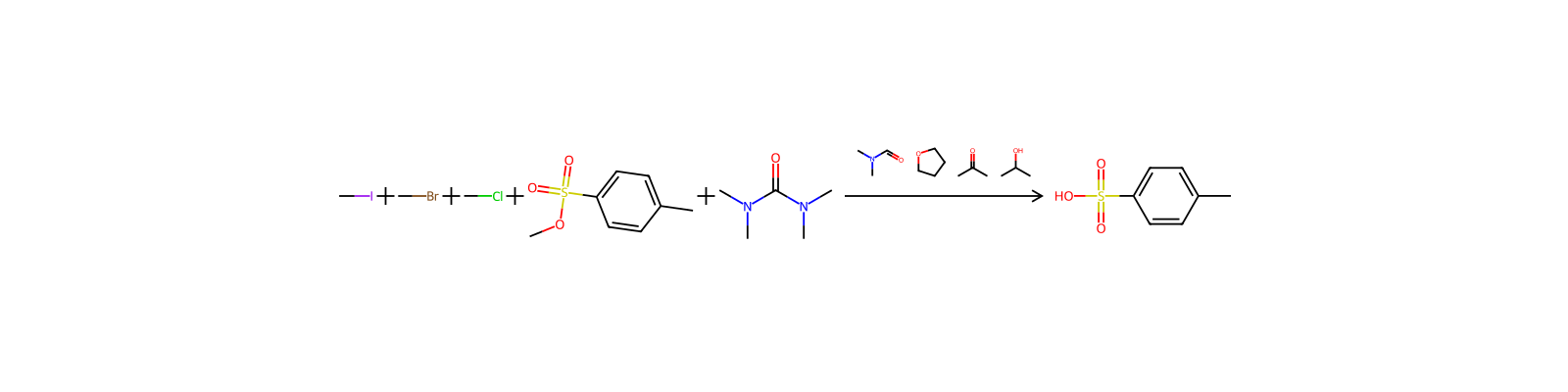
Related reactions
182 records



Linked notes
Loading…