Basic information
- CAS
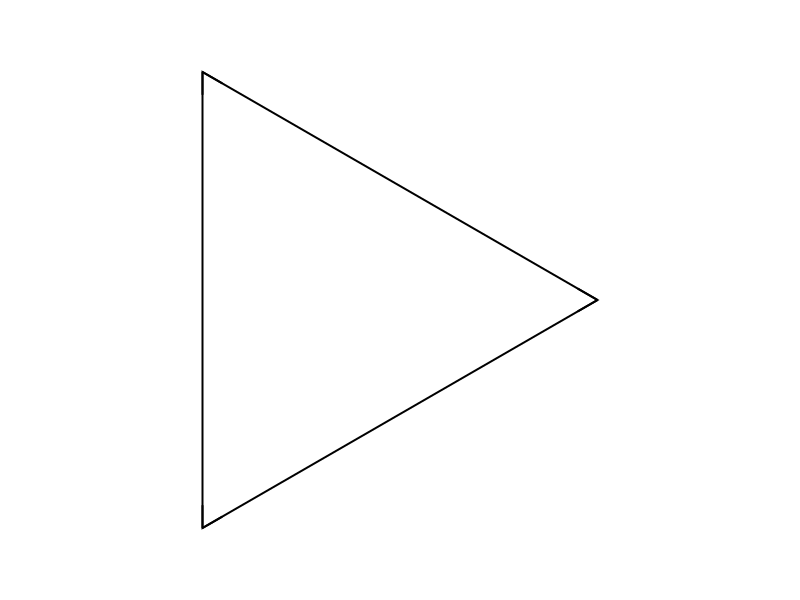
75-19-4- Standard SMILES
C1CC1- InChIKey
LVZWSLJZHVFIQJ-UHFFFAOYSA-N- Molecular formula
- C3H6
- Average molar mass
- 42.08 g/mol
- Monoisotopic mass
- 42.04695019
Names & identifiers
- Preferred name
- Cyclopropane
- IUPAC
- cyclopropane
- English name
- Cyclopropane
- Molecular formula
- C3H6
- Molecular weight
- 42.08
Names & synonyms
CYCLOPROPANETrimethylene75-19-4ciclopropanocyclopropanumZyklopropanTrimethylene (cyclic)RC 270DTXSID405878699TB643425CHEBI:30365RefChem:5724
Show more names
CyclopropnaneCyclopropane gasCYCLOPROPANE, 99+%trimethylene(cyclic)cyclopropane,liquefiedCyclopropane ISO 9001:2015 REACH
DTXCID1047734200-847-8CyclopropanMFCD00001268Cyclopropane [INN]Cyclopropanum [INN-Latin]Ciclopropano [INN-Spanish]HSDB 812
Database identifiers
- CAS
75-19-4- PubChem CID
- 6351
- DTXSID
DTXSID4058786- ChEMBL
CHEMBL1796999- ChEBI
CHEBI:30365- UNII
- 99TB643425
- EC Number
- 200-847-8
- Nikkaji
- J1.444C
Properties
Computed structural properties
- XLogP
- 1.6
- Topological polar surface area
- 0 Ų
- Hydrogen bond donors
- 0
- Hydrogen bond acceptors
- 0
- Rotatable bonds
- 0
- Heavy atoms
- 3
- Formal charge
- 0
- Complexity
- 4
Experimental & physicochemical properties
LogPlog Kow = 1.72
Odor
RESEMBLES THAT OF PETROLEUM ETHER
Mild, sweet
Odorless
Characteristic odor resembling that of solvent naphtha
TastePUNGENT
Density
0.676 at -27.4 °F (USCG, 1999) - Less dense than water; will float
1.879 G/L AT 0 °C & 1 ATM
1.879 @ 0°C
Color/FormCOLORLESS GAS
Solubility
OSTWALD SOLUBILITY COEFFICIENT (37 °C) IN H2O: 0.20; IN BLOOD: 0.42 AND IN OIL: 11.9
FREELY SOL IN ALCOHOL, ETHER; SOL IN FIXED OILS, CONCN SULFURIC ACID; 1 VOL DISSOLVES IN ABOUT 2.7 VOL OF WATER AT 15 °C
Soluble in benzene; very soluble in ethanol, ether.
3.81X10+2 mg/l water at 35 °C
Boiling Point
-27.2 °F at 760 mmHg (USCG, 1999)
-32.8 °C @ 760 MM HG
-33.5 °C @760 [mm Hg]
DecompositionWhen heated to decomposition it emits acrid smoke and fumes.
Melting Point
-197.3 °F (USCG, 1999)
-127.4 °C
-126.6 °C
Vapor Density1.88 (Air= 1)
Vapor Pressure
5.41X10+3 mm Hg at 25 °C/ calculated from experimentally derived coefficients/
5410 [mm Hg] @25 °C
Surface Tension22 dynes/cm= 0.022 N/m @ -40 °C
Physicochemical properties
- Melting point
- 128 °C · −128 °C(lit.)
- Boiling point
- 33 °C · −33 °C(lit.)
- Density
- 0.619 · 0.6190
- vapor density
- 1.45 · 1.45 (vs air)
- refractive index
- 1.3799 · 1.3799
- pka
- 46 · 46(at 25℃)
- explosive limit
- 10.4 % · 10.4%
- Water Solubility
- 464 mg/L · 464mg/L(25 ºC)
- Specific Heat Capacity
- 1.32 J/ · Cp(gas): 1.32 J/(g·K), at 25℃
- Merck
- 13 · 13,2777
- Henry's Law Constant
- 1.2 · 1.2×10-4 mol/(m3Pa) at 25℃, Plyasunov and Shock (2000)
- InChI
- InChI=1S/C3H6/c1-2-3-1/h1-3H2
- InChIKey
- LVZWSLJZHVFIQJ-UHFFFAOYSA-N
- SMILES
- C1CC1
- CAS DataBase Reference
- 75 · 75-19-4
- EWG's Food Scores
- 1 · 1
- FDA UNII
- 99 TB643425 · 99TB643425
- EPA Substance Registry System
- Cyclopropane (75-19-4)
- Symbol(GHS)
- 2 · GHS02,GHS04
- Signal word
- Danger
- Hazard statements
- 220 · H220
- Precautionary statements
- 210 · P210-P377-P381-P403
- Hazard Codes
- F+
- Risk Statements
- 12 · 12
- Safety Statements
- 9 · 9-16-33
- RIDADR
- 1027 · UN 1027
- WGK Germany
- 1 · 1
- RTECS
- 690000 · GZ0690000
- Autoignition Temperature
- 928 °F · 928 °F
- TSCA
- TSCA listed
- HazardClass
- 2.1 · 2.1
- HS Code
- 2903898090 · 2903898090
- Hazardous Substances Data
- 75 · 75-19-4(Hazardous Substances Data)
- Toxicity
- 282 gm/m3/2H · LCLo inhalation in mouse: 282gm/m3/2H
Safety & regulation
GHS classification
GHS Classification
Danger
H220: Extremely flammable gas [Danger Flammable gases]
P203, P210, P222, P280, P377, P381, and P403 (click each P-code to see the statement)
Danger
Hazard information
Regulatory Information
Chemical: Cyclopropane
Cyclopropane: HSNO Approval: HSR000992 Approved with controls
The New Jersey Worker and Community Right to Know Act requires public and private employers to provide information about hazardous substances at their workplaces. (N.J.S.A. 34:5A-1 et. seq.)
DOT LabelFlammable Gas
Fire Hazards
Excerpt from ERG Guide 115 [Gases - Flammable (Including Refrigerated Liquids)]:;EXTREMELY FLAMMABLE. Will be easily ignited by heat, sparks or flames. Will form explosive mixtures with air. Vapors from liquefied gas are initially heavier than air and spread along ground. CAUTION: Hydrogen (UN1049), Deuterium (UN1957), Hydrogen, refrigerated liquid (UN1966), Methane (UN1971) and Hydrogen and Methane mixture, compressed (UN2034) are lighter than air and will rise. Hydrogen and Deuterium fires are difficult to detect since they burn with an invisible flame. Use an alternate method of detection (thermal camera, broom handle, etc.) Vapors may travel to source of ignition and flash back. Cylinders exposed to fire may vent and release flammable gas through pressure relief devices. Containers may explode when heated. Ruptured cylinders may rocket. CAUTION: When LNG - Liquefied natural gas (UN1972) is released on or near water, product may vaporize explosively. (ERG, 2024)
· EXTREMELY FLAMMABLE.;· Will be easily ignited by heat, sparks or flames.;· Will form explosive mixtures with air.;· Vapors from liquefied gas are initially heavier than air and spread along ground.;CAUTION: Hydrogen (UN1049), Deuterium (UN1957), Hydrogen, refrigerated liquid (UN1966), Methane (UN1971) and Hydrogen and Methane mixture, compressed (UN2034) are lighter than air and will rise. Hydrogen and Deuterium fires are difficult to detect since they burn with an invisible flame. Use an alternate method of detection (thermal camera, broom handle, etc.);· Vapors may travel to source of ignition and flash back.;· Cylinders exposed to fire may vent and release flammable gas through pressure relief devices.;· Containers may explode when heated.;· Ruptured cylinders may rocket.;CAUTION: When LNG - Liquefied natural gas (UN1972) is released on or near water, product may vaporize explosively.
Fire Potential
VERY DANGEROUS FIRE HAZARD WHEN EXPOSED TO HEAT OR FLAME; CAN REACT WITH OXIDIZING MATERIALS.
Flashback along vapor trail may occur.
Health Hazards
Inhalation causes some analgesia, anesthesia, pupil dilation, shallow depth of respirations, decreasing muscle tone. Contact with liquid may cause frostbite. (USCG, 1999)
· Vapors may cause dizziness or asphyxiation without warning, especially when in closed or confined areas.;· Some may be irritating if inhaled at high concentrations.;· Contact with gas, liquefied gas or cryogenic liquids may cause burns, severe injury and/or frostbite.;· Fire may produce irritating and/or toxic gases.
Hazards Summary
Highly flammable; Mixtures with air or oxygen are flammable and explosive; Inhalation of high concentrations can cause CNS depression; [Hawley] Evaporating liquid can cause frostbite; In confined space spill, may displace air and act as simple asphyxiant; [CAMEO] Evaporating liquid can cause frostbite; [CHEMINFO]
DOT ID and Guide1027 115
Reactive GroupHydrocarbons, Aliphatic Saturated
Reactivity AlertsHighly Flammable
Reactivity Profile
CYCLOPROPANE is incompatible with strong oxidizing agents such as nitric acid. Boiling of the liquid and charring may occur followed by ignition of remaining material and other nearby combustibles. Adsorbed readily by concentrated sulfuric acid [Merck]. In other settings, mostly unreactive. Not affected by aqueous solutions of acids, alkalis, most oxidizing agents, and most reducing agents. When heated sufficiently or when ignited in the presence of air, oxygen or strong oxidizing agents, burns exothermically to produce carbon dioxide and water. Mixtures with oxygen or air may explode [Merck]. Contact of the cold liquefied gas with water may result in vigorous or violent boiling and extremely rapid vaporization due to the large temperature differences involved. If the water is hot, a liquid "superheat" explosion may occur. Pressures may build to dangerous levels if the liquid contacts water in a closed container, [Handling Chemicals Safely, 1980. p. 250].
Flammable Limits2.4%-10.3%
DOT Emergency Guidelines
/GUIDE 115: GASES - FLAMMABLE (Including Refrigerated Liquids)/ Fire or Explosion: EXTREMELY FLAMMABLE. Will be easily ignited by heat, sparks or flames. Will form explosive mixtures with air. Vapors from liquefied gas are initially heavier than air and spread along ground. CAUTION: Hydrogen (UN1049), Deuterium (UN1957), Hydrogen, refrigerated liquid (UN1966) and Methane (UN1971) are lighter than air and will rise. Hydrogen and Deuterium fires are difficult to detect since they burn with an invisible flame. Use an alternate method of detection (thermal camera, broom handle, etc.) Vapors may travel to source of ignition and flash back. Cylinders exposed to fire may vent and release flammable gas through pressure relief devices. Containers may explode when heated. Ruptured cylinders may rocket.
/GUIDE 115: GASES - FLAMMABLE (Including Refrigerated Liquids)/ Health: Vapors may cause dizziness or asphyxiation without warning. Some may be irritating if inhaled at high concentrations. Contact with gas or liquefied gas may cause burns, severe injury and/or frostbite. Fire may produce irritating and/or toxic gases.
/GUIDE 115: GASES - FLAMMABLE (Including Refrigerated Liquids)/ Public Safety: CALL Emergency Response Telephone Number on Shipping Paper first. If Shipping Paper not available or no answer, refer to appropriate telephone number listed on the inside back cover. As an immediate precautionary measure, isolate spill or leak area for at least 100 meters (330 feet) in all directions. Keep unauthorized personnel away. Stay upwind. Many gases are heavier than air and will spread along ground and collect in low or confined areas (sewers, basements, tanks). Keep out of low areas.
/GUIDE 115: GASES - FLAMMABLE (Including Refrigerated Liquids)/ Protective Clothing: Wear positive pressure self-contained breathing apparatus (SCBA). Structural firefighters' protective clothing will only provide limited protection. Always wear thermal protective clothing when handling refrigerated/cryogenic liquids.
For more DOT Emergency Guidelines (Complete) data for CYCLOPROPANE (8 total), please visit the HSDB record page.
Safety & protection
Fire Fighting
Excerpt from ERG Guide 115 [Gases - Flammable (Including Refrigerated Liquids)]:;DO NOT EXTINGUISH A LEAKING GAS FIRE UNLESS LEAK CAN BE STOPPED. CAUTION: Hydrogen (UN1049), Deuterium (UN1957), Hydrogen, refrigerated liquid (UN1966) and Hydrogen and Methane mixture, compressed (UN2034) will burn with an invisible flame. Use an alternate method of detection (thermal camera, broom handle, etc.).;SMALL FIRE: Dry chemical or CO2.;LARGE FIRE: Water spray or fog. If it can be done safely, move undamaged containers away from the area around the fire. CAUTION: For LNG - Liquefied natural gas (UN1972) pool fires, DO NOT USE water. Use dry chemical or high-expansion foam.;FIRE INVOLVING TANKS: Fight fire from maximum distance or use unmanned master stream devices or monitor nozzles. Cool containers with flooding quantities of water until well after fire is out. Do not direct water at source of leak or safety devices; icing may occur. Withdraw immediately in case of rising sound from venting safety devices or discoloration of tank. ALWAYS stay away from tanks in direct contact with flames. For massive fire, use unmanned master stream devices or monitor nozzles; if this is impossible, withdraw from area and let fire burn. (ERG, 2024)
Accidental Release Measures
· CALL 911. Then call emergency response telephone number on shipping paper. If shipping paper not available or no answer, refer to appropriate telephone number listed on the inside back cover.;· Keep unauthorized personnel away.;· Stay upwind, uphill and/or upstream.;· Many gases are heavier than air and will spread along the ground and collect in low or confined areas (sewers, basements, tanks, etc.).
· ELIMINATE all ignition sources (no smoking, flares, sparks or flames) from immediate area.;· All equipment used when handling the product must be grounded.;· Do not touch or walk through spilled material.;· Stop leak if you can do it without risk.;· If possible, turn leaking containers so that gas escapes rather than liquid.;· Use water spray to reduce vapors or divert vapor cloud drift. Avoid allowing water runoff to contact spilled material.;· Do not direct water at spill or source of leak.;CAUTION: For LNG - Liquefied natural gas (UN1972), DO NOT apply water, regular or alcohol-resistant foam directly on spill. Use a high-expansion foam if available to reduce vapors.;· Prevent spreading of vapors through sewers, ventilation systems and confined areas.;· Isolate area until gas has dispersed.;CAUTION: When in contact with refrigerated/cryogenic liquids, many materials become brittle and are likely to break without warning.
First Aid
INHALATION: remove promptly to fresh air; if symptoms of asphyxia- tion persist, administer artificial respiration and oxygen; treat symptomatically thereafter.;SKIN: if frostbite has occurred, apply warm water; treat burn. (USCG, 1999)
General First Aid:;· Call 911 or emergency medical service.;· Ensure that medical personnel are aware of the material(s) involved, take precautions to protect themselves and avoid contamination.;· Move victim to fresh air if it can be done safely.;· Administer oxygen if breathing is difficult.;· If victim is not breathing:;-- DO NOT perform mouth-to-mouth resuscitation; the victim may have ingested or inhaled the substance.;-- If equipped and pulse detected, wash face and mouth, then give artificial respiration using a proper respiratory medical device (bag-valve mask, pocket mask equipped with a one-way valve or other device).;-- If no pulse detected or no respiratory medical device available, provide continuous compressions. Conduct a pulse check every two minutes or monitor for any signs of spontaneous respirations.;· Remove and isolate contaminated clothing and shoes.;· For minor skin contact, avoid spreading material on unaffected skin.;· In case of contact with substance, remove immediately by flushing skin or eyes with running water for at least 20 minutes.;· For severe burns, immediate medical attention is required.;· Effects of exposure (inhalation, ingestion, or skin contact) to substance may be delayed.;· Keep victim calm and warm.;· Keep victim under observation.;· For further assistance, contact your local Poison Control Center.;· Note: Basic Life Support (BLS) and Advanced Life Support (ALS) should be done by trained professionals.;Specific First Aid:;· Clothing frozen to the skin should be thawed before being removed.
Exposure Control and Personal Protection
· Wear positive pressure self-contained breathing apparatus (SCBA).;· Structural firefighters' protective clothing provides thermal protection but only limited chemical protection.;· Always wear thermal protective clothing when handling refrigerated/cryogenic liquids.
Fire Fighting Procedures
STOP FLOW OF GAS, THEN USE CARBON DIOXIDE, DRY CHEMICAL, OR WATER SPRAY.
Cool exposed containers and protect men effecting shutoff with water.
Nonfire Spill Response
Excerpt from ERG Guide 115 [Gases - Flammable (Including Refrigerated Liquids)]:;ELIMINATE all ignition sources (no smoking, flares, sparks or flames) from immediate area. All equipment used when handling the product must be grounded. Do not touch or walk through spilled material. Stop leak if you can do it without risk. If possible, turn leaking containers so that gas escapes rather than liquid. Use water spray to reduce vapors or divert vapor cloud drift. Avoid allowing water runoff to contact spilled material. Do not direct water at spill or source of leak. CAUTION: For LNG - Liquefied natural gas (UN1972), DO NOT apply water, regular or alcohol-resistant foam directly on spill. Use a high-expansion foam if available to reduce vapors. Prevent spreading of vapors through sewers, ventilation systems and confined areas. Isolate area until gas has dispersed. CAUTION: When in contact with refrigerated/cryogenic liquids, many materials become brittle and are likely to break without warning. (ERG, 2024)
Disposal Methods
SRP: At the time of review, criteria for land treatment or burial (sanitary landfill) disposal practices are subject to significant revision. Prior to implementing land disposal of waste residue (including waste sludge), consult with environmental regulatory agencies for guidance on acceptable disposal practices.
Preventive Measures
SRP: Local exhaust ventilation should be applied wherever there is an incidence of point source emissions or dispersion of regulated contaminants in the work area. Ventilation control of the contaminant as close to its point of generation is both the most economical and safest method to minimize personnel exposure to airborne contaminants.
Isolation and Evacuation
Excerpt from ERG Guide 115 [Gases - Flammable (Including Refrigerated Liquids)]:;IMMEDIATE PRECAUTIONARY MEASURE: Isolate spill or leak area for at least 100 meters (330 feet) in all directions.;LARGE SPILL: Consider initial downwind evacuation for at least 800 meters (1/2 mile).;FIRE: If tank, rail tank car or highway tank is involved in a fire, ISOLATE for 1600 meters (1 mile) in all directions; also, consider initial evacuation for 1600 meters (1 mile) in all directions. In fires involving Liquefied Petroleum Gases (LPG) (UN1075), Butane (UN1011), Butylene (UN1012), Isobutylene (UN1055), Propylene (UN1077), Isobutane (UN1969), and Propane (UN1978), also refer to the "BLEVE - Safety Precautions" section. (ERG, 2024)
Immediate precautionary measure;· Isolate spill or leak area for at least 100 meters (330 feet) in all directions.;Large Spill;· Consider initial downwind evacuation for at least 800 meters (1/2 mile).;Fire;· If tank, rail tank car or highway tank is involved in a fire, ISOLATE for 1600 meters (1 mile) in all directions; also, consider initial evacuation for 1600 meters (1 mile) in all directions.;· In fires involving Liquefied Petroleum Gases (LPG) (UN1075), Butane (UN1011), Butylene (UN1012), Isobutylene (UN1055), Propylene (UN1077), Isobutane (UN1969), and Propane (UN1978), also refer to the "BLEVE - Safety Precautions" section.
Threshold Limit Values (TLV)1000.0 [ppm]
Protective Action Criteria (PAC)
150 [mg/m3]
1600 [mg/m3]
9600 [mg/m3]
Personal Protective Equipment (PPE)
Self-contained breathing apparatus for high concentrations of vapor; safety goggles or face shield. (USCG, 1999)
Self-contained breathing apparatus for high concn of vapor; safety goggles or face shield.
Toxicology
Interactions
ONE SERIOUS DRUG INTERACTION INVOLVES SENSITIZATION OF MYOCARDIUM TO CATECHOLAMINES BY CYCLOPROPANE & SOME HALOGENATED HYDROCARBONS... IN PRESENCE OF THESE, ADMIN OF EPINEPHRINE, ISOPROTERENOL, OR LEVARTERENOL MARKEDLY INCREASES INCIDENCE OF CARDIAC ARRHYTHMIAS.
VENTILATION IS PROGRESSIVELY DEPRESSED AS ANESTHESIA IS DEEPENED, PARTICULARLY IF A NARCOTIC ANALGESIC HAS BEEN USED FOR PREMEDICATION...
THE DOSE OF NONDEPOLARIZING NEUROMUSCULAR BLOCKING AGENTS (TUBOCURARINE, METOCURINE, PANCURONIUM, & GALLAMINE) SHOULD BE REDUCED WHEN USED WITH CYCLOPROPANE...BECAUSE THESE ANESTHETICS POTENTIATE MUSCLE RELAXANT EFFECTS OF NEUROMUSCULAR BLOCKING DRUGS.
ANTICHOLINERGIC DRUGS EG ATROPINE, SCOPOLAMINE, & GLYCOPYRROLATE...ARE...USED TO PROTECT AGAINST BRADYCARDIA, HYPOTENSION, & EVEN CARDIAC ARREST INDUCED BY...CYCLOPROPANE...
Environmental Fate
TERRESTRIAL FATE: Based on a recommended classification scheme(1), an estimated Koc value of 210(SRC), determined from an experimental log Kow of 1.72(2,SRC) and a recommended regression-derived equation(3), indicates that cyclopropane is expected to have moderate mobility in soil(SRC). Volatilization of cyclopropane from moist soil surfaces is expected to occur(SRC) given an estimated Henry's Law constant of 0.79 atm-cu m/mole(SRC), determined from experimental values for vapor pressure, 5.4X10+3 mm Hg(4) and water solubility, 380 mg/l(5). The potential for volatilization of cyclopropane from dry soil surfaces may exist based on a measured vapor pressure of 5.4X10+3 mm Hg(4,SRC).
AQUATIC FATE: Based on a recommended classification scheme(1), an estimated Koc value of 210(SRC), determined from an experimental log Kow of 1.72(2,SRC) and a recommended regression-derived equation(3), indicates that cyclopropane is expected to adsorb to suspended solids and sediment in water(SRC). Cyclopropane is expected to volatilize from water surfaces(3,SRC) based on an estimated Henry's Law constant of 0.79 atm-cu m/mole(4,5,SRC). Estimated half-lives for a model river and model lake are 1.9 hours and 2.6 days, respectively(3,SRC). According to a classification scheme(5), an estimated BCF value of 12(3,SRC), from an experimental log Kow of 1.72(2,SRC), suggests that bioconcentration in aquatic organisms is low(SRC).
ATMOSPHERIC FATE: According to a model of gas/particle partitioning of semivolatile organic compounds in the atmosphere(1), cyclopropane, which has an experimental vapor pressure of 5.4X10+3 mm Hg at 25 °C(2,SRC), is expected to exist solely as a vapor in the ambient atmosphere. Vapor-phase cyclopropane is degraded in the atmosphere by reaction with photochemically-produced hydroxyl radicals(SRC); the estimated half-life for this reaction in air is about 230 days(3,SRC).
Adverse EffectsNeurotoxin - Acute solvent syndrome;Other Poison - Simple Asphyxiant
Effluent ConcentrationsCyclopropane was identified in stack emissions from a waste incinerator plant(1).
Soil Adsorption/Mobility
The Koc of cyclopropane is estimated as approximately 210(SRC), using an experimental log Kow of 1.72(1) and a regression-derived equation(2,SRC). According to a recommended classification scheme(3), this estimated Koc value suggests that cyclopropane is expected to have moderate mobility in soil(SRC).
Atmospheric ConcentrationsURBAN/SUBURBAN: Cyclopropane was identified, but not quantitated, in air samples from Pretoria, Johannesburg, and Durban, South Africa, between 1975 and 1976(1).
Human Toxicity Excerpts
CYCLOPROPANE INCR IRRITABILITY OF PACEMAKER & CONDUCTION TISSUES & VENTRICULAR ARRHYTHMIAS CAN OCCUR, ESPECIALLY IF ANESTHESIA IS DEEP OR VENTILATION IS INADEQUATE & HYPERCAPNIA DEVELOPS.
CYCLOPROPANE IS MINIMALLY IRRITATING TO THE RESPIRATORY TRACT, AND THEREFORE, RESPIRATORY ALTERATIONS SUCH AS BREATH-HOLDING, TACHYPNEA AND COUGHING ARE LESS FREQUENT... LARYNGO-SPASM MAY DEVELOP DURING INDUCTION... DELIRIUM DURING INDUCTION IS NOT UNCOMMON.
A VARIETY OF ARRHYTHMIAS MAY OCCUR DURING THE ADMINISTRATION OF CYCLOPROPANE, INCLUDING SINUS BRADYCARDIA, ATRIAL EXTRASYSTOLES, ATRIAL FIBRILLATION, A-V NODAL RHYTHMS, VENTRICULAR EXTRASYSTOLES, AND BIGEMINAL RHYTHM.
THERE IS NO EVIDENCE THAT CYCLOPROPANE IS HEPATOTOXIC...
For more Human Toxicity Excerpts (Complete) data for CYCLOPROPANE (8 total), please visit the HSDB record page.
Artificial Pollution SourcesCyclopropane's production and use in organic syntheses(1) will result in its release to the environment(SRC).
Environmental Bioconcentration
An estimated BCF value of 12 was calculated for cyclopropane(SRC), using an experimental log Kow of 1.72(1) and a recommended regression-derived equation(2). According to a classification scheme(3), this BCF value suggests that bioconcentration in aquatic organisms is low(SRC).
Volatilization from Water/Soil
The Henry's Law constant for cyclopropane is estimated as 0.79 atm-cu m/mole(SRC) from its experimental values for vapor pressure, 5.4X10+3 mm Hg(1), and water solubility, 380 mg/l(2). This value indicates that cyclopropane will volatilize rapidly from water surfaces(3,SRC). Based on this Henry's Law constant, the volatilization half-life from a model river (1 m deep, flowing 1 m/sec, wind velocity of 3 m/sec) is estimated as approximately 1.9 hours(3,SRC). The volatilization half-life from a model lake (1 m deep, flowing 0.05 m/sec, wind velocity of 0.5 m/sec) is estimated as approximately 2.6 days(3,SRC). Cyclopropane is expected to volatilize from moist soil surfaces given an estimated Henry's Law constant of 0.79 atm-cu m/mole(1,2,SRC). The potential for volatilization of cyclopropane from dry soil surfaces may exist(SRC) based on a measured vapor pressure of 5.4X10+3 mm Hg(1).
Non-Human Toxicity Excerpts
POST-ANESTHETIC VOMITING OFTEN FOLLOWS THE USE OF CYCLOPROPANE IN SMALL ANIMALS.
CYCLOPROPANE ASSESSED IN VITRO BY MICROBIAL ASSAY EMPLOYING 2 HISTIDINE-DEPENDENT STRAINS OF SALMONELLA TYPHIMURIUM, TA1535 & TA100. CYCLOPROPANE WAS NOT MUTAGENIC.
Cyclopropane acts rapidly in the dog and serves as a model for predicting anesthetic concentrations for human application. In chickens, exposure for 6 hr produced embryonic abnormalities at 10 to 20% and death at 20 to 30% in 12 hr exposures.
CYCLOPROPANE LOWERED THE ARTERIAL PRESSURE OF THE PITHED RAT. HEART RATE WAS UNCHANGED. CYCLOPROPANE DECR THE PRESSOR RESPONSES TO SYMPATHETIC NERVE STIMULATION AND REDUCED MOTOR RESPONSES OF SMOOTH MUSCLE OF THE COLON TO PARASYMPATHETIC STIMULATION.
Environmental Abiotic Degradation
The experimental rate constant for the vapor-phase reaction of cyclopropane with photochemically-produced hydroxyl radicals is 0.07X10⁻¹² cu cm/molecule-sec at 25 °C(1). This corresponds to an atmospheric half-life of about 230 days at an atmospheric concentration of 5X10+5 hydroxyl radicals per cu cm(1,SRC). Cyclopropane is not expected to undergo hydrolysis or direct photolysis in the environment due to the lack of functional groups to hydrolyze(2,SRC) or its lack of ability to absorb light in the environmental spectrum(SRC).
Regulatory information
Regulatory Information
Chemical: Cyclopropane
Cyclopropane: HSNO Approval: HSR000992 Approved with controls
The New Jersey Worker and Community Right to Know Act requires public and private employers to provide information about hazardous substances at their workplaces. (N.J.S.A. 34:5A-1 et. seq.)
DHS Chemicals of Interest (COI)
Cyclopropane
1
10000
Flammable chemical that can be released at a facility.
Safety data
- wgk
- 1
- tsca
- TSCA listed
- rtecs
- GZ0690000
- ridadr
- UN 1027
- hs_code
- 2903898090
- Toxicity
- LCLo inhalation in mouse: 282gm/m3/2H
- risk_code
- 12
- Signal word
- Danger
- Symbol(GHS)
- GHS02,GHS04
- hazard_code
- F+
- safety_code
- 9-16-33
- hazard_class
- 2.1
- Hazard statements
- H220
- Autoignition Temperature
- 928 °F
- Precautionary statements
- P210-P377-P381-P403
- Hazardous Substances Data
- 75-19-4(Hazardous Substances Data)
Chemistry & industry
Pharmacology
Mechanism of Action
The effect of several inhalation and iv anesthetics, alone or in combination, on brain electric activity during evoked cortical response was studied in rats. All of the anesthetics affect the evoked sensory response in a manner which suggests a common site of anesthetic action, namely, the perturbation of normal modulation exerted upon the ventrobasal thalamus by the thalamic reticular nucleus which is remarkably susceptible to the action of these agents.
Metabolism/Metabolites
...A SMALL AMT (ROUGHLY 0.5%) IS METABOLIZED IN THE BODY AND EXCRETED AS CARBON DIOXIDE AND WATER...
NON-STEADY STATE METABOLISM OF INHALATION ANESTHETICS DURING ANESTHESIA & RECOVERY WAS SIMULATED WITH LINEAR & NON-LINEAR WHOLE BODY COMPARTMENTAL MODEL. THESE TWO MODELS WERE STUDIED FOR NINE ANESTHETICS DURING 1 MINUTE ALVEOLAR CONCN ANESTHESIA LASTING 1, 4 AND 8 HR AND RECOVERY FROM 5 TO 10 DAYS. BOTH MODELS DEMONSTRATED SIGNIFICANT METABOLISM FOR SEVERAL DAYS FOLLOWING ANESTHESIA. FOR THE LINEAR MODEL, BOTH THE PERCENTAGE AND THE MOLAR QUANTITY OF ANESTHETIC METABOLIZED INCREASED WITH INCREASED DURATION OF ANESTHESIA, INCREASED ANESTHETIC FAT SOLUBILITY AND INCREASED ASSUMED RATE OF HEPATIC METABOLISM. FOR THE NON-LINEAR MODEL, THE DURATION OF ANESTHESIA HAD LITTLE EFFECT ON THE PERCENTAGE METABOLIZED BUT DEMONSTRATED INCREASED MOLAR QUANTITIES OF ANESTHETIC METABOLIZED WITH INCREASED DURATION OF ANESTHESIA AND INCREASED FAT SOLUBILITY.
MeSH Pharmacological Classification
Agents capable of inducing a total or partial loss of sensation, especially tactile sensation and pain. They may act to induce general ANESTHESIA, in which an unconscious state is achieved, or may act locally to induce numbness or lack of sensation at a targeted site.
Absorption, Distribution and ExcretionCYCLOPROPANE IS RAPIDLY ABSORBED AND ALMOST ENTIRELY ELIMINATED BY WAY OF THE LUNGS; A SMALL AMT DIFFUSES THROUGH THE SKIN AND AN ADDITIONAL SMALL AMOUNT (ROUGHLY 0.5%) IS METABOLIZED IN THE BODY...
Uses & manufacturing
Uses
Used in organic synthesis; as anesthetic; [Hawley]
ORGANIC SYNTHESIS
MEDICATION (VET)
MEDICATION
Cyclopropane is a sweet-smelling, flammable gas that has little or no laboratory, commercial, or industrial use.
U.S. Production
(1972) PROBABLY GREATER THAN 4.54X10+5 GRAMS
(1975) PROBABLY GREATER THAN 4.54X10+5 GRAMS
Consumption PatternsAPPROX 100% AS GENERAL ANESTHETIC (1976)
Methods of Manufacturing
REACTION OF 1,3-DIBROMOPROPANE WITH ZINC IN ALCOHOL
BY REDUCTION OF 1,2-DIBROMOCYCLOPROPANE WITH ZINC AND ALCOHOL. FROM 1,3-DIBROMOPROPANE WITH ZINC AND ALCOHOL IN ABSENCE OF WATER. BY ACTION OF SODIUM VAPOR ON 1,3-DIBROMOPROPANE. FROM 1,3-DICHLOROPROPANE HEATED WITH EXCESS ZINC DUST, IODINE AND ETHANOL IN 80% YIELD. FROM 1,3-DICHLOROPROPANE WITH ZINC IN PRESENCE OF SODIUM IODIDE. FROM ETHYLENE BY THE REACTION WITH METHYLENE IODIDE AND A ZINC-COPPER COUPLE IN 29% YIELD.
Formulations/PreparationsGRADES: TECHNICAL; USP; 99.5% MIN.
General Manufacturing Information
Cyclopropane: ACTIVE
... Cyclopropane was perhaps the most widely used general anesthetic ... However, with the increasing risk of explosion in the operating room brought about by the use of electronic equipment, the need for a safe,nonflammable anesthetic increased ... .
MAJOR ARGUMENTS SUPPORTING RETENTION OF OPTION TO USE INFLAMMABLE ANESTHETICS SUCH AS CYCLOPROPANE ARE PRESENTED AS WELL AS THE PRINCIPAL GROUNDS FOR A BAN ON USE OF SUCH AGENTS.
Applications
HistoryCyclopropane was discovered by Freund (1882), but the anaesthetic properties of hydrocarbons with the general formula CnH2n were appreciated earlier. John Snow (1858), for example, administered amylene (C5H10) to 238 patients. In 1923, ethylene (C2H4) was introduced into clinical anaesthesia, but its low potency and inflammability restricted its use. At the University of Toronto, research by G. H. W. Lucas and V. E. Henderson on propylene (CH3.CH:CH2) revealed certain samples to show marked cardiac toxicity. Lucas suggested that the toxicity might arise from one of the impurities present in the samples, the cyclic isomer of propylene, cyclopropane. Pure samples of cyclopropane were prepared and this, when tested by Lucas and Henderson, proved to be a more potent and suitable anaesthetic agent than propylene.
UsesCyclopropane is a powerful, nonirritating agent which can produce anaesthesia in a few breaths. It has been used used as an anesthetic, but this use has been discontinued because the gas is dangerous to manufacture and handle. Cyclopropane has been used as the pseudo-π unsaturated hydrocarbon prototype to study the rotational spectrum of its complex formed with chlorine monofluoride and the similarity of this complex with isotopomers.
DescriptionCyclopropane (molecular formula: C3H6) is a kind of cycloalkane molecule. Cyclopropane and propene are isomers of each other. It can be used as a kind of anaesthetic. However, due to its side effect of causing a sudden decrease in blood pressure and potentially causing cardiac dysrhythmia, it has not been available for clinical use since mid-1980 as more. Its mechanism of action is through acting as the NMDA receptor antagonist as well as inhibiting the AMPA receptor, inhibiting the nicotine acetylcholine receptor, and activates certain K2P channels.
UsesCyclopropane was initially investigated because it was thought to be the toxic element in ethylene. Instead, it turned out to be an excellent anesthetic with very rapid onset and recovery while maintaining stable hemodynamics. Its use was ultimately limited because it was highly explosive. Cyclopropane is a sweet-smelling, flammable gas that has little or no laboratory, commercial, or industrial use.
General DescriptionCyclopropane is a colorless gas with a petroleum-like odor. It is shipped as a liquid at 4-6 atms. It is easily ignited. The vapors are heavier than air. Contact with the liquid may cause frostbite. It can asphyxiate by the displacement of air and has a narcotic effect in high concentration (formerly used as an anesthetic gas). Under prolonged exposure to fire or intense heat the containers may rupture violently and rocket.
Preparation methods
PreparationStroll quantities of cyclopropane have been prepared from natural deposits of the gas in the United States, but current practice involves the reaction of trimethylene glycol with hydrobromic acid to form1,3-Dibromopropane. The latter compound, in the presence of zinc dust, converts to the cyclic compound, cyclopropane.
Upstream & downstream products
Upstream raw materials
Downstream products
Additional notes
DefinitionChEBI: Cyclopropane is a cycloalkane composed of three carbon atoms to form a ring. It has a role as an inhalation anaesthetic. It is a cycloalkane and a member of cyclopropanes.
Related reactions
52 records


Compound notes
Loading…