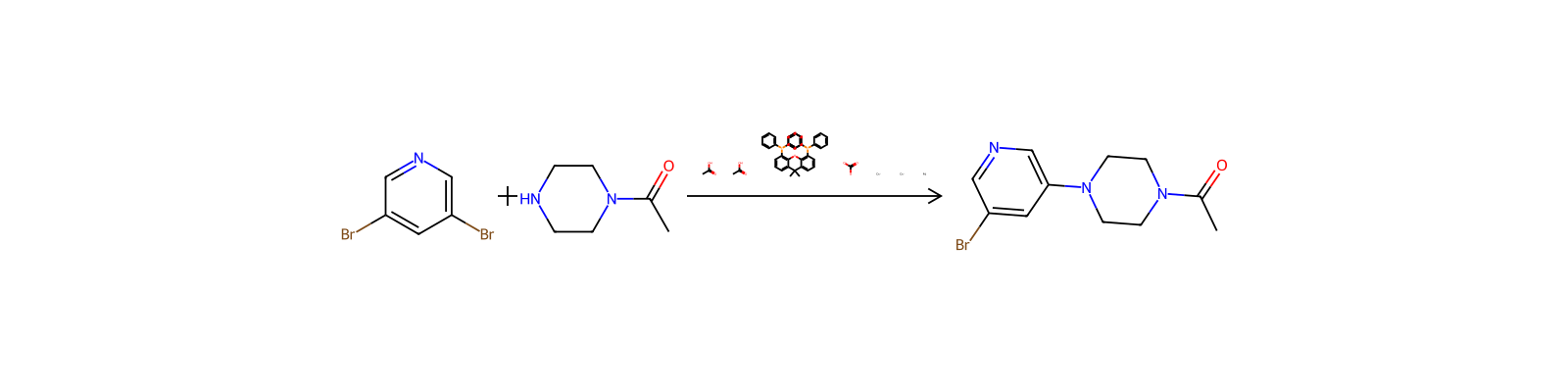
HRID 2As catalyst

161265-03-8CC1(C)c2cccc(P(c3ccccc3)c3ccccc3)c2Oc2c(P(c3ccccc3)c3ccccc3)cccc21CXNIUSPIQKWYAI-UHFFFAOYSA-Nstructure in first source
161265-03-8DTXSID20348350CHEMBL6038035Safety information is for reference only and does not replace the supplier’s Safety Data Sheet (SDS), applicable regulations, or professional assessment.
This chemical does not meet GHS hazard criteria for 2.2% (2 of 90) of reports.
Warning
H315 (54.4%): Causes skin irritation [Warning Skin corrosion/irritation]
P261, P264, P264+P265, P271, P280, P302+P352, P304+P340, P305+P351+P338, P319, P321, P332+P317, P337+P317, P362+P364, P403+P233, P405, and P501 (click each P-code to see the statement)
Aggregated GHS information provided per 90 reports by companies from 18 notifications to the ECHA C&L Inventory. Each notification may be associated with multiple companies.
Usessuzuki reaction
Uses1,1'-(9,9-Dimethyl-9H-xanthene-4,5-diyl)bis[1,1-diphenyl-phosphine is an organophosphorus compound derived from the heterocycle xanthene. It is used as a bidentate ligand and is noteworthy for having a particularly wide bite angle. Such ligands are useful in the hydroformylation of alkenes.
Uses4,5-Bis(diphenylphosphino)-9, 9-dimethylxanthene(xantphos) is used as a bidentate ligand, which finds application in hydroformylation of alkenes.