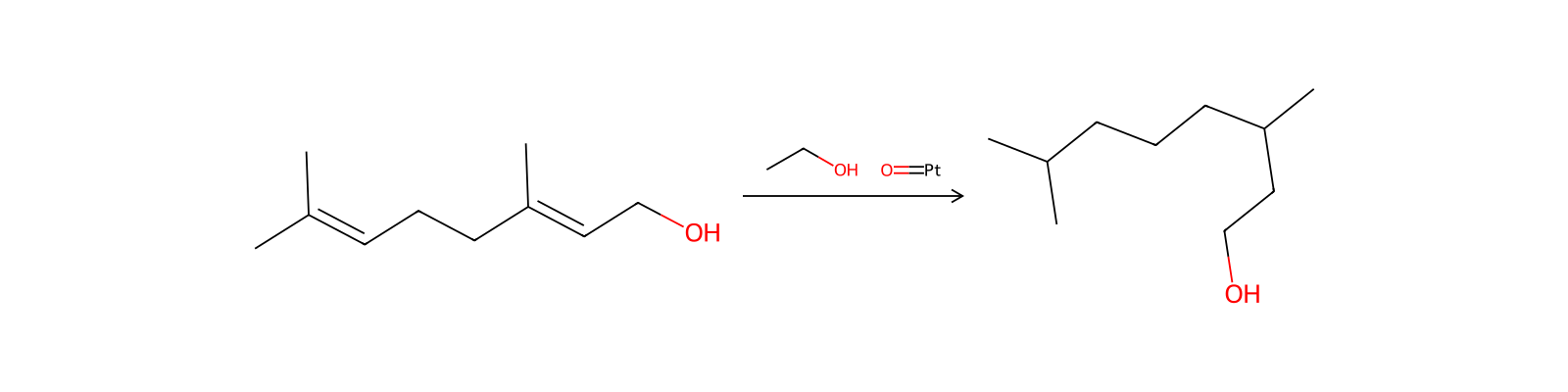
HRID 5629As reactant

106-24-1CC(C)=CCC/C(C)=C/COGLZPCOQZEFWAFX-JXMROGBWSA-NGeraniol is a colorless to pale yellow oily liquid with a sweet rose odor. (NTP, 1992)
106-24-1、106-25-2、624-15-7、68311-14-8、868742-17-0DTXSID8026727CHEMBL25719CHEBI:17447Cosmetics ingredient -> Antioxidant; Base; Conditioning/Emollient; Flavor; Fragrance; Moisturizing/Humectant; Other (Specify); Preservative/Stabilizer
Tonic
Fragrance Ingredient (3,7-Dimethyl-2,6-octadien-1-ol) -> IFRA transparency List
Fragrance Ingredient (Geraniol) -> IFRA transparency List
Agrochemicals -> Pesticide active substances
Active substance -> EU Pesticides database: Approved
log Kow = 3.56
3.56
Safety information is for reference only and does not replace the supplier’s Safety Data Sheet (SDS), applicable regulations, or professional assessment.
Warning
H317: May cause an allergic skin reaction [Warning Sensitization, Skin]
P261, P272, P280, P302+P352, P321, P333+P317, P362+P364, and P501 (click each P-code to see the statement)
This chemical does not meet GHS hazard criteria for 0.3% (7 of 2637) of reports.
Danger
H315 (98.9%): Causes skin irritation [Warning Skin corrosion/irritation]
Chemical: 2,6-Octadien-1-ol, 3,7-dimethyl-, (2E)-
Chemical: 2,6-Octadien-1-ol, 3,7-dimethyl-
Hazard Traits - Fragrance Allergen
Regulation (EC) No 1831/2003 (amended)
2,6-Octadien-1-ol, 3,7-dimethyl-, (2E)- is listed on the EPA's Chemical Data Reporting (CDR) system. Manufacturers and importers of 2,6-Octadien-1-ol, 3,7-dimethyl-, (2E)- are required to report information about their production and use of this chemical to the EPA under the Toxic Substances Control Act (TSCA). (40 eCFR Part 711)
Dossier complete 2011/266/EU, Reg. (EC) No 647/2001, Reg. (EU) 2023/1757, Reg. (EU) 2026/372 , Reg. (EU) No 570/2013
IMAP assessments - Geraniol and related compounds: Human health tier II assessment
IMAP assessments - Geraniol and related compounds: Human health tier II assessment
Allergic dermatitis with positive patch testing has been reported; Geraniol was not sensitizing in the human maximization test. A child had convulsions and died after ingesting an unknown quantity of citronella containing 93% geraniol. [HSDB] Danger of skin sensitization; [MAK] A component of the fragrance mix; Patch testing by the North American Contact Dermatitis Group showed 2.8% positive tests to geraniol. [Marks, p. 173] An irritant; Not known to be a sensitizer; Causes CNS depression, spastic paralysis and liver weight changes in high-dose animal studies; [Alfa Aesar MSDS] See Nerol.
Geraniol (GO) potent antitumor and chemopreventive effects are attributed to its antioxidant and anti-inflammatory properties. In the current study, the potential efficacy of GO (250 mg/kg) in ameliorating metabolic syndrome (MetS) induced by fructose in drinking water /administered to rats/ was elucidated. Moreover, the effect of pioglitazone (5 and 10 mg/kg; PIO) and the possible interaction of the co-treatment of GO with PIO5 were studied in the MetS model. After 4 weeks of treatment, GO and/or PIO reduced the fasting blood glucose and the glycemic excursion in the intraperitoneal glucose tolerance test. GO and PIO5/10 restrained visceral adiposity and partly the body weight gain. The decreased level of peroxisome proliferator activated receptor (PPAR)-gamma transcriptional activity in the visceral adipose tissue of MetS rats was increased by single treatment regimens. Though GO did not affect MetS-induced hyperinsulinemia, PIO5/10 lowered it. Additionally, GO and PIO5/10 suppressed glycated hemoglobin and the receptor for advanced glycated end products (RAGE). These single regimens also ameliorated hyperuricemia, the disrupted lipid profile, and the elevated systolic blood pressure evoked by MetS. The rise in serum transaminases, interleukin-1beta, and tumor necrosis factor-alpha, as well as hepatic lipid peroxides and nitric oxide (NO) was lowered by the single treatments to different extents. Moreover, hepatic non-protein thiols, as well as serum NO and adiponectin were enhanced by single regimens. Similar effects were reached by the combination of GO with PIO5; however, a potentiative interaction was noted on fasting serum insulin level, while synergistic effects were reflected as improved insulin sensitivity, as well as reduced RAGE and triglycerides. Therefore, GO via the transcriptional activation of PPAR-gamma reduces inflammation and free radical injury produced by MetS. Thereby, these effects provide novel mechanistic insights on GO management of MetS associated critical risk factors. Moreover, the co-administration of GO to PIO5 exalted the antidiabetic drug anti-MetS efficacy.
In vitro measurements indicated that geraniol is highly stable in human and rat whole blood, whereas following intravenous administration geraniol is eliminated from the bloodstream with a relatively short half-life (about 12 min), starting from a concentration of about 300 μg/mL.


Sweet rose odor
Pleasant geranium-like odor
Pleasant, floral odor
0.8894 at 68 °F (NTP, 1992) - Less dense than water; will float
0.8894 g/cu cm at 20 °C
Density: 0.870-0.890 at 15 °C
0.870-0.885
Synthetic flavoring substances and adjuvants /for human consumption/ that are generally recognized as safe for their intended use, withn the meaning of section 409 of the Act. Geraniol is included on this list.
Synthetic flavoring substances and adjuvants /for animal drugs, feeds, and related products/ that are generally recognized as safe for their intended use, within the meaning of section 409 of the Act. Geraniol is included on this list.
Residues of the following chemical substances are exempted from the requirement of a tolerance when used in accordance with good manufacturing practice as ingredients in an antimicrobial pesticide formulation, provided that the substance is applied on a semi-permanent or permanent food-contact surface (other than being applied on food packaging) with adequate draining before contact with food. (a) The following chemical substances when used as ingredients in an antimicrobial pesticide formulation may be applied to: Food-contact surfaces in public eating places, dairy-processing equipment, and food-processing equipment and utensils. (E)-Geraniol is included on this list. Limit: When ready for use, the end-use concentration is not to exceed 100 ppm.
An exemption from the requirement of a tolerance is established for residues of the biochemical pesticide geraniol in or on all food commodities.
An unsaturated aliphatic hydrocarbon and an alcohol. Flammable and/or toxic gases are generated by the combination of alcohols with alkali metals, nitrides, and strong reducing agents. They react with oxoacids and carboxylic acids to form esters plus water. Oxidizing agents convert them to aldehydes or ketones. Alcohols exhibit both weak acid and weak base behavior. They may initiate the polymerization of isocyanates and epoxides.
2 - Materials that, under emergency conditions, can cause temporary incapacitation or residual injury.
1 - Materials that must be preheated before ignition can occur. Materials require considerable preheating, under all ambient temperature conditions, before ignition and combustion can occur.
0 - Materials that in themselves are normally stable, even under fire conditions.
Skin Irrit. 2 (98.9%)
Skin irritation - category 2
Skin irritation - category 2
Flammable liquids - Category 4
Skin Sens. 1
EYES: First check the victim for contact lenses and remove if present. Flush victim's eyes with water or normal saline solution for 20 to 30 minutes while simultaneously calling a hospital or poison control center. Do not put any ointments, oils, or medication in the victim's eyes without specific instructions from a physician. IMMEDIATELY transport the victim after flushing eyes to a hospital even if no symptoms (such as redness or irritation) develop.
Suitable extinguishing media: Use water spray, alcohol-resistant foam, dry chemical or carbon dioxide.
Advice for firefighters: Wear self-contained breathing apparatus for firefighting if necessary.
ACCIDENTAL RELEASE MEASURES: Personal precautions, protective equipment and emergency procedures: Use personal protective equipment. Avoid breathing vapors, mist or gas. Ensure adequate ventilation. Evacuate personnel to safe areas. Environmental precautions: Prevent further leakage or spillage if safe to do so. Do not let product enter drains. Discharge into the environment must be avoided. Methods and materials for containment and cleaning up: Soak up with inert absorbent material and dispose of as hazardous waste. Keep in suitable, closed containers for disposal.
SMALL SPILLS AND LEAKAGE: If you spill this chemical, use absorbent paper to pick up all liquid spill material. Your contaminated clothing and absorbent paper should be sealed in a vapor-tight plastic bag for eventual disposal. Solvent wash all contaminated surfaces with alcohol followed by washing with a strong soap and water solution. Do not reenter the contaminated area until the Safety Officer (or other responsible person) has verified that the area has been properly cleaned.
SRP: Recycle any unused portion of the material for its approved use or return it to the manufacturer or supplier. Ultimate disposal of the chemical must consider: the material's impact on air quality; potential migration in air, soil or water; effects on animal, aquatic and plant life; and conformance with environmental and public health regulations. If it is possible or reasonable use an alternative chemical product with less inherent propensity for occupational harm/injury/toxicity or environmental contamination.
Product: Offer surplus and non-recyclable solutions to a licensed disposal company. Contact a licensed professional waste disposal service to dispose of this material. Contaminated packaging: Dispose of as unused product.
ACCIDENTAL RELEASE MEASURES: Personal precautions, protective equipment and emergency procedures: Use personal protective equipment. Avoid breathing vapors, mist or gas. Ensure adequate ventilation. Evacuate personnel to safe areas. Environmental precautions: Prevent further leakage or spillage if safe to do so. Do not let product enter drains. Discharge into the environment must be avoided.
Precautions for safe handling: Avoid contact with skin and eyes. Avoid inhalation of vapor or mist.
Appropriate engineering controls: Handle in accordance with good industrial hygiene and safety practice. Wash hands before breaks and at the end of workday.
Gloves must be inspected prior to use. Use proper glove removal technique (without touching glove's outer surface) to avoid skin contact with this product. Dispose of contaminated gloves after use in accordance with applicable laws and good laboratory practices. Wash and dry hands.
SRP: The scientific literature for the use of contact lenses by industrial workers is inconsistent. The benefits or detrimental effects of wearing contact lenses depend not only upon the substance, but also on factors including the form of the substance, characteristics and duration of the exposure, the uses of other eye protection equipment, and the hygiene of the lenses. However, there may be individual substances whose irritating or corrosive properties are such that the wearing of contact lenses would be harmful to the eye. In those specific cases, contact lenses should not be worn. In any event, the usual eye protection equipment should be worn even when contact lenses are in place.
Residues of the following chemical substances are exempted from the requirement of a tolerance when used in accordance with good manufacturing practice as ingredients in an antimicrobial pesticide formulation, provided that the substance is applied on a semi-permanent or permanent food-contact surface (other than being applied on food packaging) with adequate draining before contact with food. (a) The following chemical substances when used as ingredients in an antimicrobial pesticide formulation may be applied to: Food-contact surfaces in public eating places, dairy-processing equipment, and food-processing equipment and utensils. (E)-Geraniol is included on this list. Limit: When ready for use, the end-use concentration is not to exceed 100 ppm.
An exemption from the requirement of a tolerance is established for residues of the biochemical pesticide geraniol in or on all food commodities.
RECOMMENDED RESPIRATOR: Where the neat test chemical is weighed and diluted, wear a NIOSH-approved half face respirator equipped with an organic vapor/acid gas cartridge (specific for organic vapors, HCl, acid gas and SO2) with a dust/mist filter.
Eye/face protection: Tightly fitting safety goggles. Faceshield (8-inch minimum). Use equipment for eye protection tested and approved under appropriate government standards such as NIOSH (US) or EN 166(EU).
Skin protection: Handle with gloves.
Body Protection: Complete suit protecting against chemicals. The type of protective equipment must be selected according to the concentration and amount of the dangerous substance at the specific workplace.
Respiratory protection: Where risk assessment shows air-purifying respirators are appropriate use a full-face respirator with multipurpose combination (US) or type ABEK (EN 14387) respirator cartridges as a backup to engineering controls. If the respirator is the sole means of protection, use a full-face supplied air respirator. Use respirators and components tested and approved under appropriate government standards such as NIOSH (US) or CEN (EU).
The fragrance terpene geraniol forms sensitizing compounds via autoxidation and skin metabolism. Geranial and neral, the two isomers of citral, are the major haptens formed in both of these activation pathways. /The objective of the study was/ to investigate whether testing with oxidized geraniol detects more cases of contact allergy than testing with pure geraniol. The pattern of reactions to pure and oxidized geraniol, and metabolites/autoxidation products, was studied to investigate the importance of autoxidation or cutaneous metabolism in contact allergy to geraniol. Pure and oxidized geraniol were tested at 2.0% petrolatum in 2227 and 2179 consecutive patients, respectively. In parallel, geranial, neral and citral were tested in 2152, 1626 and 1055 consecutive patients, respectively. Pure and oxidized geraniol gave positive patch test reactions in 0.13% and 0.55% of the patients, respectively. Eight of 11 patients with positive patch test reactions to oxidized geraniol also reacted to citral or its components. Relevance for the positive patch test reactions in relation to the patients' dermatitis was found in 11 of 14 cases. Testing with oxidized geraniol could detect more cases of contact allergy to geraniol. The reaction pattern of the 14 cases presented indicates that both autoxidation and metabolism could be important in sensitization to geraniol.
Geraniol (GO) potent antitumor and chemopreventive effects are attributed to its antioxidant and anti-inflammatory properties. In the current study, the potential efficacy of GO (250 mg/kg) in ameliorating metabolic syndrome (MetS) induced by fructose in drinking water /administered to rats/ was elucidated. Moreover, the effect of pioglitazone (5 and 10 mg/kg; PIO) and the possible interaction of the co-treatment of GO with PIO5 were studied in the MetS model. After 4 weeks of treatment, GO and/or PIO reduced the fasting blood glucose and the glycemic excursion in the intraperitoneal glucose tolerance test. GO and PIO5/10 restrained visceral adiposity and partly the body weight gain. The decreased level of peroxisome proliferator activated receptor (PPAR)-gamma transcriptional activity in the visceral adipose tissue of MetS rats was increased by single treatment regimens. Though GO did not affect MetS-induced hyperinsulinemia, PIO5/10 lowered it. Additionally, GO and PIO5/10 suppressed glycated hemoglobin and the receptor for advanced glycated end products (RAGE). These single regimens also ameliorated hyperuricemia, the disrupted lipid profile, and the elevated systolic blood pressure evoked by MetS. The rise in serum transaminases, interleukin-1beta, and tumor necrosis factor-alpha, as well as hepatic lipid peroxides and nitric oxide (NO) was lowered by the single treatments to different extents. Moreover, hepatic non-protein thiols, as well as serum NO and adiponectin were enhanced by single regimens. Similar effects were reached by the combination of GO with PIO5; however, a potentiative interaction was noted on fasting serum insulin level, while synergistic effects were reflected as improved insulin sensitivity, as well as reduced RAGE and triglycerides. Therefore, GO via the transcriptional activation of PPAR-gamma reduces inflammation and free radical injury produced by MetS. Thereby, these effects provide novel mechanistic insights on GO management of MetS associated critical risk factors. Moreover, the co-administration of GO to PIO5 exalted the antidiabetic drug anti-MetS efficacy.
... The aim of this study was to determine whether blocking /human colonic cancer/ Caco-2 cell differentiation could sensitize the cells to 5-fluorouracil (5-FU) treatment. We show that in cells at confluency, geraniol (400 uM) prevented the formation of brush-border membranes and inhibited the expression of intestinal hydrolases (sucrase, lactase, alkaline phosphatase). The antiproliferative effect of geraniol (400 uM) together with 5-FU (5 uM) was twice that of 5-FU alone. The cytotoxicity induced by 5-FU was enhanced in the presence of geraniol, as shown by a 50% increase of lactate dehydrogenase release in the culture medium. These effects are related to enhanced intracellular accumulation of 5-FU in the presence of geraniol as shown by a 2-fold increase in intracellular 5-[6-(3)H]FU (1.5 uCi/mL).
... The anti-tumoral efficacy of geraniol and 5-fluorouracil were also evaluated on TC-118 human tumors transplanted in Swiss nu/nu mice. ... In nude mice, the combined administration of 5-fluorouracil (20 mg/kg /for 5 days) and geraniol (150 mg/kg /for 5 days) caused a 53% reduction of the tumor volume, whereas a 26% reduction was obtained with geraniol alone, 5-fluorouracil alone showed no effect.
For more Interactions (Complete) data for GERANIOL (6 total), please visit the HSDB record page.
LC50; Species: Daphnia magna (Water flea); Conditions: static; Concentration: 35 mg/L for 24 hr
LC50; Species: Daphnia magna (Water flea); Conditions: static; Concentration: 8.98 mg/L for 48 hr
LC50; Species: Danio rerio (Zebrafish); Conditions: semi-static; Concentration: 14.0 mg/L for 96 hr
LC50; Species: Oncorhynchus mykiss (Rainbow trout) fingerling; Conditions: freshwater, static, 12 °C, pH 7.5, hardness 44 mg/L CaCO3; Concentration: 3700 ug/L for 96 hr (95% confidence interval: 3300-4100 ug/L) /75% pure technical material/
For more Ecotoxicity Values (Complete) data for GERANIOL (10 total), please visit the HSDB record page.
TERRESTRIAL FATE: Based on a classification scheme(1), an estimated Koc value of 90(SRC), determined from a structure estimation method(2), indicates that geraniol is expected to have high mobility in soil(SRC). Volatilization of geraniol from moist soil surfaces is expected to be an important fate process(SRC) given an estimated Henry's Law constant of 1.15X10⁻⁵ atm-cu m/mole(2) based upon its vapor pressure, 3.0X10⁻² mm Hg(3), and water solubility, 100 mg/L(4). Geraniol is not expected to volatilize from dry soil surfaces(SRC) based upon its estimated vapor pressure(3). A 53% of theoretical BOD using activated sludge in the Japanese MITI test(4), and 98% degradation in the Manometric Respirometry test(5) suggests that biodegradation is an important environmental fate process in soil(SRC).
AQUATIC FATE: Based on a classification scheme(1), an estimated Koc value of 90(SRC), determined from a structure estimation method(2), indicates that geraniol is not expected to adsorb to suspended solids and sediment(SRC). Volatilization from water surfaces is expected(3) based upon an estimated Henry's Law constant of 1.15X10⁻⁵ atm-cu m/mole(2) derived from its vapor pressure, 3.0X10⁻² mm Hg(4), and water solubility, 100 mg/L(5). Using this Henry's Law constant and an estimation method(2), volatilization half-lives for a model river and model lake are 3 days and 34 days, respectively(SRC). According to a classification scheme(6), an estimated BCF of 100(SRC), derived from its log Kow of 3.56(7) and a regression-derived equation(2), suggests the potential for bioconcentration in aquatic organisms is moderate(SRC). A 53% of theoretical BOD using activated sludge in the Japanese MITI test(5), and 98% degradation in the Manometric Respirometry test(8) suggests that biodegradation is an important environmental fate process in water(SRC).
ATMOSPHERIC FATE: According to a model of gas/particle partitioning of semivolatile organic compounds in the atmosphere(1), geraniol, which has a vapor pressure of 3.0X10⁻² mm Hg at 25 °C(2), is expected to exist solely as a vapor in the ambient atmosphere. Vapor-phase geraniol is degraded in the atmosphere by reaction with photochemically-produced hydroxyl radicals(SRC); the half-life for this reaction in air is estimated to be 2 hours(SRC), calculated from its rate constant of 1.8x10⁻¹⁰ cu cm/molecule-sec at 25 °C(SRC) that was derived using a structure estimation method(3). Geraniol absorbs UV at wavelengths of 190-195 nm(4) and, therefore, is not expected to be susceptible to direct photolysis by sunlight(SRC).
Geraniol was identified as a volatile component of edible Korean chamchwi (Aster scaber Thunb.), at a GC peak area concentration of 0.32%(1). It was also identified as a volatile component of pineapple guava (Feihoa sellowiana Berg) fruit, 0.20 ug/g(2). Geraniol is a volatile from apricot (Prunus armeniaca L.) at concentrations of 102, 9, and 7 ug/kg fresh fruit tissue but was not identified as a plum (Prunus salisina Lindl.) volatile; it was detected in the apricot/plum hybrids at concentrations ranging from 5 to 12 ug/kg(3). Fresh rhizomes of ginger (Zingiber officinale Roscoe) emit geraniol volatile(4). It has been identified as a volatile from nectarines (Prunus persica nectarina)(5), pineapples(6), and kiwi fruit flowers (Actinnidia chinensis Planch.)(7).
Geraniol has been detected, not quantified in apple juice, citrus peel oils and juices, bilberry, cranberry, other berries, guava, papaya, cinnamon, ginger, corn mint oil, mustard, nutmeg, mace, coffee, tea, whiskey, honey, passion friut, plums, mushrooms, mango, starfruit, cardamo, coriander leaf and seeds, litchi, Ocimum basilicum, myrtle leaf, rosemary, clary sage, Spanish sage and chamomile oil(1).
IDENTIFICATION AND USE: Geraniol is colorless to pale-yellow, liquid oil. It has a sweet rose like odor. Geraniol is one of the most frequently used terpenoid fragrance materials. It can be used in all flowery-rose like compositions and does not discolor soaps. In flavor compositions, geraniol is used in small quantities to accentuate citrus notes. It is also used in alcoholic and nonalcoholic beverages, baked goods, chewing gum, frozen dairy, gelatin (pudding), gravies, hard candy, meat products, soft candy. It is an important intermediate in the manufacture of geranyl esters, citronellol, and citral. HUMAN EXPOSURE AND TOXICITY: A report of a 32 year old female patient working in a company for baking ingredients, who had been handling grated lemon peel and lemon oil for several years, developed allergic contact dermatitis of the fingers of both her hands. The material responsible for the dermatitis was identified as geraniol in both lemon peel and lemon oil and it proved to be the only source of the allergic reaction. In a human patch test, geraniol at a 32% concentration was severely irritating and geranyl acetate mildly irritating. Occupational exposure to geraniol may occur through inhalation and dermal contact with this compound at workplaces where geraniol is produced or used. Monitoring data indicate that the general population may be exposed to geraniol by inhalation through use of consumer products, ingestion of food, and dermal contact with this compound and other consumer products containing geraniol. Single compounds (SC) of fragrance mix (FM) contribute differently to FM patch test reactions. The data collected by the Information Networks of the Departments of Dermatology multicenter project from 1996-2002 were analyzed. SCs were tested in a selected group of patients, ranging from n=1083 to n=1924 per year. Reactions to SCs in FM positive patients were observed in 29% (oak moss absolute) to 5.9% geraniol. There was no time trend in reactions to SC's, although the relative share was increased for isoeugenol, cinnamic aldehyde and geraniol in 1999. ANIMAL STUDIES: Geraniol is described as not irritating in the rabbit acute dermal irritation corrosion test. It was not sensitizing in the guinea pig maximization test. Groups of five male and five female weanling rats were given diets containing geraniol for 16 weeks. No treatment related effects on growth, hematological parameters or organ weights, or on macroscopic or microscopic changes in the tissues were observed. An in vitro chromosomal aberration test was conducted in Chinese hamster fibroblast without metabolic activation. Three doses of geraniol were examined and the results were equivocal. Polyploidization effects were observed. The incidence of chromosomal aberrations at 48 hours was in the range considered negative. ECOTOXICITY STUDIES: Essential oil constituents were tested for their neurophysiological effects in Periplaneta americana cockroach and Blaberus discoidalis cockroach. Geraniol had similar depressive effects but increased spontaneous firing at lower doses. Similar effects occurred in dorsal unpaired median (DUM) neurons, recorded intracellularly in the isolated terminal abdominal ganglion of P. americana.
/OTHER TERRESTRIAL SPECIES/ Essential oil constituents were tested for their neurophysiological effects in Periplaneta americana /cockroach/ and Blaberus discoidalis /cockroach/. ... Geraniol and citral had similar depressive effects but increased spontaneous firing at lower doses (threshold 2.5 x 10⁻⁴ M). Similar effects occurred in dorsal unpaired median (DUM) neurons, recorded intracellularly in the isolated terminal abdominal ganglion of P. americana. Spontaneous firing was progressively reduced by increasing concentrations of eugenol, whereas geraniol and citral produced biphasic effects (excitation at 10-4 M, depression at 2 x 10⁻³ M). All three oils decreased excitability of silent DUM neurons that were depolarised by applied current ... All oils reduced spike undershoot. Low doses of citral and geraniol (threshold ca. 10-4 M) reversibly increased the frequency of spontaneous foregut contractions and abolished them at 2 x 10⁻³ M (together with response to electrical stimulation). ...
/OTHER TERRESTRIAL SPECIES/ The oribatid mite Oppia nitens has been suggested as a test species for ecotoxicological assessment of contaminated boreal soils. Knowledge of the ecotoxicity of pollutants of different modes of action to this species is necessary to assess its relative sensitivity in comparison with other invertebrates. The toxicity of four metals and two organic chemicals to O. nitens was evaluated over a 28- or 35-day period. Mite survival, reproduction, and tissue accumulation were assessed at the end of the test. Reproduction was a more sensitive endpoint than survival for all of the compounds except geraniol. The reproduction median inhibitory concentration (IC50) values ...for benzo[a]pyrene and geraniol were greater than 1,600 and 283 mg/kg. The median lethal concentration (LC50) values ...for benzo[a]pyrene and geraniol were greater than 1,600 and 251 mg/kg. ...
Geraniol (trans) is a plant volatile constituent from the flowers of Japanese honeysuckle (Lonicera japonica) at amounts of 107 ug/kg, 48 ug/kg, and trace in freshly opened, 12 hr, and 24 hr flowers, respectively(1).
Geraniol has been reported to occur in over 200 plants. The top 10 with the highest concentrations are as follows(1):[Table#1348]
EPA has released the Interactive Chemical Safety for Sustainability (iCSS) Dashboard. The iCSS Dashboard provides an interactive tool to explore rapid, automated (or in vitro high-throughput) chemical screening data generated by the Toxicity Forecaster (ToxCast) project and the federal Toxicity Testing in the 21st century (Tox21) collaboration. /The title compound was tested by ToxCast and/or Tox21 assays/[USEPA; ICSS Dashboard Application; Available from, as of July 7, 2016: http://actor.epa.gov/dashboard/]
Using a structure estimation method based on molecular connectivity indices(1), the Koc of geraniol can be estimated to be 90(SRC). According to a classification scheme(2), this estimated Koc value suggests that geraniol is expected to have high mobility in soil.
Geraniol is a plant volatile constituent from various flowers(1,8) and fruits(2-7). Geraniol occurs in nearly all terpene-containing essential oils(9). Palmarosa oil contains 70-85% geraniol; geranium oils and rose oils also contain large quantities(9). Geraniol is a constituent in numerous plants in parts such as the flower, seed, bulb, essential oil, fruit, leaf, and shoot(10).
The presence of geraniol in nature has been reported in more than 160 essential oils: ginger grass, lemongrass, Ceylon and Java citronella, tuberose, oak musk, orris, champaea, ylang-ylang, mace, nutmeg, sassafras, Cayenne Bois-de-Rose, Acacia farnesiana, geramium clary sage, spike, lavandin, lavender, jasmine, coriander, carrot, myrrh, eucalyptus, lime, mandarin petigrain, bergamot eteigrain, bergamot, lemon, orange and others. The essential oils of palmarosa and Cymbopogon winterianus contain the highest levels of geraniol (apprx. 80 to 95%). Also reported in...apple juice, citrus peel oils and juices, bilberry, cranberry, other berries, guava, papaya, cinnamon, ginger, corn mint oil, mustard, nutmeg, mace, milk, coffee, tea, whiskey, honey, passion friut, plums, mushrooms, mango, starfruit, cardamo, coriander leaf and seeds, litchi, Ocimum basilicum, myrtle leaf, rosemary, clary sage, Spanish sage and chamomile oil(1).
Synthetic flavoring substances and adjuvants /for human consumption/ that are generally recognized as safe for their intended use, withn the meaning of section 409 of the Act. Geraniol is included on this list.
Synthetic flavoring substances and adjuvants /for animal drugs, feeds, and related products/ that are generally recognized as safe for their intended use, within the meaning of section 409 of the Act. Geraniol is included on this list.
Residues of the following chemical substances are exempted from the requirement of a tolerance when used in accordance with good manufacturing practice as ingredients in an antimicrobial pesticide formulation, provided that the substance is applied on a semi-permanent or permanent food-contact surface (other than being applied on food packaging) with adequate draining before contact with food. (a) The following chemical substances when used as ingredients in an antimicrobial pesticide formulation may be applied to: Food-contact surfaces in public eating places, dairy-processing equipment, and food-processing equipment and utensils. (E)-Geraniol is included on this list. Limit: When ready for use, the end-use concentration is not to exceed 100 ppm.
An exemption from the requirement of a tolerance is established for residues of the biochemical pesticide geraniol in or on all food commodities.
Metabolites isolated from the urine of rats after oral administration of geraniol (I) were: geranic acid (II), 3-hydroxy-citronellic acid (III), 8-hydroxy-geraniol (IV), 8-carboxy-geraniol (V) and Hildebrandt acid (VI). Metabolites isolated from urine of rats after oral administration of linalool (VII) were 8-hydroxy-linalool (VIII) and 8-carboxy-linalool (IX). After three days of feeding rats with either geraniol or linalool, liver-microsomal cytochrome P-450 was increased. Both NADH- and NADPH-cytochrome c reductase activities were not significantly changed during the six days of treatment. Oral administration of these two terpenoids did not affect any of the lung-microsomal parameters measured.
The fragrance compound geraniol is susceptible to autoxidation when in contact with air, and to cutaneous metabolism. In both processes, the isomeric aldehydes geranial and neral are formed. ...
Male IISc rats were given (1-(3)H)geraniol in daily doses of 800 mg/kg bw by gavage for 20 consecutive days. Five urinary metabolites were identified via two primary pathways. In one pathway, the alcohol is oxidized to yield geranic acid (3,7-dimethyl-2,6-octadienoic acid) which is subsequently hydrated to yield 3, 7-dimethyl-3-hydroxy-6-octenoic acid (3-hydroxy citronellic acid). In a second pathway, the alcohol undergoes selective omega-oxidation of the C8-methyl to yield 8-hydroxygeraniol and 8-carboxygeraniol, the latter of which undergoes further oxidation to the principal urinary metabolite 2,6-dimethyl-2,6-octadienedioic acid (Hildebrandt acid) ... . It was demonstrated that administration of geraniol at a dose of 600 mg/kg bw by gavage for 1, 3 or 6 days induced expression of rat liver microsomal cytochrome P450 and geraniol hydroxylation, but not the activities of rat liver microsomal cytochrome b5, NADPH-cytochrome c reductase, and NADH-cytochrome c reductase, nor the activities of these enzymes in rat lung microsomes ... . Rabbits are also capable of omega-oxidation of geraniol, as both the Hildebrandt acid and its dihydro form (2,6-dimethyl-2-octendioic acid; reduced or dihydro-Hildebrandt acid) were isolated from the urine of treated animals... . In both rabbits and rats, the omega-hydroxylation is mediated by the cytochrome P450 system and requires NADPH and oxygen ... . It has been demonstrated that not only rat liver microsomes are capable of omega-hydroxylating geraniol, but also rat lung and kidney microsomes
Geraniol has known human metabolites that include [(2E)-3,7-Dimethylocta-2,6-dienyl] hydrogen sulfate.
L837108USY
GERANIOL
Established Pharmacologic Class [EPC] - Standardized Chemical Allergen
Physiologic Effects [PE] - Increased Histamine Release
Physiologic Effects [PE] - Cell-mediated Immunity
Chemical Structure [CS] - Allergens
The profile of the geraniol concentrations in rat blood following oral administration of the emulsified formulation was characterized by a peak concentration at 30 min of about 270 μg/mL and an area under concentration (AUC) similar to that obtained by the intravenous administration of the same geraniol dose, indicating an absolute bioavailability of 92%. Geraniol appears able to permeate directly from the bloodstream to the central nervous system following its oral administration to rats, reaching detectable amounts in the CSF; peak concentration in the CSF was found to be about 2.5 μg/mL and was observed 30 min after oral administration.
Used in soaps, cosmetics, perfumes, insect attractants, foods, and beverages; [HSDB] Occurs naturally in oil of rose, oil of palmarosa, citronella, lemon grass, and other essential oils; [Merck Index] One of the most common terpenoid chemicals used in soap as a fragrance; [Marks, p. 173] Active ingredient in biopesticide used to control mites on agricultural crops, ornamentals, and landscapes; [ExPub: EPA BRADs]
Farming (Pesticides) [Category: Industry]
For geraniol (USEPA/OPP Pesticide Code: 597501) ACTIVE products with label matches. /SRP: Registered for use in the USA but approved pesticide uses may change periodically and so federal, state and local authorities must be consulted for currently approved uses./
Insecticide
Reported uses (ppm):
Geraniol is one of the most frequently used terpenoid fragrance materials. It can be used in all flowery-roselike compositions and does not discolor soaps. In flavor compositions, geraniol is used in small quantities to accentuate citrus notes. It is an important intermediate in the manufacture of geranyl esters, citronellol, and citral.
2023: 10,000,000 - <25,000,000 lb
Production volumes for non-confidential chemicals reported under the Inventory Update Rule. [Table#1349]
This chemical is listed as a High Production Volume (HPV) (65FR81686). Chemicals listed as HPV were produced in or imported into the U.S. in >1 million pounds in 1990 and/or 1994. The HPV list is based on the 1990 Inventory Update Rule. (IUR) (40 CFR part 710 subpart B; 51FR21438).
Non-confidential 2012 Chemical Data Reporting (CDR) information on the production and use of chemicals manufactured or imported into the United States. Chemical: 2,6-Octadien-1-ol, 3,7-dimethyl-, (2E)-. National Production Volume: 6,700,985 lb/yr.
Consumption (U.S.): Annual: 2000.00 lb (From the Priority-based Assessment of Food Additives (PAFA) database, originating from the NAS survey of 1987 and assumes only 60% of poundage was reported. Individual: 0.001694 mg/kg/day.
Use in fragrances in the US amounts to about 800,000 lbs/yr
Geraniol
Geraniol; 3,7-Dimethylocta-2,6-dien-1-ol; 2,6-Octadien-1-ol, 3,7-dimethyl-, (e)-; 2,6-Dimethyl-2,6-octadien-8-ol; trans-3,7-Dimethyl-2,6-octadien-1-ol; Geraniol 60 (commercial name); Geraniol Coeur (commercial name); Geraniol extra (commercial name); Geraniol SP (commercial name); Geraniol Supra (commercial name); Meranol (commercial name); Rhodinol pure (commercial name)
IFRA_STD_037.pdf
51
IFRA 51st Amendment - Guidance for the use of IFRA Standards
Restriction: This material should be used only in the limited quantity as stated in the Standard
By fractional distillation from those essential oils rich in geraniol, or synthetically from myrcene.
Derivation: From citronella oil (Java), citronellol-free grades from palmerosa oil, and (synthetically) from pinene. These are higher quality.
Geraniol is isolated from citronella oils and from palmarosa oil. Fractional distillation of, for example, Java citronella oil (if necessary after saponification of the esters present) yields a fraction containing ca. 60% geraniol, as well as citronellol and sesquiterpenes. A product with a higher geraniol content and slightly different odor quality for use in fine fragrances is obtained by fractionating palmarosa oil after saponification of the geranyl esters.
Pyrolysis of beta-pinene yields myrcene, which is converted into a mixture of predominantly geranyl, neryl, and linalyl chloride by addition of hydrogen chloride in the presence of small amounts of catalyst, e.g., copper(I) chloride and an organic quaternary ammonium salt. After removal of the catalyst, the mixture is reacted with sodium acetate in the presence of a nitrogen base (e.g., triethylamine) and converted to geranyl acetate, neryl acetate, and a small amount of linalyl acetate. After saponification and fractional distillation of the resulting alcohols, a fraction is obtained that contains ca. 98% geraniol.
A 96% pure synthetic geraniol prepared by isomerization of linalool has become commercially available. Orthovanadates are used as catalysts, to give a >90% yield of a geraniol-nerol mixture. Geraniol of high purity is finally obtained by fractional distillation. A considerable portion of commercially available geraniol is produced by a modified process: linalool obtained in a purity of ca. 65% from alpha-pinene is converted into linalyl borates, which rearrange in the presence of vanadates as catalysts to give geranyl and neryl borates. The alcohols are obtained by hydrolysis of the esters.
Lure N Kill Japanese Beetle (Aberdeen Road Company): Active ingredient: Propionic acid, phenethyl ester 9.84%; Eugenol 23.0%; (R,Z)-5-(1-Decenyl)dihydro-2(3H)-furanone 0.47%; and Geraniol 9.84%.
Bag-A-Bug Japanese Beetle Trap (Spectrum Group): Active ingredient: Propionic acid, phenethyl ester 0.84%; Eugenol 23.0%; (R,Z)-5-(1-Decenyl)dihydro-2(3H)-furanone 0.47%; and Geraniol 2.84%.
Japanese Beetle Combo Bait (Spectrum Group): Active ingredient: Propionic acid, phenethyl ester 9.43%; Eugenol 21.98%; (R,Z)-5-(1-Decenyl)dihydro-2(3H)-furanone 0.02%; and Geraniol 9.43%.
Japanese Beetle Bait II (Trece, Inc.): Active ingredient: Propionic acid, phenethyl ester 9.5%; Eugenol 22.25%; (R,Z)-5-(1-Decenyl)dihydro-2(3H)-furanone 0.133%; and Geraniol 9.5%.
For more Formulations/Preparations (Complete) data for GERANIOL (10 total), please visit the HSDB record page.
Cosmetics product ingredient: 2,6-Octadien-1-ol, 3,7-dimethyl-, (2E)- (GERANIOL)
Information on 566 consumer products that contain Geraniol in the following categories is provided:
Fragrance Ingredients
Fragrance Ingredients
Flavoring Agents -> JECFA Flavorings Index
Flavouring Agent -> FLAVOURING_AGENT -> JECFA Functional Classes
Flavouring Agent -> FLAVOURING_AGENT -> JECFA Functional Classes
Flavouring Agent -> FLAVOURING_AGENT -> JECFA Functional Classes
All Other Chemical Product and Preparation Manufacturing
2,6-Octadien-1-ol, 3,7-dimethyl-, (2E)-: ACTIVE
2,6-Octadien-1-ol, 3,7-dimethyl-: ACTIVE
1-Octanol, 3,7-dimethyl-, tetradehydro deriv.: INACTIVE
An olefinic terpene alcohol constituting the chief part of oil of rose and oil of palmarosa; also found in many other essential oils such as citronella, lemon grass, etc.
... Compounding artificial attar of rose /Geraniol butyrate/
0.78 [Products applied to the lips]
0.25 [Products applied to the axillae]
1.1 [Products applied to the face/body using fingertips]
4.7 [Products related to fine fragrances]
1.2 [Products applied to the body using the hands (palms), primarily leave-on (Body lotion)]
0.78 [Products applied to the face using the hands (palms), primarily leave-on (Face moisturizer)]
DescriptionGeraniol is a kind of monoterpenoid as well as alcohol. It is mainly existed in plant oils such as rose oil, palmarosa oil, and citronella oil. It can also be found in plants such as geraniums and lemongrass. It has a rose-like scent and is therefore used in perfumes as well as many kinds of flavors such as peach, raspberry, grapefruit, red apple, plum, lime, orange, lemon, and blueberry. Another major application of geraniol is being used as an effective plant-based insect repellent for treatment of mosquitoes, house flies, stable flies, cockroaches, fire ants, fleas and lone star ticks. On the other hand, its scent can also attract bees.
DescriptionGeraniol has a characteristic rose-like odor. Geraniol may be prepared by fractional distillation from those essential oils rich in geraniol, or synthetically from myrcene; commercial geraniol cannot be classified according to its alcohol content, as most of the recurring impurities are alcoholic in nature (nerol, citronellol, tetrahydrogeraniol). Gas-chromatography techniques may be usefully employed to determine the geraniol content in a product.
OccurrenceThe presence of geraniol in nature has been reported in more than 160 essential oils: ginger grass, lemongrass, Ceylon and Java citronella, tuberose, oak musk, orris, champaca, ylang-ylang, mace, nutmeg, sassafras, Cayenne Bois-de-Rose, Acacia farnesiana, geramium clary sage, spike, lavandin, lavender, jasmine, coriander, carrot, myrrh, eucalyptus, lime, mandarin petitgrain, bergamot petitgrain, bergamot, lemon, orange and others The essential oils of palmarosa and Cymbopogon winterianus contain the highest levels of geraniol (approx 80 to 95%) Also reported in numerous other sources including apple juice, citrus peel oils and juices, bilberry, cranberry, other berries, guava, papaya, cinnamon, ginger, corn mint oil, mustard, nutmeg, mace, milk, coffee, tea, whiskey, honey, passion fruit, plums, mushrooms, mango, starfruit, cardamom, coriander leaf and seeds, litchi, Ocimum basilicum, myrtle leaf, rosemary, clary sage, Spanish sage and chamomile oil
UsesGeraniol was used in field evaluation of synthetic herbivore-induced plant volatiles as attractants to beneficial insects.It was used to evaluate the tumor-suppressive potency of isoprenoids in vitro and in vivo.
Usesgeraniol is perfuming and with tonic properties. It is a primary constituent in many essential oils, including citronella, lavender, lemongrass, orange flower, and ylang-ylang.
UsesGeraniol is used in the synthesis of insect repellant. It is also used in the synthesis of Angelicoin A and Herecinone J, which inhibit collagen-induced platelet aggregation.
General DescriptionColorless to pale yellow oily liquid with a sweet rose odor.
PreparationA convenient route for the production of geraniol and nerol consists of the hydrogenation of citral, which is used in large quantities as an intermediate in the synthesis of vitamin A. Large-scale processes have, therefore, been developed for producing geraniol. Currently, these are far more important than isolation from essential oils. Nevertheless, some geraniol is still isolated from essential oils for perfumery purposes. 1) Isolation from essential oils: Geraniol is isolated from citronella oils and from palmarosa oil. Fractional distillation of, for example, Java citronella oil (if necessary, after saponification of the esters present) yields a fraction containing about 60% geraniol, as well as citronellol and sesquiterpenes. Aproductwith a higher geraniol content and slightly different odor quality for use in fine fragrances is obtained by fractionating palmarosa oil after saponification of the geranyl esters. 2) Synthesis from β-pinene: Pyrolysis of β-pinene yields myrcene, which is converted into a mixture of predominantly geranyl, neryl, and linalyl chloride by addition of hydrogen chloride in the presence of small amounts of catalyst, for example, copper(I) chloride and an organic quaternary ammonium salt. After removal of the catalyst, the mixture is reacted with sodium acetate in the presence of a nitrogen base (e.g., triethylamine) and converted to geranyl acetate, neryl acetate, and a small amount of linalyl acetate.Geraniol is obtained after saponification and fractional distillation of the resulting alcohols. 3) Synthesis from linalool: A 96% pure synthetic geraniol prepared by isomerization of linalool has become commercially available. Orthovanadates are used as catalysts, to give a >90% yield of a geraniol–nerol mixture. Geraniol of high purity is finally obtained by fractional distillation. A considerable portion of commercially available geraniol is produced by a modified process: linalool obtained in a purity of about 65% from α-pinene is converted into linalyl borates, which rearrange in the presence of vanadates as catalysts to give geranyl and neryl borates. The alcohols are obtained by hydrolysis of the esters. 4) Synthesis from citral: Citral has very recently come to be produced petrochemically in very large quantities, so partial hydrogenation of citral has become a very economical route for the production of geraniol. A high selectivity for this reaction can be achieved by the use of special catalysts [106] or by special reaction techniques.
DefinitionChEBI: A monoterpenoid consisting of two prenyl units linked head-to-tail and functionalised with a hydroxy group at its tail end.
The existing information was reviewed by the independent Expert Panel for Fragrance Safety and supports the use of geraniol as described in this safety assessment. Data show that it is not genotoxic and provide a calculated Margin of Exposure (MOE) greater than 100 for the repeated dose toxicity and reproductive toxicity endpoints. Data for geraniol support a No Expected Sensitization Induction Level (NESIL) of 11000 μg/cm2 for the skin sensitization endpoint. Geraniol is not expected to be phototoxic/photoallergenic based on the ultraviolet/visible (UV/Vis) spectra. The local respiratory toxicity endpoint was evaluated using the Threshold of Toxicological Concern (TTC) for a Cramer Class I material, and the exposure is below the TTC (1.4 mg/day).