
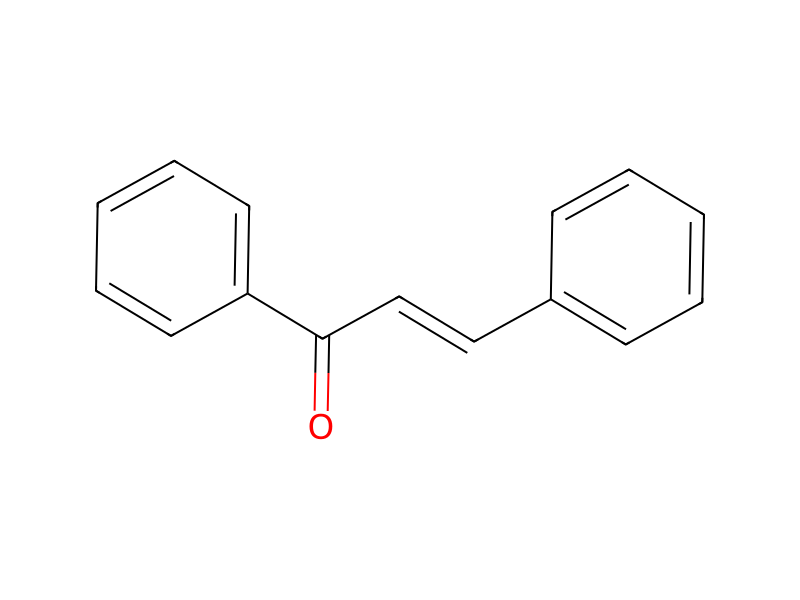
Basic information
- Standard SMILES
O=C(/C=C/c1ccccc1)c1ccccc1- InChIKey
DQFBYFPFKXHELB-VAWYXSNFSA-N- Molecular formula
- C15H12O
- Average molar mass
- 208.25 g/mol
- Monoisotopic mass
- 208.088815
Names & identifiers
- Preferred name
- Chalcone
- IUPAC
- (E)-1,3-diphenylprop-2-en-1-one
- English name
- trans-Chalcone
- Molecular formula
- C15H12O
- Molecular weight
- 208.26
Names & synonyms
Chalcone94-41-7BenzalacetophenoneBenzylideneacetophenoneChalkonePhenyl styryl ketoneCinnamophenone1,3-DIPHENYL-2-PROPEN-1-ONE(E)-1,3-diphenylprop-2-en-1-oneStyryl phenyl ketone3-Phenylacrylophenonebeta-Benzoylstyrene
Show more names
(E)-CHALCONEcone1,3-DIPHENYL-2-PROPENONE(2E)-1,3-DIPHENYLPROP-2-EN-1-ONE2-Propen-1-one, 1,3-diphenyl-, (E)-
2-Propen-1-one, 1,3-diphenyl-Benzylidene acetophenonebeta-PhenylacrylophenonePhenyl 2-phenylvinyl ketoneBenzylidenecetophenonealpha-Benzylideneacetophenone1,3-diphenylprop-2-en-1-onePhenyl (E)-2-phenylethenyl ketone
Database identifiers
- CAS
614-47-1、94-41-7- PubChem CID
- 637760
- DTXSID
DTXSID20873536- ChEMBL
CHEMBL7976- ChEBI
CHEBI:27618- UNII
- 5S5A2Q39HX
- EC Number
- 202-330-2、210-383-8
- Nikkaji
- J151.129G、J4.699J
Properties
Computed structural properties
- XLogP
- 3.1
- Topological polar surface area
- 17.1 Ų
- Hydrogen bond donors
- 0
- Hydrogen bond acceptors
- 1
- Rotatable bonds
- 3
- Heavy atoms
- 16
- Formal charge
- 0
- Complexity
- 242
Experimental & physicochemical properties
LogP4.018
Boiling Point346.50 °C. @ 760.00 mm Hg
Melting Point57.5 °C
Vapor Pressure0.000107 [mmHg]
Physical Description
Yellow powder; [Alfa Aesar MSDS]
Solid
Kovats Retention Index1970.6
Physicochemical properties
- Melting point
- 55 · 55-59 °C
- Boiling point
- 208 °C25 · 208 °C25 mm Hg(lit.)
- Density
- 1.0712 · 1.0712
- refractive index
- 1.5361 · 1.5361 (estimate)
- Flash point
- 230 °F · >230 °F
- storage temp.
- Sealed in dry,Room Temperature
- solubility
- Chloroform (Slightly)
- form
- Solid
- color
- Pale Yellow
- Odor
- 100 % · at 100.00 %. floral balsam herbal
- Odor Type
- floral
- Water Solubility
- Soluble in chloroform, ether, benzene, and ethanol (slightly). Insoluble in water.
- Merck
- 14 · 14,2037
- BRN
- 509985 · 509985
- InChI
- 1S/C15H12O/c16-15(14-9-5-2-6-10-14)12-11-13-7-3-1-4-8-13/h1-12H/b12-11+
- InChIKey
- DQFBYFPFKXHELB-VAWYXSNFSA-N
- SMILES
- [H]\C(=C(\[H])C(=O)c1ccccc1)c2ccccc2
- LogP
- 4.013 · 4.013 (est)
- CAS DataBase Reference
- 614 · 614-47-1(CAS DataBase Reference)
- EWG's Food Scores
- 1 · 1
- FDA UNII
- 5 S5A2Q39HX · 5S5A2Q39HX
- NIST Chemistry Reference
- Benzalacetophenone(614-47-1)
- UNSPSC Code
- 12352100 · 12352100
- NACRES
- 22 · NA.22
- Symbol(GHS)
- 7 · GHS07
- Signal word
- Warning
- Hazard statements
- 302 · H302-H319-H335
- Precautionary statements
- 261 · P261-P264-P270-P271-P301+P312-P305+P351+P338
- target organs
- Respiratory system
- PPE
- 95 · dust mask type N95 (US), Eyeshields, Gloves
- Hazard Codes
- Xn,Xi
- Risk Statements
- 22 · 22-36/37
- Safety Statements
- 22 · 22-36/37/39-45
- WGK Germany
- 3 · 3
- RTECS
- 5576750 · UD5576750
- HS Code
- 29143990 · 29143990
- Storage Class
- 11 · 11 - Combustible Solids
- Hazard Classifications
- 4 OralEye · Acute Tox. 4 OralEye Irrit. 2STOT SE 3
Safety & regulation
GHS classification
GHS Classification
Warning
H302 (100%): Harmful if swallowed [Warning Acute toxicity, oral];H319 (100%): Causes serious eye irritation [Warning Serious eye damage/eye irritation];H335 (100%): May cause respiratory irritation [Warning Specific target organ toxicity, single exposure; Respiratory tract irritation]
P261, P264, P264+P265, P270, P271, P280, P301+P317, P304+P340, P305+P351+P338, P319, P330, P337+P317, P403+P233, P405, and P501 (click each P-code to see the statement)
Aggregated GHS information provided per 72 reports by companies from 5 notifications to the ECHA C&L Inventory. Each notification may be associated with multiple companies.;Information may vary between notifications depending on impurities, additives, and other factors. The percentage value in parenthesis indicates the notified classification ratio from companies that provide hazard codes. Only hazard codes with percentage values above 10% are shown. For more detailed information, please visit ECHA C&L website.
This chemical does not meet GHS hazard criteria for 11.1% (5 of 45) of reports.
Hazard information
Regulatory Information
Chemical: 2-Propen-1-one, 1,3-diphenyl-
2-Propen-1-one, 1,3-diphenyl-: Does not have an individual approval but may be used under an appropriate group standard
Hazards Summary
Causes other liver changes and multiple enzyme effects in acute intraperitoneal studies of mice; Oral lethal-dose (rat) > 500 mg/kg; [RTECS] A skin irritant; [Merck Index] A skin and strong eye irritant; Toxic by ingestion; [Alfa Aesar MSDS]
Hazard Classes and Categories
Acute Tox. 4 (100%);Eye Irrit. 2 (100%);STOT SE 3 (100%)
Acute Tox. 4 (86.7%);Eye Irrit. 2 (88.9%);STOT SE 3 (86.7%)
Regulatory information
Regulatory Information
Chemical: 2-Propen-1-one, 1,3-diphenyl-
2-Propen-1-one, 1,3-diphenyl-: Does not have an individual approval but may be used under an appropriate group standard
Safety data
- PPE
- dust mask type N95 (US), Eyeshields, Gloves
- wgk
- 3
- rtecs
- UD5576750
- hs_code
- 29143990
- risk_code
- 22-36/37
- Signal word
- Warning
- Symbol(GHS)
- GHS07
- hazard_code
- Xn,Xi
- safety_code
- 22-36/37/39-45
- Storage Class
- 11 - Combustible Solids
- target organs
- Respiratory system
- Hazard statements
- H302-H319-H335
- Hazard Classifications
- Acute Tox. 4 OralEye Irrit. 2STOT SE 3
- Precautionary statements
- P261-P264-P270-P271-P301+P312-P305+P351+P338
Chemistry & industry
Pharmacology
Cellular LocationsMembrane
Uses & manufacturing
UsesNatural aromatic ketone utilized for the biosynthesis of flavones and as a template for bioactive substances known as chalcones; [Merck Index]
General Manufacturing Information2-Propen-1-one, 1,3-diphenyl-: ACTIVE
Applications
Descriptiontrans-Chalcone is an open chain flavonoid that may prevent lung and forestomach cancer.
Usestrans-Chalcone is a positive allosteric modulator of α7 nicotinic acetylcholine receptors and exhibits antioxidant activity.
General Descriptiontrans-Chalcone is an open chain flavonoid that may prevent lung and forestomach cancer.
Preparation methods
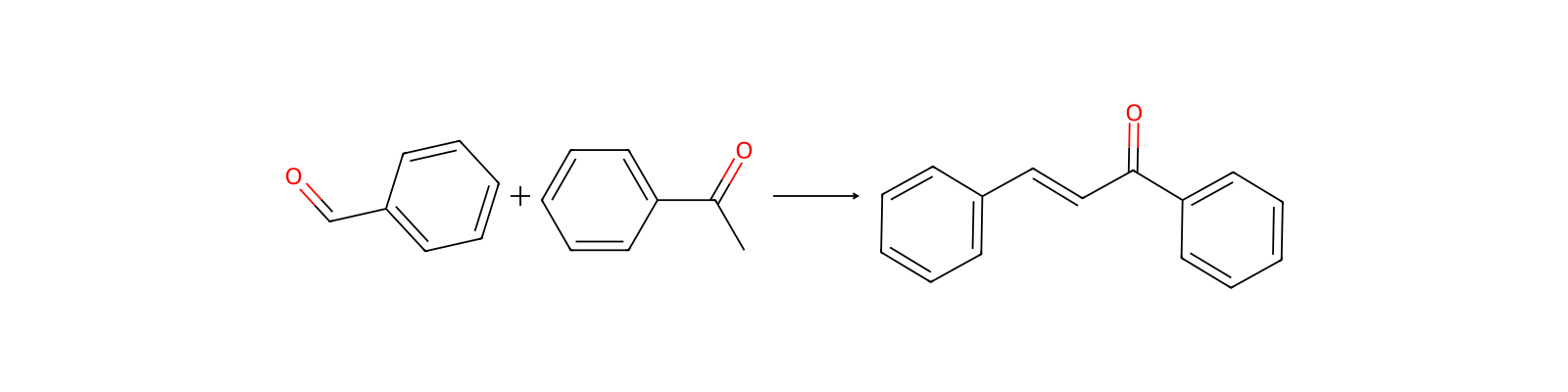
Preparationtrans-Chalcones have been obtained in good yields and selectivities following an environmentally friendly methodology by using montmorillonite KSF as a reusable heterogeneous catalyst.Clay-catalysed solventless synthesis of trans-chalcones
Upstream & downstream products
Upstream raw materials
Downstream products
Suppliers50 total
上海阿拉丁生化科技股份有限公司400-6206333 13167063860 · [email protected]
宁波君龙新材料有限公司0574 88552216 19032109277 · [email protected]
上海伟聂化工科技有限公司13046668259 · [email protected]
武汉欣扬瑞和化学科技有限公司153-07155313 15307155313 · [email protected]
湖北科乐精细化工有限公司027-59101668 19945030958 · [email protected]
山东前元高分子材料有限公司18678041314 18765609661 · [email protected]
韶远科技(上海)有限公司021-50795510 4000665055 · [email protected]
Syntechem Co.,Ltd[email protected]
Ark Pharm, Inc.847-367-3680 · [email protected]
上海晶抗生物工程有限公司021-54721350 13524668266 · [email protected]
阿法埃莎(中国)化学有限公司400-6106006 · [email protected]
安耐吉化学&3A(安徽泽升科技股份有限公司)400-0056266 · [email protected]
上海瀚鸿科技股份有限公司021-54306202 13764082696 · [email protected]
上海钰康生物科技有限公司+86-18930848214 +86-021-56762820 · [email protected]
上海瀚香生物科技有限公司177-54423994 17754423994 · [email protected]
上海竺钥化工有限公司021-33559231 18964673308 · [email protected]
山东西亚化学有限公司13355009207 13355009207 · [email protected]
玛雅试剂+86 (573) 82222445 (0)18006601000 452520369 · [email protected]
上海耐士化工科技有限公司400-188-0725 +86 21 34310725 13611771617
天津希恩思生化科技有限公司400 638 7771 · [email protected]
天长市天佳化工科技有限公司0550-2392698 18355069969 · [email protected]
南京一化生物科技有限公司13236563309 · [email protected]
上海贤鼎生物科技有限公司4009209199 · [email protected]
湖北隆信化工实业有限公司15271551270 · [email protected]
上海汇凯化学科技有限公司021-61995394 18916691159 · [email protected]
Chempioneer Limited+86-398-3831668 · [email protected]
上海将来实业股份有限公司400-0066400 13621662912 · [email protected]
上海将来实业股份有限公司021-61552785 · [email protected]
安徽科迪达化工有限公司0554-2106669 · [email protected]
HBCChem, Inc.+1-510-219-6317 · [email protected]
成都零六生物科技有限公司400-1166-196 13458535857 · [email protected]
雷丁试剂0510-85629785 18013409632 · [email protected]
北京福源坊科技有限公司010-57903446 15869909019 · [email protected]
上海创赛科技有限公司400-6087598 15021221957 · [email protected]
天津普西唐生物医药科技有限公司010-60605840 · [email protected]
上海永叶生物科技有限公司86-021-61559134 15921386130 · [email protected]
上海有朋化工有限公司021-69005955 13701776567 · [email protected]
北京海力扬化学科技有限公司13718199399 · [email protected]
北京欣赛维化学科技有限公司010-56218822 13717722232 · [email protected]
四川海诺威科技有限公司13708085536 13708085536 · [email protected]
上海凯赛化工有限公司021-33516722 13701817765 · [email protected]
上海彤源化工有限公司021-021-69182866 13701855675 · [email protected]
北京华扬致成科技有限公司13716033033 · [email protected]
上海蓝润化学有限公司021-69515658 ; 69515628 13701998368 · [email protected]
上海容立化学科技有限公司021-69992220 13701886816 · [email protected]
上海康拓化工有限公司021-69185552 13701777608 · [email protected]
Sigma-Aldrich西格玛奥德里奇(上海)贸易有限公司021-61415566 800-8193336 · [email protected]
潍坊市前进精细化工有限公司18753684562 · [email protected]
TargetMol中国(陶术生物)021-021-33632979 15002134094 · [email protected]
上海陶术生物科技股份有限公司+1-781-999-5354; +1-00000000000 · [email protected]
Additional notes
DefinitionChEBI: Chalcone is a member of the class of chalcones that is acetophenone in which one of the methyl hydrogens has been replaced by a benzylidene group. It has a role as a plant metabolite. It is a member of styrenes and a member of chalcones.
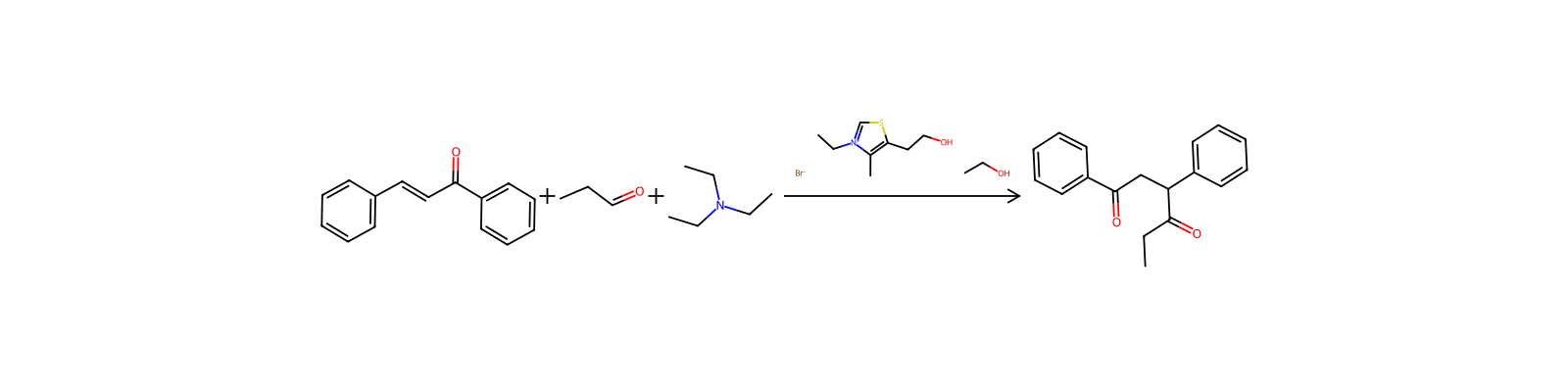
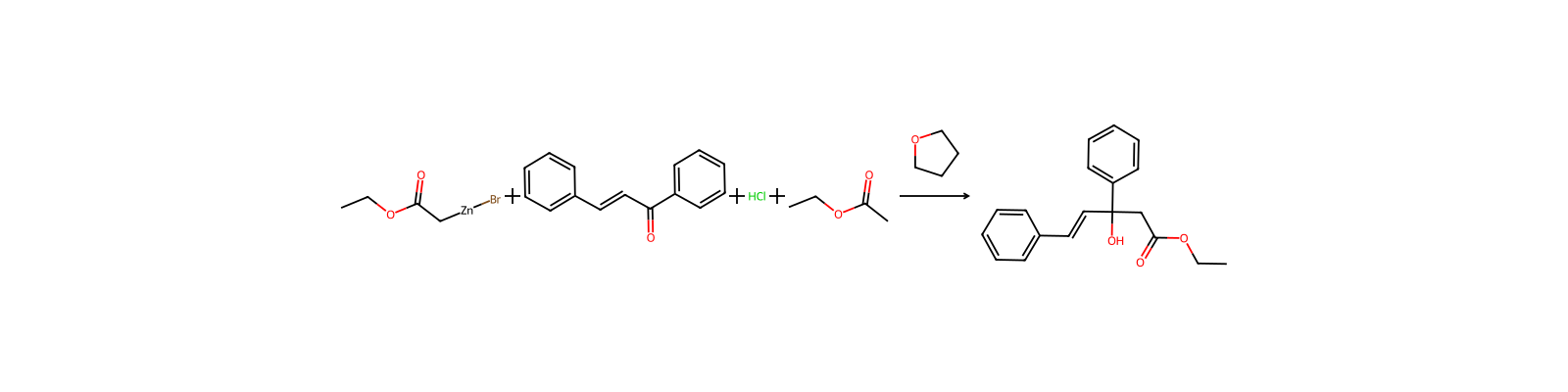
Related reactions
6 records


Linked notes
Loading…