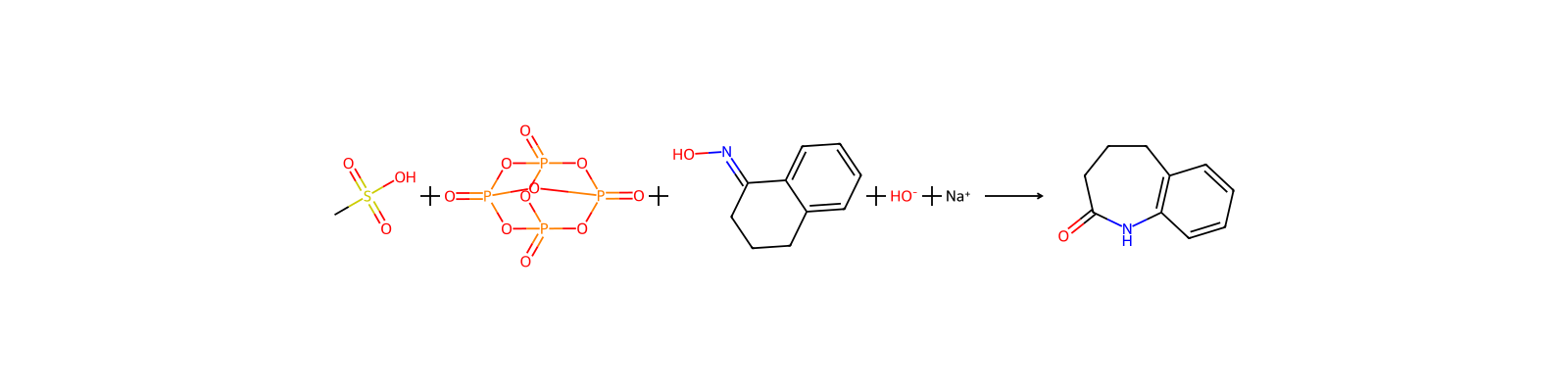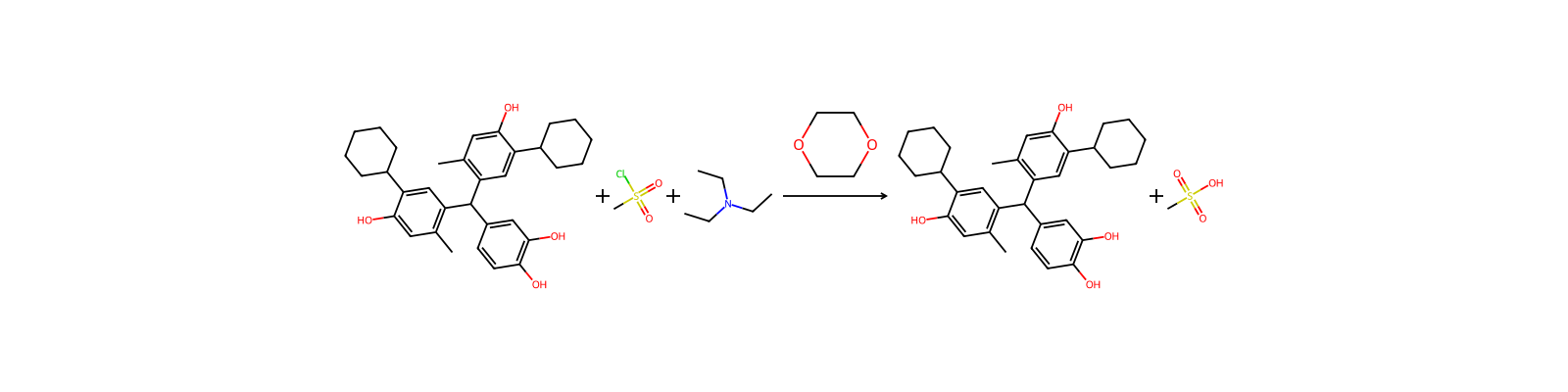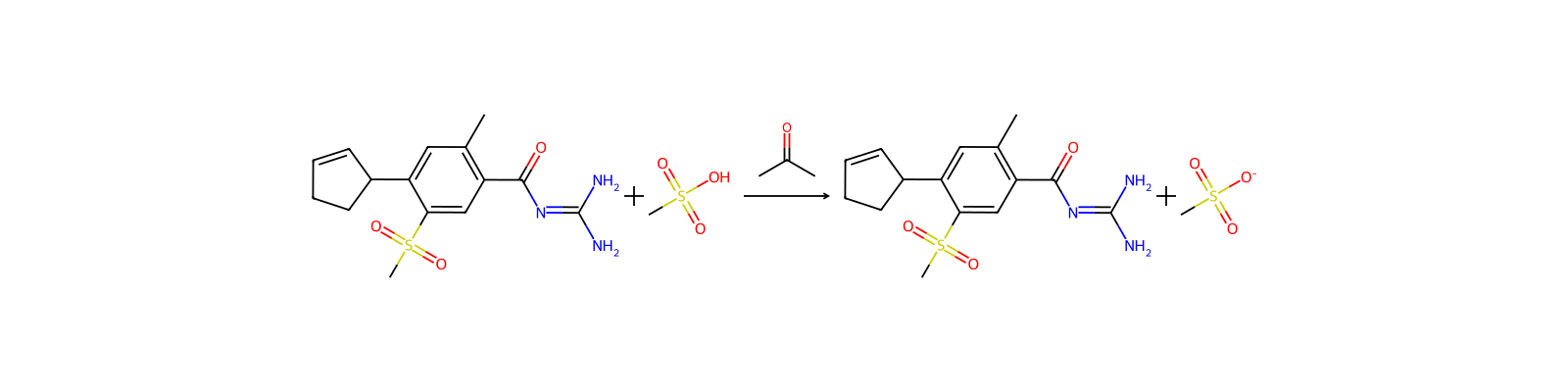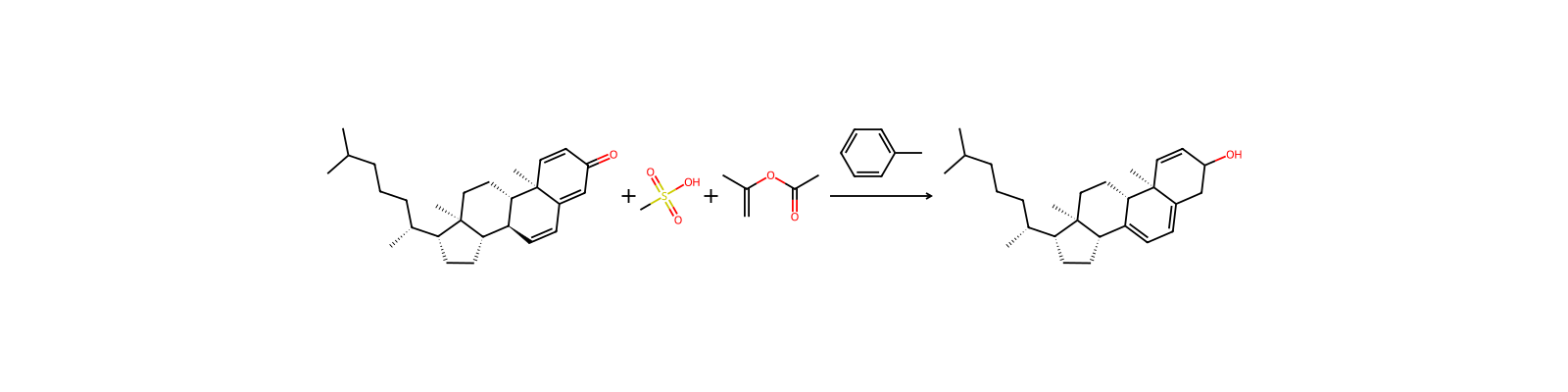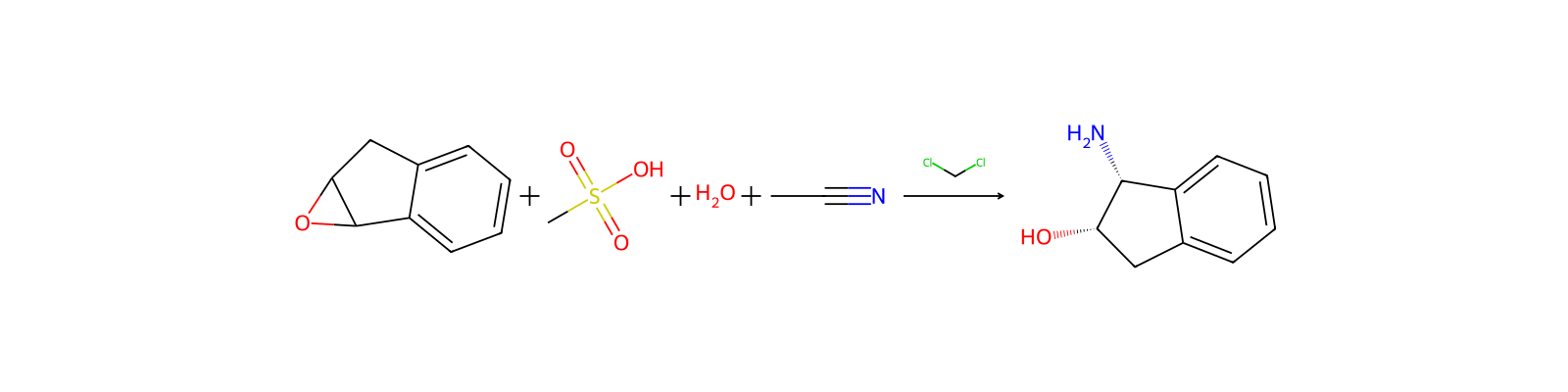
HRID 1178As reactant
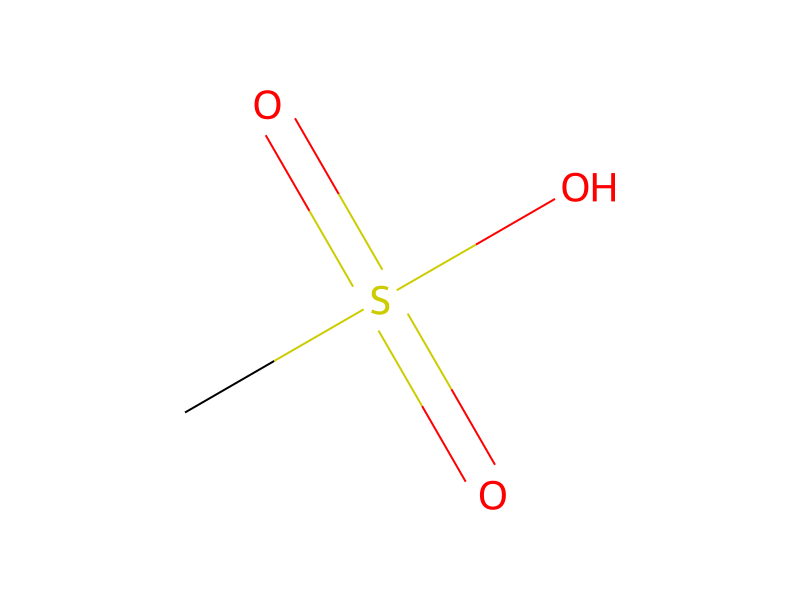
75-75-2CS(=O)(=O)OAFVFQIVMOAPDHO-UHFFFAOYSA-NMethanesulfonic acid is an alkanesulfonic acid in which the alkyl group directly linked to the sulfo functionality is methyl. It has a role as an Escherichia coli metabolite. It is an alkanesulfonic acid and a one-carbon compound. It is a conjugate acid of a methanesulfonate.
75-75-2DTXSID4026422CHEMBL3039600CHEBI:27376Other Classes -> Sulfonic Acids, Alkyl
Corrosives
Ionic Liquids
1.4812 g/cu cm at 18 °C
1.4812 @ 18°C
Solid
Liquid at room temperature
Solubility at 26-28 °C in wt %: hexane, 0; benzene, 1.5; methylcyclopentane, 0; toluene, 0.38; o-chlorotoluene, 0.23; ethyl disulfide, 0.47
Soluble in alcohol, ether
Soluble in water
In water, 1X10+6 mg/L at 20 °C /Miscible/
110 °C
189 °C closed cup
20 °C
20 °C
0.000428 [mmHg]
4.28X10⁻⁴ mm Hg at 25 °C
Safety information is for reference only and does not replace the supplier’s Safety Data Sheet (SDS), applicable regulations, or professional assessment.
Danger
H314: Causes severe skin burns and eye damage [Danger Skin corrosion/irritation]
P260, P264, P280, P301+P330+P331, P302+P361+P354, P304+P340, P305+P354+P338, P316, P321, P363, P405, and P501 (click each P-code to see the statement)
This chemical does not meet GHS hazard criteria for < 0.1% (1 of 1373) of reports.
Danger
H290 (32.3%): May be corrosive to metals [Warning Corrosive to Metals]
Chemical: Methanesulfonic acid
Methanesulfonic acid is listed on the EPA's Chemical Data Reporting (CDR) system. Manufacturers and importers of Methanesulfonic acid are required to report information about their production and use of this chemical to the EPA under the Toxic Substances Control Act (TSCA). (40 eCFR Part 711)
REACH registered substance: Methanesulphonic acid (EC: 200-898-6)
Methanesulphonic acid: HSNO Approval: HSR003638 Approved with controls
The New Jersey Worker and Community Right to Know Act requires public and private employers to provide information about hazardous substances at their workplaces. (N.J.S.A. 34:5A-1 et. seq.)
European Chemicals Bureau; IUCLID Dataset, Methanesulphonic Acid (75-75-2) (2000 CD-ROM edition) contains information on use, toxicology, and environmental effects of this chemical as supplied to the European Union by industry.[Available from, as of October 1, 2009: http://ecb.jrc.ec.europa.eu/IUCLID-]
Met. Corr. 1 (32.3%)
Skin corrosion - category 1B
Acute toxicity (Oral) - Category 3
Corrosives
Skin Corr. 1B
Methanesulfonic acid is shipped in tank trucks and in plastic 55-gal drums or smaller containers with polyethylene inserts.
The freight classification is Alkyl Sulfonic Acid, Liquid; 8 Corrosive Material, UN 2586, Chemical N01BN.
Lower explosive limit: 11.4% (by volume); upper explosive limit: 24.3% (by volume)
Electrolysis of a mixture /of hydrogen fluoride and methanesulfonic acid/ produced oxygen difluoride which exploded.
Materials to avoid: Amines, strong reducing agents, strong oxidizing agents, bases
Explosive reaction with ethyl vinyl ether.
Incompatible with hydrogen fluoride.
Methanesulfonic acid is too powerful a catalyst for O-alkylation with the vinyl ether, causing explosive polymerisation of the latter on the multimol scale. Dichloroacetic acid is a satisfactory catalyst on the 3 g mol scale.
Suitable extinguishing media: Use water spray, alcohol-resistant foam, dry chemical or carbon dioxide.
Special protective equipment for fire-fighters: Wear self contained breathing apparatus for fire fighting if necessary.
SRP: Wastewater from contaminant suppression, cleaning of protective clothing/equipment, or contaminated sites should be contained and evaluated for subject chemical or decomposition product concentrations. Concentrations shall be lower than applicable environmental discharge or disposal criteria. Alternatively, pretreatment and/or discharge to a permitted wastewater treatment facility is acceptable only after review by the governing authority and assurance that "pass through" violations will not occur. Due consideration shall be given to remediation worker exposure (inhalation, dermal and ingestion) as well as fate during treatment, transfer and disposal. If it is not practicable to manage the chemical in this fashion, it must be evaluated in accordance with EPA 40 CFR Part 261, specifically Subpart B, in order to determine the appropriate local, state and federal requirements for disposal.
Personal precautions: Use personal protective equipment. Avoid breathing vapors, mist or gas. Ensure adequate ventilation. Evacuate personnel to safe areas. Environmental precautions: Do not let product enter drains. Methods for cleaning up: Soak up with inert absorbent material and dispose of as hazardous waste. Keep in suitable, closed containers for disposal.
SRP: The most favorable course of action is to use an alternative chemical product with less inherent propensity for occupational harm/injury/toxicity or environmental contamination. Recycle any unused portion of the material for its approved use or return it to the manufacturer or supplier. Ultimate disposal of the chemical must consider: the material's impact on air quality; potential migration in soil or water; effects on animal and plant life; and conformance with environmental and public health regulations.
Observe all federal, state, and local environmental regulations. Contact a licensed professional waste disposal service to dispose of this material. Dissolve or mix the material with a combustible solvent and burn in a chemical incinerator equipped with an afterburner and scrubber.
Hygiene measures: Handle in accordance with good industrial hygiene and safety practice. Wash hands before breaks and at the end of workday.
In case of skin contact: Take off contaminated clothing and shoes immediately. Wash off with soap and plenty of water. Consult a physician.
In case of eye contact: Rinse thoroughly with plenty of water for at least 15 minutes and consult a physician.
0.18 [ppm]
2.8 [ppm]
17 [ppm]
Respiratory protection: Where risk assessment shows air-purifying respirators are appropriate use a full-face respirator with multipurpose combination (US) or type ABEK (EN 14387) respirator cartridges as a backup to engineering controls. If the respirator is the sole means of protection, use a full-face supplied air respirator. Use respirators and components tested and approved under appropriate government standards such as NIOSH (US) or CEN (EU).
Hand protection: The selected protective gloves have to satisfy the specifications of EU Directive 89/686/EEC and the Standard EN 374 derived from it. Handle with gloves.
Eye protection: Safety glasses.
Skin and body protection: Choose body protection according to the amount and concentration of the dangerous substance at the work place.
EC50; Species: Daphnia magna (Crustacea); Concentration 1.7 mg/L for 24 hr; Effect: immobilization /Conditions of bioassay not specified in source/
EC50; Species: Daphnia pulex (Crustacea); Concentration: 33 mg/L for 24 hr /Conditions of bioassay not specified in source/
EC50; Species: Daphnia pulex (Crustacea); Concentration: 12 mg/L for 48 hr/ Conditions of bioassay not specified in source/
EC50; Species: Selenastrum capricornutum /Freshwater algae/; Conditions: freshwater, static (pH 7.5-9.4); Concentration: 7.2 mg/L for 96 hr (pH 8.3); Effect: inhibition of cell multiplication
For more Ecotoxicity Values (Complete) data for Methanesulfonic acid (9 total), please visit the HSDB record page.
TERRESTRIAL FATE: Based on a classification scheme(1), an estimated Koc value of 1(SRC), determined from a structure estimation method(2), indicates that methanesulfonic acid is expected to have very mobility in soil(SRC). The pKa of methanesulfonic acid is -1.86(3), indicating that this compound will exist almost entirely in the anion form in the environment and anions generally do not adsorb more strongly to soils containing organic carbon and clay than their neutral counterparts(4). Volatilization from moist soil is not expected because the acid exists as an anion and anions do not volatilize. Methanesulfonic acid is not expected to volatilize from dry soil surfaces(SRC) based upon a vapor pressure of 4.28X10⁻⁴ mm Hg at 25 °C(5). Utilizing the Japanese MITI test, 100% of the Theoretical BOD was reached in four weeks(6) indicating that biodegradation is an important environmental fate process in soil(SRC).
AQUATIC FATE: Based on a classification scheme(1), an estimated Koc value of 1(SRC), determined from a structure estimation method(2), indicates that methanesulfonic acid is not expected to adsorb to suspended solids and sediment(SRC). A pKa of -1.86(3) indicates methanesulfonic acid will exist almost entirely in the anion form at pH values of 5 to 9 and therefore volatilization from water surfaces is not expected to be an important fate process(4). Methanesulfonic acid is miscible with water(5) and therefore bioconcentration in aquatic organisms is low(SRC). Utilizing the Japanese MITI test, 100% of the Theoretical BOD was reached in four weeks(6) indicating that biodegradation is an important environmental fate process in water(SRC).
ATMOSPHERIC FATE: According to a model of gas/particle partitioning of semivolatile organic compounds in the atmosphere(1), methanesulfonic acid, which has a measured vapor pressure of 4.28X10⁻⁴ mm Hg at 25 °C(2), is expected to exist solely as a vapor in the ambient atmosphere. Vapor-phase methanesulfonic acid is degraded in the atmosphere by reaction with photochemically-produced hydroxyl radicals(SRC); the half-life for this reaction in air is estimated to be 58 days(SRC), calculated from its rate constant of 2.8X10⁻¹³ cu cm/molecule-sec at 25 °C(SRC) that was derived using a structure estimation method(3). Methanesulfonic acid does not contain chromophores that absorb at wavelengths >290 nm(4) and therefore is not expected to be susceptible to direct photolysis by sunlight(SRC).
Using a structure estimation method based on molecular connectivity indices(1), the Koc of methanesulfonic acid can be estimated to be 1(SRC). According to a classification scheme(2), this estimated Koc value suggests that methanesulfonic acid is expected to have very high mobility in soil. The pKa of methanesulfonic acid is -1.86(3), indicating that this compound will almost entirely exist in the anion form in the environment and anions generally do not adsorb more strongly to soils containing organic carbon and clay than their neutral counterparts(4).
Methansulfonic acid (CAS # 75-75-2) undiluted, was evlauated for acute peroral toxicity. The LD50 for non-fasted male rats was 0.281 ml/kg. Dosage and mortality data are as follows: 0.25 (2/5), 0.5 (5/5), and 1.0 (2/3) ml/kg. Clinical signs at all doses included sluggishnes and unsteady gait. Gross pathology included livers mottled and burned; stomachs burned; pylorus hemorrhaged and gas filled; intestines hemorrhaged, injected, and gas filled; and kidneys mottled and slightly congested. The test substance was found to be highly toxic following acute peroral intubation.
Methansulfonic acid (CAS # 75-75-2) was evlauated for subchronic toxicity. The test substance was administered to Harlan-Wistar albino rats at doses of 0, 10, 50, 200, or 500 mg/kg in the diets. As no effect was visible after the first day of dosing, the 10 mg/kg was increased to 2000 mg/kg. None of the rats died in this study. There was no significant effect during the remainder of the 7 days of treatment and none of the criteria of stress measured (appetite, body weight change, liver and kidney weight) were significantly altered.
Methanesulfonic acid was evaluated in an epidemiology study. The methodology used to assess health effects from potential exposure included a work/family history questionnaire; physical measurements; chest x-ray; pulmonray function tests; general blood chemistries; CBC with indices and differential; urinalysis; urinary phenol; sputum cytology; and a physician's examination. The workforce consisted of 10 male employees. Chest x-rays, sputum cytology, all liver and kidney function tests, and urine pheonol were normal; and no serious blood disorder or skin disorder was reported. It was determined that there was no evidence of hematolgoical, biochemical or clinical aberrations caused by occupational exposures. One person may have an allegic response to contact with cellosolve.
URBAN/SUBURBAN: Methanesulfonic acid concentration in air particle samples collected from atop an office building in Kobe City, Japan, 1 km distant from Osaka Bay(1).
RURAL/REMOTE: Methanesulfonic acid had sub-micrometer-aerosol concentration peaks of approximately 0.47 and 0.4 mol/cu m in February and December, respectively, in the atmosphere at Cape Grim off of Australia in 1989(1). Methanesulfonic acid was found at the highest levels in atmospheric samples collected around noon and concentrated in the smaller size particles (0.25-2 um in diameter) at concentrations of 5.3, 5.5, and 15.7 ng/cu meter in samples taken from the Southern Bahamas, the Northern Bahamas, and the Sargasso Sea, respectively(2). Methanesulfonic acid was found in Germany at concentrations of 0.02 - 0.43 ug/cu m in atmospheric samples taken in October and November of 1978(3). Aerosol methanesulfonic acid was detected at six stations in the Pacific at mean concentrations of 0.097, 0.029, 0.044, 0.026, 0.021, and 0.024 ug/cu m(4). Aerosol methanesulfonic acid has been found at mean concentrations of 9.27X10⁻⁹ and 1.14X10⁻⁹ mol/cu m in July of 1985 and December of 1986 in the marine atmosphere of the British Isles(5).
RURAL/REMOTE: Methanesulfonic acid was detected in 62 out of 62 air samples collected from the UK to Antarctica between Mar 10, 1992 to Oct 1, 1993 at concentrations ranging from 1.72 to 362 ng/cu m, average 77 ng/cu m(1). Methanesulfonic acid was detected in 18 out of 18 air samples collected from the UK to the Falkland Islands between Mar 10, 1992 to Jan 11, 1992 at concentrations ranging from 1.72 to 39.7 ng/cu m, average 14.3 ng/cu m(1). Methanesulfonic acid was detected in 44 out of 44 air samples collected from areas south of the Falkland Islands between May 11, 1992 to Oct 1, 1993 at concentrations ranging from 1.94 to 362 ng/cu m, average 103 ng/cu m(1). Methanesulfonic acid was detected in 23 out of 23 air samples collected from the Halley Bay in the east Weddell Sea between Aug 12, 1992 to Oct 1, 1993 at concentrations ranging from 2.48 to 362 ng/cu m, average 136 ng/cu m(1). Methanesulfonic acid was detected in the upper limit of 39 samples collected from the Atlantic ocean between March 1987 to September 1988 at concentrations ranging from 3.9-8.5 ng/cu m(2). Methanesulfonic acid was detected in the upper limit of 4 samples collected from the English channel between April 1987 to September 1988 at concentrations ranging from 13.8-24.3 ng/cu m(2). Methanesulfonic acid was detected in the upper limit of 43 samples collected from the North Sea between April 1986 to April 1989 at concentrations ranging from 12.8 to 66.2 ng/cu m(2).
/SIGNS AND SYMPTOMS/ Corrosive to tissues (eyes, skin, mucous membranes).
/SIGNS AND SYMPTOMS/ May be harmful if inhaled. Material is extremely destructive to the tissue of the mucous membranes and upper respiratory tract. May be harmful if absorbed through skin. Causes skin burns. Causes eye burns.
A pKa of -1.86(1) indicates methanesulfonic acid will exist almost entirely in the anion form at pH values of 5 to 9 and therefore volatilization from water surfaces or moist soil surfaces is not expected to be an important fate process(2). Methanesulfonic acid is not expected to volatilize from dry soil surfaces(SRC) based upon its vapor pressure of 4.28X10⁻⁴ mm Hg(3).
Methylating agents are potent carcinogens that are mutagenic and cytotoxic towards bacteria and mammalian cells. Their effects can be ascribed to an ability to modify DNA covalently. Pioneering studies of the chemical reactivity of methylating agents towards DNA components and their effectiveness as animal carcinogens identified O(6)-methylguanine (O(6)meG) as a potentially important DNA lesion. Subsequent analysis of the effects of methylating carcinogens in bacteria and cultured mammalian cells - including the discovery of the inducible adaptive response to alkylating agents in Escherichia coli - have defined the contributions of O(6)meG and other methylated DNA bases to the biological effects of these chemicals. More recently, the role of O(6)meG in killing mammalian cells has been revealed by the lethal interaction between persistent DNA O(6)meG and the mismatch repair pathway. Here, ...the results which led to the identification of the biological consequences of persistent DNA O(6)meG are reviewed. ... The possible consequences for a human cell of chronic exposure to low levels of a methylating agent /are considered/. Such exposure may increase the probability that the cell's mismatch repair pathway becomes inactive. Loss of mismatch repair predisposes the cell to mutation induction, not only through uncorrected replication errors but also by methylating agents and other mutagens. /Alkylating agents/
Marinosulfonomonas methylotropha strain TR3 is a marine methylotroph that uses methanesulfonic acid (MSA) as a sole carbon and energy source. The genes from M. methylotropha strain TR3 encoding methanesulfonate monooxygenase, the enzyme responsible for the initial oxidation of MSA to formaldehyde and sulfite, were cloned and sequenced. They were located on two gene clusters on the chromosome of this bacterium. A 5.0-kbp HindIII fragment contained msmA, msmB, and msmC, encoding the large and small subunits of the hydroxylase component and the ferredoxin component, respectively, of the methanesulfonate monooxygenase, while a 6.5-kbp HindIII fragment contained duplicate copies of msmA and msmB, as well as msmD, encoding the reductase component of methanesulfonate. Both sets of msmA and msmB genes were virtually identical, and the derived msmA and msmB sequences of M. methylotropha strain TR3, compared with the corresponding hydroxylase from the terrestrial MSA utilizer Methylosulfonomonas methylovora strain M2 were found to be 82 and 69% identical. The msmA gene was investigated as a functional gene probe for detection of MSA-utilizing bacteria. PCR primers spanning a region of msmA which encoded a unique Rieske [2Fe-2S] binding region were designed. These primers were used to amplify the corresponding msmA genes from newly isolated Hyphomicrobium, Methylobacterium, and Pedomicrobium species that utilized MSA, from MSA enrichment cultures, and from DNA samples extracted directly from the environment. The high degree of identity of these msmA gene fragments, compared to msmA sequences from extant MSA utilizers, indicated the effectiveness of these PCR primers in molecular microbial ecology.
Used as a solvent, catalyst, and chemical intermediate; Also used in metal plating, printed circuit board manufacturing, electrolytic metal finishing, and to regenerate ion-exchange resins; [HSDB]
Electroplating [Category: Plate]
Chem int to form secondary methane sulfonates from olefins; chem int for trifluoromethane sulfonic acid, methane sulfonyl chloride
Catalyst in esterification, alkylation, olefin polymerization, peroxidation reactions.
Solvent
The anhydrous acid is ... useful as a solvent.
2023: 5,500,000 - <7,000,000 lb
(1977) Probably greater than 2.27X10+6 g
(1979) Probably greater than 2.27X10+6 g
Methanesulfonic acid is listed as a High Production Volume (HPV) chemical (65FR81686). Chemicals listed as HPV were produced in or imported into the U.S. in >1 million pounds in 1990 and/or 1994. The HPV list is based on the 1990 Inventory Update Rule. (IUR) (40 CFR part 710 subpart B; 51FR21438).
Production volumes for non-confidential chemicals reported under the Inventory Update Rule. [Table#4993]
Production volume for non-confidential chemicals reported under the 2006 Inventory Update Rule. Chemical: Methanesulfonic acid. Aggreated National Production Volume: 1 to <10 million pounds.
Oxidation of methyl mercaptan
Prepared from sulfur trioxide and methane; ... by oxidn of dimethyl disulfide.
Grade: 70%
Methanesulfonic acid (MSA) soln - containing 50 mg MSA (Eastman Kodak Co No 6320)/mL chloroform; prepn fresh daily.
EPA Safer Chemical Functional Use Classes -> Processing Aids and Additives
Safer Chemical Classes -> Green circle - The chemical has been verified to be of low concern
Not Known or Reasonably Ascertainable
Methanesulfonic acid: ACTIVE
The popularity of MSA as an electrolyte in electrochemical applications has developed as a result of the following unique physical and chemical properties: (1) exhibits low corrosivity and is easy to handle, (2) nonoxidizing, (3) manufacturing process yields a high purity acid, (4) exceptional electrical conductivity, (5) high solubility of metal salts permits broad applications, (6) MSA-based formulations are simpler, (7) biodegradable, and (8) highly stable to heat and electrical current.
UsesMethanesulfonic acid is a raw material for medicine and pesticide. It can also be used as dehydrating agent, curing accelerator for coating, treating agent for fiber, solvent, catalysis, and esterification as well as polymerization reaction. It can be used as solvent, alkylation, catalyst of esterification and polymerization, also used in medicine and electroplating industry. It can also be applied to oxidation.
UsesPolymerization catalyst. Methanesulfonic acid has been developed as an esterification catalyst in place of sulfuric acid for the synthesis of resins in paints and coatings. One of the major advantages of methanesulfonic acid over sulfuric acid is that it is not an oxidizing species.
UsesMethanesulfonic acid is used as a catalyst in organic reactions namely esterification, alkylation and condensation reactions due to its non- volatile nature and solubility in organic solvents. It is also involved in the production of starch esters, wax oxidate esters, benzoic acid esters, phenolic esters, or alkyl esters. It reacts with sodium borohydride in presence of polar solvent tetrahydrofuran to prepare borane-tetrahydrofuran complex. It finds application in batteries, because of its purity and chloride absence. In pharmaceutical industry, it is used for the manufacturing of active pharmaceutical ingredients like telmisartan and eprosartan. It is useful in ion chromatography and is a source of carbon and energy for some gram-negative methylotropic bacteria.It is involved in the deprotection of peptides.
UsesFor complete protein and peptide hydrolysis with tryptophan recovery. After hydrolysis the samples are diluted prior to amino acid analysis.
General DescriptionMethanesulfonic acid (MSA) is a strong organic acid. The chemical oxidation of dimetyl sulfide in the atmosphere leads to the formation of MSA in large quantities. MSA undergoes biodegradation by forming CO2 and sulphate. It is considered a green acid as it is less toxic and corrosive in comparison to mineral acids.1 The aqueous MSA solution has been considered a model electrolyte for electrochemical processes.
PreparationMethanesulfonic acid is produced predominantly by oxidizing methylthiol or dimethyl disulfide using nitric acid, hydrogen peroxide, chlorine or by employing electrochemical processes.
DefinitionChEBI: An alkanesulfonic acid in which the alkyl group directly linked to the sulfo functionality is methyl.