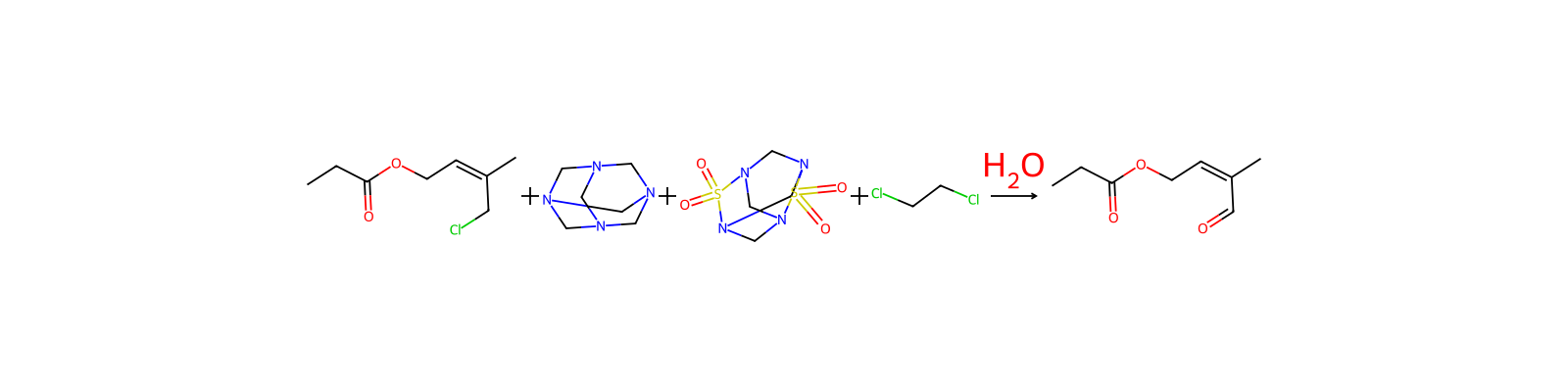

Basic information
- Standard SMILES
O=S1(=O)N2CN3CN1CN(C2)S3(=O)=O- InChIKey
AGGKEGLBGGJEBZ-UHFFFAOYSA-N- Molecular formula
- C4H8N4O4S2
- Average molar mass
- 240.3 g/mol
- Monoisotopic mass
- 239.9986971
Names & identifiers
- Preferred name
- Tetramethylenedisulfotetramine
- IUPAC
- 2lambda6,6lambda6-dithia-1,3,5,7-tetrazatricyclo[3.3.1.13,7]decane 2,2,6,6-tetraoxide
- English name
- 2,6-Dithia-1,3,5,7-tetraazatricyclo3.3.1.13,7decane, 2,2,6,6-tetraoxide
- Molecular formula
- C4H8N4O4S2
- Molecular weight
- 240.26
Names & synonyms
TetramethylenedisulfotetramineTetramineTETS80-12-6TetramethylenedisulphotetramineDSTAF6TS3WME05DTXSID8040307NSC-1728242,6-Dithia-1,3,5,7-tetraazatricyclo(3.3.1.13,7)decane, 2,2,6,6-tetraoxide2,6-Dithia-1,3,5,7-tetraazatricyclo[3.3.1.13,7]decane, 2,2,6,6-tetraoxideRefChem:188783
Show more names
Tretamine in methanolTetramethylenedisulfotetramine solution2,6-Dithia-1,3,5,7-tetraazatricyclo3.3.1.13,7decane, 2,2,6,6-tetraoxide
DTXCID6020307CHEBI:391662,6-dithia-1,3,5,7-tetraazatricyclo(3.3.1.1(3,7)-decane 2,2,6,6-tetraoxide)disulfotetraazaadamantaneTetramine (adamantane derivative)199488-98-72lambda6,6lambda6-dithia-1,3,5,7-tetrazatricyclo[3.3.1.13,7]decane 2,2,6,6-tetraoxideUNII-F6TS3WME05
Database identifiers
- CAS
80-12-6- PubChem CID
- 64148
- DTXSID
DTXSID8040307- UNII
- F6TS3WME05
- EC Number
- 804-552-0
Properties
Computed structural properties
- XLogP
- -1.7
- Topological polar surface area
- 98 Ų
- Hydrogen bond donors
- 0
- Hydrogen bond acceptors
- 8
- Rotatable bonds
- 0
- Heavy atoms
- 14
- Formal charge
- 0
- Complexity
- 378
Physicochemical properties
- Melting point
- 242.5 °C · 242.5°C (rough estimate)
- Boiling point
- 498.1 · 498.1±45.0 °C(Predicted)
- Density
- 1.574 · 1.574 (estimate)
- refractive index
- 1.6 · 1.6000 (estimate)
- Flash point
- 2 °C · 2°C
- storage temp.
- -20 °C · -20°C
- pka
- -11.52 · -11.52±0.20(Predicted)
- form
- solid
- Major Application
- agricultureenvironmental
- InChI
- 1S/C4H8N4O4S2/c9-13(10)5-1-6-3-8(13)4-7(2-5)14(6,11)12/h1-4H2
- InChIKey
- AGGKEGLBGGJEBZ-UHFFFAOYSA-N
- SMILES
- O=S1(=O)N2CN3CN1CN(C2)S3(=O)=O
- FDA UNII
- 6 TS3WME05 · F6TS3WME05
- EPA Substance Registry System
- 2 · 2,6-Dithia-1,3,5,7-tetraazatricyclo[3.3.1.13,7]decane, 2,2,6,6-tetraoxide (80-12-6)
- UNSPSC Code
- 41116107 · 41116107
- NACRES
- 24 · NA.24
- Symbol(GHS)
- 2 · GHS02, GHS07
- Signal word
- Danger
- Hazard statements
- 225 · H225-H302+H312+H332-H319
- Precautionary statements
- 210 · P210-P261-P302+P352+P312-P304+P340+P312-P337+P313-P403+P235
- Hazard Codes
- F,Xn
- Risk Statements
- 11 · 11-20/21/22-36
- Safety Statements
- 16 · 16-36/37
- RIDADR
- 1648 · UN 1648 3 / PGII
- WGK Germany
- 2 · 2
- Storage Class
- 3 · 3 - Flammable liquids
- Hazard Classifications
- 4 DermalAcute · Acute Tox. 4 DermalAcute Tox. 4 InhalationAcute Tox. 4 OralEye Irrit. 2Flam. Liq. 2
- Toxicity
- 0.2 orally · LD in mice (mg/kg): 0.20 orally or s.c. (Hagen)
Safety & regulation
GHS classification
GHS Classification
Danger
H300 (100%): Fatal if swallowed [Danger Acute toxicity, oral]
P264, P270, P301+P316, P321, P330, P405, and P501 (click each P-code to see the statement)
Aggregated GHS information provided per 39 reports by companies from 1 notifications to the ECHA C&L Inventory.;Information may vary between notifications depending on impurities, additives, and other factors. The percentage value in parenthesis indicates the notified classification ratio from companies that provide hazard codes. Only hazard codes with percentage values above 10% are shown. For more detailed information, please visit ECHA C&L website.
Hazard information
Regulatory Information
2,6-Dithia-1,3,5,7-tetraazatricyclo3.3.1.13,7decane, 2,2,6,6-tetraoxide: Does not have an individual approval but may be used as a component in a product covered by a group standard. It is not approved for use as a chemical in its own right.
Hazard Classes and CategoriesAcute Tox. 1 (100%)
Safety & protection
Acute Exposure Guideline Levels (AEGLs)The compound is currently at the Holding Status AEGLs which have been reviewed by the NAC/AEGL Committee and are on hold due to insufficient data to develop AEGL values.
AEGLs NotesAEGLs Status: Holding
Toxicology
Acute Toxicity LinkChemical: TETRAMINE
Regulatory information
Regulatory Information
2,6-Dithia-1,3,5,7-tetraazatricyclo3.3.1.13,7decane, 2,2,6,6-tetraoxide: Does not have an individual approval but may be used as a component in a product covered by a group standard. It is not approved for use as a chemical in its own right.
Safety data
- wgk
- 2
- ridadr
- UN 1648 3 / PGII
- Toxicity
- LD in mice (mg/kg): 0.20 orally or s.c. (Hagen)
- risk_code
- 11-20/21/22-36
- Signal word
- Danger
- Symbol(GHS)
- GHS02, GHS07
- hazard_code
- F,Xn
- safety_code
- 16-36/37
- Storage Class
- 3 - Flammable liquids
- Hazard statements
- H225-H302+H312+H332-H319
- Hazard Classifications
- Acute Tox. 4 DermalAcute Tox. 4 InhalationAcute Tox. 4 OralEye Irrit. 2Flam. Liq. 2
- Precautionary statements
- P210-P261-P302+P352+P312-P304+P340+P312-P337+P313-P403+P235
Chemistry & industry
Uses & manufacturing
Use ClassificationRODENTICIDES
Applications
DescriptionTetramethylenedisulfotetramine (2,6-dithia-1,3,5,7-tetraazadamantane, 2,2,6,6-tetraoxide, TETS) is a highly toxic heteroadamantane rodenticide. It is an odorless, tasteless, white crystalline powder that is slightly soluble in water (0.25 mg ml-1), dimethyl sulfoxide and acetone. It was originally synthesized in 1933 as a resinous condensation product of sulfamide and formaldehyde and used commercially in pillows and upholstery as an impregnating stiffening and antimold agent. However, in 1950, a massive poisoning of German workers in the furniture manufacturing industry was linked to ‘Crinex’ wool, which contained TETS as a byproduct of processing. Early experimental studies in rodents revealed that TETS was an extremely toxic convulsant agent. It was also discovered at this time that TETS is a highly effective rodent repellent, which resulted in its use during reforestation projects to prevent seed predation by rodents. However, because of its high toxicity in mammals, including humans, and its persistence in the environment, many countries banned its production and use in 1984. This ban became worldwide when China issued similar restrictions in 1991. However, due to its relative ease of synthesis and low cost, TETS remains available on the black market, particularly in many rural areas of China and in regions outside of China that have large Asian populations.
UsesDespite the worldwide ban on its production and use, TETS continues to be used illicitly as a rodenticide in various regions of the world. In China, TETS is known as ‘Dushuqiang’, ‘Meishuming,’ or ‘Shanbudao.’ In 2000, the National Poison Control Center of China revealed that 74% of commercial rodenticides contained illegal chemicals, with TETS found in nearly 50% of these pesticides. From 1977 to 2002, it was estimated that there were thousands of cases of TETS poisoning in China, resulting in hundreds of deaths. A more recent analysis indicates that between 1991 and 2010, there were over 14 000 cases of TETS intoxication in China, of which 932 resulted in death. In 2003, the first case of TETS intoxication in the United States was reported: a healthy 15-month-old girl was poisoned following accidental ingestion of a rodenticide imported from China that contained TETS. While many cases are thought to be due to accidental poisonings, there have been numerous reports of TETS being used to intentionally poison humans.
Related reactions
1 records
Linked notes
Loading…