
HRID 194645As reactant
Completing data — refresh the page later to see the latest
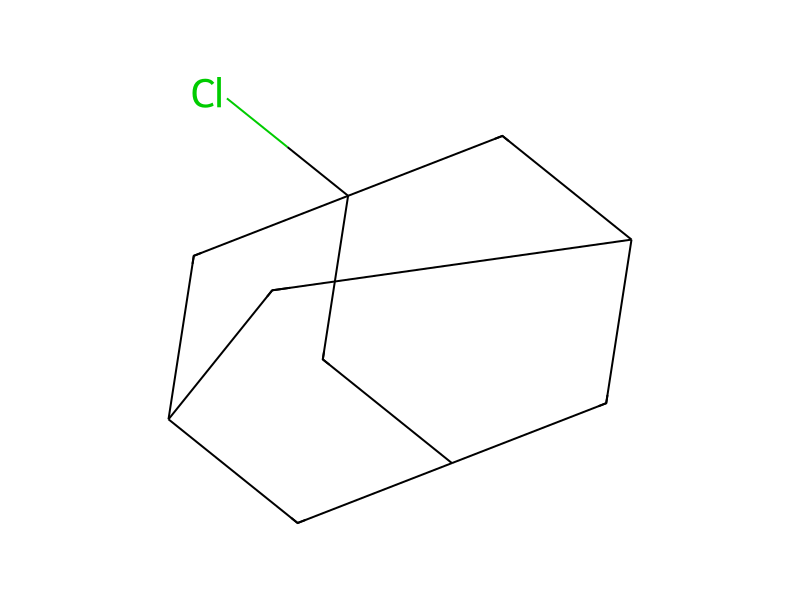
935-56-8ClC12CC3CC(CC(C3)C1)C2OZNXTQSXSHODFR-UHFFFAOYSA-N935-56-8DTXSID1061318Safety information is for reference only and does not replace the supplier’s Safety Data Sheet (SDS), applicable regulations, or professional assessment.
Danger
H315 (100%): Causes skin irritation [Warning Skin corrosion/irritation]
P261, P264, P264+P265, P271, P273, P280, P302+P352, P304+P340, P305+P351+P338, P305+P354+P338, P317, P319, P321, P332+P317, P337+P317, P362+P364, P391, P403+P233, P405, and P501 (click each P-code to see the statement)
Aggregated GHS information provided per 2 reports by companies from 2 notifications to the ECHA C&L Inventory. Each notification may be associated with multiple companies.
Uses1-Chloroadamantane, an adamantane derivative shown to exhibit virucidal activity against the Newcastle disease virus in chick embryo fibroblasts. (Adamantane EP Impurity A)
Uses1-Chloroadamantane was employed as precursor for the synthesis of perfluoroadmantane derivatives via aerosol direct fluorination.
General DescriptionAn unusual zwitterionic diradical intermediate complex was generated during the photoinduced electron-transfer substitution reaction between 1-chloroadamantane and tert-butylamine system in a hydrocarbon glass.


