HomeMCPWorkbenchSkills
HomeWorkbenchNotificationsMe
llms.txt · MCP GuidePrivacy Policy · Terms of Service · Supportv1.8.0
  1. Home
  2. /Compound

Pivalic acid

HCID 6417
New noteNew reactionRequest quotes
Print preview

Completing data — refresh the page later to see the latest

Basic informationOverviewNames & identifiersPropertiesSafety & regulationChemistry & industryRelated reactionsCompound notes
Substructure searchFind similar structures

Basic information

CAS
75-98-9
Standard SMILES
CC(C)(C)C(=O)O
InChIKey
IUGYQRQAERSCNH-UHFFFAOYSA-N
Molecular formula
C5H10O2
Average molar mass
102.13 g/mol
Monoisotopic mass
102.06807956

Overview

TRIMETHYLACETIC ACID is a colored crystalline solid of low toxicity that is soluble in water, ethyl alcohol and diethyl ether.

Names & identifiers

Preferred name
Pivalic acid
IUPAC
2,2-dimethylpropanoic acid
English name
2,2-Dimethylpropanoic acid
Molecular formula
C5H10O2
Molecular weight
102.1317

Names & synonyms

Pivalic acid75-98-9Trimethylacetic acid2,2-DIMETHYLPROPANOIC ACID2,2-Dimethylpropionic acidNeopentanoic acidtert-Pentanoic acidPropanoic acid, 2,2-dimethyl-Versatic 5Kyselina pivalovaalpha,alpha-Dimethylpropionic acid2,2-dimethyl-propanoic acid
Show more names
DTXSID8026432813RE8BX41NSC-65449DTXCID106432CHEBI:45133RefChem:174621200-922-5Acetic acid, trimethyl-

Database identifiers

CAS
75-98-9
PubChem CID
6417
DTXSID
DTXSID8026432
ChEMBL
CHEMBL322719
ChEBI
CHEBI:45133
UNII
813RE8BX41
EC Number
200-922-5
Nikkaji
J4.166A

Properties

Computed structural propertiesFilling in

XLogP
1.5
Topological polar surface area
37.3 Ų
Hydrogen bond donors
1
Hydrogen bond acceptors
2
Rotatable bonds
1
Heavy atoms
7
Formal charge
0
Complexity
78.6

Experimental & physicochemical properties

Chemical ClassesOther Classes -> Organic Acids
LipidsFatty Acyls [FA] -> Fatty Acids and Conjugates [FA01] -> Branched fatty acids [FA0102]
SpringerMaterials PropertiesActivation energy
LogP · 4 items

log Kow = 1.48

1.48

1.4

1.42

Density · 4 items

0.905 at 122 °F (USCG, 1999) - Less dense than water; will float

0.905 at 50 °C

Relative density (water = 1): 0.91

0.91 @25 °C

Viscosity4.2 mm²/s at 37.8 °C
Color/Form · 2 items

Colorless cyrstals

Needles

Solubility · 5 items

Very soluble in ethanol, ethyl ether

1 g dissolves in 40 ml water; freely sol in alcohol, ether

In water, 2.17X10+4 mg/L at 20 °C

21.7 mg/mL at 20 °C

Solubility in water, g/100ml at 20 °C: 2.5 (sparingly soluble)

Safety & regulation

Safety information is for reference only and does not replace the supplier’s Safety Data Sheet (SDS), applicable regulations, or professional assessment.

GHS classification

GHS Classification · 6 items

Danger

H302 (100%): Harmful if swallowed [Warning Acute toxicity, oral]

P260, P261, P264, P264+P265, P270, P271, P280, P301+P317, P301+P330+P331, P302+P352, P302+P361+P354, P304+P340, P305+P351+P338, P305+P354+P338, P316, P317, P321, P330, P332+P317, P337+P317, P362+P364, P363, P405, and P501 (click each P-code to see the statement)

Aggregated GHS information provided per 256 reports by companies from 10 notifications to the ECHA C&L Inventory. Each notification may be associated with multiple companies.

Warning

H302: Harmful if swallowed [Warning Acute toxicity, oral]

Hazard information

Regulatory Information · 4 items

Chemical: Propanoic acid, 2,2-dimethyl-

Propanoic acid, 2,2-dimethyl- is listed on the EPA's Chemical Data Reporting (CDR) system. Manufacturers and importers of Propanoic acid, 2,2-dimethyl- are required to report information about their production and use of this chemical to the EPA under the Toxic Substances Control Act (TSCA). (40 eCFR Part 711)

REACH registered substance: Pivalic acid (EC: 200-922-5)

Pivalic acid: Does not have an individual approval but may be used under an appropriate group standard

DOT LabelCorrosive
Fire Hazards · 2 items

COMBUSTIBLE. Produces vapors irritating to eyes and skin. Decomposes to produce acrid smoke and fumes. (USCG, 1999)

Combustible. Above 64 °C explosive vapour/air mixtures may be formed.

Fire PotentialCombustible.
Health Hazards · 1 item

CALL FOR MEDICAL AID. SOLID: Irritating to eyes and skin. Harmful if swallowed. IF IN EYES OR ON SKIN, flush with running water for at least 15 minutes; hold eyelids open if necessary. Wash skin with soap and water. Remove and isolate contaminated clothing and shoes at the site. If SWALLOWED and victim is UNCONSCIOUS OR HAVING CONVULSIONS, do nothing except keep victim warm. Because of low volatility, it is relatively harmless when inhaled at normal ambient temperature (around 20 °C). It is slightly toxic by ingestion or skin absorption. The vapor is irritating at elevated temperatures. Can cause considerable discomfort by oral routes; may cause reversible or irreversible changes to exposed tissue, not permanent injury or death. (USCG, 1999)

Chemistry & industry

Pharmacology

Metabolism/Metabolites · 5 items

Pivalic acid administered orally to mice was excreted in urine primarily in conjugated forms.

Three healthy volunteers were orally dosed with 100 and 200 mg of the test substance. More than 90% of pivalic acid is excreted as pivaloyl-carnitine and no measurable amount of free pivalic acid was present in the urine samples, indicating that pivalic acid was quantitatively conjugated with carnitine in the human body. /Pivaloyloxymethyl (+)-(6R,7R)-7-[(Z)-2-(2-amino-4-thiazolyl)-2-pentenamido]-3-carbamoyloxymethyl-8-oxo-5-thia-1-azabicyclo[4.2.0]oct-2-ene-2-carboxylate hydrochloride hydrate (S-1108), an oral cephem antibiotic/

Healthy volunteers in a Phase I clinical study were orally dosed with 200 mg of the test substance 3 times a day for 8 days. No clinical or abnormal signs. Pivalic acid is metabolized in the body to pivaloyl-carnitine. The urinary excretion of pivaloyl-carnitine and the plasma carnitine concentration of 50% indicates that there is enough carnitine store in the body to detoxify the pivalic acid. /Pivaloyloxymethyl (+)-(6R,7R)-7-[(Z)-2-(2-amino-4-thiazolyl)-2-pentenamido]-3-carbamoyloxymethyl-8-oxo-5-thia-1-azabicyclo[4.2.0]oct-2-ene-2-carboxylate hydrochloride hydrate (S-1108), an oral cephem antibiotic/

Freshly prepared rat hepatocytes from male Sprague-Dawley rats/ partly clofibrate treated, were exposed to 0, 0.5, 1.0, 5.0, and 10.0 mM of the test substance. Hepatocytes activate pivalate to pivaloyl-CoA, which can be used as a substrate for pivaloylcarnitine formation. the sequestration of hepatocyte CoA as pivaloyl-CoA is associated with the inhibition of pyruvate oxidation. /Pivalate/

For more Metabolism/Metabolites (Complete) data for 2,2-DIMETHYLPROPANOIC ACID (9 total), please visit the HSDB record page.

Absorption, Distribution and Excretion · 2 items

14(C) labeled pivalic acid, administered orally in mice, was well absorbed and distributed in bone, kidneys, olfactory bulb, salivary gland, and some adipose tissues, and finally excreted in urine, primarily as its conjugated forms.

Both pivaloylesterified antibiotics and pivalic acid cause pivaloylcarnitine excretion into urine in the rat and human. In the present study, the formation of pivaloylcarnitine, expressed as short-chain acylcarnitines has been observed in rats. The carnitine pool of the rats was radiolabeled by injection of L-[3H]butyrobetaine 24 h prior to exposure to pivalic acid injected i.p. or pivampicillin administered orally. The presence of pivaloylcarnitine in liver, heart, kidney, stomach, small intestine, testis, muscle, brown fat, white fat and serum was determined at zero time, 0.5, 2, 8 and 24 h after exposure to pivalic acid. After injection of pivalic acid, pivaloylcarnitine calculated as percent of free carnitine and short-chain acylcarnitines amounted to (mean +/- SD) 1.1 +/- 0, 15.4 +/- 2.5, 33.4 +/- 0.7 and 37.5 +/- 1.5% in the heart and 1.2 +/- 0.2, 20.6 +/- 9.5, 29.8 +/- 7.6 and 22.5 +/- 1.6% in brown fat after 0, 0.5, 2 and 8 h, respectively. 2 h after administration, pivaloylcarnitine calculated as percent of free carnitine and short-chain acylcarnitines was highest in the heart (20.9 +/- 7.6%) and brown fat (19.0 +/- 8.5%) in the pivalic acid-treated rat, and highest in the kidney (12.4 +/- 3.1%) and brown fat (10.2 +/- 2.8%) in the pivampicillin-treated rat. Pivaloylcarnitine percent in the liver was 2.8 +/- 0.6 in the pivalic acid-treated rat, 3.5 +/- 1.2 in the pivampicillin-treated rat and 1.3 +/- 0.4 in the control group. Pivaloylcarnitine concentration, nmol/g and nmol/organ, was highest in the heart and brown fat in both treatment groups. The present study suggests that the heart and the brown fat, but not the liver, play important roles in pivaloylcarnitine formation in the rat.

Related reactions

297 records
New reaction record
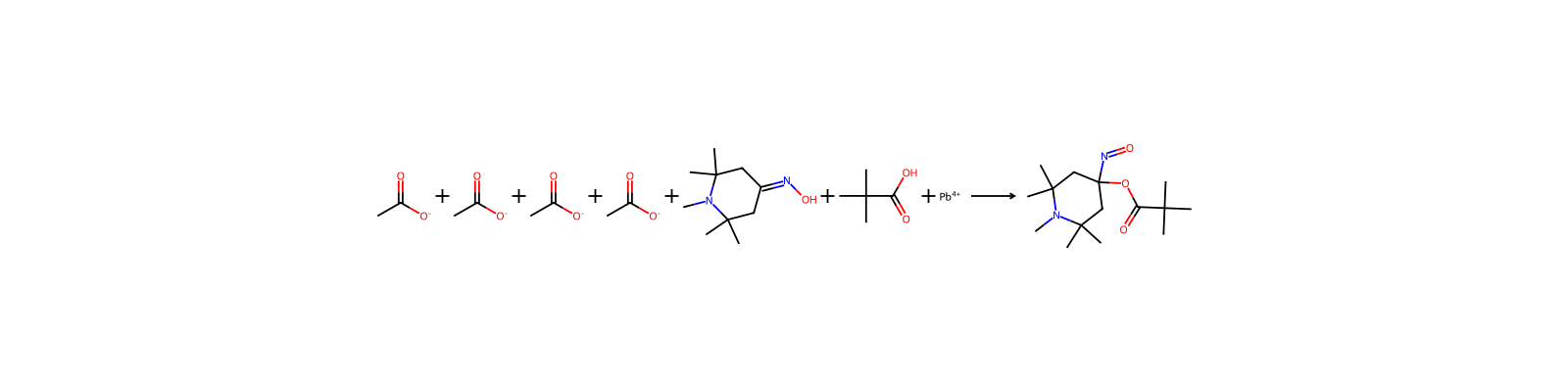
HRID 5691 reaction equation
HRID 5691As reactantuspto-grants-1993_09
HRID 36239 reaction equation
HRID 36239As reactantuspto-grants-1995_05
HRID 64720 reaction equation
HRID 64720As reactantuspto-grants-1986_09
HRID 67798 reaction equation
HRID 67798As reactantuspto-grants-1982_08
HRID 81086 reaction equation
HRID 81086As reactantuspto-grants-2014_09
HRID 81240 reaction equation
HRID 81240As reactantuspto-grants-2014_09
HRID 100618 reaction equation
HRID 100618As reactantTraining data from https://doi.org/10.1039/C8SC04228D (2/10)
HRID 101419 reaction equation
HRID 101419As reactantTraining data from https://doi.org/10.1039/C8SC04228D (2/10)
Page 1 of 38

Compound notes

Loading…

On this pageBasic informationOverviewNames & identifiersPropertiesSafety & regulationChemistry & industryRelated reactionsCompound notes
More actions
New noteNew reactionRequest quotes
Flash Point · 4 items

147.2 °F (USCG, 1999)

64 °C

64 °C (closed cup)

64 °C c.c.

Boiling Point · 5 items

325 to 327 °F at 760 mmHg (USCG, 1999)

163.8 °C

164.00 °C. @ 760.00 mm Hg

164 °C

163.8 °C @760 [mm Hg]

DecompositionWhen heated to decomposition it emits acrid smoke and irritating fumes.
Melting Point · 4 items

91 to 95 °F (USCG, 1999)

35.5 °C

35 °C

36 °C

Physicochemical properties

Symbol(GHS)
7 · GHS07
Signal word
Warning
Hazard statements
302 · H302-H315-H319
Precautionary statements
264 · P264-P270-P280-P301+P312-P302+P352-P305+P351+P338
RIDADR
3261 · 3261
HazardClass
8 · 8
PackingGroup
II
Hazards Summary · 1 item

A skin, eye, and respiratory tract irritant; [ICSC] In lethal-dose inhalation studies, causes somnolence in mice and dyspnea in rats; [RTECS] A corrosive substance that can cause injury to the skin and eyes; [CHEMINFO] A corrosive substance that can cause injury to the skin, eyes, and respiratory tract; Inhalation may cause chemical pneumonitis; Can be absorbed through skin; [MSDSonline]

Reactive GroupAcids, Carboxylic
UN ClassificationUN Hazard Class: 8; UN Pack Group: II
Special Reports · 2 items

EPA/Office of Pollution Prevention and Toxics; High Production Volume (HPV) Challenge Program's Robust Summaries and Test Plans. Available from the Database Query page at: http://www.epa.gov/hpv/pubs/hpvrstp.htm on Neoacids C5-C28 Category as of January 3, 2008.

European Chemicals Bureau; IUCLID Dataset, Pivalic acid (75-98-9) (2000 CD-ROM edition). Available from the Database Query page at: http://ecb.jrc.it/esis/esis.php as of January 3, 2008.

Reactivity Profile · 1 item

TRIMETHYLACETIC ACID is a carboxylic acid. Carboxylic acids donate hydrogen ions if a base is present to accept them. They react in this way with all bases, both organic (for example, the amines) and inorganic. Their reactions with bases, called "neutralizations", are accompanied by the evolution of substantial amounts of heat. Neutralization between an acid and a base produces water plus a salt. Carboxylic acids with six or fewer carbon atoms are freely or moderately soluble in water; those with more than six carbons are slightly soluble in water. Soluble carboxylic acid dissociate to an extent in water to yield hydrogen ions. The pH of solutions of carboxylic acids is therefore less than 7.0. Many insoluble carboxylic acids react rapidly with aqueous solutions containing a chemical base and dissolve as the neutralization generates a soluble salt. Carboxylic acids in aqueous solution and liquid or molten carboxylic acids can react with active metals to form gaseous hydrogen and a metal salt. Such reactions occur in principle for solid carboxylic acids as well, but are slow if the solid acid remains dry. Even "insoluble" carboxylic acids may absorb enough water from the air and dissolve sufficiently in it to corrode or dissolve iron, steel, and aluminum parts and containers. Carboxylic acids, like other acids, react with cyanide salts to generate gaseous hydrogen cyanide. The reaction is slower for dry, solid carboxylic acids. Insoluble carboxylic acids react with solutions of cyanides to cause the release of gaseous hydrogen cyanide. Flammable and/or toxic gases and heat are generated by the reaction of carboxylic acids with diazo compounds, dithiocarbamates, isocyanates, mercaptans, nitrides, and sulfides. Carboxylic acids, especially in aqueous solution, also react with sulfites, nitrites, thiosulfates (to give H2S and SO3), dithionites (SO2), to generate flammable and/or toxic gases and heat. Their reaction with carbonates and bicarbonates generates a harmless gas (carbon dioxide) but still heat. Like other organic compounds, carboxylic acids can be oxidized by strong oxidizing agents and reduced by strong reducing agents. These reactions generate heat. A wide variety of products is possible. Like other acids, carboxylic acids may initiate polymerization reactions; like other acids, they often catalyze (increase the rate of) chemical reactions.

Atmospheric Standards · 1 item

This action promulgates standards of performance for equipment leaks of Volatile Organic Compounds (VOC) in the Synthetic Organic Chemical Manufacturing Industry (SOCMI). The intended effect of these standards is to require all newly constructed, modified, and reconstructed SOCMI process units to use the best demonstrated system of continuous emission reduction for equipment leaks of VOC, considering costs, non air quality health and environmental impact and energy requirements. Neopentanoic acid is produced, as an intermediate or a final product, by process units covered under this subpart.

Chemical DangersThe solution in water is a weak acid. Reacts with bases and strong oxidants. This generates fire and explosion hazard. Attacks many metals. This produces flammable/explosive gas (hydrogen - see ICSC 0001).

Safety & protection

Fire Fighting · 2 items

Extingiush small fires: dry chemical, CO2, water spray or foam; large fires: water spray, fog or foam. (USCG, 1999)

Use water spray, powder, alcohol-resistant foam, carbon dioxide.

First Aid Measures · 4 items

Fresh air, rest. Refer for medical attention.

Rinse skin with plenty of water or shower. Refer for medical attention if skin irritation occurs.

First rinse with plenty of water for several minutes (remove contact lenses if easily possible), then refer for medical attention.

Rinse mouth.

First AidINHALATION: Remove victim to fresh air, get medical attention if irrtation persists.
Safe StorageSeparated from strong oxidants, bases and food and feedstuffs. Dry. Well closed. Ventilation along the floor.
Fire Fighting Procedures · 2 items

Powder, alcohol-resistant foam, water spray, carbon dioxide.

If material on fire or involved in fire: Do not extinguish fire unless flow can be stopped. Use water in flooding quantities as fog. Solid streams of water may be ineffective. Cool all affected containers with flooding quantities of water. Apply water from as far a distance as possible. Use "alcohol" foam, dry chemical, or carbon dioxide.

Storage ConditionsSeparated from strong oxidants, food and feedstuffs.
Cleanup Methods · 4 items

Collect leaking liquid in sealable containers. If solid: sweep spilled substance into containers; if appropriate, moisten first to prevent dusting. Wash away remainder with plenty of water. (Extra personal protection: A/P2 filter respirator for organic vapour and harmful dust).

Environmental considerations: Land spill: Dig a pit, pond, lagoon, holding area to contain liquid or solid material. Dike surface flow using soil, sand bags, foamed polyurethane, or foamed concrete. Absorb bulk liquid with fly ash, cement powder, or commercial sorbents /SRP: If time permits, pits, ponds, lagoons, soak holes, or holding areas should be sealed with an impermeable flexible membrane liner./

Environmental considerations: Water spill: Use natural barriers or oil spill control booms to limit spill travel. Remove trapped material with suction hoses.

Environmental considerations: Air spill: Apply water spray or mist to knock down vapors.

Nonfire Spill Response · 1 item

Avoid contact with solid and dust. Keep people away. Wear self-contained positive pressure breathing apparatus and full protective clothing. Stop discharge if possible. Shut off ignition sources. Call fire department. Isolate and remove discharged material. Notify local health and pollution control agencies. Issue warning - water contaminant Should be removed. Chemical and physical treatment. Dangerous to aquatic life in high concentrations. May be dangerous if it enter water intakes. Notify local health and wildlife officials. Notify operators of nearby water intakes. (USCG, 1999)

Disposal Methods · 1 item

SRP: At the time of review, criteria for land treatment or burial (sanitary landfill) disposal practices are subject to significant revision. Prior to implementing land disposal of waste residue (including waste sludge), consult with environmental regulatory agencies for guidance on acceptable disposal practices.

Spillage Disposal · 1 item

Personal protection: filter respirator for organic gases and particulates adapted to the airborne concentration of the substance. Collect leaking and spilled liquid in sealable containers as far as possible. Absorb liquid in sand or inert absorbent. If solid: sweep spilled substance into containers. If appropriate, moisten first to prevent dusting. Wash away remainder with plenty of water. Store and dispose of according to local regulations.

Preventive Measures · 3 items

If material not on fire and not involved in fire: Keep sparks, flames, and other sources of ignition away. Keep material out of water sources and sewers. Build dikes to contain flow as necessary. Use water spray to disperse vapors and dilute standing pools of liquid..

Personnel protection: Avoid breathing vapors. Keep upwind. ... Do not handle broken packages unless wearing appropriate personal protective equipment. Wash away any material which may have contacted the body with copious amounts of water or soap and water.

SRP: The scientific literature for the use of contact lenses in industry is conflicting. The benefit or detrimental effects of wearing contact lenses depend not only upon the substance, but also on factors including the form of the substance, characteristics and duration of the exposure, the uses of other eye protection equipment, and the hygiene of the lenses. However, there may be individual substances whose irritating or corrosive properties are such that the wearing of contact lenses would be harmful to the eye. In those specific cases, contact lenses should not be worn. In any event, the usual eye protection equipment should be worn even when contact lenses are in place.

Isolation and EvacuationExcerpt from ERG Guide 154 [Substances - Toxic and/or Corrosive (Non-Combustible)]:

Toxicology

Ecotoxicity Values · 5 items

LC50; Species: Carassius auratus (Goldfish, weight 3.3 g); Conditions: freshwater, static, 20 °C, pH 5.4, dissolved oxygen >4.0 mg/L; Concentration: 400000 ug/L for 24 hr

LC50; Species: Carassius auratus (Goldfish, weight 3.3 g); Conditions: freshwater, static, 20 °C, pH 7.0, dissolved oxygen >4.0 mg/L; Concentration: 4500000 ug/L for 24 hr

LC50; Species: Carassius auratus (Goldfish, weight 3.3 g); Conditions: freshwater, static, 20 °C, pH 5.4, dissolved oxygen >4.0 mg/L; Concentration: 380000 ug/L for 96 hr

EC50; Species: Xenopus laevis (African clawed frog, embryo); Conditions: freshwater, renewal, pH 7.0-7.8; Concentration: 2669400 ug/L for 96 hr (2513000-2835000 ug/L); Effect: general developmental changes /> or =98% purity/

For more Ecotoxicity Values (Complete) data for 2,2-DIMETHYLPROPANOIC ACID (8 total), please visit the HSDB record page.

Environmental Fate · 3 items

TERRESTRIAL FATE: Based on a classification scheme(1), an estimated Koc value of 150(SRC), determined from a log Kow of 1.48(2) and a regression-derived equation(3), indicates that 2,2-dimethylpropanoic acid is expected to have high mobility in soil(SRC). The pKa of 2,2-dimethylpropanoic acid is 5.03(4), indicating that this compound will exist partially in the anion form in the environment and anions generally do not adsorb more strongly to soils containing organic carbon and clay than their neutral counterparts(5). Volatilization of 2,2-dimethylpropanoic acid from moist soil surfaces is not expected to be an important fate process because anions do not volatilize. 2,2-Dimethylpropanoic acid is not expected to volatilize from dry soil surfaces(SRC) based upon a vapor pressure of 0.50 mm Hg(6). Several screening studies(7-11) suggest that under aerobic conditions, 2,2-dimethylpropanoic acid may biodegrade in soil with sufficient acclimation time, but no rate data were available.

AQUATIC FATE: Based on a classification scheme(1), an estimated Koc value of 150(SRC), determined from a log Kow of 1.48(2) and a regression-derived equation(3), indicates that 2,2-dimethylpropanoic acid is not expected to adsorb to suspended solids and sediment(SRC). Volatilization from water surfaces is expected(3) based upon a Henry's Law constant of 2.78X10⁻⁶ atm-cu m/mole(4). Using this Henry's Law constant and an estimation method(3), volatilization half-lives for a model river and model lake are 13 and 100 days, respectively(SRC). According to a classification scheme(5), BCFs of <0.2-1.2 at a concentration of 1 ppb and <2.3 at a concentration of 0.1 ppb(6), suggest bioconcentration in aquatic organisms is low(SRC). Several screening studies(7-11) suggest that under aerobic conditions, 2,2-dimethylpropanoic acid may biodegrade in aquatic systems with sufficient acclimation time but no data were available. Aquatic oxidation with hydroxyl radicals is not likely to be an important fate process based on a half-life of 1.5 yrs in water under continuous sunlight(12).

ATMOSPHERIC FATE: According to a model of gas/particle partitioning of semivolatile organic compounds in the atmosphere(1), 2,2-dimethylpropanoic acid, which has a vapor pressure of 0.50 mm Hg at 25 °C(2), is expected to exist solely as a vapor in the ambient atmosphere. Vapor-phase 2,2-dimethylpropanoic acid is degraded in the atmosphere by reaction with photochemically-produced hydroxyl radicals(SRC); the half-life for this reaction in air is estimated to be 27 days(SRC), calculated from its rate constant of 5.9X10⁻¹³ cu cm/molecule-sec at 25 °C(3).

Adverse EffectsDermatotoxin - Skin burns.
Exposure RoutesThe substance can be absorbed into the body by inhalation, through the skin and by ingestion.
Signs and Symptoms · 4 items

Cough. Sore throat.

Redness. Pain.

Redness. Pain.

Burning sensation.

Effluent Concentrations2,2-Dimethylpropanoic acid was identified at a concn of 8 ppm in effluent from one of three New Jersey publicly owned treatment works (POTWs) located in an industrial area of the state(1).
Soil Adsorption/Mobility · 1 item

The Koc of 2,2-dimethylpropanoic acid is estimated as 150(SRC), using a log Kow of 1.48(1) and a regression-derived equation(2). According to a classification scheme(3), this estimated Koc value suggests that 2,2-dimethylpropanoic acid is expected to have high mobility in soil. The pKa of 2,2-dimethylpropanoic acid is 5.03(4), indicating that this compound will exist partially in anion form in the environment and anions generally do not adsorb more strongly to soils containing organic carbon and clay than their neutral counterparts(5).

Human Toxicity Excerpts · 3 items

/HUMAN EXPOSURE STUDIES/ Treatment with pivalic acid containing prodrugs has been shown to cause carnitine depletion by loss of pivaloyl carnitine in urine. A 7-day standard pivmecillinam treatment of adults lead to a marked decrease of the free serum carnitine concentration (44.6 to 12.9 umol/L), whereas no change was seen in those given norfloxacine (40.0 to 40.5 umol/L). In some patients irrespective of age the free serum carnitine concentration was decreased to levels (around 10 umol/L) at which an impaired ketone-body production may occur.

/HUMAN EXPOSURE STUDIES/ Short-term administration of pivampicillin and pivmecillinam resulted in a reduction of serum carnitine concentration and an increase in excretion of acylcarnitine in urine. These changes persisted for more than ten days after cessation of therapy. In seven girls on long-term treatment with a mixture of pivampicillin and pivmecillinam the mean total serum carnitine concentration fell to 15% (7-27%) of pretreatment values. The acylcarnitine fraction was 11-57% of total carnitine, compared with less than 2% before treatment. Muscle carnitine concentrations in two girls treated with the antibiotics for 22 and 30 months were only 10% of the mean reference value. These concentrations in serum and muscle are in the range encountered in patients with carnitine deficiencies of other aetiologies in which life-threatening metabolic crises may arise. The risk of adverse effects from prodrugs that give rise to pivalic acid should be seriously considered, particularly in patients under metabolic stress.

/CASE REPORTS/ An 18-month-old boy was treated with an antibiotic containing pivalic acid for 6 months for intractable otitis media and then developed repeated convulsions and loss of consciousness. Laboratory data showed hypoglycemia and hypocarnitinemia. Intravenous administration of glucose was ineffective against the seizures and loss of consciousness. However, the patient regained consciousness and recovered soon after intravenous infusion of carnitine. To our knowledge, intravenous carnitine administration that contributed to marked improvements in neurologic deficit caused by administration of an antibiotic containing pivalic acid has not been reported previously.

Artificial Pollution Sources · 1 item

2,2-Dimethylpropanoic acid's production and use in the production of polymers and resins, pharmaceuticals, agricultural chemicals, cosmetics, fuels, lubricants and transmission fluids(1) may result in its release to the environment through various waste streams(SRC).

Environmental Biodegradation · 1 item

AEROBIC: 2,2-Dimethylpropanoic acid at a high initial concn of 100 ppm exhibited a 24% theoratical BOD over an incubation period of 5 days in an aerobic screening study at 21 °C using sewage inoculum(1). An aerobic screening study using activated sludge inoculum at pH 7 showed only a small removal of 2,2-dimethylpropanoic acid (high initial concn of 500 ppm) in a Warburg respirometer at pH 7(5). 2,2-Dimethylpropanoic acid exhibited a 10% theoratical BOD over an incubation period of 5 days in an aerobic screening study at 20 °C using sewage inoculum(2). 2,2-Dimethylpropanoic acid at an initial concn of 3.4 ppm exhibited a 52% theoretical BOD over an incubation period of 10 days in an aerobic screening study at 25 °C and pH 6.5-7.5 using sewage inoculum(3). 2,2-Dimethylpropanoic acid at an initial concn of 4.1 ppm exhibited 1.2, 0, 14, and 86% theoretical BOD over respective incubation periods of 2, 5, 10, and 20 days in an aerobic screening study at 25 °C using soil inoculum(4).

Environmental Bioconcentration · 1 item

The BCF of 2,2-dimethylpropanoic acid was <0.2-1.2 at a concentration of 1 ppb and <2.3 at a concentration of 0.1 ppb using carp (Cypinus carpio) which were exposed over a 6-week period(1). According to a classification scheme(2), these BCFs suggest bioconcentration in aquatic organisms is low(SRC).

Volatilization from Water/Soil · 1 item

The Henry's Law constant for 2,2-dimethylpropanoic acid is 2.78X10⁻⁶ atm-cu m/mole(1). This Henry's Law constant indicates that 2,2-dimethylpropanoic acid is expected to volatilize from water surfaces(2). Based on this Henry's Law constant, the volatilization half-life from a model river (1 m deep, flowing 1 m/sec, wind velocity of 3 m/sec)(2) is estimated as 13 days(SRC). The volatilization half-life from a model lake (1 m deep, flowing 0.05 m/sec, wind velocity of 0.5 m/sec)(2) is estimated as 100 days. 2,2-Dimethylpropanoic acid's Henry's Law constant indicates that volatilization from moist soil surfaces may occur(SRC). 2,2-Dimethylpropanoic acid is not expected to volatilize from dry soil surfaces(SRC) based upon a vapor pressure of 0.50 mm Hg(3).

Regulatory information

Atmospheric Standards · 1 item

This action promulgates standards of performance for equipment leaks of Volatile Organic Compounds (VOC) in the Synthetic Organic Chemical Manufacturing Industry (SOCMI). The intended effect of these standards is to require all newly constructed, modified, and reconstructed SOCMI process units to use the best demonstrated system of continuous emission reduction for equipment leaks of VOC, considering costs, non air quality health and environmental impact and energy requirements. Neopentanoic acid is produced, as an intermediate or a final product, by process units covered under this subpart.

Safety data

ridadr
3261
Signal word
Warning
Symbol(GHS)
GHS07
hazard_class
8
packing_group
II
Hazard statements
H302-H315-H319
Precautionary statements
P264-P270-P280-P301+P312-P302+P352-P305+P351+P338

Uses & manufacturing

Uses · 6 items

Used to make pharmaceuticals and as a veterinary medication; [HSDB] Also used to make other organic chemicals, as an additive to gasoline and aviation fuel, in gas permeable membranes, and in optical materials (plastic lenses and coating applications); [CHEMINFO]

Petroleum Production and Refining [Category: Industry]

Intermediate, as a replacement for some natural materials

... finds numerous uses in the production of polymers and resins, pharmaceuticals, agricultural chemicals, cosmetics, fuels, lubricants and transmission fluids.

Prodrug ... to improve the bioavailability of therapeutic candidates.

MEDICATION (VET)

U.S. Production · 3 items

2023: 1,000,000 - <2,500,000 lb

Production volumes for non-confidential chemicals reported under the Inventory Update Rule. [Table#5273]

2,2-Dimethylpropanoic acid is listed as a High Production Volume (HPV) chemical (65FR81686). Chemicals listed as HPV were produced in or imported into the U.S. in >1 million pounds in 1990 and/or 1994. The HPV list is based on the 1990 Inventory Update Rule. (IUR) (40 CFR part 710 subpart B; 51FR21438).

Consumer UsesNot Known or Reasonably Ascertainable
Industry UsesIntermediate
Methods of Manufacturing · 3 items

Prepared by the reaction of tert-butylmagnesium chloride and carbon dioxide.

From isobutylene or diisobutylene with carbon monoxide and water at a temperature below 100 °C and elevated carbon monoxide pressure.

The Koch-Haaf reaction can be used to prepare trimethylacetic acid from 2-methyl-1-propanol and 2-methyl-2-propanol by the addition of carbon monoxide in the presence of sulfuric acid. With readily available 2-methyl-1-propanol (isobutanol) from the oxo synthesis, trimethylacetic acid can be obtained in 89% yield.

Formulations/Preparations>99% pure
General Manufacturing Information · 2 items

All Other Chemical Product and Preparation Manufacturing

Propanoic acid, 2,2-dimethyl-: ACTIVE