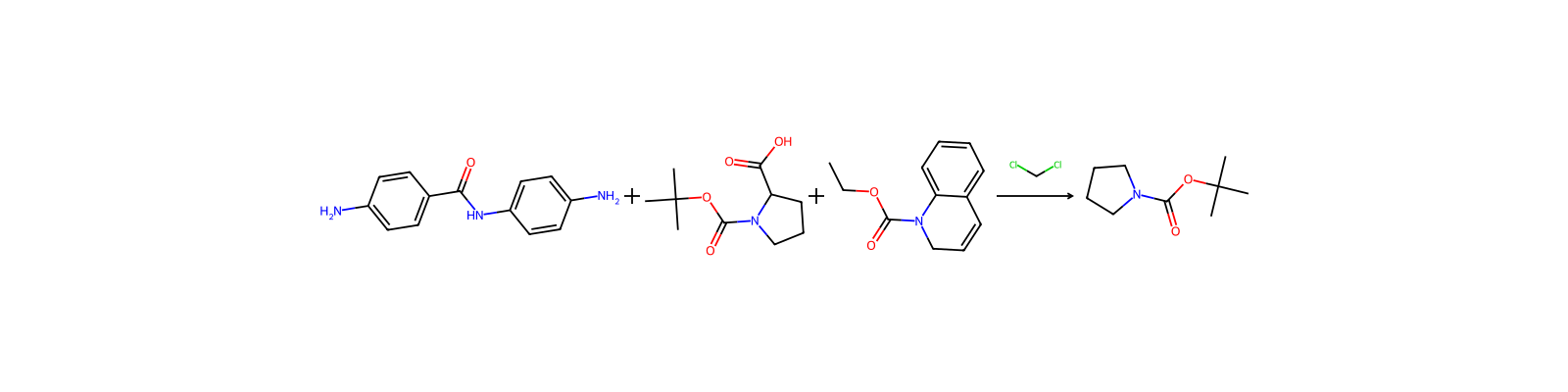
HRID 63971As reactant

86953-79-9CC(C)(C)OC(=O)N1CCCC1LPQZERIRKRYGGM-UHFFFAOYSA-Nstructure in first source
86953-79-9DTXSID60349184Safety information is for reference only and does not replace the supplier’s Safety Data Sheet (SDS), applicable regulations, or professional assessment.
Warning
H315 (100%): Causes skin irritation [Warning Skin corrosion/irritation]
P261, P264, P264+P265, P271, P280, P302+P352, P304+P340, P305+P351+P338, P319, P321, P332+P317, P337+P317, P362+P364, P403+P233, P405, and P501 (click each P-code to see the statement)
Aggregated GHS information provided per 41 reports by companies from 4 notifications to the ECHA C&L Inventory. Each notification may be associated with multiple companies.
UsesN-Boc-pyrrolidine may be used in the synthesis of the following:2-aryl-N-boc-pyrrolidinesscalemic 2-pyrrolidinylcuprates2-alkenyl-N-Boc-pyrrolidines1-deoxycastanosperminemethylphenidate analogues(+)-elaeokanine A
Uses1-Boc-pyrrolidine is a boc-protected cyclic amine used as a building block in the preparation of diastereomers by usually undergoing α'-lithiations and electrophilic substitution reactions.
General DescriptionN-Boc-pyrrolidine is an N-substituted pyrrolidine. It is reported that the reactivity of N-Boc-pyrrolidine towards C-H insertion reaction is 2000 times more than cyclohexane. It undergoes α-arylation in the presence of a palladium catalyst with high enantioselectivity.