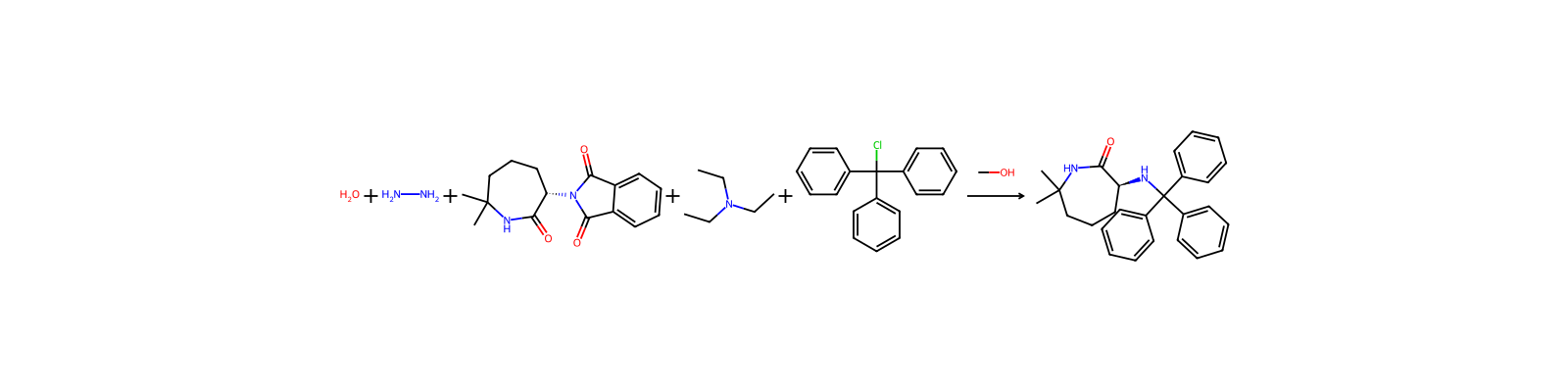
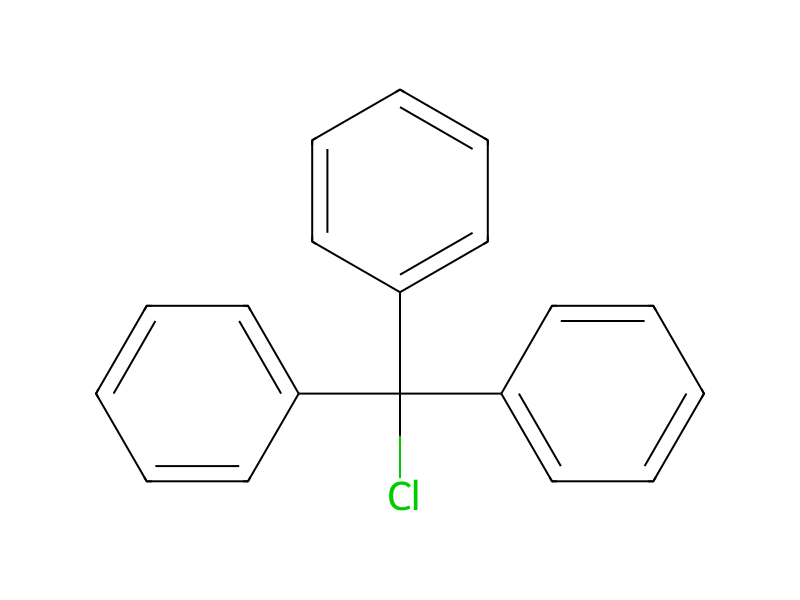
Trityl chloride
Basic information
- CAS
76-83-5- Standard SMILES
ClC(c1ccccc1)(c1ccccc1)c1ccccc1- InChIKey
JBWKIWSBJXDJDT-UHFFFAOYSA-N- Molecular formula
- C19H15Cl
- Average molar mass
- 278.8 g/mol
- Monoisotopic mass
- 278.0862282
Names & identifiers
- Preferred name
- Trityl chloride
- IUPAC
- [chloro(diphenyl)methyl]benzene
- English name
- Triphenylmethyl Chloride
- Molecular formula
- C19H15Cl
- Molecular weight
- 278.78
Names & synonyms
76-83-5Trityl chlorideTriphenylchloromethaneCHLOROTRIPHENYLMETHANEtriphenylmethylchlorideMethane, chlorotriphenyl-Benzene, 1,1',1''-(chloromethylidyne)tris-DTXSID30525111,1',1''-(Chloromethylidyne)trisbenzene1D9GZ8QQXNNSC-435DTXCID7031084
Show more names
TRT-CLTRITY CHLORIDETRIPHENYLCHLORMETHANEchlorotriphenyl-methanNSC 435
RefChem:575983200-986-4Triphenylmethyl chloride(chloromethanetriyl)tribenzene(chlorodiphenylmethyl)benzeneTrityl Chloride Resin[Chloro(diphenyl)methyl]benzenetritylchloride
Database identifiers
- CAS
76-83-5- PubChem CID
- 6456
- DTXSID
DTXSID3052511- ChEMBL
CHEMBL261393- UNII
- 1D9GZ8QQXN
- EC Number
- 200-986-4
- Nikkaji
- J62.557D
Properties
Computed structural properties
- XLogP
- 5
- Topological polar surface area
- 0 Ų
- Hydrogen bond donors
- 0
- Hydrogen bond acceptors
- 0
- Rotatable bonds
- 3
- Heavy atoms
- 20
- Formal charge
- 0
- Complexity
- 235
Experimental & physicochemical properties
PolymersOther Classes -> Halogenated Polyaromatics
SpringerMaterials PropertiesCrystal structure
Color/FormNEEDLES OR PRISMS FROM BENZENE OR PETROLEUM ETHER
SolubilityINSOL IN WATER, SLIGHTLY SOL IN ALCOHOL, SOL IN ACETONE; VERY SOL IN ETHER, BENZENE, CHLOROFORM, CARBON DISULFIDE, CARBON TETRACHLORIDE
Boiling Point310 °C @ 760 MM HG
Melting Point113-114 °C
Vapor Pressure0.00000387 [mmHg]
Physical DescriptionSolid; [HSDB] Off-white powder with a pungent odor; Hydrolyzed with water; [MSDSonline]
Collision Cross Section162.5 Ų [M+H]+ [CCS Type: DT; Buffer gas: N2; Ionization: APCI+; Dataset: TOXCAST; Source Identifier: DTXSID3052511]
Other Experimental Properties
Safety & regulation
Safety information is for reference only and does not replace the supplier’s Safety Data Sheet (SDS), applicable regulations, or professional assessment.
GHS classification
GHS Classification
Danger
H314 (77.4%): Causes severe skin burns and eye damage [Danger Skin corrosion/irritation]
P260, P261, P264, P264+P265, P271, P273, P280, P301+P330+P331, P302+P352, P302+P361+P354, P304+P340, P305+P354+P338, P316, P317, P319, P321, P332+P317, P362+P364, P363, P391, P403+P233, P405, and P501 (click each P-code to see the statement)
Aggregated GHS information provided per 137 reports by companies from 13 notifications to the ECHA C&L Inventory. Each notification may be associated with multiple companies.
Hazard information
Regulatory Information
Chemical: Benzene, 1,1',1''-(chloromethylidyne)tris-
REACH registered substance: Chlorotriphenylmethane (EC: 200-986-4)
Chlorotriphenylmethane: Does not have an individual approval but may be used under an appropriate group standard
Hazards SummaryA corrosive substance that can cause injury to the skin, eyes, and respiratory tract; Inhalation may cause chemical pneumonitis; [MSDSonline]
Hazard Classes and CategoriesSkin Corr. 1B (77.4%)
Toxicology
Adverse EffectsDermatotoxin - Skin burns.
Non-Human Toxicity Excerpts
POTENCY OF TRIPHENYL DERIV OF GROUP IV ELEMENTS IN INHIBITING GROWTH OF 1ST & 4TH INSTAR T CASTANEUM LARVAE WAS MUCH GREATER FOR PH3SNCL & PH3PBCL THAN FOR PH3CCL. IN HIGH CONCN PH3CCL WAS INACTIVE IN INHIBITING IN VITRO INVERTASE, AMYLASE & PROTEASE ACTIVITIES.
Chemistry & industry
Uses & manufacturing
General Manufacturing Information
Benzene, 1,1',1''-(chloromethylidyne)tris-: ACTIVE
TRIARYL CHLOROALKANE IMPROVED ADHESION OF FAST-SETTING POLYURETHANE PREPOLYMER TO TISSUE.
Applications
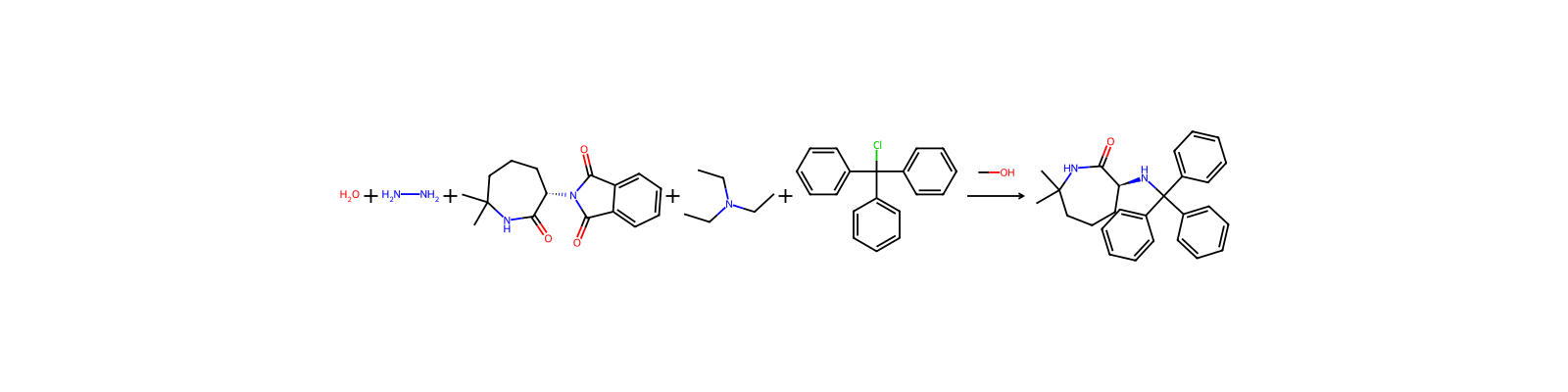
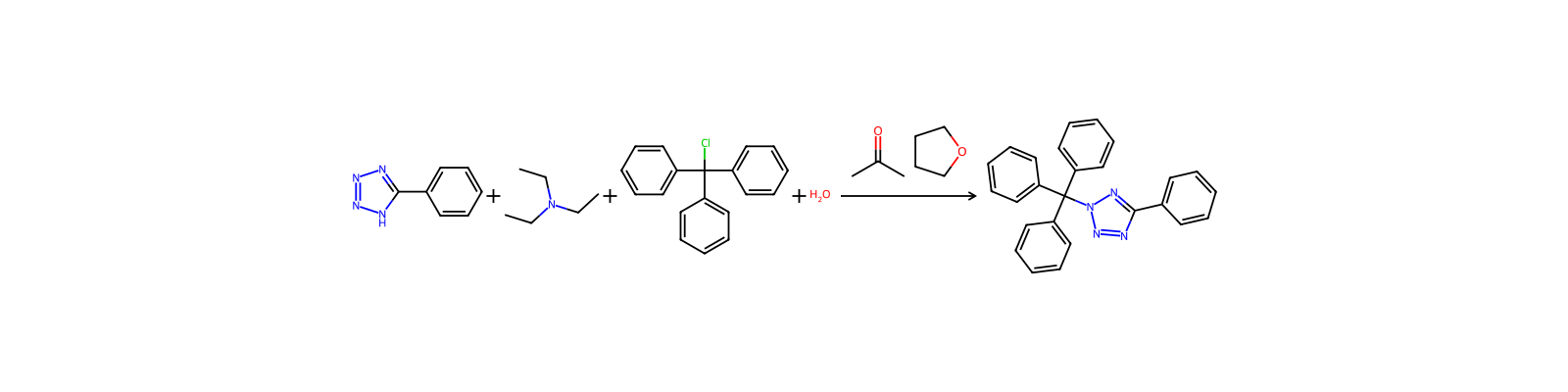
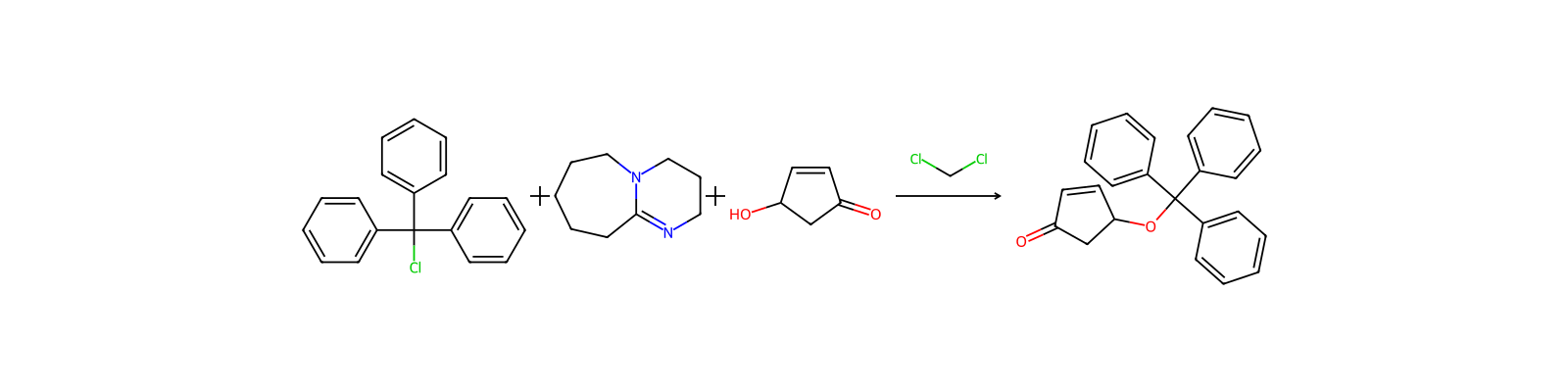
UsesTrityl Chloride is an alkyl halide commonly used in organic synthesis to introduce the trityl protecting group. Trityl Chloride is used in the preparation of S-trityl-L-cysteine (STLC), a tight-bindin g inhibitor of Eg5 that prevents mitotic progression.
Preparation methods
PreparationTriphenylmethyl Chloride may be prepared by the reaction of triphenylmethanol with acetyl chloride, or by the Friedel–Crafts alkylation of benzene with carbon tetrachloride to give the trityl chloride-aluminium chloride adduct, which is then hydrolyzed.
Upstream & downstream products
Upstream raw materials
Downstream products
Related reactions
1,682 records


Compound notes
Loading…