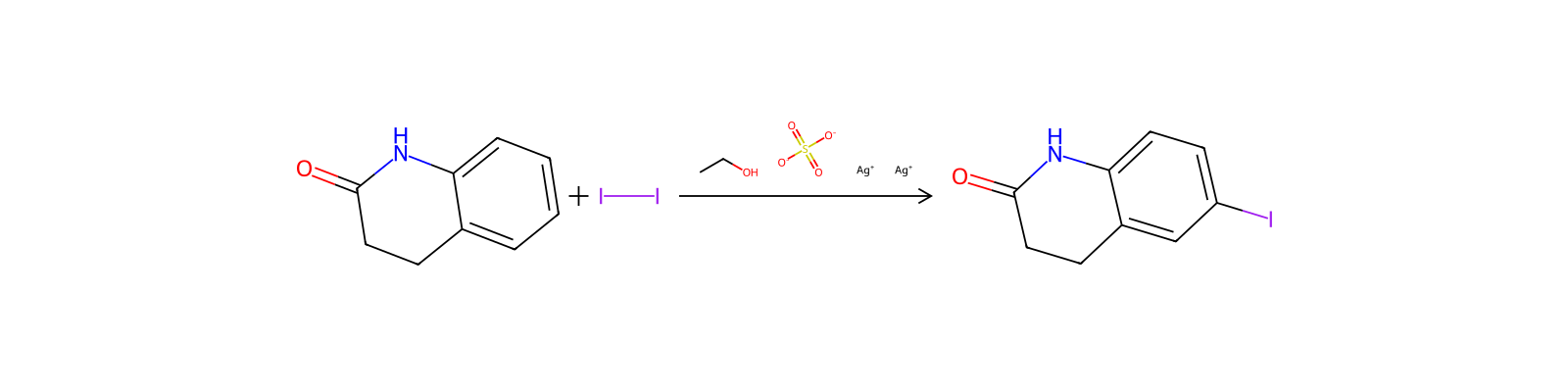
Hydrocarbostyril
Completing data — refresh the page later to see the latest
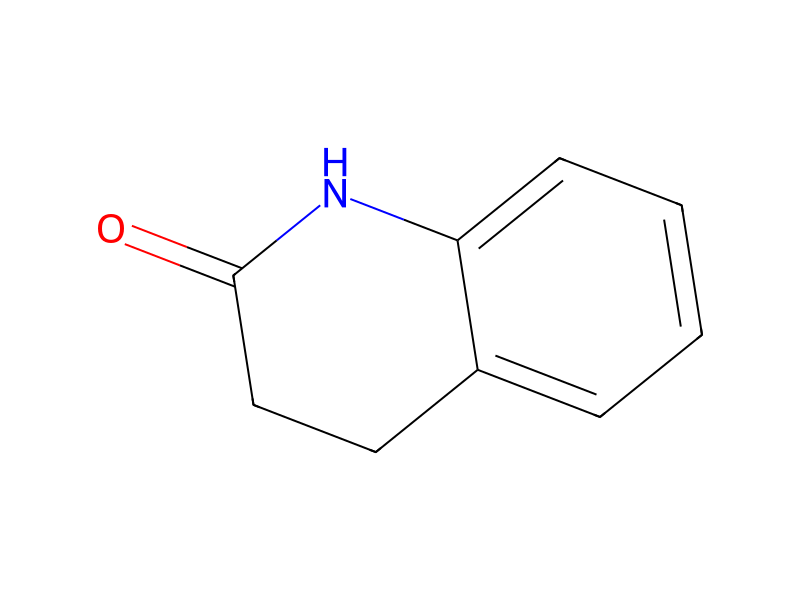
Basic information
- CAS
553-03-7- Standard SMILES
O=C1CCc2ccccc2N1- InChIKey
TZOYXRMEFDYWDQ-UHFFFAOYSA-N- Molecular formula
- C9H9NO
- Average molar mass
- 147.17 g/mol
- Monoisotopic mass
- 147.06841391
Overview
3,4-Dihydro-2(1H)-quinolinone is a member of quinolines.
Names & identifiers
- Preferred name
- Hydrocarbostyril
- IUPAC
- 3,4-dihydro-1H-quinolin-2-one
- English name
- 3,4-DIHYDROQUINOLIN-2(1H)-ONE
- Molecular formula
- C9H9NO
- Molecular weight
- 147.17
Names & synonyms
553-03-73,4-Dihydro-2(1H)-quinolinone3,4-Dihydroquinolin-2(1H)-oneHydrocarbostyril3,4-Dihydrocarbostyril3,4-Dihydro-2-quinolinolo-Aminohydrocinnamic acid lactam2-Oxo-1,2,3,4-tetrahydroquinoline2CKG6TX32FNSC-49170DTXSID40203816RefChem:788994
Show more names
3,4-Dihydro-2-quinolinoneinoneDIHYDROCARBOSTYRILdihydro-α-quinolone
DTXCID70126307621-863-5942-197-41,2,3,4-tetrahydroquinolin-2-one3,4-dihydro-1H-quinolin-2-one2(1H)-Quinolinone, 3,4-dihydro-Dihydro-quinolinoneMFCD00016722
Database identifiers
- CAS
553-03-7- PubChem CID
- 64796
- DTXSID
DTXSID40203816- ChEMBL
CHEMBL388582- ChEBI
CHEBI:194726- UNII
- 2CKG6TX32F
- EC Number
- 621-863-5、942-197-4
- Nikkaji
- J6.725C
Properties
Computed structural propertiesFilling in
- XLogP
- 1.1
- Topological polar surface area
- 29.1 Ų
- Hydrogen bond donors
- 1
- Hydrogen bond acceptors
- 1
- Rotatable bonds
- 0
- Heavy atoms
- 11
- Formal charge
- 0
- Complexity
- 167
Experimental & physicochemical properties
LogP1.34
Solubility15.9 [ug/mL] (The mean of the results at pH 7.4)
Physicochemical properties
- Melting point
- 165 · 165-167 °C (lit.)
- Boiling point
- 267.28 °C · 267.28°C (rough estimate)
- Density
- 1.1135 · 1.1135 (rough estimate)
- refractive index
- 1.52 · 1.5200 (estimate)
- storage temp.
- Keep in dark place,Sealed in dry,Room Temperature
- solubility
- 30 mg/ml,DMSO: · DMF: 30 mg/ml,DMSO: 30 mg/ml,DMSO:PBS (pH 7.2) (1:6): 0.14 mg/ml
- form
- Crystalline Powder
- pka
- 14.76 · 14.76±0.20(Predicted)
- color
- Off-white
- Water Solubility
- Slightly soluble in water.
- Sensitive
Safety & regulation
Safety information is for reference only and does not replace the supplier’s Safety Data Sheet (SDS), applicable regulations, or professional assessment.
GHS classification
GHS Classification
Warning
H302 (98.6%): Harmful if swallowed [Warning Acute toxicity, oral]
P261, P264, P264+P265, P270, P271, P272, P280, P301+P317, P302+P352, P304+P340, P305+P351+P338, P319, P321, P330, P332+P317, P333+P317, P337+P317, P362+P364, P403+P233, P405, and P501 (click each P-code to see the statement)
Aggregated GHS information provided per 71 reports by companies from 7 notifications to the ECHA C&L Inventory. Each notification may be associated with multiple companies.
Not Classified
Hazard information
Hazard Classes and Categories
Acute Tox. 4 (98.6%)
Not Classified
Safety data
- wgk
- 2
- ridadr
- 2811
- hs_code
- 29337900
- risk_code
- 22-36/37/38-43
- Signal word
- Warning
- Symbol(GHS)
- GHS07,GHS06
- hazard_code
- Xn,Xi
- hazard_note
- Irritant
- safety_code
- 26-36/37
- hazard_class
- 6.1(b)
- Storage Class
- 11 - Combustible Solids
- packing_group
- III
- target organs
- Respiratory system
- Hazard statements
- H301-H302-H315-H317-H319-H335
Chemistry & industry
Applications
Uses3,4-Dihydro-2-(1H)-quinolinone may be employed as medium supplement in the culture medium of Pseudomonas ayucida during enrichment culture experiments. It is used to prepare potent bicyclic peptide deformylase inhibitors with antibacterial effects. It is also used to synthesize substituted iminopiperidines as inhibitors of human nitric oxide synthase isoforms.
Uses3,4-Dihydro-2(1H)-quinolinone may be employed as medium supplement in the culture medium of Pseudomonas ayucida during enrichment culture experiments.
General DescriptionSeries of 3,4-dihydro-2(1H)-quinolinone derivatives having sigma-1 receptor (σ1R) antagonist activity have been synthesized. 3,4-dihydro-2((1)H)-quinolinones have been synthesized using N-(1′-alkoxy)cyclopropyl-2-haloanilines as starting reagent. Cyclopropane ring expansion in the presence of palladium catalyst is the major step involved in the synthesis. Library of 3,4-dihydro-2(1H)-quinolinones have been synthesized through the rearrangement of β-lactam intermediates on the solid-phase
Upstream & downstream products
Upstream raw materials
Downstream products
Related reactions
136 records


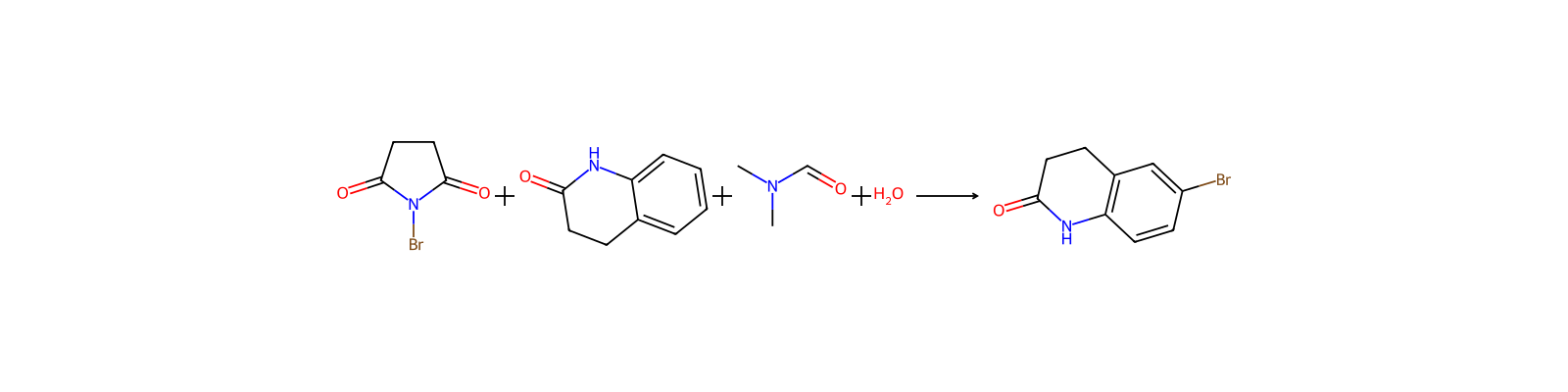


Compound notes
Loading…